Key Takeaways
Why Holiday Car Sales Exist in the First Place
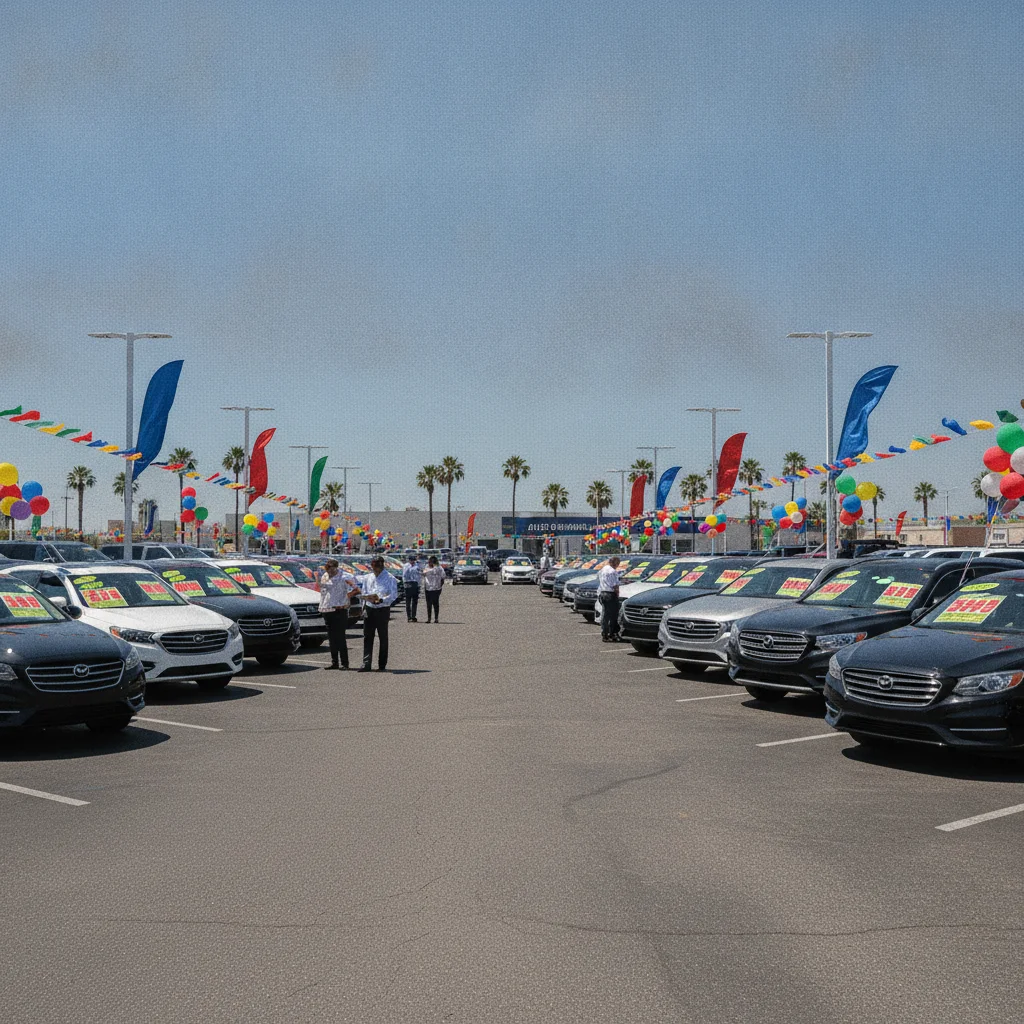
Holiday weekend advertising for car dealerships is so pervasive that it's easy to assume the whole thing is a manufactured gimmick. Giant inflatable gorillas, red-white-and-blue bunting, and urgent radio spots proclaiming "the biggest sale of the year" have made many buyers rightfully skeptical. But the skepticism itself can lead you astray in the opposite direction — dismissing real pricing opportunities because the marketing feels theatrical.
The truth is more nuanced: some holiday events are structurally tied to genuine manufacturer incentives and inventory pressures, while others are mostly branding exercises that dress up routine pricing in festive packaging. Understanding why the incentives exist in any given window is the key to sorting real savings from noise.
Automakers and dealers operate on model-year cycles. New vehicles for the following year typically begin arriving at lots between July and October. That creates a hard deadline: any current-year inventory still on the lot after the new model year arrives depreciates instantly in the eyes of buyers. Dealers know this, manufacturers know this, and so incentive programs are deliberately concentrated around the moments when that pressure peaks.
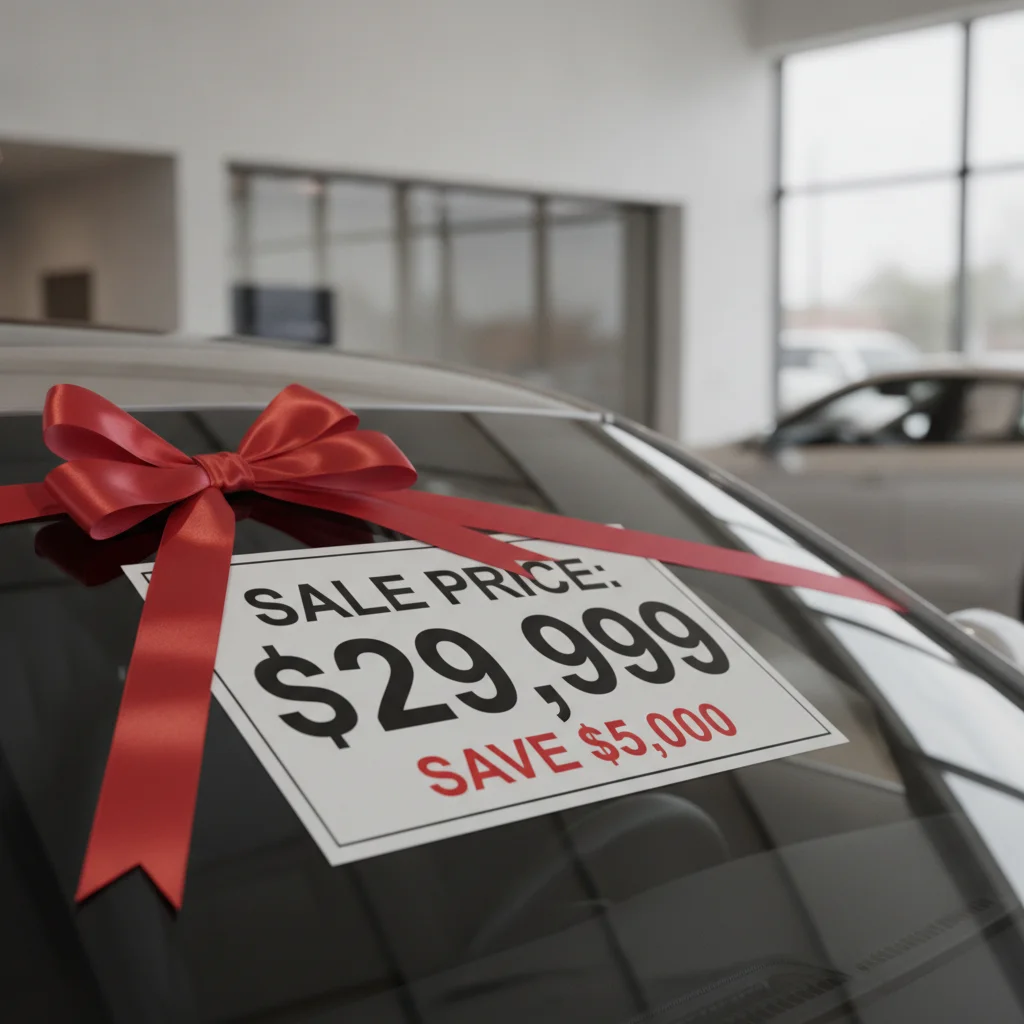
Holiday weekends also serve a pure traffic function. A "Presidents' Day Sale" announcement gets people off their couches and onto dealer lots when they might otherwise spend a long weekend doing something else. More foot traffic means more sales volume — and volume itself is a dealer's primary lever for hitting manufacturer bonus thresholds. Those thresholds often pay dealers thousands of dollars per unit, creating an incentive to discount individual cars in order to unlock larger back-end bonuses.
So the marketing is real, the foot traffic motive is real, and — depending on the specific holiday and the inventory moment — the discounts can be real too. The question is which holidays actually deliver and which are mostly calendar-themed advertising.
The Holiday-by-Holiday Breakdown
Not all holiday sales events are created equal. Each falls at a different point in the model-year calendar, and that position determines how much genuine pricing pressure underlies the promotion.
Memorial Day (Late May)
Memorial Day is legitimately one of the better buying windows of the year. By late May, the following model year's vehicles are already in production and some are in transit to ports and rail yards. Dealers who haven't moved prior-year inventory by this point start feeling real pressure. Manufacturer incentive programs — rebates, subsidized financing rates — tend to be robust in May and June precisely because of this dynamic.
Expect average discounts of 5–8% off MSRP on current-model-year vehicles, and occasionally more on models with high lot inventory. The tradeoff: selection is still broad, so you're not forced to take whatever's left.
8–12%
Average discount off MSRP during Labor Day
Industry analysts at Edmunds and TrueCar consistently find that September is the peak month for manufacturer-to-consumer incentive spending, with Labor Day weekend representing the inflection point.
$3,200
Average incentive per vehicle in September
According to J.D. Power data, average per-unit incentive spending by automakers typically peaks in September, the month when new model-year arrivals most acutely pressure remaining prior-year inventory.
3–5%
Typical Fourth of July discount vs. MSRP
Edmunds transaction data shows Fourth of July discounts run noticeably shallower than Memorial Day or Labor Day events, reflecting lower model-year inventory pressure in early July.
62%
Buyers who don't compare invoice vs. advertised price
A Consumer Reports survey found that nearly two-thirds of buyers never looked up invoice pricing before visiting a dealership, leaving them unable to evaluate whether a 'sale price' represented a genuine markdown.
$4,600+
Interest saved on 0% vs. 6% APR over 60 months
On a $32,000 vehicle financed over 60 months, the difference between 0% and 6% APR amounts to over $4,600 in total interest — making financing promotions potentially more valuable than sticker-price discounts.
Fourth of July (Early July)
The Fourth of July falls in an interesting middle zone. New model-year vehicles haven't arrived yet in most cases, but the urgency of Memorial Day has passed. Manufacturer incentive programs are still running, but dealers aren't yet in full clearance mode. Expect genuine deals, but more modest — typically 3–5% off MSRP on average. The holiday creates foot traffic, which dealers want, but the structural pressure isn't as intense as it will be by August and September.
Labor Day (Early September)
Labor Day is arguably the single best holiday for buyers who want maximum discount on the current model year. By September, new model-year vehicles are arriving on lots — or have already arrived. Any current-year unit still in stock costs the dealer money every day it sits. Manufacturer rebates and dealer-to-customer cash incentives are at their annual peak. Discounts of 8–12% off MSRP on prior-model-year vehicles are not unusual for high-inventory models.
The catch: selection is thinner. You may find the trim or color you want has already sold, and the remaining inventory skews toward configurations that didn't sell quickly for a reason — unusual color combinations, stripped-down trim levels, or high-demand options that pushed the price beyond what most buyers wanted to pay.
Presidents' Day (Mid-February)
Presidents' Day occupies a quieter moment in the model-year cycle. The new model year arrived months ago and is already well-established on lots. What Presidents' Day sales primarily target is leftover prior-year inventory — vehicles that survived through the fall clearance window and are now carrying an extra few months of depreciation. These can be genuine bargains, sometimes priced 10–15% below their original MSRP, but the inventory pool is small and vehicle condition varies.
This event also coincides roughly with tax refund season, which brings a wave of buyers using refunds as down payments. That increased demand slightly offsets the pricing advantage. See how this demand wave affects the market in our article on tax refund season and car dealerships.
Black Friday / Thanksgiving Weekend
Counterintuitively, Thanksgiving weekend has become a meaningful car-buying event. It falls in late November, when new model-year vehicles are fully established and dealers are pushing hard to hit year-end volume targets. Manufacturer-to-dealer incentives for year-end volume bonuses are strong, and some of that flows through to buyers. The crowd-avoidance factor also works in buyers' favor: most people are focused on retail shopping, so dealership foot traffic is lower, and salespeople have more time and motivation to close deals.
Manufacturer Incentives vs. Dealer Markup: Know the Difference
Every major automaker publishes its current incentive offers on its website — exact rebate amounts and financing rates by model and region. Before visiting any dealership during a holiday event, spend five minutes on the manufacturer's site to document what incentives you're entitled to. If the dealer's advertised 'holiday discount' is less than the publicly available manufacturer incentive, the dealer is keeping the difference as margin. You are entitled to the full manufacturer incentive regardless of what the dealer advertises.
Common Myths About Holiday Car Sales — Corrected
The holiday sales landscape is cluttered with half-truths that circulate year after year. Some myths work in dealers' favor; others cause buyers to miss genuine opportunities. Here's what the evidence actually shows.
Myth
Every holiday sale event features deep, across-the-board discounts on all vehicles.
Fact
Holiday discounts are heavily concentrated on slow-selling or outgoing-model-year inventory — high-demand vehicles see little to no price reduction regardless of the promotional period.
Manufacturers and dealers design incentive programs to move specific inventory, not to discount everything uniformly. A top-selling SUV with a three-month waiting list will carry the same price tag on Labor Day as it did in March. The advertised holiday sale applies — meaningfully — only to vehicles dealers actually need to move.
This distinction matters enormously for buyers who go in expecting a blanket markdown. If your target vehicle is in high demand, a holiday event won't help you. Your leverage comes from finding the equivalent model with lower local demand, a higher-than-average days-on-lot figure, or a competing dealer with more inventory. Checking multiple dealers' online inventory before visiting lets you identify which specific units have sat the longest — those are the candidates for real discounts, holiday or not.
Myth
The 0% APR financing deal offered during holiday events is always better than taking a cash rebate.
Fact
Whether 0% APR beats a cash rebate depends on the loan amount, term, and your alternative financing rate — in many scenarios, the rebate wins.
Consider a concrete example: a $32,000 vehicle with either a $2,500 cash rebate (financed at 5.9% APR for 60 months) or 0% APR with no rebate. At 5.9% on $29,500 (after rebate), your total interest over 60 months is approximately $4,620. At 0% on $32,000, your interest is $0 — a savings of $4,620. In this case, 0% APR wins by about $2,120.
But change the variables — shorter loan term, lower available APR from your credit union, smaller rebate versus larger loan — and the calculation shifts. A buyer with excellent credit who can secure 3.9% from their bank on a 48-month loan might find the cash rebate more valuable than forgoing it for 0% APR. The point is to run the actual numbers rather than assuming the financing promotion is automatically superior.
Dealers understand that most buyers don't run this calculation, which is why 0% APR offers are prominently featured in holiday advertising — they create perceived value that doesn't always reflect real value for every buyer's situation.
Myth
Waiting for a holiday sale is always worth it — you should delay any purchase until the next big event.
Fact
Delaying a purchase for a holiday event only makes sense if the expected discount exceeds the cost of waiting — including potential price increases, inventory loss, and continued ownership costs on your current vehicle.
If you're three weeks away from a holiday event and are ready to buy, waiting is probably sensible. But if you're four months away from Labor Day and your current vehicle needs $1,800 in repairs to stay roadworthy, the math of waiting becomes more complicated. The holiday discount has to exceed both the repair cost and any price changes between now and then — and manufacturer incentives in some windows are no better than what's currently available.
There's also an inventory risk. The specific vehicle you want may not be on a lot in three months. Popular configurations sell out, and new orders for unusual combinations can take weeks or months to arrive. If you find exactly what you want at a fair price today, the certainty of that transaction often outweighs a speculative future discount.
The most disciplined approach: research current manufacturer incentives now, compare them to historical incentive levels for the upcoming holiday (resources like Edmunds and Consumer Reports track this), and only wait if the historical differential meaningfully exceeds your holding costs.
Myth
Holiday sales prices are special 'event' prices that disappear when the weekend ends.
Fact
Most holiday sale pricing reflects underlying manufacturer incentives that remain in place for weeks or months — the deadline urgency in advertising is largely artificial.
Manufacturer rebates and subsidized financing offers are typically announced on a monthly basis and run through the end of that month, sometimes extending into the next. A Memorial Day "sale" that begins on Thursday and ends Monday is, in most cases, built on incentives that were available the previous Tuesday and will continue through June 30th.
The artificial deadline serves the dealer's interest in creating purchase urgency. "This offer expires Monday at midnight" is marketing language, not an accurate description of when the underlying manufacturer incentive program terminates. Verify the actual expiration date of any incentive directly on the manufacturer's website — it's listed clearly in the fine print of every offer.
The implication: if you need more time to think, take it. The deal that was available on Saturday is likely available on Wednesday. The one exception is specific dealer-funded discounts layered on top of manufacturer incentives, which can genuinely expire when a dealer decides to remove them.
Myth
New Year's Eve is the best day of the year to buy a car.
Fact
New Year's Eve can offer strong deals, but it's neither universally the best day nor reliably better than late September or October for most buyers.
The New Year's Eve car-buying myth is persistent, and it has a kernel of truth: the last day of December is the last day of the calendar year, the fiscal year for many manufacturers, and the last chance for salespeople to hit annual bonus thresholds. All of that creates real motivation to close deals.
But the same logic applies to the last day of any month, particularly months when model-year changeovers are happening. A dealer on September 30th with a lot full of current-year vehicles and new models arriving in two weeks faces comparable — sometimes greater — pressure than the same dealer on December 31st with a cleared lot and healthy year-end sales numbers already in the books.
New Year's Eve also has a practical drawback: dealership hours are often reduced, and many buyers and staff have holiday plans. A compressed operating day means less time to negotiate deliberately. Late September and late October often represent better structural buying moments with fewer logistical constraints.
Myth
Holiday sales at dealerships are primarily for new cars — used car prices don't move much.
Fact
Used car pricing is influenced by holiday-period demand shifts, and certified pre-owned inventory can see meaningful discounts during the same windows that drive new-car promotions.
When manufacturer incentives make new cars more affordable during holiday events, used car demand softens slightly — some buyers who would have purchased used find the new-car value proposition competitive enough to switch. Dealers with large used inventories respond by adjusting prices to maintain appeal. This effect is modest but real, particularly on two-to-four-year-old vehicles that compete most directly with current-model new cars.
Certified pre-owned vehicles — which carry manufacturer-backed warranties and inspection standards — are especially worth investigating during major holiday events. Some manufacturers extend special CPO financing rates (not as low as 0% on new vehicles, but below market rates) during promotional periods, creating genuine value for buyers who want near-new reliability at a used-car price point.
For buyers weighing new versus used, the Market Timing hub provides a useful framework for evaluating which moments favor each option based on broader supply and demand cycles.
Don't Let Crowd Psychology Rush Your Decision
Holiday weekend dealerships are deliberately designed to feel urgent — busy showrooms, limited-time announcements over PA systems, and salespeople referencing other interested buyers. These are pressure tactics that compress your deliberation window. If you feel rushed, you're in the exact psychological state the dealership wants you in. The discipline of leaving, sleeping on it, and returning the next day has saved buyers thousands of dollars more reliably than any single negotiating tactic.
Extended Warranties Pushed Hard During Holiday Events
Holiday sales events are a common moment for finance managers to aggressively pitch extended warranties, paint protection packages, and gap insurance. These add-ons carry very high dealer margins and are almost always negotiable in price or skippable entirely. The excitement of a holiday deal can make buyers more susceptible to saying yes in the finance office. Decide your position on these products before you arrive, not in the moment.
Understanding these myths is only part of the equation. Timing your dealership visit strategically — including when during the weekend you show up — also matters. Compare the evidence on weekday vs. weekend dealership visits to see how day-of-week affects pricing leverage.
How to Extract Real Value From Holiday Events
Knowing which holidays matter is necessary but not sufficient. The actual dollars you save depend heavily on how you engage with the process. Here are the mechanics that matter most.
Research Invoice Price Before You Walk In
The "sale price" advertised in holiday promotions is almost always measured against MSRP. But MSRP is not the same as what the dealer paid — that's the invoice price. The gap between invoice and MSRP varies by brand and model, ranging from about 2% on popular vehicles with waiting lists to 10–12% on slow sellers. Services like Edmunds, TrueCar, and the manufacturer's own website will show you the invoice price. Knowing it lets you evaluate whether a "holiday discount" actually represents a markdown from market value or just a number anchored to an inflated sticker.

Separate the Car Price From the Financing
Holiday events frequently bundle 0% APR financing offers with vehicle promotions. These can be genuinely valuable — on a $35,000 vehicle financed over 60 months at 7% instead of 0%, you'd pay roughly $6,700 in interest. But dealers sometimes structure the offer so that taking the 0% APR means forgoing a cash rebate. Run the math both ways: sometimes a 2% APR loan plus a $2,500 rebate is better than 0% APR with no rebate, depending on your loan term and the rebate amount.
Use End-of-Month Timing Within the Holiday Window
If a holiday weekend falls at the end of the month — as Labor Day and Memorial Day often do — the end-of-month quota pressure amplifies the holiday discount. Salespeople and sales managers who are within reach of a monthly volume bonus become significantly more motivated to close deals, including by absorbing more of the discount internally. This is the single most actionable timing insight: a deal closed on Monday of a holiday weekend that also falls on the last day of the month carries maximum dealer motivation.
Don't Abandon Your Preferred Specs Just Because It's on Sale
One of the most common errors during holiday sales is accepting a vehicle you don't want because it's discounted. A $4,000 discount on a color combination you dislike or a trim level missing features you need is not actually a savings — it's a purchase you'll regret for the years you own the vehicle. Legitimate savings require a vehicle you would have bought anyway at fair market price. The deal is the variable; your requirements should be the constant.
Check Manufacturer Websites Directly
Manufacturer incentive pages (available on every major brand's website under "offers" or "deals") list the actual cash-back amounts and financing rates by model and region. Cross-referencing these against dealer advertisements tells you immediately whether the dealer is passing through the manufacturer's incentive or partially retaining it as margin. If the manufacturer is offering $3,000 cash back and the dealer is advertising a $1,500 "holiday discount," you know there's another $1,500 of incentive money the dealer is keeping.
When the Holiday Timing Actually Works Against You
Holiday weekends have one structural disadvantage that buyers often overlook: volume. When a dealership runs a genuine promotion and advertises it aggressively, foot traffic spikes. That spike shifts negotiating leverage — a salesperson who knows three other buyers are interested in the same vehicle has less incentive to discount deeply for you specifically.
High-demand vehicles — new models, limited trims, anything with a waiting list — essentially never receive meaningful holiday discounts regardless of what the advertising implies. The promotion exists to sell inventory that needs selling. If a vehicle is selling itself, the holiday sale is marketing theater for that specific unit.

There's also a fatigue dynamic. Buyers who shop on the busiest day of a holiday weekend (typically Saturday) often make faster, less-researched decisions simply because the dealership experience is overwhelming. Crowds, noise, multiple salespeople juggling customers, and a general urgency in the air all work to compress the deliberation time that produces good decisions. If you're going to buy during a holiday event, consider Sunday or Monday of a three-day weekend, when the crowds thin but the incentives still apply.
Finally, consider your alternatives. If you're flexible about model year or trim, buying a certified pre-owned vehicle at the right market moment may outperform any holiday new-car deal. A one-to-two-year-old vehicle has already absorbed its steepest depreciation, and a well-timed purchase can represent more actual value than any MSRP percentage discount on a new vehicle.
The Bottom Line: Real Savings Require Real Preparation
Holiday weekend car sales occupy a strange middle ground: they're neither pure fiction nor the unmissable savings events the advertising suggests. The structural incentives are real at certain points in the calendar — particularly Memorial Day, Labor Day, and late-November — but translating those incentives into actual savings in your pocket requires preparation that most buyers skip.
The preparation checklist is straightforward: know the invoice price before you walk in, understand what manufacturer incentives are publicly available, decide in advance whether a cash rebate or financing deal is better for your situation, and don't let the festive atmosphere accelerate a decision you haven't thought through. The buyers who do this homework are the ones for whom holiday sales are genuinely valuable. The buyers who don't are the ones who fund the marketing budget.
One last note: the principles that govern new-car holiday pricing apply in a modified form to auto insurance renewal timing as well. If you're purchasing a new vehicle during a holiday event, it's worth simultaneously reviewing your coverage. Our comprehensive guide to every auto insurance discount worth knowing can help you avoid overpaying on the insurance side even as you optimize the purchase price. And for ongoing deal awareness, our Discounts & Deals hub tracks current savings opportunities across both buying and insuring your vehicle.

All claims are backed by peer-reviewed research. Sources on request.