Key Takeaways
Option A
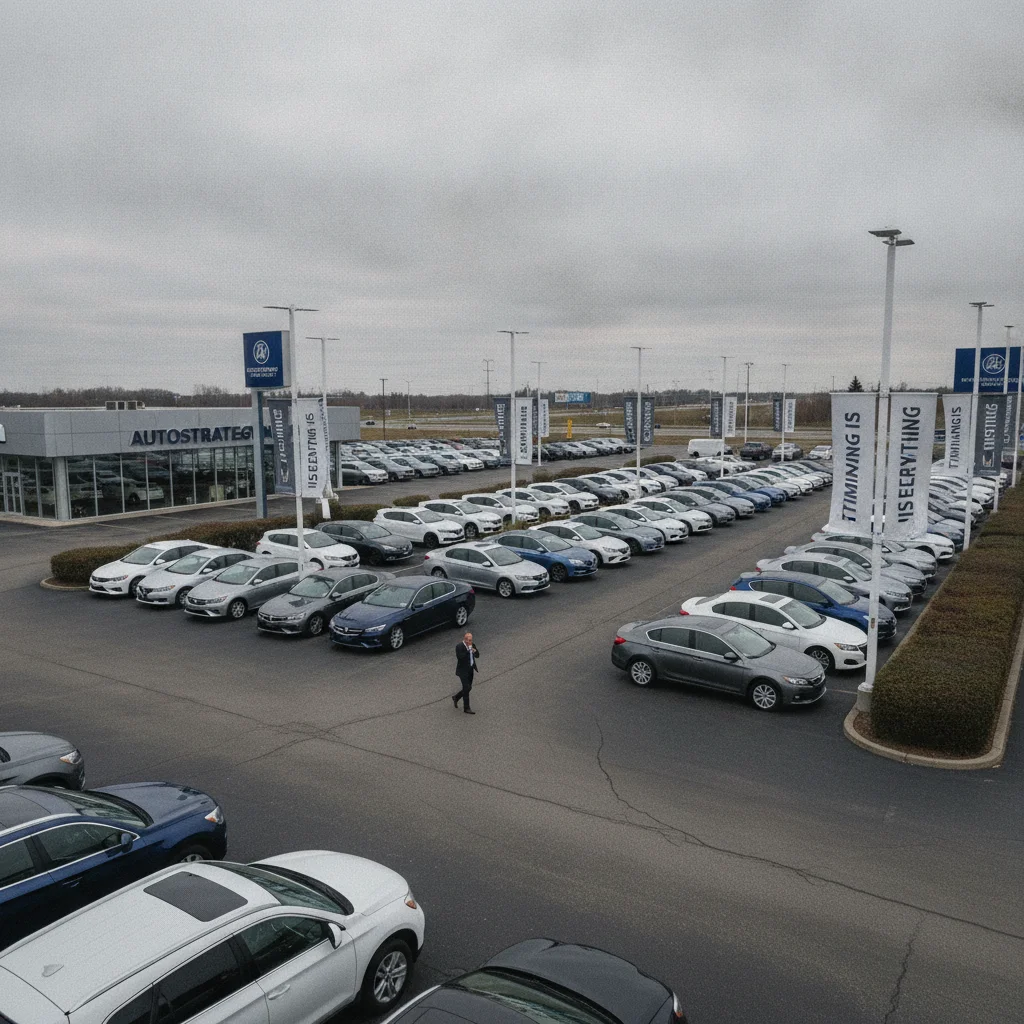
Weekday Dealership Visit
The quieter, lower-pressure shopping window.
Best for: Buyers who want maximum salesperson attention and a relaxed negotiation environment with fewer competing shoppers.
Option B
Weekend Dealership Visit
The high-traffic, high-energy buying environment.
Best for: Buyers who need to coordinate schedules, want a wider selection of staff available, and don't mind a busier floor.
If you want a low-pressure environment with full salesperson attention
Weekday Dealership Visit
Foot traffic is significantly lighter Monday through Thursday, so salespeople aren't juggling multiple customers and are more likely to spend time working a deal with you.
If you're shopping near the end of the month and the dealership needs units
Weekend Dealership Visit
A dealership chasing a monthly quota on the final weekend of the month may actually be more motivated to close quickly and offer concessions to hit their target.
If you're a first-time buyer who needs more time to ask questions
Weekday Dealership Visit
Less pressure and a more patient sales floor let you move at your own pace, reducing the chance of agreeing to add-ons or financing terms you haven't fully evaluated.
If you're attending a manufacturer-sponsored sales event
Weekend Dealership Visit
Factory incentive programs tied to promotional weekends are real and apply equally regardless of traffic level — showing up Sunday is no worse than Saturday for those deals.
If negotiation is your primary tool and you've done your research
Weekday Dealership Visit
An unhurried salesperson is more likely to make multiple back-and-forth trips to the manager's desk, giving you more room to negotiate than a packed Saturday floor allows.
The Origin of the 'Visit on a Weekday' Advice
The belief that walking into a dealership on a quiet Tuesday automatically earns you a better deal has been circulating in car-buying forums and personal finance blogs for decades. The logic sounds intuitive: fewer customers means a desperate salesperson, and a desperate salesperson means discounts. But like a lot of automotive folk wisdom, the reality is more complicated.
The advice isn't entirely wrong — it's just incomplete. Weekday visits do change the dynamics of the showroom floor in measurable ways. What they don't do is automatically change the price on the windshield or the invoice. To understand what actually moves the needle, you have to understand how dealerships structure their incentives and how salespeople are compensated.
Most car salespeople work on a commission model tied to gross profit per vehicle, unit volume bonuses, or both. Their urgency to close a deal is driven less by whether it's Tuesday or Saturday and more by where they stand against their monthly quota. That quota resets every 30 days — and that reset date is what you should be watching more closely than the day of the week. See how those monthly and annual timing windows compare in our article on end-of-month vs. end-of-year car buying.

That said, dismissing day-of-week timing entirely would be an overcorrection. There are real, documented differences between a weekday visit and a weekend visit — they just aren't always the differences buyers assume.
What Actually Changes on a Weekday vs. a Weekend
Let's get specific about what shifts when you walk into a dealership on a Monday versus a Saturday.
Floor Traffic and Salesperson Attention
Dealerships see their highest foot traffic on Saturdays. Some estimates put Saturday volume at two to three times the weekday average. That traffic concentration means salespeople are stretched thin, managers are busy reviewing deals in the finance office, and the negotiation timeline is compressed. You may find yourself rushed through the process simply because the salesperson has three other customers waiting.
On a weekday, especially Monday through Wednesday, the floor can be genuinely quiet. A salesperson who has no other active customers has every incentive to spend an hour working through numbers with you. That patience is a real advantage — not because it changes the car's price, but because it creates room for more thorough negotiation.
Finance Office Availability
The finance and insurance (F&I) office is where a lot of dealership profit is made — through add-on products like extended warranties, paint protection packages, and gap insurance. On a packed Saturday, the F&I manager is moving customers through as quickly as possible. On a weekday, they may spend more time presenting options, which can ironically lead to more upsell pressure — or, if you're prepared to decline tactfully, a less rushed environment where you can ask clarifying questions about loan terms.
| Criterion | Weekday Visit | Weekend Visit |
|---|---|---|
| Floor traffic | Low — often quiet Mon–Wed | High — Saturday is peak day |
| Salesperson attention | Full, unhurried attention | Split across multiple customers |
| Negotiation pace | Slower, more deliberate | Faster, more pressure to close |
| Manager availability | High — fewer deals competing | Low — multiple approvals queued |
| Quota-driven urgency | Depends on month position, not day | Same — quota-driven, not day-driven |
| Price discount likelihood | No automatic advantage | No automatic disadvantage |
| F&I session length | Longer — more time to review | Shorter — high throughput pressure |
| Best combined with | End-of-month weekday timing | Holiday promotion or month-end push |
Manager Approval Speed
Every price concession a salesperson offers typically requires manager sign-off. On a busy weekend, that manager is fielding multiple approvals simultaneously. Deals that require more back-and-forth — because you're negotiating hard — can stall simply due to bandwidth. A weekday visit removes that bottleneck, which can actually speed up the negotiation process and lead to cleaner deal structures.
2–3×
Saturday floor traffic vs. weekday average
Industry estimates from automotive retail consultants consistently place Saturday as the highest-traffic dealership day, with volume two to three times typical weekday levels.
2–3%
Typical dealer holdback as percentage of MSRP
Manufacturer holdback payments, separate from consumer rebates, create financial cushion that dealers can share with buyers without technically selling at a loss.
Last 3 days
Monthly window with lowest average transaction prices
Aggregated transaction data from Edmunds and TrueCar shows the final three days of any calendar month consistently produce the lowest average prices relative to MSRP.
$500–$1,500
Estimated savings from end-of-month vs. early-month buying
Consumer finance analysts estimate buyers who shop the final week of the month save between $500 and $1,500 more on average compared to equivalent early-month purchases.
The Quota Factor: Why Month-End Beats Day-of-Week Every Time
Here's the most important thing to understand about dealer motivation: manufacturer incentive programs — both for salespeople and for the dealership as a whole — are almost universally structured around monthly unit-sales targets. Automakers pay dealers what's called a "holdback" (typically 2–3% of MSRP) and offer additional stair-step bonuses when dealers hit specific sales thresholds.
A salesperson who needs three more sales to hit their bonus tier on the 28th of the month is far more motivated to deal than the same salesperson on the 5th of the month — regardless of which day of the week either of those dates falls on. This is the structural reality that makes end-of-month timing so consistently powerful. Our guide on timing your new car purchase walks through how these windows stack up with real data.
How Stair-Step Incentives Work
Manufacturers sometimes offer dealers tiered bonus payments based on reaching percentage thresholds of their monthly sales target — for example, an extra $500 per unit if the dealer sells 90% of target, and $1,000 per unit if they hit 100%. This means a dealer who is just below a threshold has enormous financial motivation to close additional units before month-end, and that motivation can translate directly into price flexibility for buyers who visit at the right moment.
Pre-Approval Makes Any Visit Stronger
Arriving with a pre-approved auto loan from your bank or credit union changes the dynamic at any dealership visit, weekday or weekend. It establishes your rate as a concrete baseline, prevents the finance office from inflating your APR, and signals that you're a serious, finance-ready buyer. Even if you ultimately use dealer financing because they beat your rate, having the pre-approval in hand gives you genuine leverage.
Weekday Advantage Is Amplified for Used Car Buyers
Used car negotiations tend to have more room to move than new car deals, where invoice pricing is more transparent. On a busy Saturday, a used car manager may be less willing to make concessions on a unit that has multiple interested buyers looking at it the same day. A weekday visit removes that real or perceived competition, which can work meaningfully in your favor on a used vehicle priced at the dealer's discretion.
What this means practically: if the last three days of the month happen to fall on a Thursday, Friday, and Saturday, you're better off going Saturday (even with higher foot traffic) than the previous Tuesday. The quota pressure outweighs the floor-traffic advantage of a slow weekday by a wide margin.
Conversely, a weekday visit in the first week of the month — when quotas are just resetting and salespeople feel no urgency — is probably the weakest position you can be in from a timing standpoint. You get the quiet floor but none of the motivation that actually produces discounts.
How to Stack Both Advantages
The optimal strategy is to combine the two: visit on a weekday that also falls near the end of the month. A Wednesday or Thursday in the last week of the month gives you reduced floor traffic, full salesperson attention, and the quota pressure that actually drives concessions. This is the closest thing to a structural timing edge that car-buying research consistently supports.
What the Evidence Actually Shows (and What Doesn't Hold Up)
Let's separate the claims that have real support from the ones that are mostly automotive mythology.
What Holds Up
- Weekday visits are less pressured. This is consistently reported by both buyers and former automotive salespeople. You get more time, more attention, and a less chaotic environment.
- End-of-month timing produces measurable savings. Multiple studies and aggregated transaction data from services like TrueCar and Edmunds have shown that average transaction prices relative to MSRP are lower in the final days of the month than at the beginning.
- Weekday F&I sessions are longer. This cuts both ways — more time to be upsold, but also more time to negotiate down add-ons or decline them clearly.
What Doesn't Hold Up
- "Weekday visits get you a better price automatically." There's no evidence that dealerships apply different pricing on Tuesdays vs. Saturdays. The advertised price is the advertised price. Your negotiation skill and preparation matter far more than the calendar.
- "Salespeople are desperate on slow days." A salesperson who's already hit quota has no urgency on any day of the week. Desperation is quota-driven, not traffic-driven.
- "Rainy days or bad weather get you deals." This is a persistent myth. A dealership isn't going to discount a $40,000 vehicle because you showed up in the rain. For more on timing myths worth ignoring, see our roundup of car-buying timing myths that keep costing shoppers money.
The bottom line is that day-of-week timing is a real but minor variable. It can improve your experience and slightly improve your negotiating environment. It is not a substitute for knowing your numbers — specifically, the invoice price, any manufacturer-to-dealer incentives, and competing quotes from other dealers or online retailers.
How to Maximize Either Visit Window
Whether you visit on a Tuesday or a Saturday, the preparation you bring to the table does more work than the day of the week. Here's how to make either window as effective as possible.
Before You Go: Know Three Numbers
- Invoice price: What the dealer paid the manufacturer for the vehicle. Resources like Edmunds, TrueCar, and Consumer Reports provide this. It's your anchor for negotiation, not MSRP.
- Current incentives: Manufacturer-to-customer rebates or low-APR offers are publicly listed on automaker websites. Know what's available before you sit down.
- Competing quotes: Use online retailers and competing dealers to establish a market price benchmark. Bring that number with you or reference it explicitly.
At the Dealership: Control the Sequence
One of the most effective tactics — regardless of day of week — is to negotiate the out-the-door vehicle price completely before discussing trade-in value or financing. Dealers prefer to blend these conversations because it obscures where profit is being extracted. Keep them separate. For a deeper breakdown of this and other tactics, see used car buying strategies dealers prefer you don't know.
If you're financing through the dealership, arrive with a pre-approved rate from your bank or credit union. This gives you a genuine alternative and prevents the F&I office from inflating the interest rate above what you'd otherwise qualify for. For context on how dealer negotiation works across the full transaction, our hub covers the mechanics in detail.

On Weekdays Specifically
Use the quieter environment to slow the process deliberately. Ask for time to review numbers before signing anything. Request itemized breakdowns of all fees. Take a break, walk outside, and review the deal summary before entering the F&I office. A weekday gives you the time to do all of this without a salesperson hovering because three other customers just walked in.
On Weekends Specifically
If you're visiting on a weekend — especially near month-end — acknowledge upfront that you're a serious buyer ready to complete the transaction today if the numbers work. This signals to a busy salesperson that you're worth prioritizing over browsing shoppers, and it sets the stage for a faster, cleaner negotiation process.
How Stair-Step Incentives Work
Manufacturers sometimes offer dealers tiered bonus payments based on reaching percentage thresholds of their monthly sales target — for example, an extra $500 per unit if the dealer sells 90% of target, and $1,000 per unit if they hit 100%. This means a dealer who is just below a threshold has enormous financial motivation to close additional units before month-end, and that motivation can translate directly into price flexibility for buyers who visit at the right moment.
Pre-Approval Makes Any Visit Stronger
Arriving with a pre-approved auto loan from your bank or credit union changes the dynamic at any dealership visit, weekday or weekend. It establishes your rate as a concrete baseline, prevents the finance office from inflating your APR, and signals that you're a serious, finance-ready buyer. Even if you ultimately use dealer financing because they beat your rate, having the pre-approval in hand gives you genuine leverage.
Weekday Advantage Is Amplified for Used Car Buyers
Used car negotiations tend to have more room to move than new car deals, where invoice pricing is more transparent. On a busy Saturday, a used car manager may be less willing to make concessions on a unit that has multiple interested buyers looking at it the same day. A weekday visit removes that real or perceived competition, which can work meaningfully in your favor on a used vehicle priced at the dealer's discretion.
Holiday Weekends: A Special Case Worth Understanding
Holiday sales events occupy a unique position in this discussion. Memorial Day, Labor Day, Fourth of July, and Presidents' Day weekend sales are among the most heavily advertised periods in automotive retail. Manufacturer incentives and dealer promotions during these periods can be genuinely meaningful — but they require scrutiny.
The legitimate savings during holiday weekends typically come from two sources: manufacturer-funded APR reductions (sometimes 0% for 60 months on slow-selling models) and cash-back rebates added specifically for the promotional period. These are real discounts that apply to everyone who walks in that weekend, regardless of negotiation skill.
What's often inflated is the implied urgency and the size of the discount relative to a comparable non-holiday month-end deal. A dealer advertising "$4,000 off" during a holiday weekend may be starting from an elevated price point, and the same vehicle might have been available for $3,500 off at end-of-month in a less promotional period. Our detailed review of holiday weekend sales events breaks down which promotions deliver real savings versus marketing theater.
The practical takeaway: don't avoid holiday weekends on principle, but don't assume the advertised discount is the ceiling of what's available. Treat the event pricing as a floor, not a ceiling, and negotiate from there using the same invoice-based anchoring you'd use any other time.
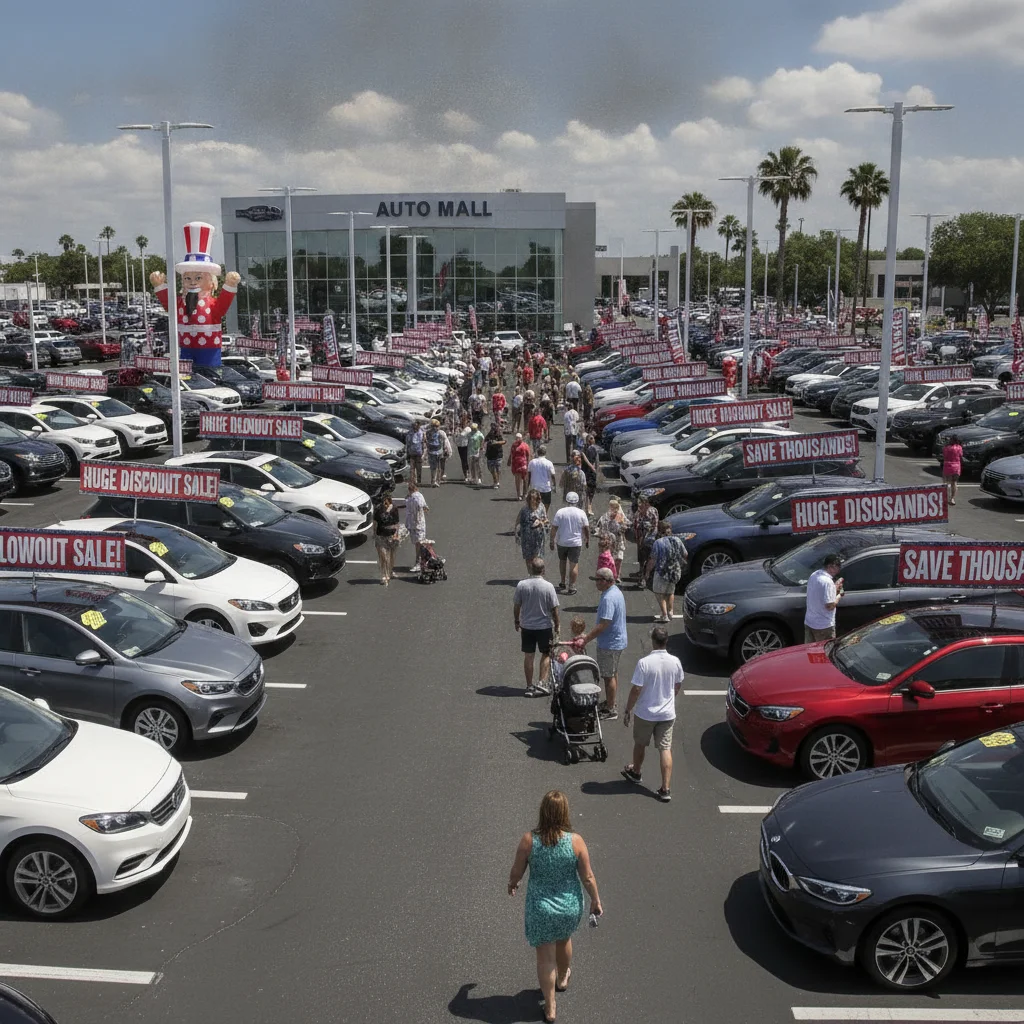
And remember: a holiday weekend that falls at the end of the month stacks two legitimate timing advantages simultaneously. If a manufacturer is running a 0% APR event on the last Saturday of the month, that's one of the strongest buying environments the calendar can produce — busy floor and all.

All claims are backed by peer-reviewed research. Sources on request.