

Key Takeaways
Option A
Email Negotiation
The deliberate, documented approach.
Best for: Buyers who want time to think, multiple competing offers, and a written record of every commitment made.
Option B
In-Person Negotiation
The fast, high-pressure arena.
Best for: Confident buyers who can resist impulse decisions and want to close a deal the same day.
If you're a first-time buyer or easily pressured
Email Negotiation
Email removes time pressure entirely. You can research any counter-offer before responding, and you won't leave the lot having agreed to extras you didn't want.
If you need a car quickly — within 24 to 48 hours
In-Person Negotiation
Email threads can take days or stall out. Showing up prepared with printed competing quotes often closes deals the same afternoon.
If you're targeting a hard-to-find trim or color
In-Person Negotiation
When dealer inventory is thin, email leverage weakens. A relationship built in person gives you earlier access to incoming units and first right of refusal.
If you're negotiating across multiple markets or cities
Email Negotiation
You can realistically contact 10 or 15 dealers over email in a morning. That breadth of outreach is impossible in person and drives genuine price competition.
If you want to use a competitor's quote as a hammer
Email Negotiation
Competing written quotes are far more persuasive than verbal claims. Dealers take documented numbers seriously in ways they won't honor 'I heard it was cheaper elsewhere.'
Why the Negotiation Channel Changes Everything
Most car buyers treat the negotiation method as a minor detail. It isn't. Where and how you negotiate directly affects how much leverage you have, how fast the dealer can pressure you, and whether their commitments are enforceable once you're in the finance office.
I spent years on the other side of that desk. Floor salespeople are trained to build rapport, create urgency, and move you through the process quickly — because speed favors the house. The longer you're in the building, the more emotionally invested you become, and the harder it is to walk away from a deal that doesn't serve you.
Email breaks that dynamic. It hands the clock to you instead. But it comes with its own weaknesses. Dealers can go dark, string you along, or give you a quote that evaporates when you arrive. Neither channel is automatically superior — what matters is understanding the mechanics of each so you can decide which one fits your position.
For a full picture of how the dealership process works from first contact through signing, see Car Dealer Negotiation from First Contact to Final Signature. This article focuses specifically on the channel choice and what it costs or saves you.
How Email Negotiation Actually Works
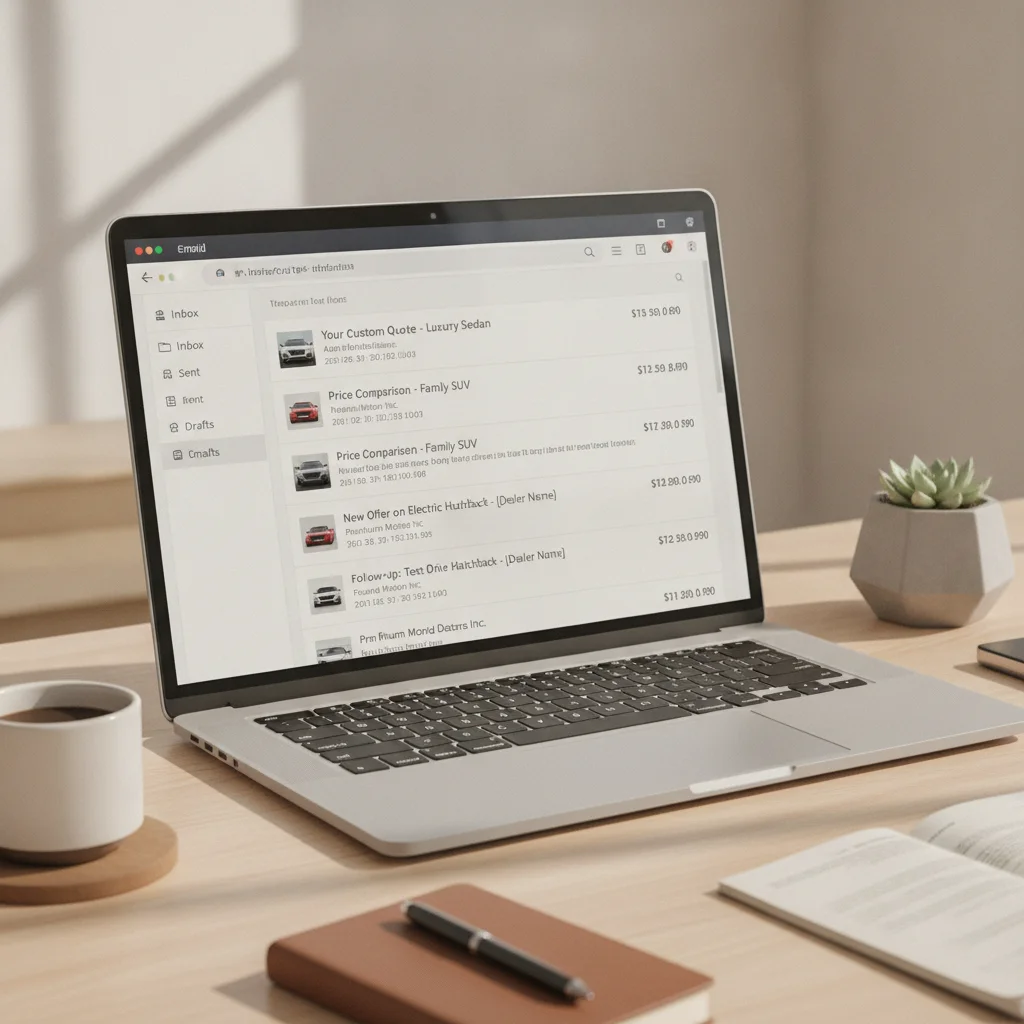
Email negotiation means contacting a dealer's internet sales department — not the general inbox, not a floor salesperson — and requesting an out-the-door (OTD) price on a specific vehicle. That means: vehicle price, destination charge, dealer fees, and estimated taxes and registration. Any quote that omits those line items is incomplete and functionally meaningless.
The leverage comes from volume. When you contact eight to twelve dealers simultaneously and make clear you're getting competing quotes, you've created an auction dynamic. Dealers know they're competing, which incentivizes real movement on price rather than a scripted back-and-forth.
What to include in your opening email
- The exact vehicle: year, make, model, trim, and preferred color or package
- Your timeline (e.g., ready to purchase this week)
- A request for an all-inclusive out-the-door price in writing
- A statement that you're contacting multiple dealers — dealers respond better when this is explicit, not implied
Dealers who respond with a phone call number rather than a price in writing are stalling. Decline politely and stay on email. If they won't quote in writing, they won't honor verbal commitments at the lot either.
| Criterion | Email Negotiation | In-Person Negotiation |
|---|---|---|
| Time pressure | None — you set the pace | High — dealership controls the clock |
| Ability to compare dealers | Easy — contact 10+ simultaneously | Difficult — one dealer at a time |
| Paper trail | Built in — every quote is documented | None until you reach the deal sheet |
| Closing speed | Slow — days to finalize | Fast — can close same day |
| Emotional pressure | Low — no physical environment | High — sunk cost, rapport, urgency |
| Dealer response quality | Variable — some stall or lowball | More transparent with real buyer present |
| Starting price point | Often lower via internet dept. | Typically starts at MSRP or above |
| F&I office vulnerability | Lower — less fatigue on arrival | Higher — mentally exhausted by the time you sign |
| Works for rare/low-inventory vehicles | Poorly — leverage depends on supply | Better — relationship and timing matter |
| Best combined with | In-person close once price is locked | Email-gathered competing quotes in hand |
$1,500
Typical internet vs. floor price gap
Consumer reports from automotive forums and buyer aggregators consistently show internet department quotes running $500–$1,500 lower than equivalent in-person starting offers on the same vehicle.
72%
Buyers who didn't negotiate at all
A 2023 Cox Automotive Car Buyer Journey study found nearly three-quarters of buyers accepted the dealer's offer without any counter-negotiation — leaving significant money on the table.
6–8 hrs
Average in-person car buying time
Cox Automotive research shows the average in-person car purchase takes six to eight hours from arrival to signing, creating significant mental fatigue before the F&I office stage.
3–5
Competing dealers needed for real leverage
Experienced buyers and negotiation coaches generally agree you need at minimum three to five legitimate competing OTD quotes for dealers to move meaningfully on price.
One more advantage that often gets overlooked: that email chain is documentation. When the finance manager in the F&I office suddenly quotes a price $400 higher than what you discussed, you can pull up the email on your phone and point to the number. That paper trail changes the power dynamic significantly. For context on how these written commitments interact with the actual paperwork you'll sign, the Paperwork & Contracts is worth reviewing before you walk in.
How In-Person Negotiation Actually Works
In-person negotiation is the default for most buyers, and dealerships have spent decades optimizing the environment to their advantage. That's not cynicism — it's the reason showroom floors are designed the way they are, why you're offered coffee and asked about your family, and why the finance office is a separate room you're moved to after agreeing on price.
None of this means in-person negotiation can't work. It absolutely can — if you walk in prepared, emotionally detached, and willing to leave. The buyers who lose in person are almost always the ones who came in without a target price, got attached to a specific unit, and let time pressure drive their decisions.
What works in your favor in person
- Speed: A deal that might take four days over email can close in four hours in person, assuming both sides are motivated.
- Relationship and read: You can gauge whether the salesperson has authority, whether the sales manager is engaged, and whether the dealer is actually motivated to move the unit.
- Physical presence signals commitment: Showing up with a check from a credit union or a pre-approval letter tells the dealer you're a real buyer, which sometimes unlocks deals email can't.
What works against you in person
- Time investment creates sunk cost pressure: After two hours at the dealership, walking away feels like failure — even when it's the right move.
- The four-square worksheet: A classic dealership tactic that blends price, trade-in value, down payment, and monthly payment into one confusing box, making it easy to give ground without realizing it.
- F&I office add-ons: Extended warranties, GAP insurance, paint protection, and other products are aggressively pitched after the vehicle price is settled. In-person buyers are more vulnerable because they're already fatigued.

If you do go in person, read Negotiating a New Car Price Without Feeling Outmatched before you go. It covers specific counter-moves for the most common dealership tactics.
Internet Sales Dept. vs. Floor Sales: Know the Difference
When emailing a dealership, ask specifically for the internet sales manager or internet sales department — not a general inquiry. Internet sales staff are typically authorized to quote lower margins because they operate under different performance metrics than floor salespeople. Floor salespeople earn commissions on gross profit per deal; internet managers often earn bonuses on volume. That difference in incentive structure works in your favor when you contact the right person from the start.
Pre-Approval Changes the In-Person Dynamic
Walking into a dealership with a pre-approved auto loan from a bank or credit union fundamentally shifts the negotiation. You're no longer a financing prospect — you're a cash-equivalent buyer. Dealers still want to beat your rate (they earn reserve income on dealer-arranged financing), but they can't hold financing over you as a bargaining chip. Get pre-approved before any in-person visit, regardless of whether you intend to use the dealer's financing in the end.
Not All Email Quotes Are Binding
An emailed price is not a legally binding contract. Dealers can and sometimes do claim the price has changed by the time you arrive — often citing a recently sold unit or an inventory update. Protect yourself by confirming the VIN of the specific vehicle in your email exchange and asking for written confirmation from both the salesperson and a manager. If the price changes on arrival, you have grounds to walk and should.
The Hybrid Strategy: What Professional Buyers Actually Do
Here's what I've seen sharp buyers do consistently: they negotiate the price over email, then close in person. This approach captures the best of both channels while eliminating most of the weaknesses.
The sequence works like this:
- Collect competing OTD quotes via email from six to twelve dealers. Give yourself two to three business days to let responses come in.
- Identify the lowest credible offer — one from a legitimate dealer with the exact vehicle in inventory, not a bait quote on a unit they don't actually have.
- Use that quote to pressure the next two or three dealers on your list. Forward the email quote and ask if they can beat or match it.
- Select your preferred dealer — not always the cheapest, but the one with the right combination of price, inventory, and location.
- Confirm in writing before you arrive that the price is locked and the vehicle is held. Get the salesperson's and sales manager's names in that email confirmation.
- Visit in person to test drive and finalize — but treat the vehicle price as a closed conversation. Your energy goes into the F&I office products and the trade-in value if applicable.
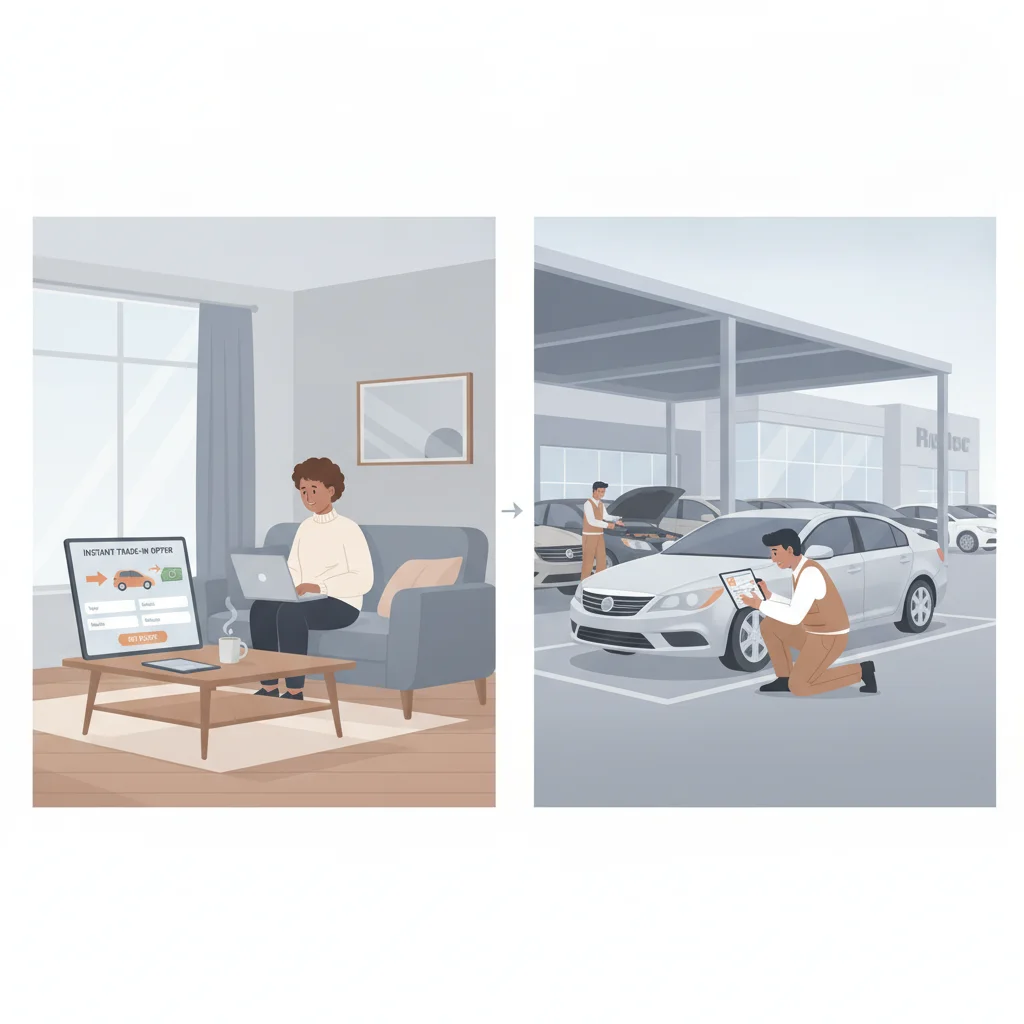
If you're also dealing with a trade-in, that process has its own set of pitfalls. The online trade-in offers vs. in-person dealer appraisals piece explains how to get the most accurate value before you set foot in the dealership. Separately, understanding the full spectrum of negotiating at the dealership vs. buying online helps you see where email negotiation fits into the broader decision between traditional and fully digital car buying.

Common Mistakes That Undercut Both Methods
Whether you negotiate by email, in person, or both, these are the errors that consistently cost buyers money — and they're almost always avoidable.
Negotiating monthly payment instead of total price
This is the single most expensive mistake buyers make, and it happens in both channels. When you agree to a monthly payment without knowing the interest rate, loan term, and total amount financed, dealers can — and do — stretch the term to make a payment look affordable while adding thousands to your total cost. Always negotiate the out-the-door price first. The payment is a math problem you solve afterward.
Revealing your maximum payment too early
In email, don't include budget information in your initial inquiry. In person, don't answer "what are you looking to spend per month?" with a real number. That ceiling becomes their target, not their floor.
Letting the trade-in get bundled into the vehicle negotiation
Your trade-in is a separate transaction. Dealers prefer to blend them together because it creates flexibility to appear generous on one side while recouping margin on the other. Get your OTD price on the new vehicle confirmed before trade-in value enters the conversation. You can use a platform like Carmax or an instant online offer to establish a baseline value first — the Dealer Trade-Ins hub has a useful breakdown of how dealer appraisals work.
Accepting a verbal commitment without written confirmation
This applies especially to in-person buyers. If a manager "agrees" to include a free oil change package, floor mats, or a specific delivery date verbally, it means nothing unless it's in the written deal sheet. If it isn't written, it didn't happen.
Signing in the F&I office without reviewing what you agreed to
The finance office is the final and most profitable room in the dealership. Review every number on every document before signing. The vehicle price on the contract must match the OTD quote you negotiated — whether that quote came by email or in person. Don't let time pressure or a friendly finance manager rush you past the line items. The Paperwork & Contracts hub covers exactly what you should be looking at on each document.

Which Method Saves More Money? A Realistic Look at the Numbers
The honest answer: neither method guarantees a lower price on its own. What determines your outcome is preparation, not the channel. But the data and anecdotal evidence from thousands of buyer reports consistently point to one pattern — buyers who use email to generate competing quotes before visiting a dealer tend to pay less than buyers who walk in cold.
The reason is structural. Floor salespeople are trained to anchor high and negotiate down slowly. Internet sales departments, by contrast, operate on thinner margins because they know buyers comparing quotes online are price-sensitive and will move to the next dealer if the number isn't competitive. Internet prices are often $300 to $1,500 lower as a starting point on the same vehicle, simply because the sales channel is different.
In-person negotiation can close that gap — if you're skilled, prepared, and emotionally disciplined. But for most buyers, email removes the variables that make dealership negotiation so difficult: time pressure, emotional manipulation, physical exhaustion, and the asymmetry of experience between a trained salesperson and an occasional car buyer.
If you want to go deeper on the tactics that apply once you're actually at the table — whether you negotiated by email or not — Negotiating a New Car Price Without Feeling Outmatched is the most actionable follow-up read. And if you're weighing whether to skip the dealership negotiation entirely in favor of a fully online purchase, Online Dealerships vs. Traditional Dealerships breaks down what you actually gain and give up with each model.
The bottom line: use email to set the price floor, use in-person to close with confidence, and never let the dealership control the timeline.
All claims are backed by peer-reviewed research. Sources on request.