Key Takeaways
Why Remote and Pre-Delivery Inspections Demand a Different Mindset
Test drives exist for a reason. They surface transmission shudder, brake fade, electrical gremlins, and road noise that no photograph or seller description will ever reveal. When you can't get behind the wheel — whether you're buying at an online auction, purchasing out of state, or taking delivery of a vehicle you've only seen in a showroom video — you're operating with a narrower information window. The question isn't whether you can buy safely under these conditions. You can. The question is whether you're disciplined enough to follow a systematic process rather than letting deal excitement short-circuit your judgment.
This guide is built for three common scenarios:
- Auction and instant-offer purchases — cars sold as-is with limited inspection windows
- Out-of-state or remote private-party and dealer transactions — where you're buying a car hundreds of miles away
- Pre-delivery situations — where the car exists at a lot or port but you haven't physically seen it yet
The core process is the same across all three. What changes is who does the inspection and how much leverage you have to walk away.
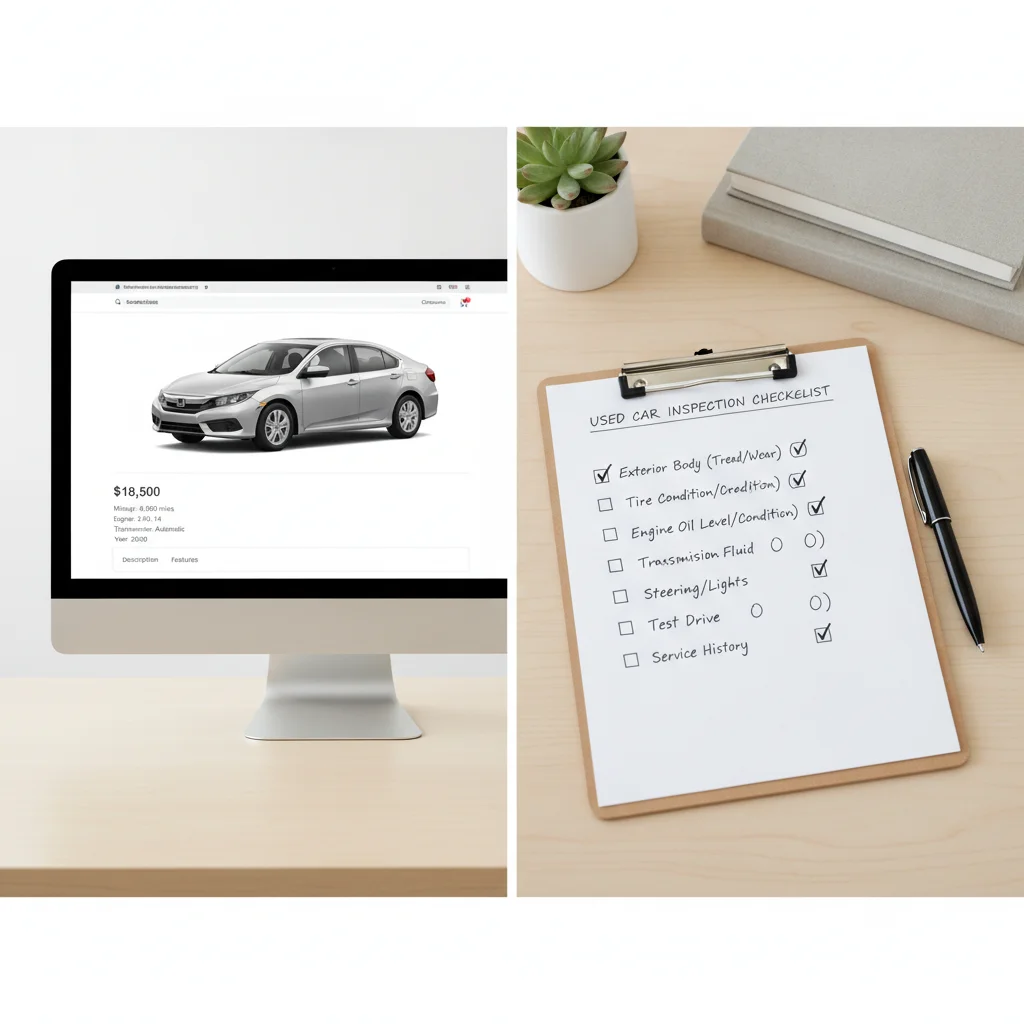
For a broader foundation on remote purchases, the Online Car Buying hub covers the full ecosystem of platforms, financing, and logistics. This article focuses specifically on the inspection process itself.
What You Need Before You Inspect Anything
Before you evaluate the physical condition of any car you can't test drive, get your documentation baseline in order. Missing this step means you could spend an hour scrutinizing photos only to discover the title is salvage or the odometer was rolled back.
What you will need
Pull a vehicle history report the moment you have a VIN. Don't wait until you're emotionally committed. A Carfax or AutoCheck report costs $40–$50 and can immediately rule out a vehicle with a salvage title, undisclosed accidents, or chronic odometer discrepancies. Cross-reference the reported mileage against any service records the seller provides — a gap of more than a few thousand miles between report entries and claimed maintenance history is a red flag worth pressing on.
Vehicle History Report (Carfax or AutoCheck)
Reveals title history, reported accidents, odometer readings, and ownership count before you evaluate the physical vehicle.
OBD-II Scanner or Auto Parts Store Scan
Reads stored and active diagnostic trouble codes to identify electronic and mechanical fault conditions.
Independent Pre-Purchase Inspection (PPI)
Provides an objective mechanical and structural assessment from a mechanic with no financial interest in the sale.
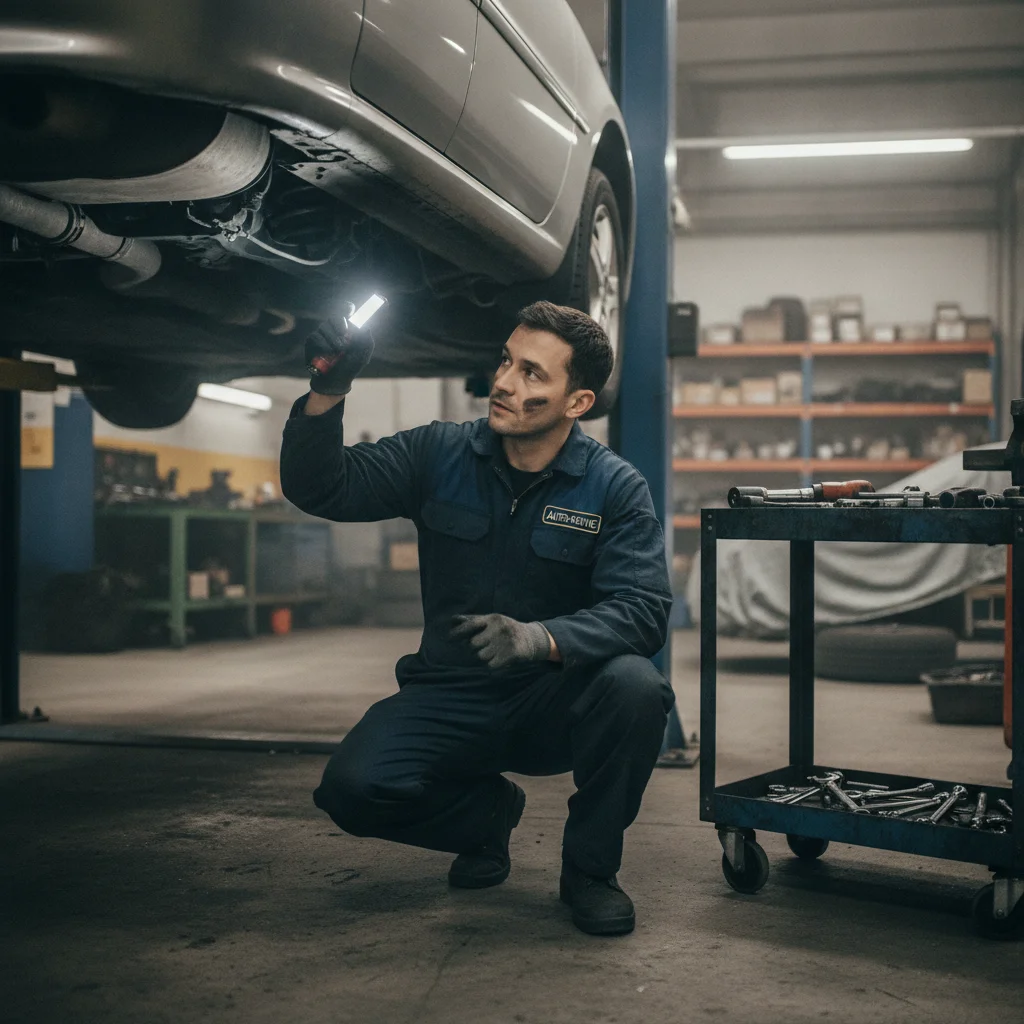
Flashlight or Inspection Light
Illuminates undercarriage, engine bay, and interior areas that are difficult to photograph clearly.
Paint Thickness Gauge
Detects repainted panels by measuring paint depth — factory paint is thinner and more uniform than bodywork filler.
Video Call App (FaceTime, WhatsApp, Zoom)
Enables a live guided walkthrough with the seller when you can't be physically present at the vehicle.
KBB / Edmunds Valuation Tool
Establishes fair market value so you can assess whether the asking price accounts for condition and needed repairs.
Once you've cleared the documentation hurdle, you're ready to move into the physical inspection process. If you're working with a seller or dealer who resists providing any of the documentation or media listed above, treat that resistance as information — it usually means something is being hidden.
See questions to ask before buying a car you can't drive first for a complete list of seller inquiries that complement the physical inspection process.
The Remote Inspection Checklist: Step by Step
Follow these steps in order. Each one builds on the last. If a seller refuses to provide what a step requires, document that refusal and factor it into your risk assessment.
Request a Cold-Start Video
Ask the seller to record a video of the car starting from cold — meaning the engine has not been run for at least 8 hours. A cold-start video is one of the most revealing pieces of remote inspection footage you can get. Watch and listen for:
- Exhaust smoke color: blue smoke indicates burning oil; white smoke (beyond brief condensation on cold mornings) suggests coolant intrusion; black smoke points to a rich fuel mixture
- Ticking or knocking sounds in the first 10–30 seconds of startup
- How quickly the engine settles to a stable idle — rough or hunting idle points to vacuum leaks or sensor issues
- Warning lights: ask the seller to pan to the instrument cluster immediately after starting
The video should be unedited and shot in real time. If it's suspiciously short or cuts away before the idle stabilizes, request a new one.
Get Comprehensive Photo and Video Documentation
A dozen listing photos aren't enough. Request a structured set of media covering every area where problems hide. Here's the specific list to send the seller:
- All four body panels in natural daylight (at angles that show paint condition and panel gaps)
- Undercarriage photos — front, rear, and both sides — using a flashlight or inspection light
- Engine bay with no covers removed (you want to see what's actually there)
- All four tires showing tread depth and sidewall condition
- Interior: driver's seat, passenger seat, rear seat, headliner, carpet, and trunk
- Odometer reading on a running vehicle
- Door jambs and trunk jambs (repaint evidence shows up here)
- All glass, including windshield in direct sunlight to catch chips and cracks
Look at door jambs carefully. Original factory paint has a specific texture and uniform color. Overspray, masking lines, or mismatched paint on jambs are reliable indicators of prior bodywork that may not appear on the vehicle history report.
Request an OBD-II Diagnostic Scan
Any auto parts store — AutoZone, O'Reilly, Advance Auto Parts — will scan a vehicle's OBD-II port for free. Ask the seller to take the car to the nearest location and provide you with a printout or photo of the full diagnostic report, including both active DTCs (diagnostic trouble codes) and any stored or pending codes.
Active codes mean a current problem. Pending codes mean a problem is intermittent or developing. A freshly cleared code — meaning codes were erased but no drive cycles have been completed — may show up as a "not ready" status on emissions monitors. This is a common tactic to hide issues right before sale. If monitors show "not ready" on more than one or two systems, assume codes were recently cleared.
Run a VIN Check and Cross-Reference the Physical VIN
Pull a vehicle history report (Carfax, AutoCheck, or the NMVTIS database) using the VIN provided by the seller. Then ask for photographic confirmation of the physical VIN in at least two locations:
- Dashboard VIN plate (visible through the windshield on the driver's side)
- Driver's door jamb sticker
Compare both to each other and to the VIN on the title and any registration documents. A mismatch between any two of these is a serious fraud indicator. Also check whether the history report shows the state of registration matches what the seller claims — a car titled in a flood-prone state with recent registration history warrants extra scrutiny for water damage.
Arrange a Third-Party Pre-Purchase Inspection
This is the single highest-value step in any remote purchase. A local independent mechanic near the seller will inspect the car for $100–$200 and give you an objective condition report. This is non-negotiable on any purchase over $5,000 and strongly advised for anything over $2,500.
When arranging a PPI:
- Find a shop via RepairPal, Yelp, or AAA's approved shop finder — look for shops with a physical address and verifiable reviews
- Call the shop directly to confirm they perform PPIs and what the report includes
- Ask for a lift inspection (not just a drive-around) to assess the undercarriage
- Request the shop perform an OBD scan as part of the inspection
- Have the shop check for fluid leaks, suspension wear, brake thickness, and body/frame condition
The seller needs to agree to allow the inspection and deliver the car to the shop. A legitimate seller will accept this. A seller who refuses a third-party inspection on a used vehicle is a seller you should walk away from.
Review the Inspection Report and Make Your Decision
Once you have the mechanic's written report, go through it systematically:
- Identify any immediate safety concerns — brake issues, tire condition, suspension components — these need repair before the car is driven
- Estimate repair costs for flagged items using RepairPal's cost estimator or local quotes
- Compare total cost (purchase price + estimated repairs) to market value using KBB, Edmunds, or NADA
- Use findings as negotiation leverage — documented issues justify a price reduction equal to at minimum the estimated repair cost
If the inspection reveals undisclosed issues that materially affect value or safety, you have three options: walk away, renegotiate, or require the seller to repair specific items before purchase. What you should never do is rationalize a bad inspection report because you've already invested time and emotion in the deal.
Never Wire Money Before Inspection Is Complete
Wire transfers are essentially irreversible. Once the funds leave your account, recovering them from a fraudulent seller is extremely difficult. Always complete your inspection steps — including the third-party PPI — before any funds are transferred. Use escrow services for high-value remote transactions when available.
Flood and Hail Damage Can Hide for Months
Flood-damaged vehicles can pass a casual inspection for weeks or months after exposure. Look specifically for water lines in the trunk and under seats, corrosion on seat rail bolts, musty odors, and mud residue in hidden areas. Hail damage is easier to see in raking sunlight but is often hidden under fresh paint. Check the NMVTIS report for any total-loss designation.
Delivery Damage Is the Shipper's Liability — But Only If Documented
If your car was shipped via transport carrier, inspect it before the driver leaves and document any damage on the Bill of Lading at time of delivery. Damage noted on the BOL becomes the carrier's liability. Damage discovered after the driver leaves is extremely difficult to claim. Never sign a clean BOL if you haven't inspected the vehicle.
If you're buying from a private party or smaller dealer and a third-party inspection isn't logistically feasible, consider whether the deal is worth the risk. The guide to getting a pre-purchase inspection on a remote vehicle explains how to arrange an independent mechanic inspection even when you can't be there yourself — including how to find local shops near the seller and what to tell them.
Delivery Day: Your Last Chance to Catch What Inspection Missed
When the vehicle arrives — whether you drove to pick it up or it was shipped — you have a critical window before you sign anything. This is the moment many buyers rush through because they're excited. Don't.
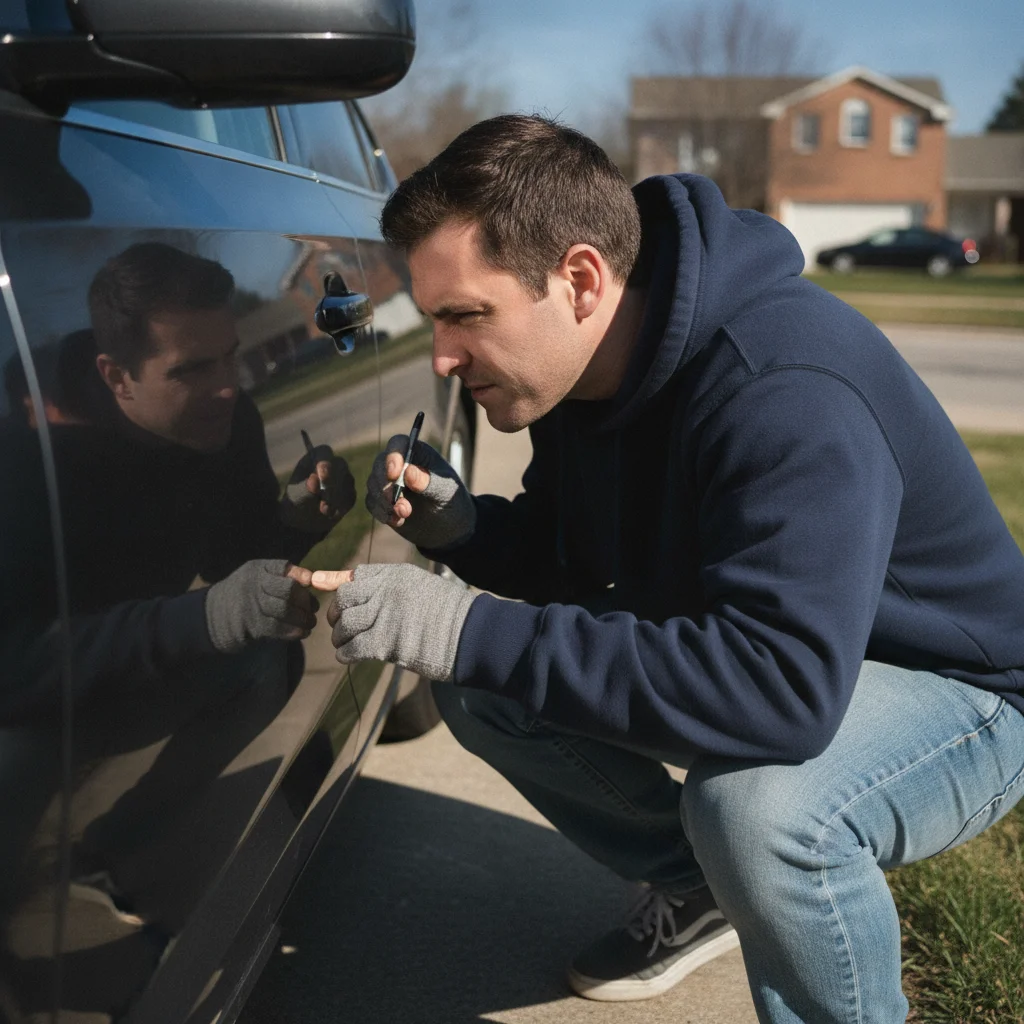
Do your delivery walkthrough in daylight. Never accept a car in a dimly lit garage or at night if you can avoid it. Bring a flashlight regardless. Your delivery inspection covers the same categories as the remote checklist, but now you can verify them directly:
- Panel gaps and paint consistency — run your hand along body seams; uneven gaps suggest prior bodywork
- Glass and seals — check all windows for chips or cracks; press door and trunk seals to verify they're pliable and intact
- Interior wear — compare seat wear, pedal wear, and steering wheel wear against the claimed mileage; extreme wear on a low-mileage car is a mileage integrity flag
- Fluid levels — pop the hood and check oil color and level, coolant, brake fluid, and transmission fluid if accessible
- Cold start — if the car has been sitting, start it cold and listen for ticking, rattling, or smoke from the exhaust
- Warning lights — let the car go through its startup self-check and confirm no warning lights remain illuminated
Schedule Delivery in the Morning
Morning delivery gives you the best natural light for your inspection and — if the car was delivered by transport — the longest window to complete your walkthrough before any signing deadline. Avoid evening or indoor deliveries whenever possible. If you're signing at a dealership, ask to move the car outside before doing your condition review.
Live Video Walkthrough as a Supplement
If a third-party inspection isn't feasible for a lower-value purchase, a live FaceTime or WhatsApp call with the seller is the next best option. Direct the seller in real time: ask them to run their hand along every body seam, hold the camera steady under the car, and show the cold-start sequence. It won't replace a PPI, but it's significantly better than static photos alone.
Use Repair Costs as Negotiation Leverage
Any documented issue from the PPI report is a legitimate basis for renegotiating price. Prepare a simple written list of findings with estimated repair costs before contacting the seller. A professional, data-backed negotiation conversation is far more effective than a vague request for a discount.
Do Not Sign Until You Are Satisfied
On delivery day, you have more leverage than at any other point in the transaction. Once you sign the bill of sale and accept delivery, your options narrow dramatically. If the car doesn't match what was represented — in condition, mileage, or title status — refuse delivery and document everything in writing immediately. Walk away from any situation where you're pressured to sign before completing your walkthrough.
Undisclosed Liens Follow the Car, Not the Seller
If a seller fails to pay off an existing auto loan before transferring title, the lienholder can legally repossess the vehicle from you even after you've purchased it. Always verify the title is free of liens before paying. For private-party sales, run the VIN through your state's DMV or a lien check service. For dealer transactions, confirm the Buyers Guide and title documentation match and show no active lien.
For cars purchased through major online platforms, check the return policy before delivery day. Some platforms offer a 7-day or 250-mile return window. Knowing your rights in advance gives you a concrete fallback if the delivery inspection reveals undisclosed issues. The pre-purchase checklist for buying a car online covers return policy verification as part of its broader due diligence framework.
Common Deal-Breakers to Watch For
Not every flaw is a reason to walk away, but some findings should be automatic deal-breakers regardless of how attractive the price is. Here's where experienced buyers draw hard lines:
| Finding | Why It Matters | Walk Away or Renegotiate? |
|---|---|---|
| Salvage or rebuilt title | Structural integrity unknown; hard to insure and resell | Walk away unless price reflects deep discount |
| Active DTC codes (engine/transmission) | Indicates known mechanical fault being masked | Walk away or require repair before purchase |
| Frame damage evidence | Safety risk; expensive or impossible to fully correct | Walk away |
| Rust in structural areas (frame rails, floor pans) | Structural integrity compromise; repair costs unpredictable | Walk away |
| Odometer discrepancy | Federal crime if intentional; voids any mileage-based warranty | Walk away |
| VIN mismatch across documents | Potential fraud or title washing | Walk away immediately |
| Missing or altered VIN plates | Strong indicator of stolen vehicle | Walk away and report |
| Fresh paint over rust or damage | Cosmetic concealment of structural issue | Walk away or require independent inspection |
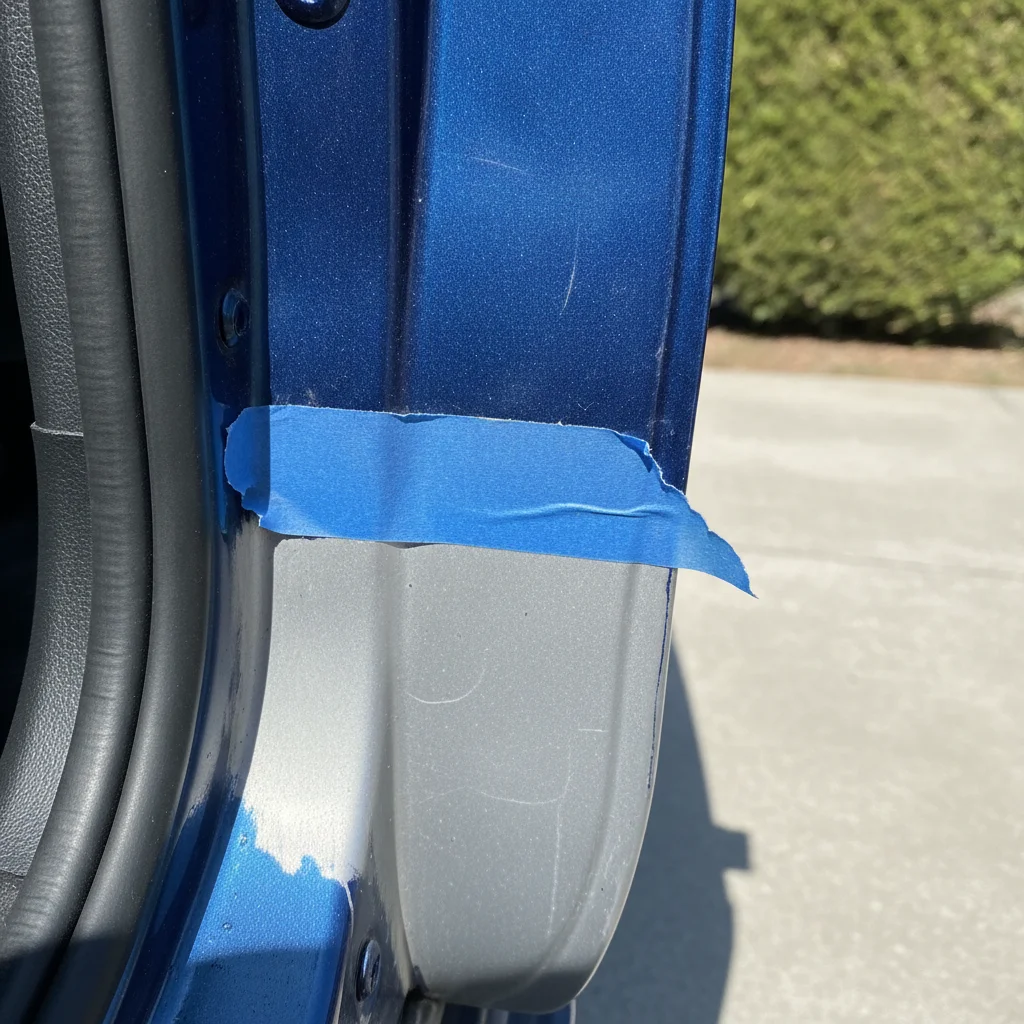
Cosmetic issues — door dings, minor paint chips, worn upholstery — are negotiating points, not deal-breakers. Price them into your offer. Structural, title, and mechanical issues are different categories entirely. They don't get negotiated away; they either get fixed before purchase or you walk.
If you're evaluating a used car and want a broader framework for the whole process, the Buying Used Cars hub is a solid reference alongside this checklist.
Protecting Yourself on Paper After the Inspection
A clean inspection doesn't mean your work is done. Before money moves and signatures happen, lock in your protections in writing.
If the seller disclosed any issues verbally during the inspection process, get them documented in the bill of sale or in written communication (email or text works). Verbal representations are nearly impossible to enforce. Written ones, especially those referencing specific VINs and condition claims, give you a paper trail if disputes arise post-purchase.
For dealer transactions, review the "as-is" box on the buyer's order carefully. Dealers are required by the FTC Used Car Rule to display a Buyers Guide disclosing whether a warranty applies. If any warranty was promised verbally, confirm it appears in the Buyers Guide or a separate written warranty document before you sign.
Do Not Sign Until You Are Satisfied
On delivery day, you have more leverage than at any other point in the transaction. Once you sign the bill of sale and accept delivery, your options narrow dramatically. If the car doesn't match what was represented — in condition, mileage, or title status — refuse delivery and document everything in writing immediately. Walk away from any situation where you're pressured to sign before completing your walkthrough.
Undisclosed Liens Follow the Car, Not the Seller
If a seller fails to pay off an existing auto loan before transferring title, the lienholder can legally repossess the vehicle from you even after you've purchased it. Always verify the title is free of liens before paying. For private-party sales, run the VIN through your state's DMV or a lien check service. For dealer transactions, confirm the Buyers Guide and title documentation match and show no active lien.
For out-of-state purchases specifically, understand how the title will be transferred before you pay. The seller should provide a clear title (no liens) at time of sale. If a lien payoff is involved, the transaction should be structured so the lienholder is paid directly from the sale proceeds — never pay the full amount to a seller who still owes money on the vehicle and trust them to clear the lien afterward.
Buying a used car online covers title transfer logistics, shipping arrangements, and what to expect from remote transaction timelines in more detail.

All claims are backed by peer-reviewed research. Sources on request.