
Key Takeaways
Summary
22 items · 20–40 minutes
Why Self-Auditing Before You Apply Matters
Refinancing your auto loan can genuinely save you money — sometimes thousands of dollars over the life of the loan. But the decision isn't automatic. The savings depend on a specific set of conditions: your credit health, your current rate, your vehicle's value, and your timing. Apply without checking these conditions, and you risk a wasted hard inquiry, a worse deal than you expected, or a declined application that leaves you worse off than when you started.
This checklist is designed to be your pre-application filter. Work through each question honestly before you approach any lender. If most answers point in the right direction, you're likely a strong refinancing candidate. If several answers raise red flags, the checklist also tells you what to fix first.
For a broader picture of what happens on the lender's side when they review your file, see what lenders look at before approving an auto refinance. Understanding both sides of the table puts you in a much stronger negotiating position.

Once you've completed this audit, gather the documents you'll need before refinancing so you can move quickly once you've identified the right lender.
Tools You'll Need to Work Through This Checklist
Before you start evaluating the questions below, pull together a few resources. Most of these are free or low-cost, and having them in front of you makes the self-audit concrete rather than speculative. Guessing at your credit score or your car's value leads to overconfidence — real numbers lead to real decisions.
Kelley Blue Book (KBB)
Look up your vehicle's current market value to calculate your loan-to-value ratio before applying.
AnnualCreditReport.com
Pull your free credit reports from all three bureaus to check for errors and understand your credit profile.
myFICO
Access your FICO Auto Score, the specific credit score version most auto lenders use during refinance decisions.
Auto Loan Refinance Calculator
Run side-by-side comparisons of your current and potential new loan to calculate true interest savings and break-even timelines.
Edmunds True Market Value
Cross-reference your vehicle's market value as a second estimate alongside KBB for a more accurate LTV calculation.
Consumer Financial Protection Bureau (CFPB) Rate Tool
Research benchmark auto refinance interest rates by credit score tier to set realistic expectations before shopping.
Don't skip the FICO Auto Score lookup. Many borrowers check their standard FICO score and assume that's what lenders see. Auto lenders use a specialized scoring model that weights your credit history with auto loans more heavily. Your FICO Auto Score can differ from your general score by 20–40 points in either direction, which can place you in an entirely different rate tier with lenders.
The Full Pre-Application Checklist
Work through these questions in order. The first groups focus on your existing loan and credit position — the foundation. Later groups address the financial math and market conditions that determine whether the numbers actually justify moving forward.
Timing Your Application Wrong Is Costly
Refinancing in the last 12 months of your loan rarely saves meaningful money because the bulk of interest has already been paid under the front-loaded amortization structure most auto loans use. If you're within a year of payoff, the math almost never favors refinancing — and the hard inquiry isn't worth it. Similarly, applying too early (under six months into your loan) means your credit score hasn't recovered from the original inquiry, and lenders may flag the application as a stability risk.
Negative Equity Blocks Most Refinance Paths
If you owe more on your car than it's currently worth — known as being upside-down on your loan — nearly every mainstream lender will decline your refinance application. Depreciation hits hardest in the first two years, so if you bought recently or rolled negative equity from a trade-in into your current loan, check your LTV before applying. Paying down your principal to get above water is often the necessary first step.
Your Current Loan
Your Credit Position
Your Vehicle's Situation
The Financial Math
Market and Timing Conditions
Your Readiness to Apply
Hard Inquiries Have Real Consequences
Every refinance application you submit triggers a hard inquiry on your credit report, which can lower your score by a few points temporarily. If you apply with multiple lenders outside a 14-day rate-shopping window, each inquiry counts separately. Run through this checklist fully before submitting your first application — not after.
A Lower Monthly Payment Isn't Always a Win
Stretching your loan from 36 months to 60 months can cut your monthly payment noticeably while costing you thousands more in total interest. Always compare total loan cost — not just the monthly figure — before deciding a refinance offer is worthwhile.
Prepayment Penalties Can Erase Your Savings
Some original auto loan contracts include prepayment penalties if you pay off the loan early by refinancing. Check your current loan agreement or call your lender to confirm the exact amount before you assume refinancing will save money.
If you're unsure whether poor credit is limiting your options entirely, it's worth reading what to verify before applying for a bad credit car loan — many of the same preparatory principles apply, even if you're refinancing rather than buying.
Understanding the Break-Even Math
The break-even calculation is the single most underused tool in the refinancing decision. Here's how it works in plain terms.
Suppose your current monthly payment is $480 and a refinanced loan would bring it to $410 — a $70 monthly saving. But refinancing costs you $400 in fees (origination fee, title transfer, and state registration). Your break-even point is:
$400 ÷ $70 = 5.7 months
If you plan to keep the car for at least six more months, refinancing clears the break-even threshold. If you're planning to trade the car in four months, refinancing costs you money rather than saving it.
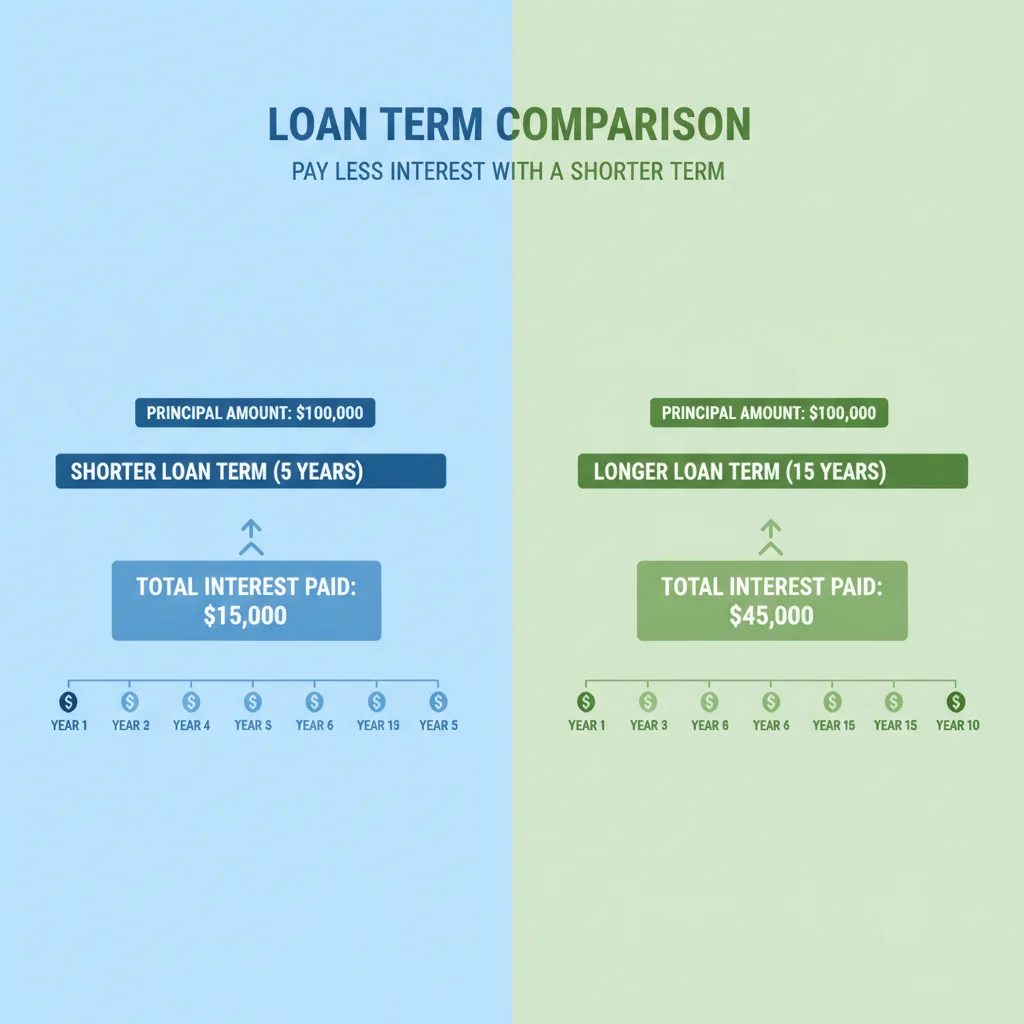
This math changes when you extend your loan term. If you lower your monthly payment from $480 to $360 by extending from 36 months to 60 months, your break-even on fees is fast — but your total interest cost may actually increase by $1,200 over the full loan. The monthly payment drop is real; the total savings are not. Always run both calculations.
Once your break-even math confirms refinancing makes sense, the next step is walking through the full refinancing application process — from pulling your credit to signing with your new lender.
Red Flags That Suggest You Should Wait
Not every borrower who wants to refinance should do so right now. Certain conditions make waiting — and preparing — the smarter short-term move.
- Your credit score dropped recently. A lower score since your original loan means you'll likely be offered a higher rate, not a lower one. Wait for the issue to resolve and your score to recover before applying.
- You're underwater on the loan. If your vehicle's market value is below your remaining balance, most lenders won't touch the application. Focus on paying down principal first, or wait for the car's depreciation to stabilize.
- You just opened the loan. Lenders treat applications under six months old with skepticism, and your credit score hasn't recovered from the original inquiry yet. Six months is generally the earliest you should consider applying.
- You're in the final year of repayment. With only 10–12 payments left, the interest remaining on your loan is minimal. A new loan restarts the amortization clock, often wiping out any rate savings with new fees and front-loaded interest.
- Your income or employment status changed recently. Lenders verify employment before approving a refinance. A recent job change — even to a higher-paying role — can complicate the process if you can't document stable income yet.
If several of these apply to you, spend the next three to six months improving your position. Paying down your balance, building your credit score, and stabilizing your income can shift you from a marginal applicant to a strong one — and that typically translates to a meaningfully better rate offer.
To avoid the errors that even well-prepared borrowers make, review common mistakes that undercut an otherwise good refinancing decision before you submit.
When the Checklist Gives You the Green Light
If you've worked through this checklist and the majority of answers point in the right direction — your credit score has improved, your LTV is healthy, you're early-to-mid-loan, and the break-even math works out in under 12 months — you're in a strong position to move forward.
Your next steps are clear:
- Get your documents organized. A complete document checklist for refinancing covers everything lenders typically request so you're not caught scrambling mid-application.
- Rate-shop with at least three lenders — a credit union, a bank, and an online lender — all within the same 14-day window so the credit bureaus treat the inquiries as one.
- Compare offers on total loan cost, not just monthly payment or rate. The lender with the lowest rate and the longest term may not offer the best deal overall.
- Once you've selected a lender, review the full refinancing walkthrough from application to closing to know exactly what to expect at each step.
Refinancing done right takes a few hours of focused preparation spread over one to two weeks. The payoff — whether it's a lower rate, a shorter term, or a more manageable payment — is worth every question you answered before hitting submit.
If you're also considering whether preapproval makes sense as part of your approach, understanding loan preapproval explains how it works and why it can strengthen your position with lenders.

All claims are backed by peer-reviewed research. Sources on request.