Key Takeaways
Why a High APR Demands a More Aggressive Approach
An auto loan at 7% and one at 18% are not simply different numbers — they represent fundamentally different financial burdens. On a $25,000 loan over 60 months, the difference between those two rates is roughly $7,000 in extra interest paid over the life of the loan. That's money that goes entirely to the lender, not toward your vehicle's equity or your own financial goals.
Most auto loans use simple interest, which means interest accrues daily based on your current outstanding principal. Every day you carry a high balance at a high rate, the meter is running. This is actually good news for borrowers who understand it: reducing your principal faster — even by a small amount — produces immediate interest savings. You don't have to wait until the loan ends to benefit.
To understand how interest and APR affect your total cost, it helps to think of your loan not as a monthly payment but as a running balance with a daily cost attached to it. The higher that cost per day, the more urgency there is to shrink the balance.
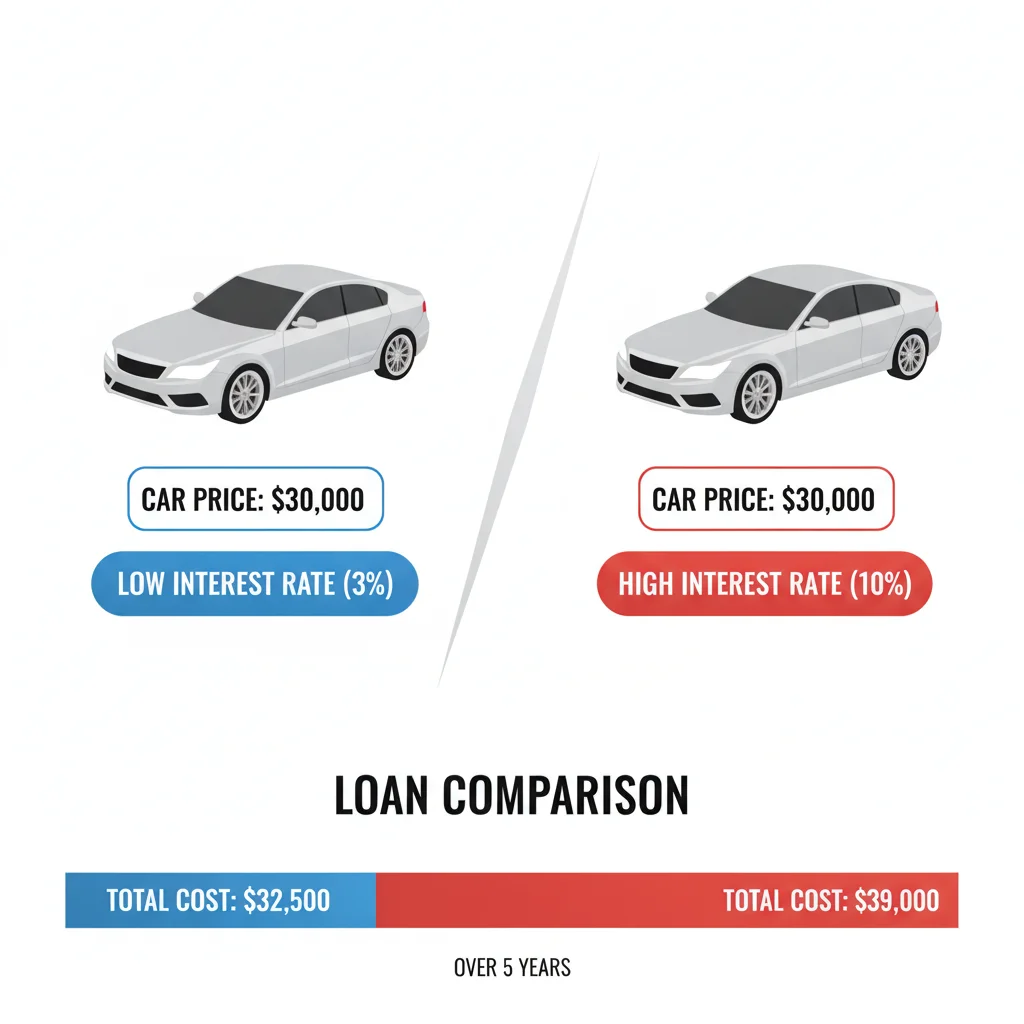
If you're in the above-average APR range — roughly anything above 8–10% for a used vehicle or 6–7% for new — the strategies below are ordered by typical impact level. Start at the top and work your way down based on what's available to you.
Best Practices for Paying Off a High-Interest Auto Loan
These practices are sequenced to give you the clearest path from highest-impact to most sustainable. Some can be combined; others are alternatives. Read each one, check whether it applies to your loan, and then map out a plan.
Confirm your loan type before making any extra payments
Simple-interest loans reward every extra dollar you put toward principal with immediate interest savings. Precomputed (or Rule of 78s) loans front-load interest in a way that diminishes or eliminates the benefit of paying early. Knowing which type you have prevents wasted effort and financial disappointment.
Refinance to a lower APR before aggressively paying down the existing balance
Extra payments on a high-rate loan save interest, but they save even more on a lower-rate loan. If your credit has improved since origination — or if you financed at a dealership markup — you may qualify for a rate that cuts your daily interest accrual by 30–50% before you make a single extra payment.
Always instruct your lender to apply extra payments to principal
By default, many lenders apply extra payments to your next scheduled payment, not to your outstanding principal. This advances your due date but doesn't reduce the balance — meaning you accrue the same amount of interest as if you hadn't paid extra at all. Written or documented instructions change this outcome.
Switch to biweekly payments to generate one extra full payment per year
Biweekly payments work because 26 half-payments equal 13 full payments rather than 12. That 13th payment reduces your principal every year without requiring any budget overhaul. On a high-interest loan, this can shave months off the loan term and save several hundred to over a thousand dollars in interest.
Direct all windfalls — tax refunds, bonuses, gifts — toward a lump-sum principal payment
Lump-sum payments make the most dramatic immediate dent in your principal balance, resetting your daily interest calculation downward in one move. On a high-interest loan, the opportunity cost of not applying a windfall to the loan can be substantial — a $2,000 tax refund applied to a 17% loan effectively earns a guaranteed 17% return.
Round up your monthly payment to the nearest $50 or $100
Rounding up is psychologically easy to sustain because the amount feels trivial month to month, but the cumulative effect on a high-interest loan is significant. Even an extra $50 per month on a $18,000 loan at 15% APR can save over $600 in interest and cut months off the term.
Check for prepayment penalties before executing any payoff strategy
Some lenders — especially subprime and buy-here-pay-here lenders — include prepayment penalties that charge a fee for paying off early. These can offset or negate the interest savings you're trying to capture. Reading the contract before acting protects you from an unpleasant surprise.

Biweekly Payments: A Low-Effort Strategy With Real Results
One of the simplest structural changes you can make is switching from monthly to biweekly payments. Here's how it works: instead of making 12 full payments per year, you make 26 half-payments. Because there are 52 weeks in a year, 26 half-payments equal 13 full monthly payments — one extra payment per year, applied automatically.
Confirm Biweekly Payments Are Applied Immediately
Some lenders hold biweekly payments in a suspense account until a full monthly payment accumulates, then apply both at once. This means you're not reducing your principal any faster — you're just paying in smaller installments. Before setting up biweekly payments, ask your lender in writing how each half-payment is applied and when. If they hold payments, consider making one larger manual extra payment each month instead.
Round Up Payments for Effortless Extra Principal Reduction
If budgeting for a large extra payment feels difficult, simply round your monthly payment up to the nearest $50 or $100. This method requires no budget restructuring and consistently reduces principal faster than the standard schedule. On a high-interest loan, even $50 extra per month can save hundreds of dollars and trim several months off the loan term.
That extra payment goes directly toward principal reduction. Over a 60-month loan at a high interest rate, this approach can shave off several months of payments and save hundreds to over a thousand dollars in interest, depending on your balance and rate.
Before setting this up, call your lender and confirm two things: first, that they accept biweekly payments and apply each payment immediately (not hold it until a full month's payment accumulates); and second, that there are no prepayment penalties attached to your loan. Certain loan structures reduce or eliminate the benefit of paying ahead of schedule — always verify before you restructure your payment cadence.
$7,000+
Extra interest on 18% vs. 7% APR loan
On a $25,000, 60-month auto loan, an 18% APR borrower pays roughly $7,000 more in interest than a 7% APR borrower over the full loan term.
13
Full payments made per year on biweekly schedule
Biweekly payment schedules produce 26 half-payments annually, equivalent to 13 full monthly payments — one extra per year applied entirely to principal.
~22%
Average APR for deep subprime auto borrowers
According to Experian's State of the Automotive Finance Market report, deep subprime borrowers (scores below 580) face average auto loan APRs above 21% for new vehicles.
40+ points
Credit score improvement that may unlock refinancing
Industry data suggests a credit score improvement of 40 or more points from origination is often enough to qualify a borrower for a materially lower refinance rate.
Lump Sums vs. Extra Monthly Payments: Knowing Which to Use
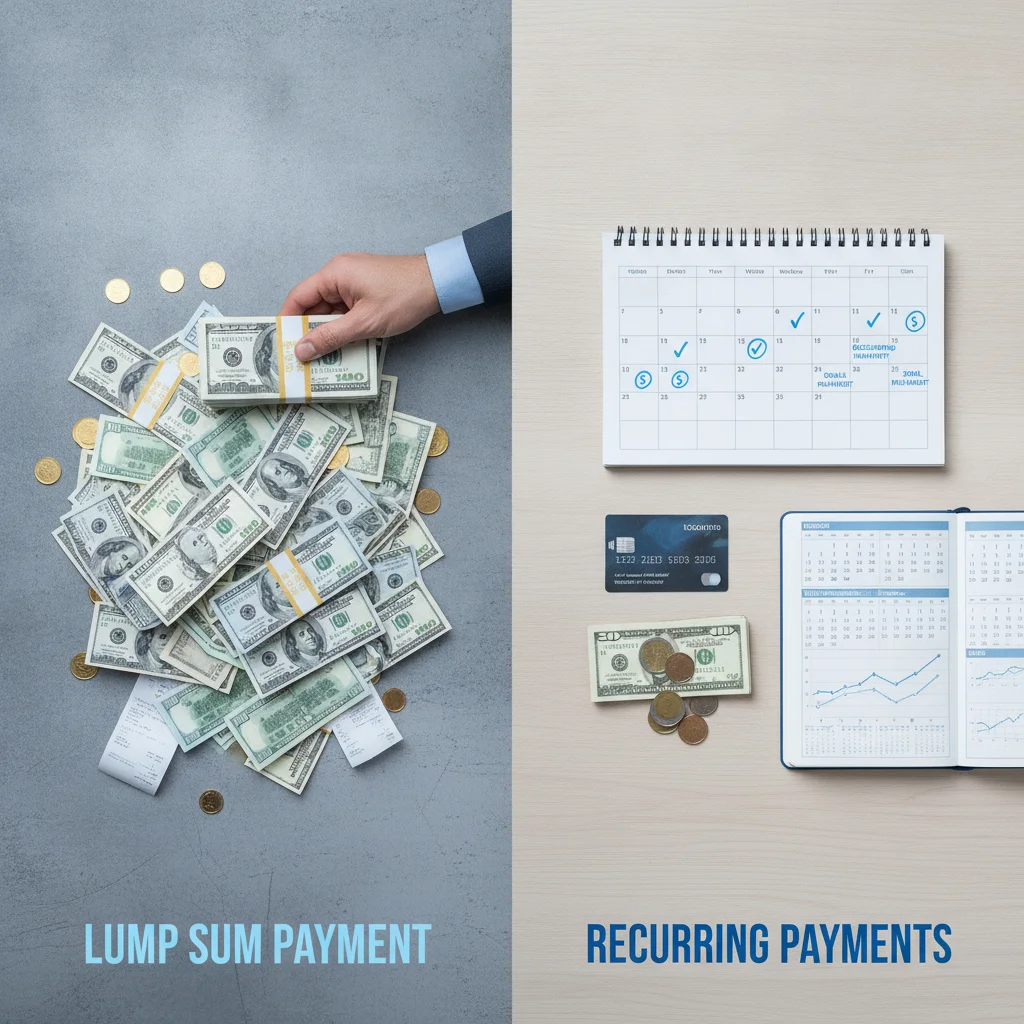
Borrowers often wonder whether it's smarter to make one large lump-sum payment — a tax refund, bonus, or inheritance — or to consistently pay a bit more every month. The honest answer: both work, and the best choice depends on your cash flow and how you're psychologically wired.
A lump sum has the advantage of immediately resetting your principal balance to a significantly lower number, which reduces the daily interest accrual from that point forward. A consistent extra monthly payment — say, an additional $75 or $100 each month — builds momentum gradually but sustains itself without relying on windfalls.
For a side-by-side breakdown of these two approaches across different loan balances and timelines, see lump-sum payoff vs. extra monthly payments. The key principle is the same for both: instruct your lender in writing to apply the additional amount to principal only, not to future payments. This is a critical step that many borrowers miss.
What 'Advancing Your Due Date' Actually Means
When a lender applies an extra payment to your 'next payment' rather than principal, they simply mark your account as paid ahead — your due date shifts forward but your balance barely moves. This looks like progress but isn't. Interest continues accruing on the same high balance every day. To truly benefit from extra payments, you must ensure they reduce the outstanding principal, not just prepay future installments.
Precomputed Loans: When Early Payoff Saves Less
Precomputed interest loans — sometimes called Rule of 78s loans — calculate all the interest for the full loan term upfront and embed it into the total amount owed. Because so much interest is front-loaded into the early payments, paying off the loan early saves significantly less than it would on a simple-interest loan. These loans are less common today but still appear, particularly from smaller or subprime lenders. Always confirm your loan type before designing a payoff strategy.
Refinancing Has Closing Costs Too — But They're Usually Modest
Auto loan refinancing typically has lower transaction costs than mortgage refinancing. Many lenders charge no origination fee at all, and the main costs are a new title transfer fee and possibly a small lender fee. In most states, these total $50–$200. When the rate reduction is meaningful — say, dropping from 15% to 9% — the break-even on those costs is usually measured in weeks, not months.
If your lender won't apply extra payments to principal on request, or if they automatically advance your due date instead, you may be in a precomputed interest loan — a structure where paying early saves you little or nothing. This is one of several signs that your loan terms make early payoff less worthwhile.
When Refinancing Is the Smartest First Move
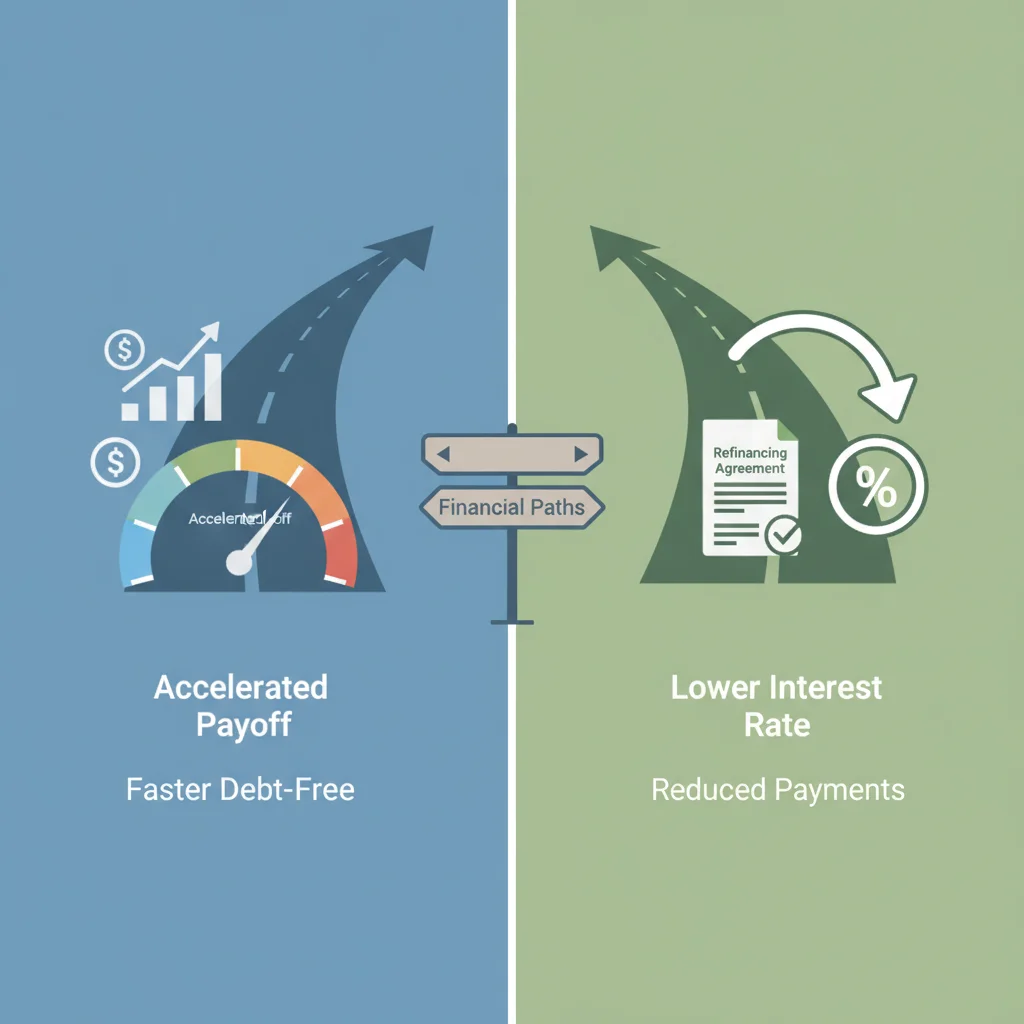
If your credit score has improved since you took out your loan — or if you originally financed through a dealership at a marked-up rate — refinancing deserves serious consideration before you aggressively pay down the existing loan. Here's the logic: paying extra on an 18% loan is good, but refinancing that balance to a 9% loan and then paying extra is dramatically better.
“The single most powerful thing a subprime auto borrower can do is refinance as soon as their credit allows. Aggressively paying down a 20% loan when you could qualify for 10% is the financial equivalent of bailing out a boat with a bucket instead of plugging the hole.”
— Greg McBride, Chief Financial Analyst, Bankrate
Refinancing works by replacing your existing loan with a new one at a lower APR. Your monthly payment may drop, but the real benefit is the reduction in daily interest accrual on the outstanding balance. Many lenders — including credit unions, online lenders, and some banks — offer auto refinance products with no origination fee.
To qualify for a meaningfully lower rate, your credit needs to have improved or your original rate needs to have been inflated relative to your actual creditworthiness. Your credit score directly affects the rates lenders will offer — even moving from a 620 to a 680 can unlock significantly better terms.
For a full comparison of refinancing versus accelerated payoff as competing strategies, see how these two paths to a cheaper auto loan stack up. Refinancing first and then applying payoff strategies to the new loan is often the optimal combination.
Quick Wins You Can Implement Today
Not every payoff strategy requires weeks of planning. Some of the most impactful steps can be taken within the next 24 hours. Below are the highest-ROI actions for borrowers who want to start reducing their interest burden immediately.
Pairing Debt Payoff Methods With Your Auto Loan
If you're managing multiple debts alongside your auto loan, it's worth considering how structured debt payoff methodologies apply to your situation. The two most common are the snowball method (pay off the smallest balances first to build momentum) and the avalanche method (pay off the highest-interest balances first to minimize total interest paid).
For borrowers carrying a high-interest auto loan alongside other debts like credit cards or personal loans, the avalanche method typically maximizes savings — but only if you can stay consistent over time. The snowball method may be more effective if you need motivational wins to stay on track. See how these debt payoff methods apply specifically to auto loans.
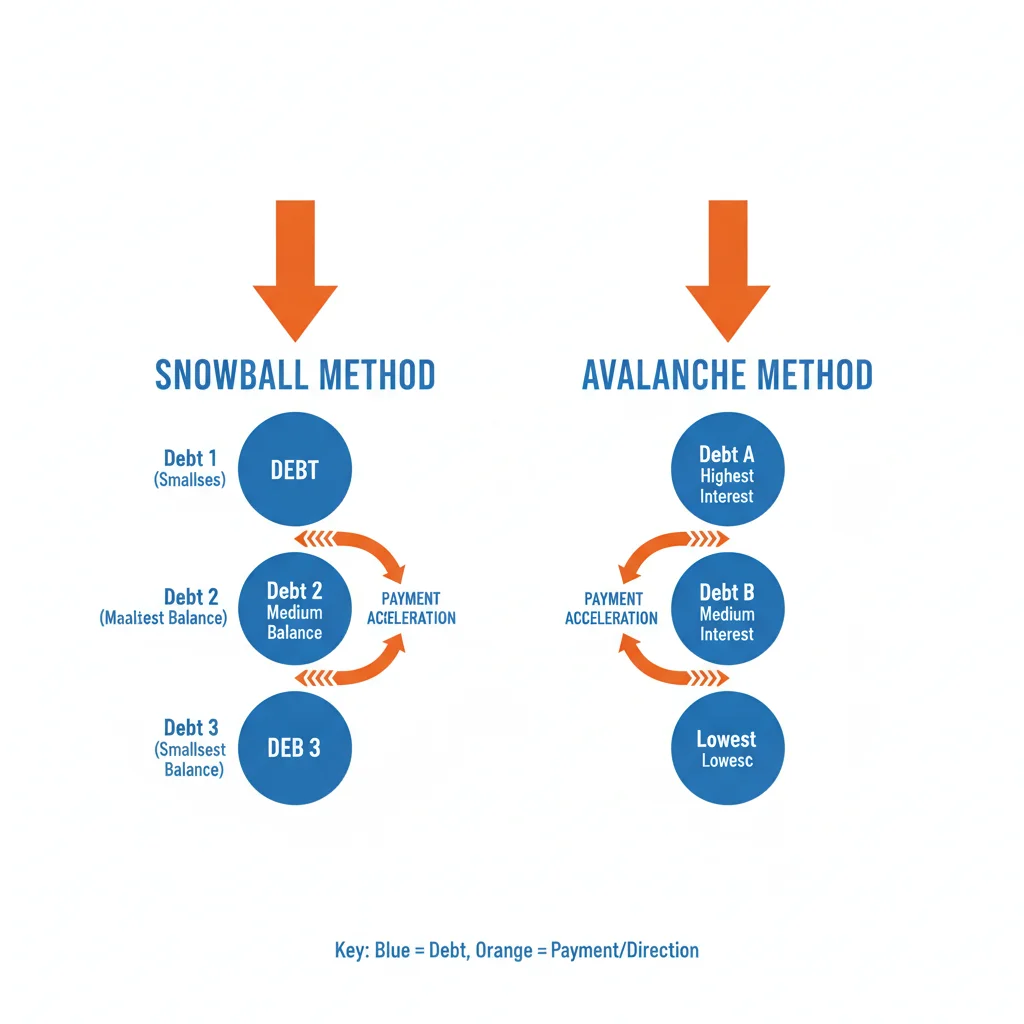
The main takeaway: whichever method you choose, your high-interest auto loan should almost always be prioritized over lower-rate debts. A 17% auto loan beats out a 5% student loan in urgency every time.
Putting It All Together: Building Your Payoff Plan
There's no single correct path — but there is a logical sequence. Start by reviewing your loan documents to confirm whether you have a simple-interest or precomputed loan, and whether any prepayment penalties apply. From there, evaluate your credit score to determine whether refinancing is a realistic option right now.
If refinancing is on the table, pursue it first. Then layer in biweekly payments or a consistent monthly overpayment on the new loan. If refinancing isn't an option yet, focus on principal-directed extra payments and any lump sums you can redirect from discretionary spending or windfalls.
For borrowers who are weighing whether early payoff is better than putting that cash to work in the market, the calculus changes depending on your rate. Whether to pay off your car early or invest the extra money depends heavily on your APR — at 15% or higher, eliminating the debt almost always wins. At 5% or below, investing may outperform.
Whatever your starting point, the most important move is beginning. Every month you delay costs you real money on a high-interest loan. Pick one strategy, implement it this week, and build from there.

All claims are backed by peer-reviewed research. Sources on request.