
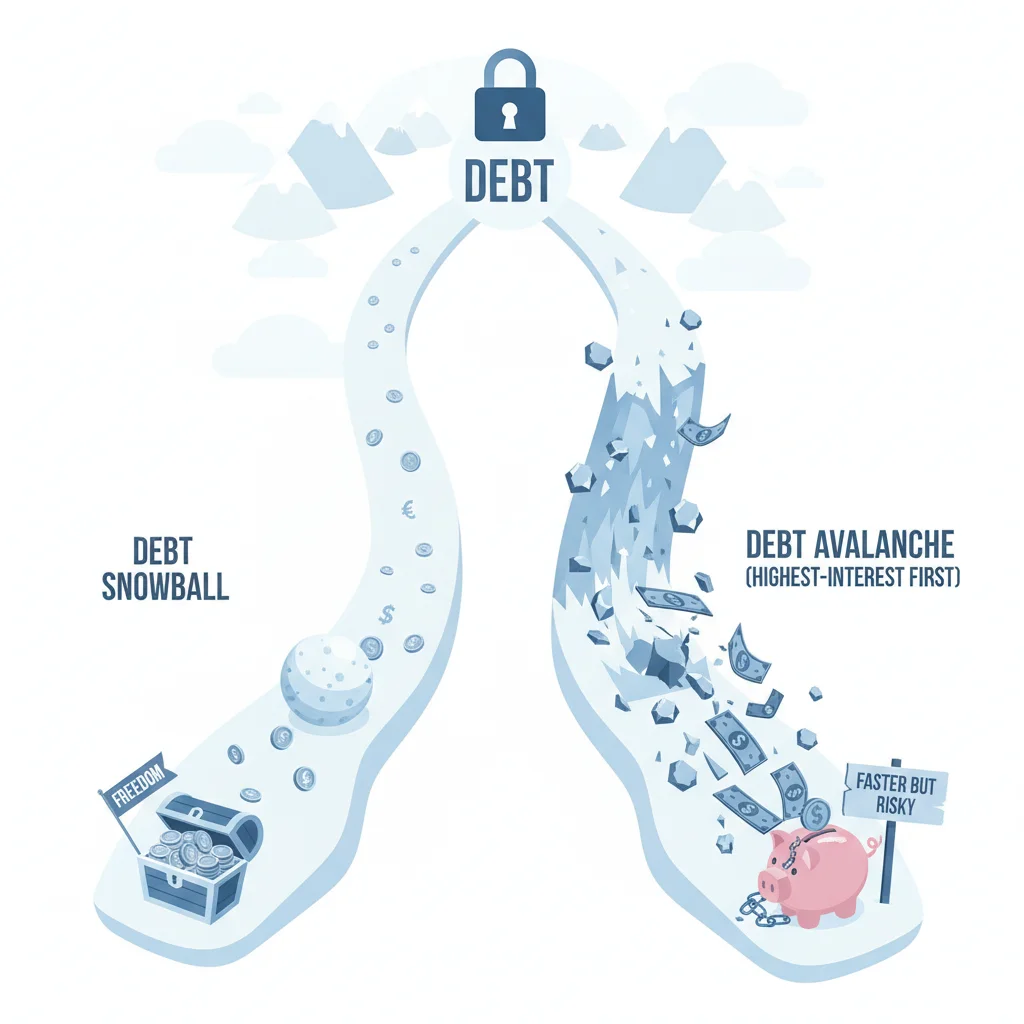
Key Takeaways
Option A
Debt Snowball Method
The momentum-driven, psychology-first approach.
Best for: Borrowers juggling multiple debts who need quick wins to stay motivated and build consistent payment habits.
Option B
Debt Avalanche Method
The mathematically optimal, interest-minimizing strategy.
Best for: Disciplined borrowers focused on minimizing total interest paid, especially those carrying high-APR auto loans.
If you have multiple debts and struggle to stay motivated
Debt Snowball Method
Paying off smaller balances first generates visible progress quickly, reducing the psychological burden and keeping you on track across all your debts.
If your auto loan carries the highest interest rate among all your debts
Debt Avalanche Method
Directing every extra dollar at the highest-rate loan first minimizes total interest paid over the life of your debts — and a high-APR car loan is the perfect avalanche target.
If you have only one debt — your auto loan
Debt Avalanche Method
With a single loan, both methods are identical in practice. Simply pay as much extra as possible each month to minimize interest and shorten your loan term.
If you have bad credit and a high-rate auto loan alongside smaller debts
Debt Avalanche Method
High-APR loans compound interest costs rapidly. Attacking the auto loan first with avalanche logic cuts the most expensive debt before it snowballs on its own.
If you want a structured plan that feels like a clear system
Debt Snowball Method
The snowball's ordered list of targets gives you a defined roadmap, which many borrowers find easier to follow than an abstract interest-rate ranking.
What the Snowball and Avalanche Methods Actually Are
Both the debt snowball and debt avalanche are structured frameworks for paying off multiple debts faster than the minimum payment schedule requires. They tell you where to direct extra dollars — not how to find them. The difference lies entirely in which debt you target first.
Debt Snowball: Smallest Balance First
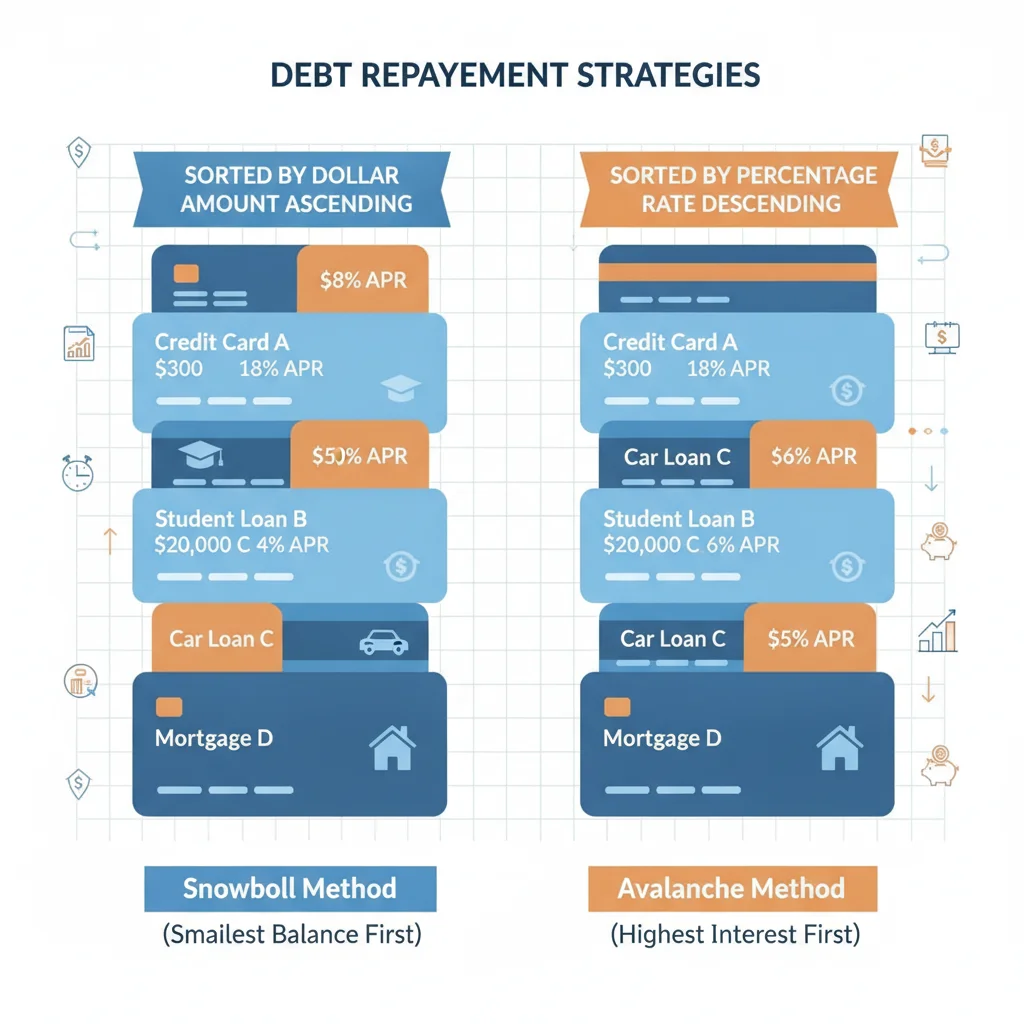
Popularized by personal finance author Dave Ramsey, the snowball method works like this: list all your debts from smallest to largest balance, regardless of interest rate. Pay minimums on every debt except the smallest. Throw every extra dollar at that smallest balance until it's gone. Then roll that freed-up payment into the next-smallest debt — and so on. The growing payment amount rolling down your list is the "snowball."
The appeal is psychological. You get a full payoff — a zero balance — faster than any other method. That win reinforces behavior and keeps you engaged.
Debt Avalanche: Highest Interest Rate First
The avalanche method is identical in structure but uses a different sorting rule: list your debts from highest to lowest APR. Pay minimums on everything except the highest-rate debt. Direct all extra payments there. Once it's eliminated, move to the next-highest rate.
Because interest is what costs you the most money over time, eliminating the highest-rate debt first is mathematically optimal. You'll pay less total interest than with any other fixed-payment strategy — including the snowball.
If you're new to how auto loan interest compounds in the first place, see our introduction to early auto loan payoff for a plain-language breakdown before continuing.
How Each Method Applies When Your Auto Loan Is in the Mix
Here's where auto loans get interesting — and where a lot of advice gets vague. The snowball and avalanche are designed for multi-debt scenarios. So applying them to your car loan depends heavily on what else you owe.
Scenario 1: You Have Only an Auto Loan
If the car loan is your only debt, both methods collapse into the same action: pay extra every month. There's no ranking needed. Every additional dollar you put toward principal reduces your balance, shortens your term, and cuts the total interest you'll pay. The method label doesn't matter — the extra payment does.
See our comparison of lump-sum payoffs vs. extra monthly payments to decide whether occasional windfalls or consistent overpayments work better for your situation.
Scenario 2: You Have Multiple Debts Including an Auto Loan
This is where the method choice becomes real. Consider a borrower with three debts:
- Credit card: $2,400 balance at 24% APR
- Auto loan: $14,500 balance at 11% APR
- Student loan: $9,000 balance at 5.5% APR
Snowball ranking: Credit card → Student loan → Auto loan (smallest to largest balance).
Avalanche ranking: Credit card → Auto loan → Student loan (highest to lowest rate).
In this example, both methods agree on the first target — the credit card. They diverge afterward. The snowball moves to the student loan next; the avalanche moves to the auto loan. That divergence has real dollar consequences. The 11% auto loan is accruing more interest per month than the 5.5% student loan, so paying it second (avalanche) saves more money than paying it third (snowball).
| Criterion | Debt Snowball | Debt Avalanche |
|---|---|---|
| Payoff order | Smallest balance first | Highest APR first |
| Total interest paid | Higher (but close) | Lower — mathematically optimal |
| Time to first full payoff | Fastest — smallest debt gone first | Slower if highest-rate debt is large |
| Motivational impact | High — early wins reinforce behavior | Lower — results take longer to see |
| Best auto loan scenario | Auto loan is not the smallest balance | Auto loan has the highest rate |
| Complexity | Simple — sort by balance | Simple — sort by APR |
| Works for single auto loan | Yes — same as avalanche | Yes — same as snowball |
| Recommended for | Borrowers needing momentum | Disciplined, math-focused borrowers |
If your auto loan carries a high rate — as is common for borrowers with limited credit history — the strategies for high-interest auto loans article covers additional tools worth combining with either method.
$1,200+
Average interest saved by paying $100 extra/month
On a typical 60-month $20,000 auto loan at 8% APR, consistent $100 overpayments save over $1,200 in interest and cut nearly a year off the term.
68%
Americans carrying non-mortgage debt simultaneously
According to the Federal Reserve's 2023 Survey of Consumer Finances, most U.S. households carrying an auto loan also carry at least one other debt, making payoff method sequencing relevant.
9.1%
Average new auto loan APR (2024)
Experian's Q3 2024 State of the Automotive Finance Market report shows new car loan APRs averaging over 9%, making avalanche targeting especially valuable when the auto loan is the highest-rate debt.
The Real Cost Difference: Interest Math in Plain Terms
To make the comparison concrete, consider a simplified two-debt example where the methods diverge.
Debt A: Auto loan — $12,000 balance at 9.5% APR, 48 months remaining.
Debt B: Personal loan — $3,500 balance at 6% APR, 24 months remaining.
Available extra payment: $200/month beyond all minimums.
Snowball approach: Attack Debt B first (smaller balance). Debt B paid off in roughly 14 months. Then redirect that full payment to the auto loan.
Avalanche approach: Attack Debt A first (higher rate). The auto loan gets the $200 extra immediately.
Running the numbers: over the full repayment period, the avalanche method saves approximately $280–$340 more in interest than the snowball in this scenario — not a dramatic difference, but real money. The gap widens the higher your auto loan's APR and the larger its balance relative to your other debts.
The snowball, meanwhile, eliminates the personal loan about 10 months sooner — providing a psychological win and freeing up the personal loan's minimum payment to use elsewhere.
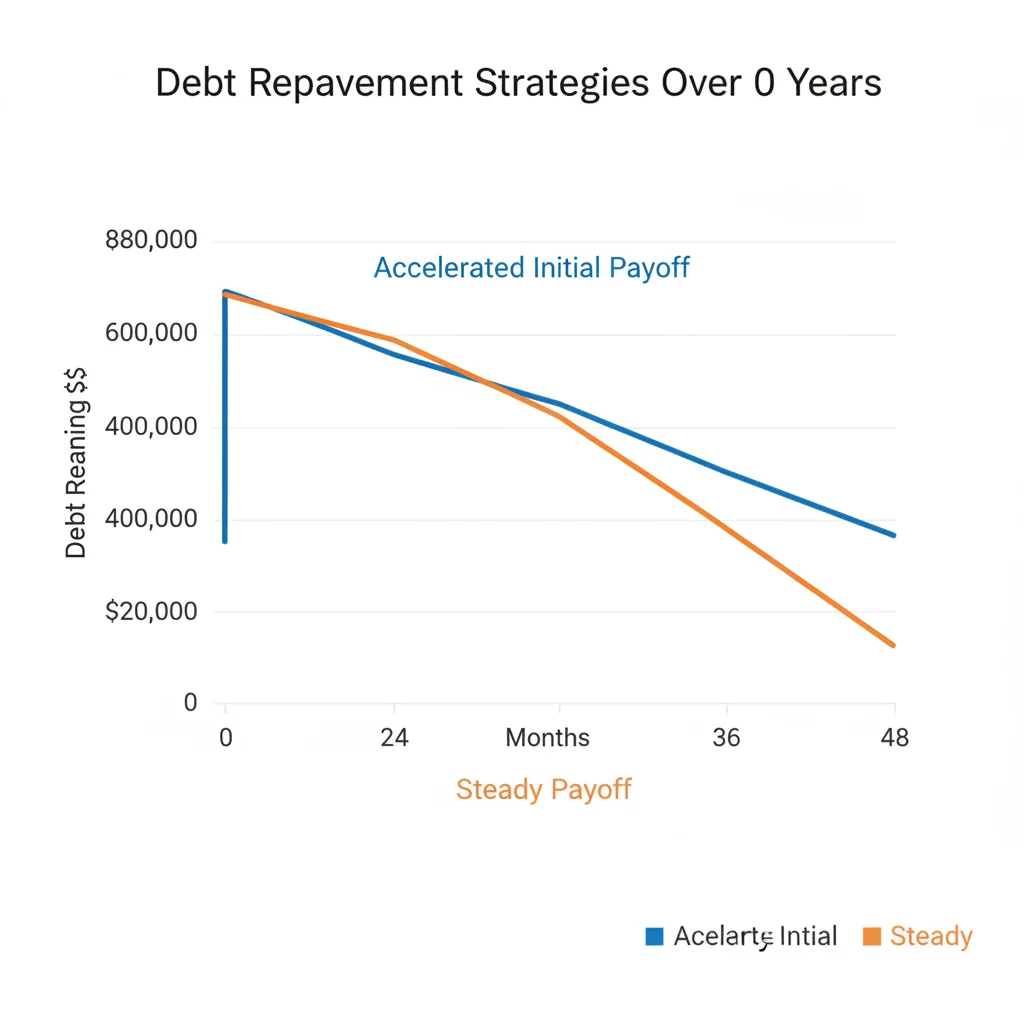
Neither outcome is wrong. The "best" method is the one you'll actually follow through on for 12, 24, or 36 months. A perfect avalanche plan abandoned after six months loses to an imperfect snowball plan executed consistently.
The Math Gap Is Often Smaller Than You Think
Studies comparing snowball and avalanche outcomes consistently find that the total interest difference between the two methods is relatively modest for most real-world debt portfolios — often less than 5–8% of total interest paid. That's meaningful money, but not a catastrophic penalty for choosing snowball. The behavioral advantage of the snowball — keeping borrowers engaged — can easily offset the mathematical disadvantage if it prevents plan abandonment.
Before You Start: Check for Prepayment Penalties
Before directing a single extra dollar at your auto loan, read your loan agreement. Look for a section titled Prepayment or Early Payoff. Most modern auto loans — particularly those from banks, credit unions, and major captive lenders — do not charge prepayment penalties. But some subprime auto loans and older contracts do include them.
A prepayment penalty can take several forms:
- Flat fee: A fixed dollar amount (e.g., $250) charged if you pay off before a specified date.
- Percentage of remaining balance: A fee equal to 1–3% of whatever you owe when you pay it off early.
- Rule of 78s: A precomputed interest calculation that front-loads your interest charges, reducing — or eliminating — the savings from early payoff. This method is banned in some states for loans over 61 months but still appears in shorter-term contracts.
If you find a prepayment clause, calculate whether your interest savings exceed the penalty before committing to aggressive payoff. In many cases they still do — but you need the math to confirm it.
Borrowers with bad credit loans often face stricter contract terms. If that describes your situation, review the bad credit auto loan options hub for guidance on what to watch for in these agreements.
Also worth considering: if your loan's interest rate is high enough, refinancing to a lower rate before accelerating payoff can amplify your savings significantly. See our accelerated payoff vs. refinancing comparison to weigh that decision.
Finding Extra Money to Fund Either Strategy
Both the snowball and avalanche require one thing neither method provides: extra cash. The framework tells you where to aim; you have to load the weapon.
Even $50–$100 per month applied consistently to principal makes a measurable difference. On a $15,000 auto loan at 10% APR with 48 months remaining, an extra $100/month cuts approximately 11 months off the loan and saves roughly $900 in interest.
Common sources of extra payoff cash include:
- Budget reallocation: Subscription audits, dining-out reductions, or pausing a savings goal temporarily to attack high-rate debt first.
- Windfalls: Tax refunds, bonuses, gifts. Even one annual lump-sum payment can significantly reduce principal.
- Income increases: A part-time gig, freelance work, or overtime hours earmarked specifically for debt payoff.
- Freed minimums: As each debt closes (snowball) or as you pay off a balance (either method), redirect that minimum payment to the next target automatically.
Our guide on freeing up cash to pay off your car loan faster walks through these approaches in detail, including a subscription audit template and side-income ideas that work around a full-time schedule.
One practical tip: when you make an extra payment, contact your lender or log into your account and designate the payment as principal-only. If you don't specify, some servicers apply extra funds to your next scheduled payment — which does reduce interest but doesn't shorten your term as efficiently as a direct principal reduction.

Understanding how your down payment affected your starting loan balance can also clarify how much runway you have left. The down payments hub explains how initial equity shapes your repayment math from day one.
Choosing Your Method: A Decision Framework
After understanding the mechanics, the honest answer is: your temperament matters as much as the math. Use the following questions to identify which method fits your situation.
Ask These Four Questions
- How many debts do you have? If your auto loan is your only debt, skip the method debate — just pay extra every month.
- What is your auto loan's APR relative to your other debts? If your car loan has the highest rate, avalanche and snowball align on it as the top target. No trade-off to make.
- How motivated are you by visible progress? If you've abandoned payoff plans before when results felt slow, the snowball's quick wins may be worth the extra interest cost.
- How large is the interest gap between your debts? If your auto loan's rate is 11% and your next-highest is 10.5%, the avalanche's mathematical advantage is small. If the gap is 11% vs. 5%, the avalanche advantage is substantial.
The Hybrid Approach
Some borrowers use a hybrid: start with the snowball to eliminate one or two small debts quickly, then switch to avalanche logic once motivation is established. This sacrifices a small amount of interest savings in exchange for the behavioral reinforcement of early wins — a trade many financial counselors consider worthwhile.
Whatever you choose, document your plan. Write down your debt list, your ranking, your extra payment amount, and your target payoff dates. Reviewing that list monthly keeps the strategy from fading into background noise.
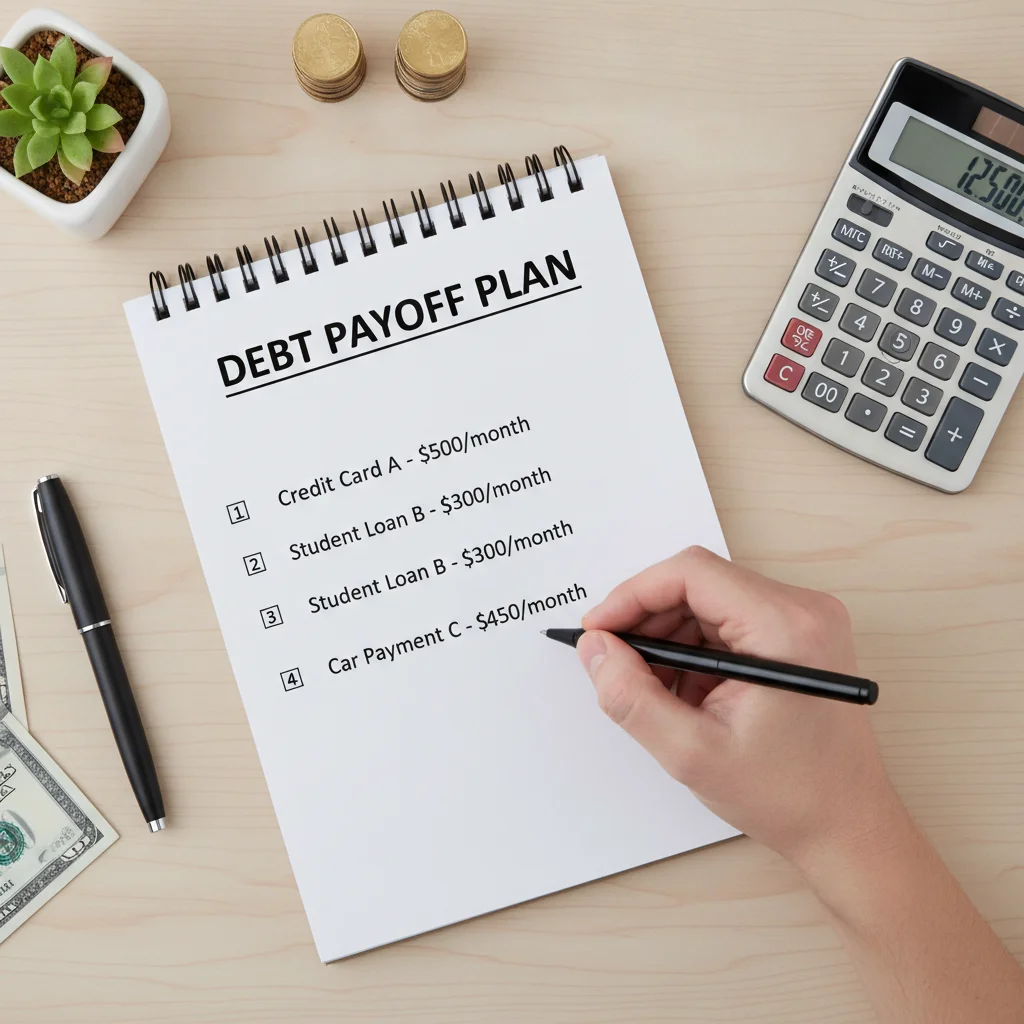
The bottom line: a $200/month extra payment applied consistently will save you more money over five years than choosing the "correct" method but applying it sporadically. The best debt payoff strategy is the one you'll actually execute — month after month, without exception.

All claims are backed by peer-reviewed research. Sources on request.