
Key Takeaways
Preapproval Shortfall
A preapproval shortfall occurs when the loan amount a lender agrees to give you is less than the selling price of the car you want to buy. The gap between those two numbers is money you'll need to cover some other way — through a larger down payment, a lower negotiated price, or a different vehicle choice. It's a common situation and doesn't automatically mean the deal is dead.
Lenders calculate your preapproval ceiling based on your debt-to-income ratio, credit score, and sometimes the loan-to-value ratio of the vehicle. If the car's price pushes beyond that ceiling, the lender won't fund the excess — it becomes your responsibility to bridge the difference.
Why Preapproval Shortfalls Are More Common Than You Think
You did everything right. You got preapproved before stepping on the lot, you compared lenders, and you walked in with a letter in hand. Then the salesperson quotes you a price — and it's $3,500 more than what your lender approved. Now what?
This scenario is not the exception. It happens constantly, especially in a market where vehicle prices have climbed steadily and many buyers haven't adjusted their budget expectations accordingly. Lenders calculate your preapproval ceiling based on your financial profile at a specific moment in time — your credit score, existing debt load, income verification, and sometimes the loan-to-value limits they set internally. If the car you want sits above that ceiling, you've got a gap to close.
The good news: a preapproval shortfall doesn't mean you've failed or that you can't buy. It means you have a clearly defined problem with a finite number of solutions — and knowing them puts you ahead of most buyers on that lot.
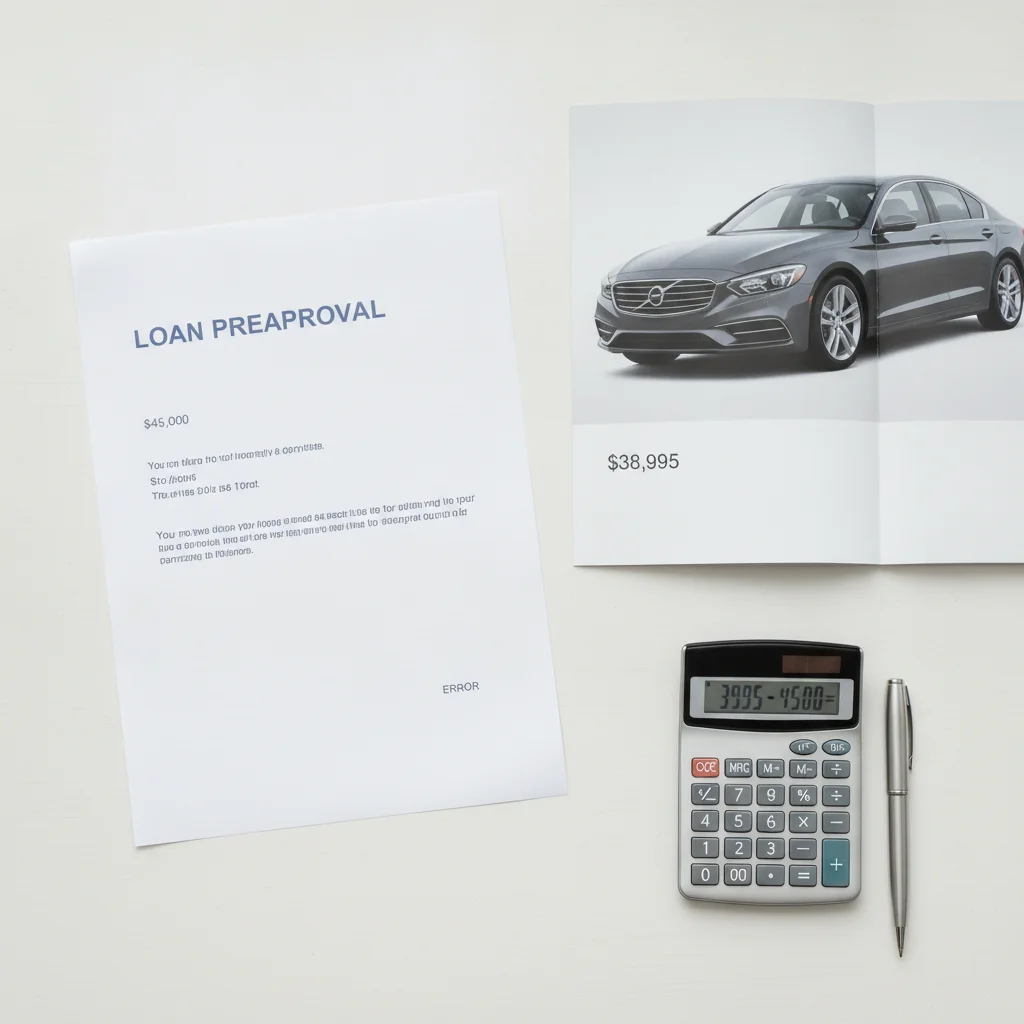
Buyers who skip preapproval entirely often end up paying far more because they never know what their approved ceiling is. At least with a preapproval in hand, you know exactly where you stand and how large the gap is before any negotiations begin.
Option 1: Negotiate the Car's Price Down to Meet Your Approval
This is the cleanest solution — and your preapproval letter is the tool that makes it possible. When you walk in with documented financing already secured, the conversation shifts fundamentally. You're not a buyer begging to qualify; you're a cash-equivalent buyer shopping for the best price.
Dealers know that a buyer with preapproval can walk. That knowledge is leverage. Use it explicitly: tell the salesperson your budget ceiling is firm and that you need the out-the-door price to fit within it. Many dealers would rather discount a few thousand dollars than lose a sale entirely.
“A preapproval letter is not a ceiling — it's a floor. It tells the dealer exactly where you stand and makes every dollar above that number something they have to justify to you, not something you have to beg them for.”
— Desmond Kimathi, Former dealership finance insider and auto financing advocate
Practically speaking, here's how to approach it:
- Start below your shortfall, not at it. If you're $3,000 short, open negotiations aiming for a $4,500–$5,000 discount. You'll likely meet somewhere in the middle.
- Focus on out-the-door price, not sticker price. Fees, add-ons, and dealer accessories can quietly inflate the number. Pin down every line item.
- Use competing inventory as pressure. If the same trim is listed at another dealer for less, mention it. Dealers respond to comparison shopping faster than almost anything else.
Effective dealer negotiation is a skill set, not just a tactic. If you haven't mapped out your approach before arrival, the dealership has a structural advantage over you. A preapproval letter closes that gap.
Don't Reveal Your Exact Preapproval Amount
When you walk into the dealership, your preapproval letter is a tool — not an opening bid. If the finance manager knows your exact ceiling, they have every incentive to push the price right up to it. Keep negotiating focused on out-the-door price first, financing structure second.
Run the Gap Analysis Before You Go Shopping
Before visiting any dealer, calculate the maximum out-the-door price you can afford given your preapproval amount and available down payment. Include taxes, title, and registration fees in that number — they routinely add 8–12% to the vehicle price in many states. Shopping with a firm ceiling prevents the deal from creeping above what your loan actually covers.
Option 2: Increase Your Down Payment to Cover the Gap
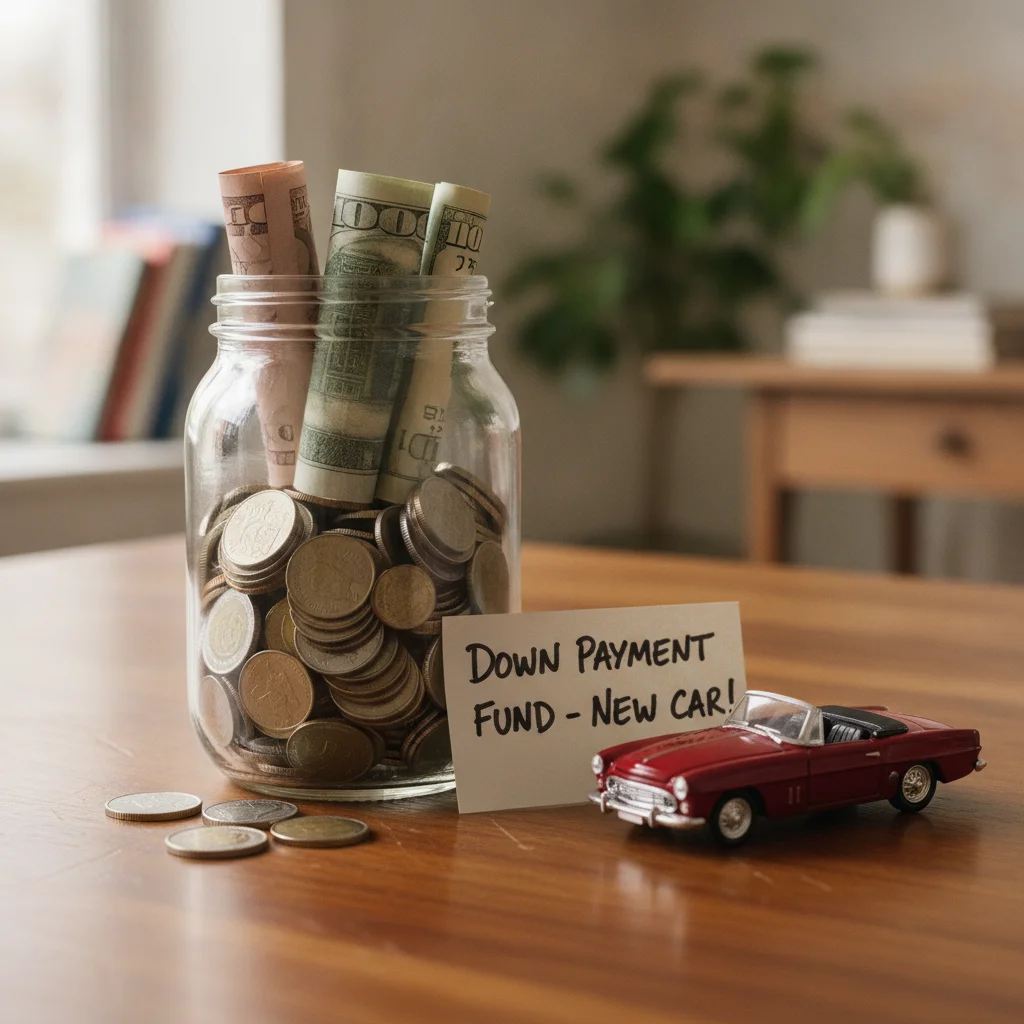
If the price won't move, your down payment can. This is the most direct mathematical fix: whatever the shortfall is, put it down in cash. Your lender finances the rest, and the deal closes.
It sounds simple, and mechanically it is. But there are real risks to consider before you raid your savings:
~20%
Average vehicle price increase since 2020
According to Kelley Blue Book data, average new vehicle transaction prices rose roughly 20% between 2020 and 2024, outpacing many buyers' preapproval ceilings.
$2,000+
Typical cost of dealer rate markup over loan life
The Consumer Financial Protection Bureau has documented that dealer interest rate markups routinely add $1,000–$3,000 to the total cost of an auto loan over its full term.
14–45 days
Rate-shopping window for credit score protection
FICO and VantageScore treat multiple auto loan inquiries within this window as a single inquiry, allowing buyers to shop lenders without significant score damage.
78%
Buyers who finance through the dealership
J.D. Power data shows the majority of car buyers end up using dealer-arranged financing, often without comparing rates from outside lenders first.
$4,895
Average difference between sticker and transaction price on new cars
Edmunds data shows new car buyers who negotiate consistently pay thousands less than sticker — a gap that can often cover a preapproval shortfall entirely.
- Don't drain your emergency fund. If putting an extra $4,000 down leaves you with less than two to three months of expenses in reserve, you've traded a financing problem for a financial vulnerability. Cars break. Jobs end. Keep that buffer.
- Check whether the extra down payment changes your rate. Some lenders tier their interest rates by loan-to-value ratio. A larger down payment might push you into a better rate bracket, reducing your monthly payment more than expected.
- Time your deposit. If you're a few weeks away from a paycheck or a savings milestone, it may be worth waiting rather than overextending today.
The relationship between down payment size and loan structure is worth understanding deeply before you decide. Down payments directly affect preapproval terms — and sometimes putting more down upfront can actually unlock a higher approved amount or a lower rate on a new application.
Also, if the gap feels too large to cover comfortably, that's a signal worth taking seriously. Recognizing when your down payment is too small for the vehicle you're targeting can save you from a loan structure that will hurt you for years.
Option 3: Apply for a Second Preapproval With a Different Lender
Not all lenders underwrite the same way. Your bank might cap you at $27,000 because of internal LTV guidelines. A credit union in your area might approve you for $31,000 using a slightly different debt-to-income formula. The only way to know is to apply to multiple sources.
The credit impact of rate shopping is smaller than most buyers fear. Credit scoring models — FICO and VantageScore alike — treat multiple auto loan inquiries within a short window (typically 14 to 45 days, depending on the version) as a single inquiry. So applying to three or four lenders in rapid succession costs you almost nothing in score terms.
Rate Shopping Won't Hurt Your Credit Much
Many buyers avoid applying to multiple lenders because they fear credit score damage. In practice, credit scoring models are designed to recognize rate shopping behavior. Multiple auto loan inquiries submitted within a 14–45 day window (depending on the scoring model) are counted as a single inquiry. Apply broadly, compare the offers, and take the best one.
Dealer Financing Can Be Legitimate — Know the Signals
Not every dealer financing offer is a trap. Manufacturer-subsidized rates — often advertised as 0% or 1.9% APR for well-qualified buyers — can genuinely beat outside lenders. The red flag isn't the offer itself; it's when the dealer refuses to show you the buy rate, rushes you through the paperwork, or bundles the financing with overpriced add-ons. Slow down and ask for every rate in writing before signing.
Where to look when your current preapproval isn't enough:
- Credit unions. Member-owned, nonprofit structure means they often approve higher amounts at lower rates than traditional banks — especially for members with established relationships.
- Online lenders. Companies like LightStream, Consumers Credit Union, or PenFed can offer competitive ceilings, and the application takes minutes.
- The manufacturer's captive finance arm. If you're buying a new vehicle, the brand's own financing arm (Honda Financial, Ford Motor Credit, etc.) sometimes has promotional programs that allow higher loan amounts or subsidized rates.
If your credit isn't ideal and you're running into multiple shortfalls, there are lenders who specialize in challenged credit profiles and may approve a higher ceiling than standard banks. The tradeoff is typically a higher interest rate, so you'll need to calculate total cost of borrowing, not just monthly payment.
Option 4: Recalibrate Your Vehicle Choice
Sometimes the right answer is the uncomfortable one: the car you want doesn't match the loan you qualify for, and no amount of negotiating or down payment math will bridge that gap cleanly. In those cases, adjusting the vehicle is not a retreat — it's a financially sound decision.
This doesn't necessarily mean a completely different car. Often it means:
- A lower trim level. The difference between an EX and a Sport trim on the same model can be $2,500–$4,000. If that bridges your shortfall, you get 90% of the car for a loan that actually works.
- A model year older. A certified pre-owned version of the same vehicle from the prior year often costs $5,000–$8,000 less with similar reliability and warranty coverage.
- Fewer add-ons. Dealers often bundle accessories — paint protection, cargo covers, dealer-installed options — into the price. Stripping those out can close the gap without touching the base price.
Before you settle, run the total cost comparison. A car that's $4,000 cheaper with a $1,000 higher interest bill over five years is still a $3,000 win. The math matters more than the badge on the trunk.
What to Do When the Dealer Offers to Finance the Full Amount
Here's where it gets tricky. You mention your preapproval shortfall to the finance manager, and they immediately offer to handle your entire financing in-house — full purchase price, no gap, problem solved. Sounds convenient. It often is — for the dealer.
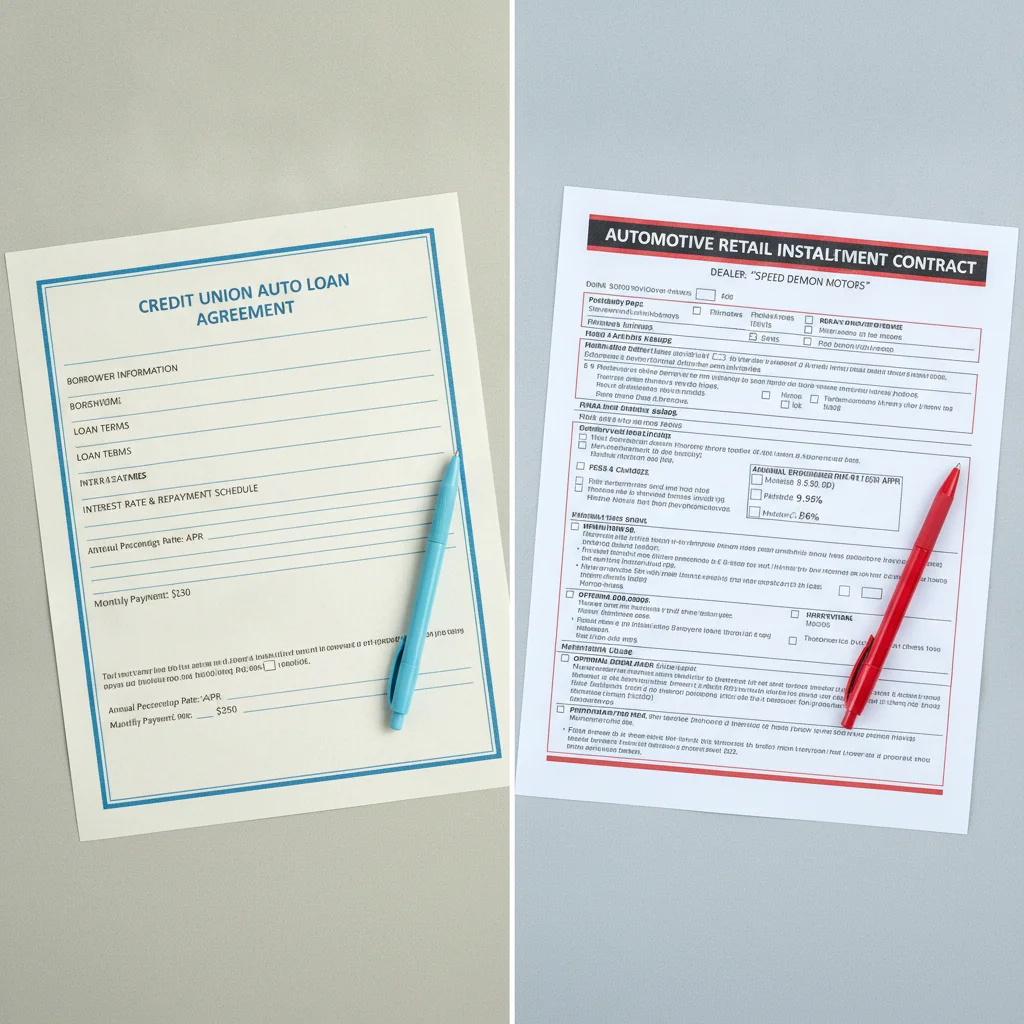
Dealer-arranged financing generates backend profit for the dealership through what's called a rate markup. The lender gives the dealer a buy rate (say, 6.5%), and the dealer is allowed to sell you financing at a higher rate (say, 8.9%) and pocket the difference. That spread over a 60-month loan can add thousands of dollars to your total cost.
Rate Shopping Won't Hurt Your Credit Much
Many buyers avoid applying to multiple lenders because they fear credit score damage. In practice, credit scoring models are designed to recognize rate shopping behavior. Multiple auto loan inquiries submitted within a 14–45 day window (depending on the scoring model) are counted as a single inquiry. Apply broadly, compare the offers, and take the best one.
Dealer Financing Can Be Legitimate — Know the Signals
Not every dealer financing offer is a trap. Manufacturer-subsidized rates — often advertised as 0% or 1.9% APR for well-qualified buyers — can genuinely beat outside lenders. The red flag isn't the offer itself; it's when the dealer refuses to show you the buy rate, rushes you through the paperwork, or bundles the financing with overpriced add-ons. Slow down and ask for every rate in writing before signing.
That said, dealer financing isn't always a bad deal. Here's how to evaluate it honestly:
- Ask for the APR in writing before agreeing to anything.
- Calculate the total interest paid over the full loan term — not the monthly payment difference.
- Compare that total cost against your preapproval offer plus whatever down payment you'd need to close the gap.
- If the dealer's total cost is within a few hundred dollars, the convenience may be worth it. If it's thousands more, walk.
The reason walking in with preapproval changes the entire dynamic is precisely this: you have a real number to compare against. Without it, you're evaluating the dealer's offer in a vacuum and almost always losing.
If you haven't gone through the full preapproval process yet, now is the time — even if you're already on the lot. You can apply from your phone and have a response within minutes from many lenders.
Building a Game Plan Before the Shortfall Happens
The buyers who handle a preapproval shortfall best are the ones who anticipated it. Before you ever set foot on a lot, run your own gap analysis:
- Get your preapproval first. Know your ceiling before you fall in love with a specific vehicle.
- Set your target price range 10–15% below your preapproval ceiling. This gives you room for taxes, title, registration, and any down payment you want to preserve.
- Apply to at least two or three lenders. Take the highest approval and keep the others as backup options.
- Have a down payment figure in reserve. Know exactly what you're willing and able to put down — and what your absolute ceiling is — before any negotiation begins.
- Identify two or three acceptable vehicles, not just one. Emotional attachment to a single car weakens every negotiating position you have.
Don't Reveal Your Exact Preapproval Amount
When you walk into the dealership, your preapproval letter is a tool — not an opening bid. If the finance manager knows your exact ceiling, they have every incentive to push the price right up to it. Keep negotiating focused on out-the-door price first, financing structure second.
Run the Gap Analysis Before You Go Shopping
Before visiting any dealer, calculate the maximum out-the-door price you can afford given your preapproval amount and available down payment. Include taxes, title, and registration fees in that number — they routinely add 8–12% to the vehicle price in many states. Shopping with a firm ceiling prevents the deal from creeping above what your loan actually covers.
The relationship between your down payment structure and your overall loan terms is worth studying before you commit. Small adjustments upfront can change your monthly payment, your total interest, and even whether a lender approves the full amount you need.
A preapproval shortfall is a problem with solutions — but only if you've already thought through those solutions before sitting down across from a finance manager whose job is to close a deal on terms that work for the dealership.

All claims are backed by peer-reviewed research. Sources on request.