
Key Takeaways
Preapproval and Down Payment Relationship
When a lender preapproves you for an auto loan, they evaluate your credit, income, and the amount you plan to borrow. Your down payment directly reduces the loan amount you need, which can increase your chances of approval, lower your interest rate, and improve the terms on your preapproval offer. In short, what you put down and what a lender will lend you are not independent variables — they move together.
Lenders calculate loan-to-value (LTV) ratios when setting rates. A larger down payment lowers LTV, which reduces lender risk and often triggers a better rate tier in the lender's pricing matrix.
Why These Two Variables Are More Connected Than You Think
Most buyers treat preapproval and down payment as two separate checklists. They apply for a preapproval, get a number, then figure out their down payment separately. That's leaving money on the table.
These two elements are fundamentally linked. Your preapproval amount is based on the loan you're requesting — and your down payment determines how large that loan actually needs to be. Change one, and you change the other. More importantly, changing your down payment upward can change the quality of your preapproval — meaning lower rates and better terms, not just a smaller balance.
Understanding this relationship gives you two levers instead of one when you walk into the financing conversation. That's a real advantage in a process that's engineered to benefit the lender and the dealer, not the buyer.
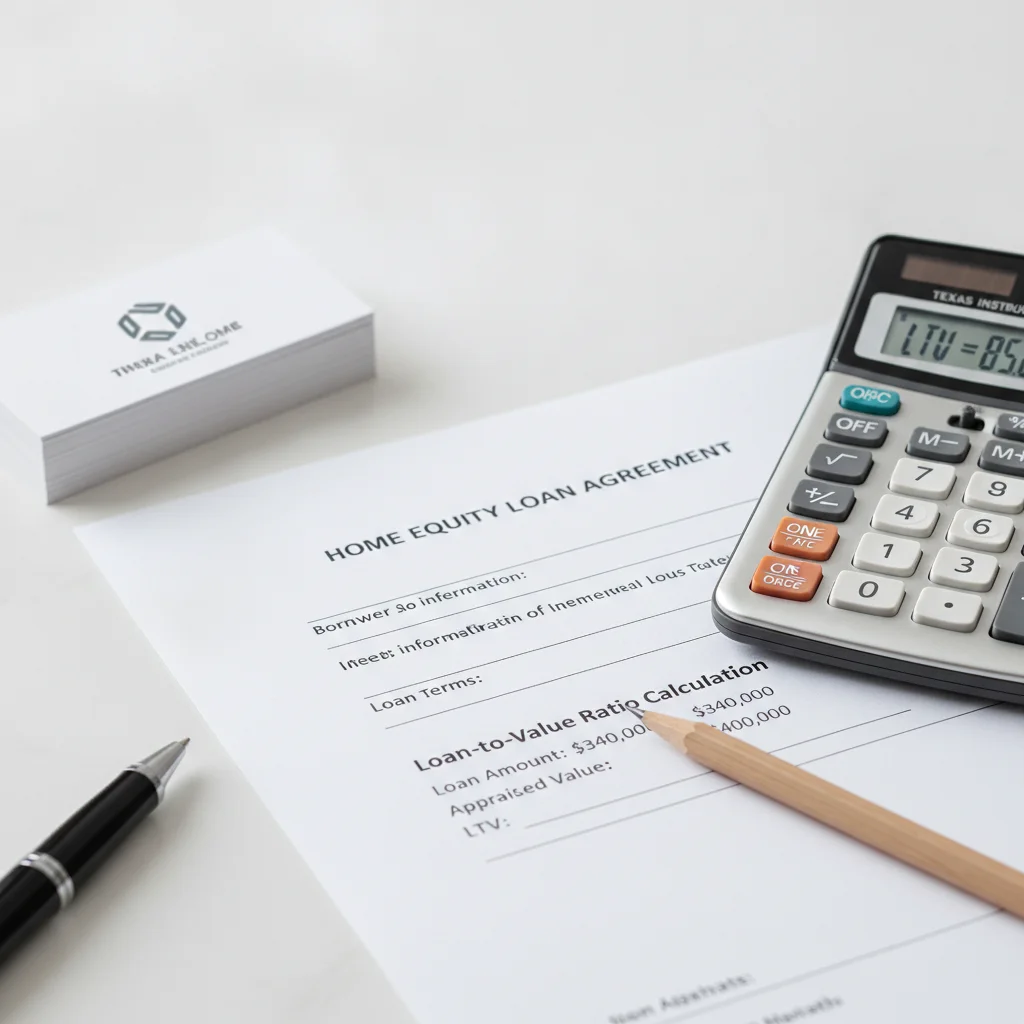
Think about it from the lender's perspective. They're evaluating risk. A buyer who puts 20% down is statistically less likely to default than one who puts nothing down — and even if they do default, the lender has more equity to recover. That reduced risk translates directly into the rate they're willing to offer you. The math behind this is the loan-to-value ratio (LTV): divide your loan amount by the vehicle's value. A lower LTV signals less risk, and lenders price that accordingly.
See exactly how down payment size changes your LTV and total financing cost for a deeper breakdown of the numbers.
How Preapproval Actually Works — and What Lenders Are Evaluating
When you apply for preapproval, the lender pulls your credit, verifies your income, and asks you what loan amount you're looking for. Based on those inputs, they issue a conditional offer: we'll lend you up to X dollars at Y interest rate for Z months, assuming the vehicle qualifies.
That's important — assuming the vehicle qualifies. Lenders have their own requirements for vehicle age, mileage, and condition. Your preapproval is tied to a loan amount and a risk profile, not a blank check.
80%
LTV threshold for best rate tiers
Many lenders reserve their most competitive rates for loans with a loan-to-value ratio at or below 80%, meaning a 20% down payment is often the pivotal number.
43%
Buyers who don't get preapproved
According to Cox Automotive's car buyer journey studies, roughly 43% of auto buyers do not seek financing preapproval before visiting a dealership.
$1,000+
Average dealer finance reserve per deal
Dealers typically earn a markup (called the finance reserve) of $1,000 or more per financed deal by marking up the interest rate the lender quotes — a spread buyers without preapprovals rarely see.
14–45 days
Rate-shopping window for credit inquiries
FICO and VantageScore treat multiple auto loan inquiries within a 14–45 day window as a single inquiry, making it safe to seek multiple preapprovals simultaneously.
0.5–2%
Typical rate improvement from higher down payment
Improving LTV from 90% to 80% or better can yield an interest rate reduction of 0.5% to 2% depending on the lender's risk-based pricing model.
What lenders are really doing is stress-testing three things:
- Creditworthiness — Your score, payment history, and existing debt load. This determines whether you qualify at all and which rate tier you land in.
- Debt-to-income ratio (DTI) — Whether your income is sufficient to support the proposed monthly payment alongside your existing obligations.
- Loan-to-value ratio (LTV) — How much you're borrowing relative to what the vehicle is worth. Your down payment is the primary dial that controls this number.
Here's the critical insight: you can't easily change your credit score in the days before you shop. You can't quickly inflate your income. But you can increase your down payment — and that directly improves your LTV, which lenders weigh heavily in rate decisions. The impact of your credit score on loan rates is significant, but a strong down payment can offset a weaker score more than most buyers realize.
Preapproval Is Conditional, Not Guaranteed
A preapproval letter is a conditional commitment based on the information you provided at application. The lender will still verify the vehicle's value and may adjust terms if the car doesn't meet their collateral standards — for example, if it's too old, has too many miles, or is priced significantly above book value. Always confirm final terms once you've identified a specific vehicle.
Watch Out for Dealer-Layered Financing
When dealers know your preapproval doesn't quite cover the purchase price, some will suggest financing add-ons — extended warranties, GAP insurance, paint protection — and roll them into a separate loan or inflate the primary loan at a higher rate. Any product the dealer finances as a solution to a gap should be evaluated independently at its full cost, not just its monthly payment impact.
The Negotiating Power a Preapproval Letter Gives You
Here's what I saw repeatedly working in dealership finance: buyers without preapprovals get quoted a monthly payment. Buyers with preapprovals get quoted an interest rate. That's a fundamentally different conversation, and it favors the buyer every time.
When a dealer knows you don't have outside financing, they control all the variables: the purchase price, the interest rate, the loan term, and any add-ons they pack into the payment. They can give you a "good" monthly payment by stretching the term to 84 months while charging you 9% interest. You feel like you won. You didn't.
A preapproval letter changes all of that. It establishes a rate benchmark the dealer must compete with. Dealers do have access to wholesale lending rates from captive lenders and their dealer-lender relationships, and sometimes they can legitimately beat your preapproval rate. That's fine — you benefit. But they can only do that if they're competing, and they only compete when you force them to.
“The moment a buyer reveals their target monthly payment without a preapproval in hand, they've told the dealer everything they need to structure a deal in the house's favor. Preapproval is the single most underutilized tool available to car buyers.”
— Desmond Kimathi, Former dealership finance manager and consumer auto financing advocate
The tactical sequence that works:
- Get preapproved before you set foot on a lot — or even browse online inventory seriously.
- Negotiate the out-the-door price of the vehicle first, before any mention of financing.
- Once you have an agreed price, present your preapproval letter and ask if they can beat the rate.
- If they can, great. If not, you use your preapproval to close the deal at your terms.
This sequence prevents the most common dealer tactic: payment anchoring. That's when a salesperson asks, "What monthly payment are you comfortable with?" The moment you answer that question, you've handed them control of the deal structure. Don't answer it. Your preapproval is your shield against that tactic.
Apply for Preapproval Before You Know the Exact Car
You don't need to have a specific vehicle in mind to get preapproved. Apply based on your target price range and planned down payment. This gives you time to compare lender offers without the pressure of a deal on the table. Most preapprovals are valid for 30–60 days — plenty of time to find the right vehicle.
Use a Loan Amortization Calculator to Test Scenarios
Before you finalize your down payment amount, run the numbers through a loan amortization calculator. Plug in different down payment amounts and see how your monthly payment and total interest change at your preapproved rate. Even an extra $1,500 down can meaningfully shift both numbers — and make a 48-month term feasible where a 60-month term previously seemed necessary.
Adjusting Your Down Payment to Strengthen Your Preapproval
Let's say you apply for preapproval and get approved, but the rate is higher than you expected — or you're on the borderline of approval. Before you accept those terms, consider whether increasing your down payment changes the equation.
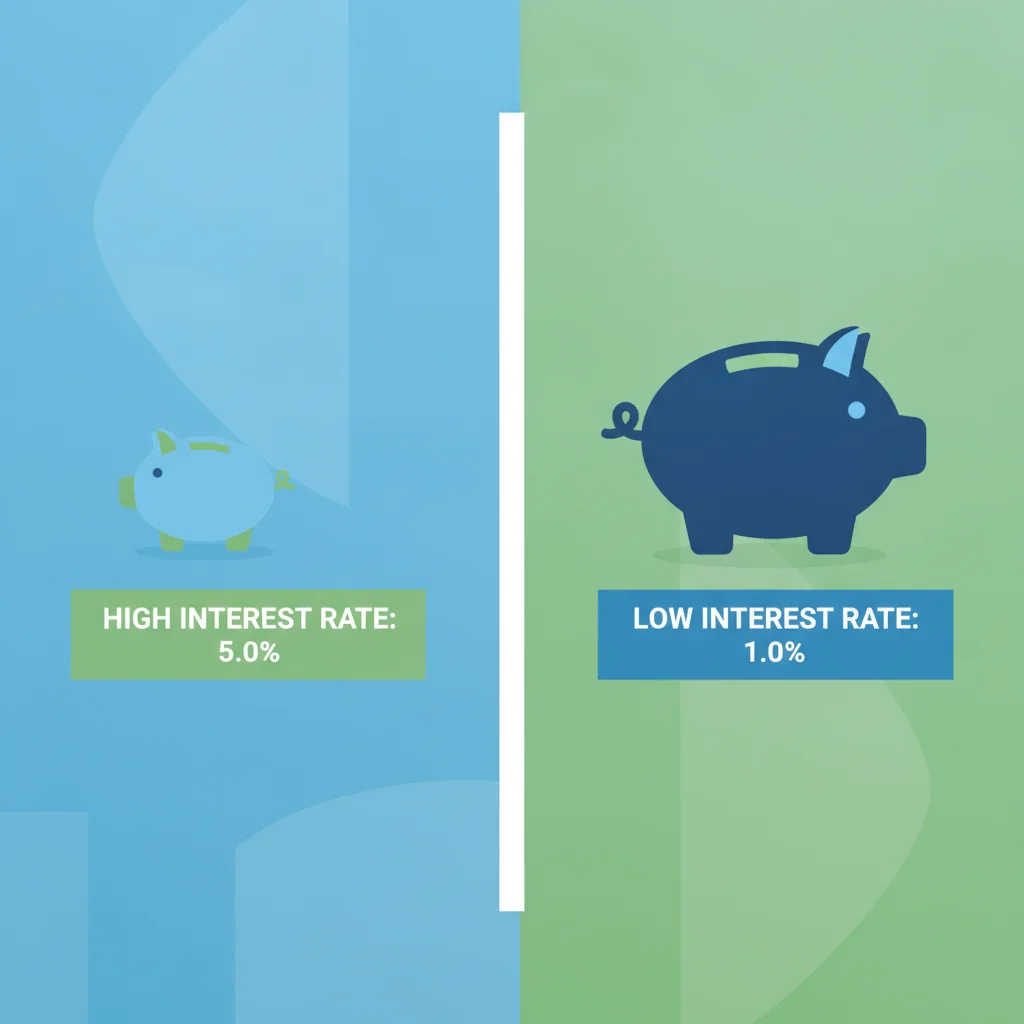
Many lenders use tiered rate structures based on LTV. If your loan is at 90% LTV, you might be at one rate. Drop to 80% LTV with a larger down payment, and you may qualify for a rate that's 0.5% to 1.5% lower — sometimes more. On a $30,000 loan over 60 months, a 1% rate difference is roughly $780 in total interest. That's real money, and it comes directly from a decision you control.
Here's how to approach this strategically:
- Ask your lender directly: "If I increase my down payment to hit 80% LTV, does my rate change?" Good lenders will tell you. Some lenders have specific LTV thresholds — 80%, 75%, 70% — where rates step down.
- Use the gap as negotiating room: If your preapproval comes in lower than the car's price, a larger down payment bridges that gap without requiring a second application or a co-signer.
- Factor in opportunity cost: Tying up more cash in a down payment means less liquidity. Don't strip your emergency fund to chase a slightly lower rate. The goal is optimization, not over-commitment.
Also consider how your down payment interacts with your credit score on an auto loan — because the two factors work together in ways most buyers don't anticipate.
And remember: preapproval is a ceiling, not a commitment. You can always borrow less than what you're approved for. If you find a vehicle below your preapproval amount, put down enough to keep the loan amount right where you planned. You're not obligated to use the full approved amount.
What to Do When Your Preapproval Doesn't Quite Cover the Car You Want
This happens more often than buyers expect, especially when vehicle prices are elevated or when the preapproval was based on an estimated purchase price that turned out to be too low. Your options are more numerous than most buyers realize.
The cleanest solution is usually increasing your down payment. If you're approved for $28,000 and the car you want costs $31,000 out the door, putting an additional $3,000 down closes the gap without a new application. This also keeps your LTV in check, which is good for your rate.
A less obvious option: negotiate the vehicle price down. Dealers aren't always operating at their lowest price point — especially on used inventory. A few hundred dollars off the price, combined with some of your savings, can make the math work without you needing to find a new lender or a co-borrower.
What you don't want to do is let the dealer finance the shortfall through a second loan or a high-rate add-on product. I've seen deals where a buyer had a solid preapproval but the dealer layered in a vehicle service contract financed at 15% to cover a gap in the loan. The buyer thought they were fine because their primary rate was good. They weren't fine.
For a full breakdown of your options in this situation, see what happens when your preapproval is less than the car's price.
Preapproval Is Conditional, Not Guaranteed
A preapproval letter is a conditional commitment based on the information you provided at application. The lender will still verify the vehicle's value and may adjust terms if the car doesn't meet their collateral standards — for example, if it's too old, has too many miles, or is priced significantly above book value. Always confirm final terms once you've identified a specific vehicle.
Watch Out for Dealer-Layered Financing
When dealers know your preapproval doesn't quite cover the purchase price, some will suggest financing add-ons — extended warranties, GAP insurance, paint protection — and roll them into a separate loan or inflate the primary loan at a higher rate. Any product the dealer finances as a solution to a gap should be evaluated independently at its full cost, not just its monthly payment impact.
The Monthly Payment Impact You Can Actually Calculate
One of the most practical ways to see how down payment and preapproval interact is through monthly payment math. Buyers often fixate on the monthly number without understanding what drives it — and that's exactly the environment dealers prefer.
Your monthly payment is determined by three things: the loan amount (purchase price minus down payment), the interest rate, and the loan term. Your preapproval addresses the rate and the maximum loan amount. Your down payment controls the actual loan balance you carry.
Here's a concrete illustration:
| Purchase Price | Down Payment | Loan Amount | Rate | Term | Monthly Payment |
|---|---|---|---|---|---|
| $35,000 | $2,000 (6%) | $33,000 | 7.5% | 60 mo. | $660/mo. |
| $35,000 | $7,000 (20%) | $28,000 | 6.5% | 60 mo. | $548/mo. |
| $35,000 | $10,500 (30%) | $24,500 | 6.0% | 60 mo. | $472/mo. |
Notice that the 20% down payment scenario doesn't just reduce the loan balance — it also comes with a lower rate because the LTV is better. The combined effect is a $112/month difference from the 6% down scenario. Over 60 months, that's $6,720 in total payments. The buyer in scenario three saves $11,280 in payments compared to scenario one — before even accounting for total interest paid.
For the full breakdown on how each dollar of down payment reduces monthly obligations, see how down payment size affects your monthly payment.
Apply for Preapproval Before You Know the Exact Car
You don't need to have a specific vehicle in mind to get preapproved. Apply based on your target price range and planned down payment. This gives you time to compare lender offers without the pressure of a deal on the table. Most preapprovals are valid for 30–60 days — plenty of time to find the right vehicle.
Use a Loan Amortization Calculator to Test Scenarios
Before you finalize your down payment amount, run the numbers through a loan amortization calculator. Plug in different down payment amounts and see how your monthly payment and total interest change at your preapproved rate. Even an extra $1,500 down can meaningfully shift both numbers — and make a 48-month term feasible where a 60-month term previously seemed necessary.
Building Your Strategy Before You Walk Into the Dealership
The buyers who get the best deals aren't the most aggressive negotiators at the table — they're the most prepared ones before they arrive. Preparation means knowing your numbers before anyone else frames them for you.
Here's the pre-dealership checklist that actually moves the needle:
- Check your credit report — Dispute any errors before you apply. Even a single incorrect late payment can drop your score into a worse rate tier.
- Get preapproved from at least two lenders — Your bank or credit union is usually the best starting point. Credit unions in particular tend to offer lower auto loan rates than traditional banks. Having two offers creates competition without meaningfully damaging your credit score if done within a two-week window.
- Decide on your down payment before preapproval — Tell the lender the loan amount you actually want, factoring in your planned down payment. Don't apply for the maximum you might need; apply for what you intend to borrow.
- Know the vehicle's market value — Use pricing tools to understand what the car is actually worth before you negotiate. Your preapproval's LTV calculation depends on the lender's valuation of the vehicle, which is often based on book value guides. If the dealer is pricing above that, your approved loan amount may not cover the full asking price.
- Calculate your target monthly payment range — Know what you can genuinely afford before a salesperson asks you. That way you're using their question as a data point, not letting it anchor the deal.
The down payment and preapproval conversation isn't something that happens at the dealership — it's something you should have with yourself and your lender before you ever test drive a vehicle. Buyers who do that work in advance consistently get better rates, shorter loan terms, and lower total costs. The ones who skip it are the ones subsidizing dealer profit margins.
For context on the broader picture of why down payment size matters to the entire loan structure, see the down payments hub — it covers everything from minimum requirements to trade-in strategies.


All claims are backed by peer-reviewed research. Sources on request.