Key Takeaways
Option A
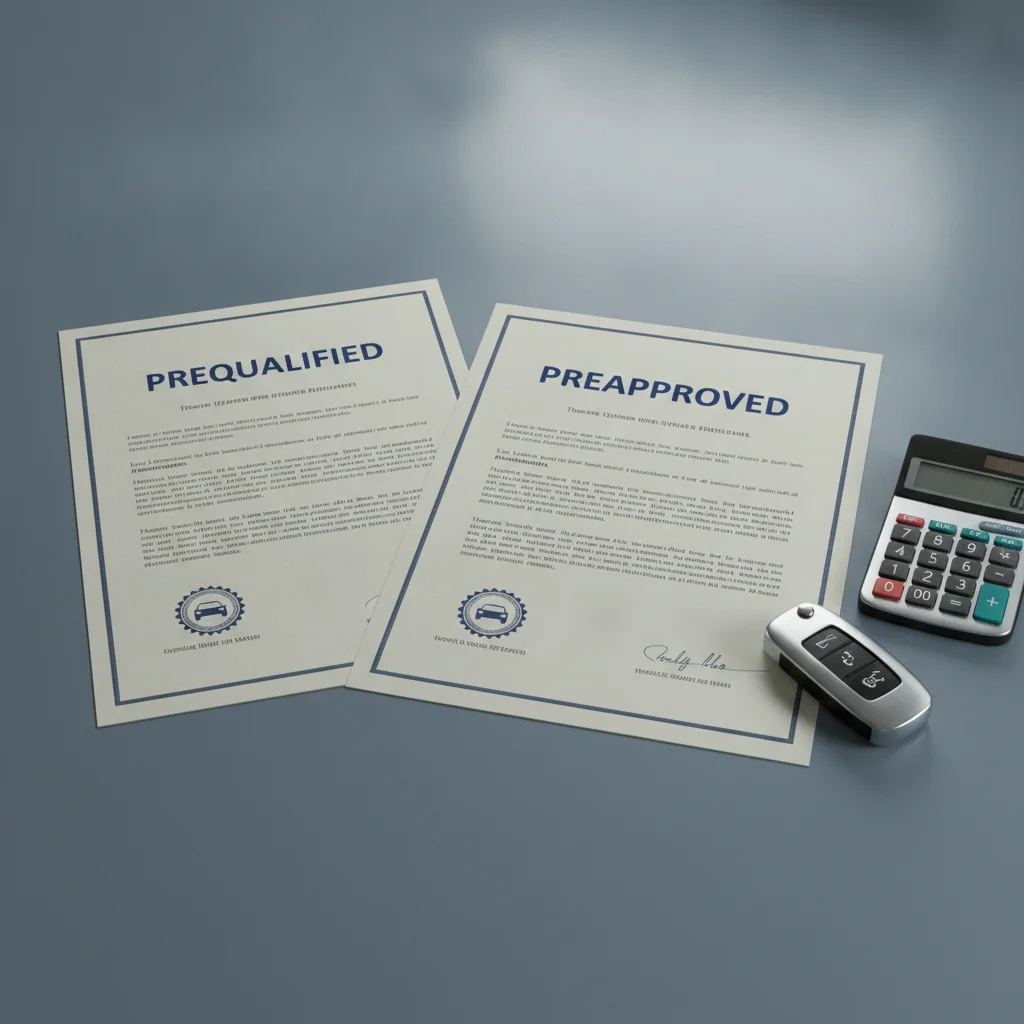
Prequalification
The soft estimate that gets you in the ballpark.
Best for: Early-stage shoppers who want a rough sense of their borrowing range before they've committed to buying.
Option B
Preapproval
The verified offer that gives you real negotiating power.
Best for: Buyers who are ready to shop and want a concrete rate offer that holds weight at the dealership.
If you're just starting to explore whether you can afford a car
Prequalification
It won't ding your credit and gives you a rough borrowing estimate to set expectations before you get serious.
If you're ready to visit dealerships and negotiate
Preapproval
A firm rate offer removes the dealer's financing advantage and gives you a verified number to negotiate against or beat.
If you have bruised or subprime credit and worry about dealership surprises
Preapproval
Knowing your actual approved rate in advance prevents dealers from quoting inflated rates on the assumption you haven't shopped.
If you want to compare multiple lenders without hammering your credit score
Preapproval
Rate-shopping within a 14–45 day window bundles hard inquiries together, minimizing credit score impact while maximizing your rate options.
If you have no idea what your credit looks like right now
Prequalification
Use prequalification to get a baseline read on your creditworthiness, then fix any issues before you pursue formal preapproval.
Why the Distinction Matters More Than You Think
Walk into any dealership without financing sorted out and you hand the finance manager a tool to work against you. They control the rate, the term, and often the monthly payment framing — and they've used all three to obscure the actual cost of a vehicle for decades. The single most effective thing a buyer can do before stepping foot on a lot is understand exactly what kind of financing commitment they're carrying with them.
That's where prequalification and preapproval get confused — and where the confusion costs buyers real money. The terms sound interchangeable, lenders sometimes use them loosely, and plenty of car shoppers assume that if they've done one, they've essentially done the other. They haven't.
Preapproval isn't just a formality — it's a verified credit decision backed by a real underwriting process. Prequalification is a well-informed estimate. Both have value, but only one gives you leverage at the negotiating table.

Let's break down exactly how each process works, what's checked, what's binding, and what a dealer sees when you walk in with each one.
How Prequalification Works — and What It Can't Tell You
Prequalification is essentially an educated guess — a lender's estimate of what you might qualify for based on basic financial information you self-report and a soft credit pull that doesn't affect your score. You'll typically enter your income, housing costs, employment status, and desired loan amount. The lender checks your credit file without a hard inquiry and returns a range: something like "you may qualify for loans between $15,000 and $22,000 at rates between 7% and 11% APR."
That's useful context. It tells you roughly what ballpark you're in before you've committed to anything. For buyers who are months away from purchasing or who simply want to understand their creditworthiness without any risk to their score, prequalification is a reasonable starting point.
But notice what prequalification doesn't do:
- It doesn't verify your income with actual documentation.
- It doesn't confirm your employment.
- It doesn't commit the lender to any specific rate or amount.
- It doesn't give you anything concrete to show a dealer.
A prequalification estimate can change dramatically once a lender actually runs a full credit check and verifies your finances. The gap between the estimated rate you saw during prequalification and the actual rate you're offered can be significant — sometimes several percentage points — especially if your credit profile has nuances that a soft pull doesn't surface.
| Criterion | Prequalification | Preapproval |
|---|---|---|
| Credit check type | Soft pull (no score impact) | Hard pull (minor score impact) |
| Income verification | Self-reported, unverified | Documented and verified by lender |
| Output | Estimated rate range | Specific rate and loan amount |
| Lender commitment | None — estimate only | Binding offer (typically 30–60 days) |
| Dealer credibility | Low — dealers know it's unverified | High — verified by underwriting |
| Negotiating leverage | Minimal | Significant |
| Best timing | Early research phase | Active shopping phase |
| Obligates you to borrow? | No | No |
Subprime borrowers especially should be cautious about treating prequalification as a reliable number. A soft pull may not catch derogatory marks, collections, or payment history patterns the same way a full hard inquiry does.
How Preapproval Works — and Why Dealers Notice
Preapproval is a real credit decision. A lender reviews your full application, pulls a hard credit inquiry, verifies your income and employment, and issues you a specific offer: a maximum loan amount at a specific interest rate for a defined term. That offer is typically valid for 30–60 days and tied to a vehicle that meets certain criteria (usually age and mileage restrictions on used cars).
When you walk into a dealership with a preapproval letter in hand, the dynamic shifts. The finance manager now knows three things they'd rather you didn't know going in:
- You already have a rate. They have to beat it or match it to earn your business.
- You've been through underwriting. You're a verified buyer, not a tire-kicker.
- Their financing markup — the dealer reserve — is visible to you. If they try to quote a rate higher than what your preapproval shows, you'll catch it.
Dealers won't refuse to work with preapproved buyers — that's a myth. But they will try to beat your preapproval with a dealer-arranged loan, because if they can get you to finance through them at a slightly better rate, they still earn a margin from the lender. That's actually a good outcome for you — competition drives your rate down.

One critical point about the hard inquiry: a preapproval doesn't obligate you to take the loan. You can get preapproved by three different lenders, compare the offers, and ultimately use whichever gives you the best terms — or use a dealer-arranged loan if it's genuinely better. The inquiries, if done within a focused shopping window, are typically bundled by FICO and VantageScore models and treated as a single inquiry.
0.5%–2.5%
Typical dealer financing markup range
Industry data from the Consumer Financial Protection Bureau indicates dealers routinely add markup above the lender's buy rate, directly increasing borrower cost.
14–45 days
Rate-shopping window for bundled inquiries
FICO and VantageScore models treat multiple auto loan hard inquiries within this window as a single inquiry, encouraging buyers to shop multiple lenders.
$1,600+
Extra interest from a 2% APR markup
On a $30,000 auto loan over 60 months, a 2 percentage point rate increase adds roughly $1,600 in total interest compared to a buyer who secured the base rate.
30–60 days
Typical preapproval validity window
Most lenders honor a preapproval offer for 30 to 60 days, giving buyers adequate time to shop vehicles without restarting the application process.
The Credit Impact: Soft Pull vs. Hard Pull Explained
This is the sticking point that stops many buyers from pursuing preapproval — the fear of damaging their credit score. It's worth addressing directly, because the concern is largely overblown when you understand how the inquiry system works.
Prequalification: Soft Pull
A soft credit inquiry does not affect your score. Lenders, landlords, employers, and even you yourself can conduct soft pulls without any scoring consequence. Prequalification uses a soft pull, which is why it carries no credit risk — but also why it can't produce a binding offer. The lender hasn't actually committed anything.
Preapproval: Hard Pull
A hard inquiry typically reduces your score by a few points — usually fewer than five — and the effect diminishes over time. More importantly, the credit scoring models used by FICO and VantageScore contain a rate-shopping provision: multiple hard inquiries for the same type of loan (auto, mortgage, student) within a 14-to-45-day window are counted as a single inquiry.
This means you can apply to your bank, a credit union, and an online lender on the same weekend without multiplying the credit score damage. The system is designed specifically to encourage rate shopping — use it.
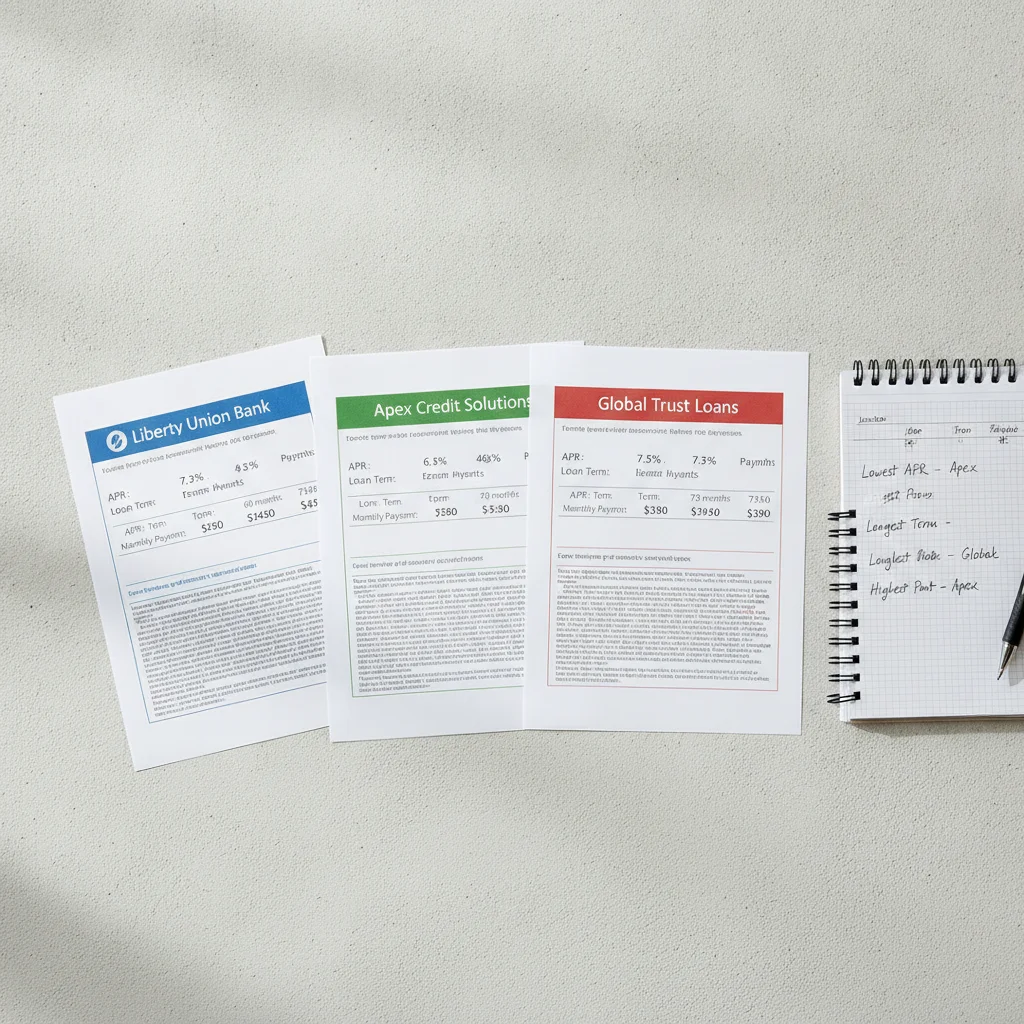
Understanding the terms inside your preapproval offer — APR, loan term, principal — is just as important as getting the offer in the first place. A lower monthly payment isn't always a better deal if it's attached to a longer term that costs you more in total interest.
Check Your Credit Report First
Before pursuing preapproval, pull your free credit reports from AnnualCreditReport.com and review them for errors. A single inaccurate derogatory mark can suppress your score by 20–50 points, costing you a meaningfully higher rate. Disputing errors takes time, so do this step weeks before you plan to apply. If you find clean reports, proceed to preapproval with confidence.
Preapproval Doesn't Lock In the Vehicle
A preapproval approves you as a borrower — not a specific car. You'll still need to identify a vehicle that meets the lender's criteria (typically age, mileage, and loan-to-value limits for used vehicles). Once you choose a car, the lender finalizes the loan against that specific vehicle before closing. Some lenders will adjust terms slightly if the vehicle doesn't meet their standards, so confirm the vehicle requirements when you receive your offer.
Using Preapproval as a Negotiating Lever
Here's what I saw repeatedly from the other side of the finance desk: buyers without preapproval get quoted whatever the finance manager thinks they'll accept. Buyers with preapproval get the dealer's real competitive rate. That's not speculation — it's how the incentive structure works.
When a dealership arranges financing through one of their lending partners, they typically receive a dealer reserve — a markup on the buy rate (the actual rate the lender offers) that can range from 0.5% to 2.5% APR or more. On a $30,000 loan over 60 months, a 2% markup means roughly $1,600 extra in interest paid by the buyer.
Arriving with a preapproval neutralizes this. Your move at the dealership is simple:
- Negotiate the vehicle price first, completely separately from financing. Don't let the conversation merge into a monthly payment discussion.
- Once price is agreed, present your preapproval and tell them you'll be using that rate unless they can beat it.
- Let them try. If they come back with a lower APR from their lender, take it and verify there are no hidden fees attached to that lower rate.
- If they can't beat it, use your preapproval. You've already won.
For buyers considering used vehicles — especially certified pre-owned options — preapproval is especially valuable. CPO financing is often promoted as a deal, but manufacturer-arranged rates are only competitive when you already know your benchmark rate and can compare honestly.
Not all preapprovals are equally firm. Some lenders issue conditional preapprovals that can change once the actual vehicle is identified or income is verified at closing. Before you walk into a dealer, confirm whether your offer is firm or conditional — and what conditions, if any, could alter the rate or amount.
Which One Should You Get — and When
The short answer: get prequalified when you're exploring, get preapproved when you're buying. But the timing matters more than most buyers realize.
Use Prequalification If:
- You're 3–6 months out from purchasing and want to understand your credit picture without any score impact.
- You're unsure whether your income and debt load will support the loan amount you need.
- You want to identify and fix credit issues before applying for a real loan.
Pursue Preapproval If:
- You're actively shopping and plan to buy within the next 30–60 days.
- You want real negotiating leverage at the dealership.
- You're comparing rates across multiple lenders before committing.
- You want to separate the vehicle price negotiation from the financing conversation cleanly.
A common sequence that works well: start with prequalification at one or two lenders to gauge where you stand. Use that information to check your credit report for errors, pay down any revolving balances you can, and identify your target loan amount. Then, when you're ready to shop, apply for preapproval at two to three lenders — a bank or credit union you already have a relationship with, plus one or two online lenders who often offer competitive rates — and do it all within the same week to keep the rate-shopping window tight.
Walk into the dealership with your best preapproval in hand. You're no longer a buyer they're educating about financing. You're a buyer who already knows the answer, and they have to work to beat it.

All claims are backed by peer-reviewed research. Sources on request.