
Key Takeaways
Credit Utilization
Credit utilization is the percentage of your available revolving credit — mainly credit cards — that you're currently using. If you have $10,000 in total credit card limits and carry a $3,000 balance, your utilization is 30%. Lenders and credit scoring models treat high utilization as a sign of financial stress, which can lower your credit score even if you never miss a payment.
FICO and VantageScore models weight credit utilization heavily — it accounts for roughly 30% of your FICO score under the 'amounts owed' category. Both overall utilization across all cards and per-card utilization are evaluated separately.
Why Your Credit Card Balance Is a Car Loan Problem
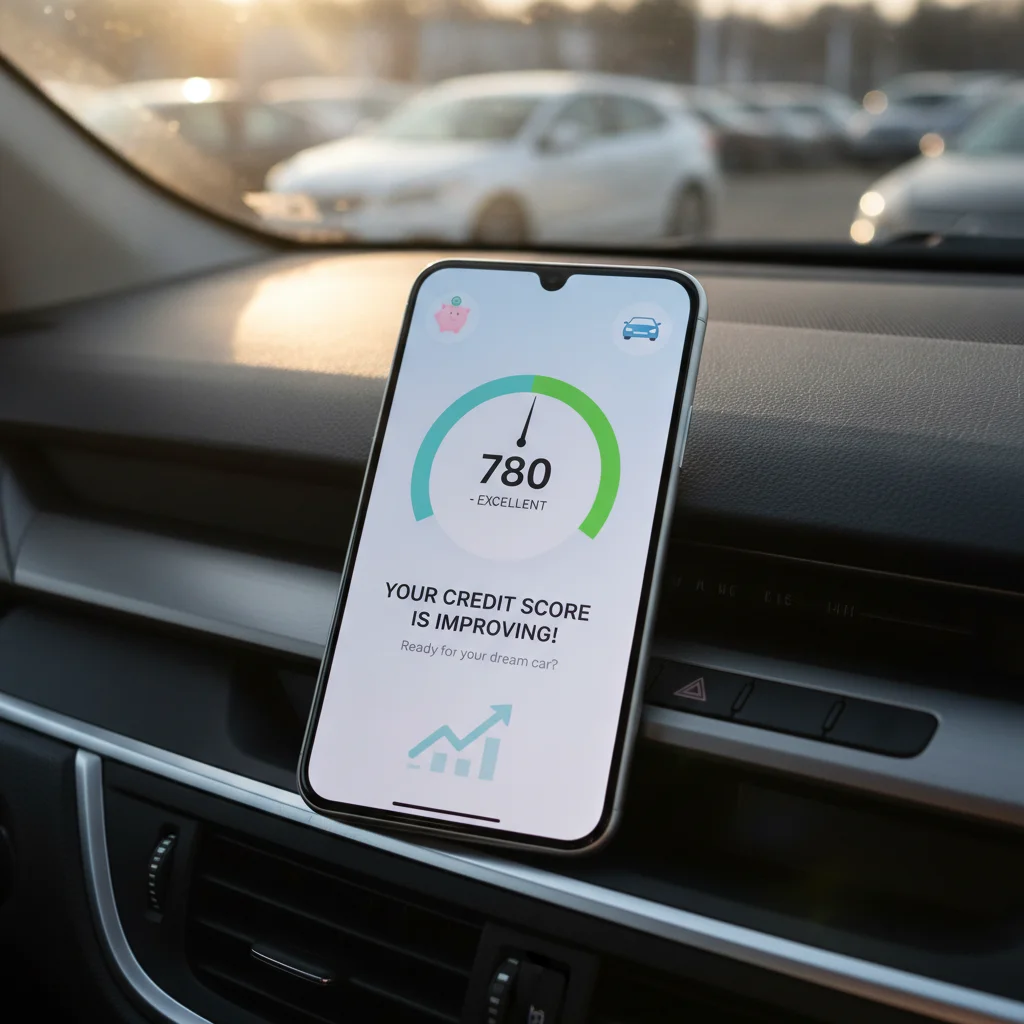
Most buyers walk into a dealership thinking their credit score is the fixed number they checked last month on their banking app. What they don't realize is that the score a lender pulls on application day can be meaningfully different — and often lower — because of what's sitting on their credit cards right now.
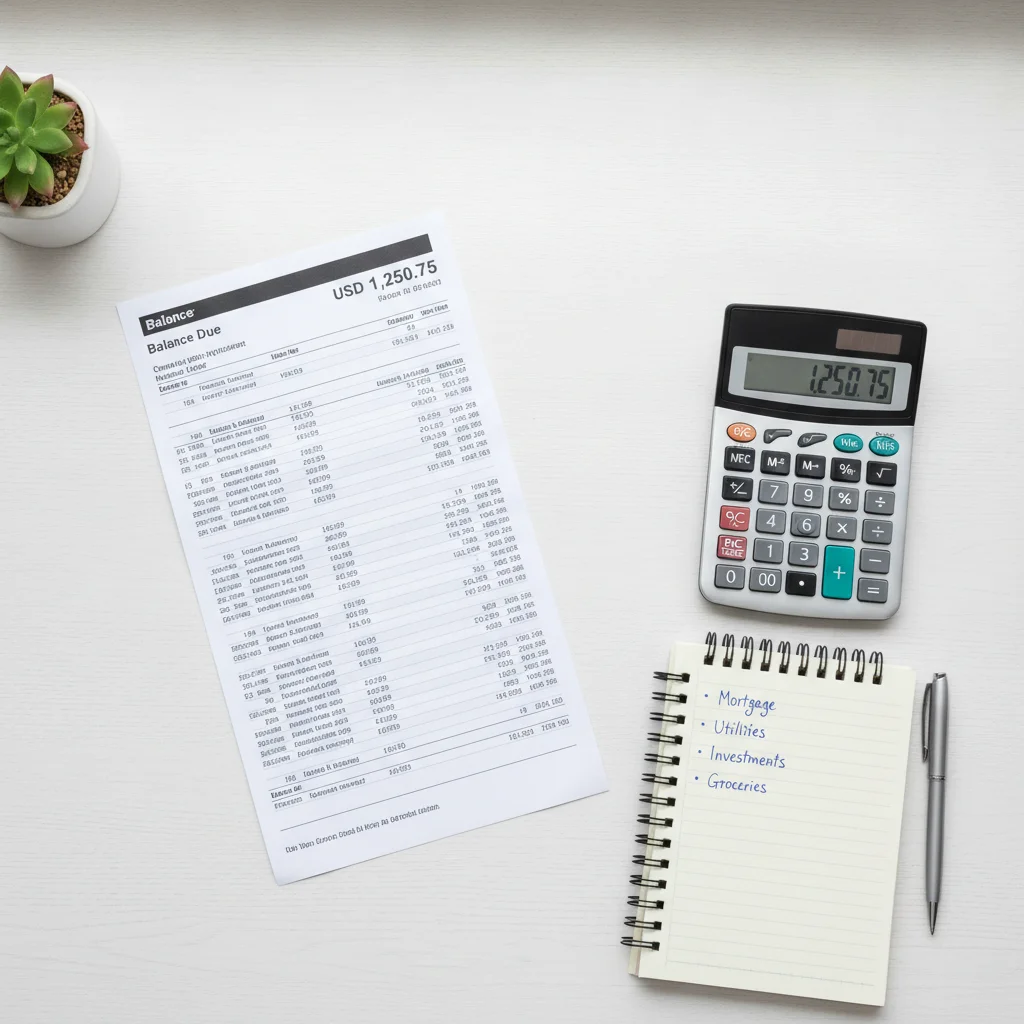
Credit utilization doesn't care that you pay your balance in full every month. It's a snapshot metric. The bureaus capture whatever balance your card issuer happens to report at statement close, not what you actually owe at the end of the month. If you ran up $4,500 on a card with a $6,000 limit — maybe buying furniture, covering a home repair, or just a heavy travel month — your utilization on that card alone hits 75%. That's a problem the day you apply for a car loan, even if you planned to pay it off next week.
I've sat across the desk from buyers who were stunned to find out their rate was a full two points higher than what they'd been quoted during an informal conversation, all because their score had dropped since then. Nine times out of ten, when I dug into it, elevated card balances were the culprit.
This isn't a fringe scenario. It's one of the most consistent, avoidable mistakes car buyers make — and fixing it costs nothing but a little planning.
How the Math Actually Works
Credit utilization is calculated two ways, and both matter to your score:
- Overall utilization: Total balances across all revolving accounts ÷ total credit limits across all revolving accounts
- Per-card utilization: Balance on each individual card ÷ that card's limit
Scoring models penalize you on both dimensions. So if you have three cards with a combined $20,000 in limits and $5,000 in balances, your overall utilization is 25% — not terrible. But if $4,500 of that $5,000 sits on one card with a $5,000 limit, that card's individual utilization is 90%, which scoring models will flag regardless of what the overall number looks like.
30%
Portion of FICO score tied to amounts owed
According to FICO, 'amounts owed' — which includes credit utilization — is the second-largest factor in your credit score, just behind payment history.
~$2,700
Extra interest on a $28K loan from a 40-point score drop
Based on illustrative comparison between a 720-score loan at 6.5% APR and a 679-score loan at 9.9% APR over 60 months — a gap commonly driven by elevated utilization.
30–45 days
Typical time to see score reflect a paydown
After a card issuer reports a lower balance to the credit bureaus, scoring models recalculate within days — but the reporting itself typically follows the monthly billing cycle.
10%
Utilization level that tends to optimize credit scores
Credit scoring experts and FICO data consistently show borrowers with utilization under 10% tend to achieve the highest scores, all else being equal.
Here's a practical example. Take a buyer with a 720 FICO score applying for a $28,000 auto loan over 60 months. At 720, a typical lender might offer 6.5% APR — a monthly payment around $548 and total interest of roughly $4,880. Now imagine that buyer had been carrying a high balance and their score was actually 679 at the time of application. At 679, that same lender might quote 9.9% APR — a payment of $594 and total interest of $7,640. That's $2,760 in additional cost for the same car and the same loan, driven entirely by a credit score gap that could have been closed by paying down a card balance before applying.
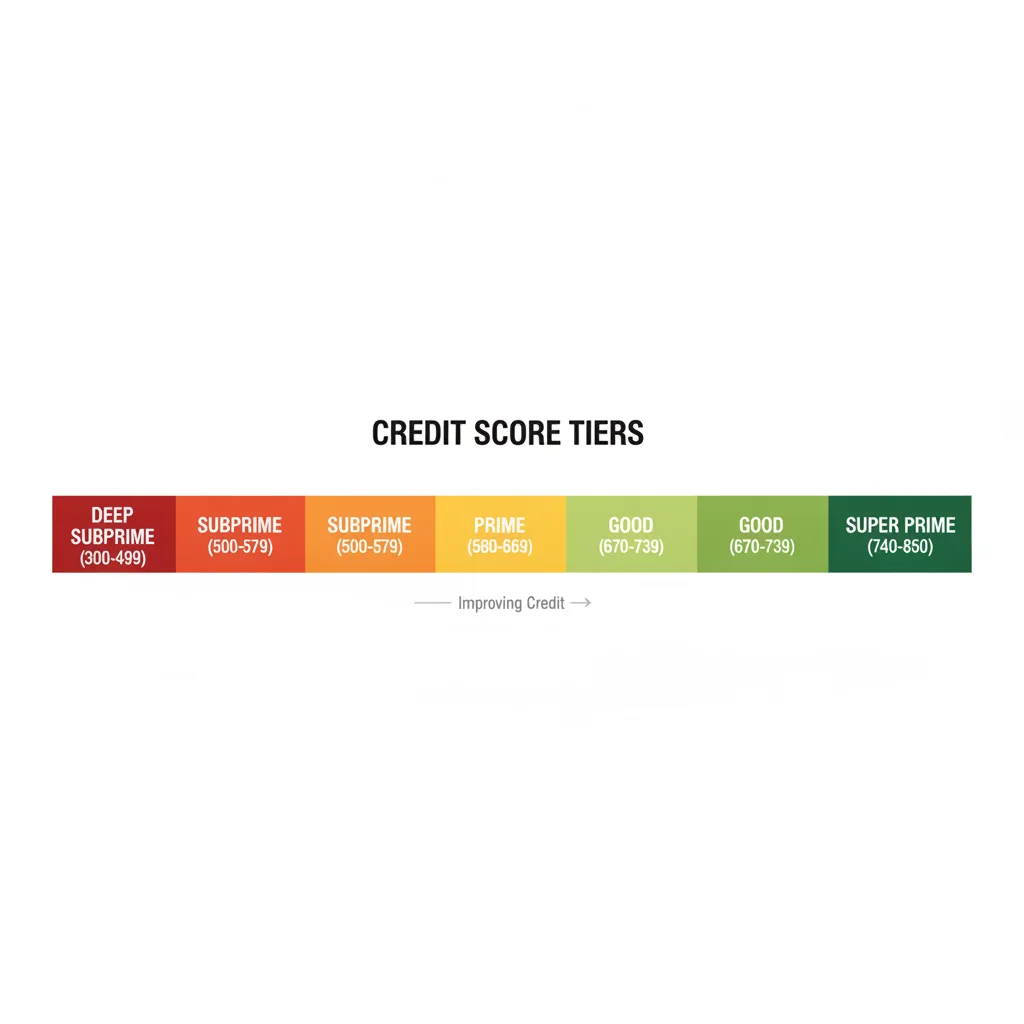
The tier boundaries differ by lender, but the principle is consistent: score bands translate directly into rate bands, and utilization is one of the fastest levers you can pull to move between them.
“Amounts owed is not just about how much you owe — it's about how much of your available credit you're using. Even if you're managing debt responsibly, high utilization tells the scoring model you may be overextended.”
— Ethan Dornhelm, Vice President of Scores and Predictive Analytics at FICO
The Timing Problem Most Buyers Miss
Here's the piece that trips up even financially savvy buyers: utilization improvement is time-sensitive, and the clock is tied to billing cycles, not your payment date.
When you pay down a credit card balance, your card issuer doesn't instantly update the credit bureaus. They report your balance once per billing cycle — typically at statement close. So if you pay down $3,000 on March 18th but your statement closes March 5th, the bureaus won't see the lower balance until April's statement closes. That's potentially a 6-week gap between your action and the score improvement.
Time Your Paydown to Your Statement Date
Find out when each of your card issuers reports your balance to the credit bureaus — this is usually the statement close date, which you can find on your statement or by calling the issuer. Make your paydown payment before that date, not after. Paying the day after the statement closes means you'll wait another full billing cycle for the lower balance to show up in your score.
Get Pre-Approved Before You Touch the Dealership
Walk in with a pre-approval from a bank, credit union, or online lender before the dealer pulls your credit. That gives you a rate benchmark and means you can compare the dealer's offer against something real. Dealers sometimes present financing as a favor — a pre-approval reminds you that you already have options.
The practical implication: if you're planning to buy a car and want to use utilization paydown to boost your score, start at least 60–90 days before you plan to apply. That window gives you two billing cycles to ensure the lower balance is reported and reflected in your score before a lender pulls it.
You can also call your card issuer and ask when they report to the bureaus — most will tell you. Time your paydown to happen just before that reporting date for the fastest possible score update. Some issuers allow you to request an off-cycle balance update, though this isn't guaranteed.
After you have your score in shape, understand that the clock keeps ticking. If you run balances back up between getting pre-approved and actually signing the loan documents, the lender may re-pull your credit at closing and discover the change. See our guide to keeping your score stable between pre-approval and closing for what to avoid during that window.
What Score Range You're Actually Targeting
Auto lenders don't all use the same scoring model, and many use industry-specific auto scores (FICO Auto Score 8 or 9) that weight recent credit behavior somewhat differently than base FICO scores. But the tier structure is broadly similar across lenders:
| Credit Score Range | Tier Label | Typical APR Range (New Car) |
|---|---|---|
| 750+ | Super Prime | 5%–7% |
| 700–749 | Prime | 6.5%–8.5% |
| 660–699 | Near Prime | 8%–12% |
| 620–659 | Subprime | 11%–17% |
| Below 620 | Deep Subprime | 15%–25%+ |
Rates are illustrative ranges based on market conditions and vary by lender, loan term, and vehicle type.
These thresholds mean that a 20-point score improvement — entirely achievable by paying down one credit card — can drop you into a lower rate tier and save you thousands over the loan term. The math is most impactful right at the tier boundaries. A buyer at 698 has much more to gain from a utilization fix than a buyer at 740, because crossing from Near Prime to Prime changes their rate category entirely.
If you're not sure where you stand, check out the score-improvement sequence we cover before you do anything else. Knowing your starting point tells you which lever — utilization, payment history, or something else — will move the needle fastest for your situation.
Auto Lenders May Use a Different Score Version
Many auto lenders use industry-specific FICO Auto Scores (versions 2, 4, 5, 8, or 9) rather than base FICO scores. These models weight certain factors — including recent auto loan payment history — differently. Your base FICO score from a consumer monitoring tool is a reasonable proxy, but the exact number a lender sees may differ by 10–30 points in either direction.
Utilization Resets Every Month
Unlike a late payment, which can stay on your report for seven years, utilization has no memory. Pay down your balances and your score reflects the lower utilization at the next reporting cycle. This makes it one of the most actionable short-term levers available to car buyers who need a score boost before applying.
Practical Steps to Clean Up Utilization Before You Buy
Once you understand the mechanics, the playbook is straightforward. Here's how to execute it:
- Pull your current reports. Get your free reports at AnnualCreditReport.com and note the balance and limit on every revolving account. Calculate your per-card and overall utilization.
- Identify the high-impact targets first. Any card above 50% utilization is a priority. If you have one card at 80% and others at 10%, paying down the 80% card will do far more for your score than spreading payments across all cards.
- Target under 30% per card — ideally under 10%. The score improvement from dropping a card from 80% to 29% is significant. The improvement from 29% to 9% is smaller but still meaningful, especially if you're near a tier boundary.
- Do not close paid-off cards. Closing a card removes that limit from your available credit, raising your overall utilization ratio on remaining cards. It can also shorten your credit history. Pay them off and leave them open.
- Avoid new credit card applications. A new card application generates a hard inquiry, which temporarily dips your score. It also changes your average account age. Neither helps you heading into a car loan application.
- Time the application after the next billing cycle. Confirm when your card issuers report, then apply for the car loan after that report date passes so lenders see the updated, lower balance.
If you're shopping multiple lenders — which you should be — understand how inquiry clustering works so you don't inadvertently hurt your score. See our explainer on how multiple loan applications affect your credit for how to rate-shop without scoring damage.
When Utilization Alone Isn't Enough
Utilization is a powerful lever, but it's not the only signal lenders evaluate. If your score is being dragged down by late payments, collections, or a thin credit file, paying down card balances will help but won't fully offset those other factors. And once you've addressed your score, lenders will also evaluate your debt-to-income ratio — which measures how much of your monthly income goes to debt payments. A great credit score with a high DTI can still result in a denial or a rate bump.
See how these two signals interact in our guide on how lenders use your debt-to-income ratio alongside your credit score.
Also worth addressing: some buyers believe that because they have good income or always pay on time, utilization doesn't matter as much. That's not how scoring models work. Payment history and utilization are weighted separately. You can have a spotless payment record and still score in the 650s because you're carrying $18,000 in credit card balances against $22,000 in limits. Lenders looking at that file see both the good payment behavior and the financial stress signal — and the scoring model has already penalized you for it before the lender even opens your application.
If your situation involves a lower score across multiple factors, the bad credit loan options hub covers financing paths available to borrowers who need to act before they've had time to fully repair their credit profile.
Time Your Paydown to Your Statement Date
Find out when each of your card issuers reports your balance to the credit bureaus — this is usually the statement close date, which you can find on your statement or by calling the issuer. Make your paydown payment before that date, not after. Paying the day after the statement closes means you'll wait another full billing cycle for the lower balance to show up in your score.
Get Pre-Approved Before You Touch the Dealership
Walk in with a pre-approval from a bank, credit union, or online lender before the dealer pulls your credit. That gives you a rate benchmark and means you can compare the dealer's offer against something real. Dealers sometimes present financing as a favor — a pre-approval reminds you that you already have options.
One more thing worth knowing: getting pre-approved before you go to the dealership protects you from having the dealer control the financing conversation entirely. The loan preapproval hub walks through what preapproval actually means and how to use it as leverage. And if you want to know which credit misconceptions are costing buyers money, our breakdown of credit score myths is worth a read before you step foot in a showroom.
All claims are backed by peer-reviewed research. Sources on request.