Key Takeaways
When the Door Keeps Closing
You've done everything you thought was right — submitted the application, provided your income documents, waited nervously — and then received another rejection. If this has happened more than once, the frustration is completely understandable. But repeated denials are rarely a sign that you'll never get a loan. They're usually a signal that something specific in your financial profile needs to be addressed first.
The auto lending market is not a single door. It's a corridor of many doors, and the key is figuring out which one your situation actually fits. Subprime borrowers — generally those with credit scores below 620 — are not automatically excluded from car financing. They're just excluded from certain types of financing. Understanding that distinction changes everything.
Before you apply again anywhere, it's worth reading why loan applications get denied even with steady income, because income is only one piece of a much larger puzzle lenders evaluate. Once you know why you were turned down, the paths below become a lot more actionable.

Here are eight realistic paths forward — ranked roughly from most immediate to longer-term — that can break the cycle of rejection and get you into a car on terms you can actually manage.
Eight Paths Forward When Lenders Keep Saying No
Get a copy of your denial notice and pull your credit reports
Under the Equal Credit Opportunity Act, lenders are required to tell you why they denied your application. This isn't just a formality — it's one of the most useful pieces of information you can have. Look for the specific reasons listed on your adverse action notice: high debt-to-income ratio, too many recent inquiries, derogatory marks, insufficient credit history, or unverifiable income.
Once you have those reasons, pull your free credit reports from AnnualCreditReport.com and check each one — Equifax, Experian, and TransUnion — separately. Errors are more common than people expect: incorrect balances, accounts that belong to someone else, or payments marked late that were actually on time. Disputing and correcting errors can lift your score meaningfully within 30 to 60 days, sometimes enough to move you into an approvable range.
This step costs nothing and takes less than an hour. There's no reason to skip it before trying again anywhere else.
Your denial notice contains the exact reasons you were rejected — treat it as a roadmap, not just bad news.
Apply at a credit union before trying other lenders
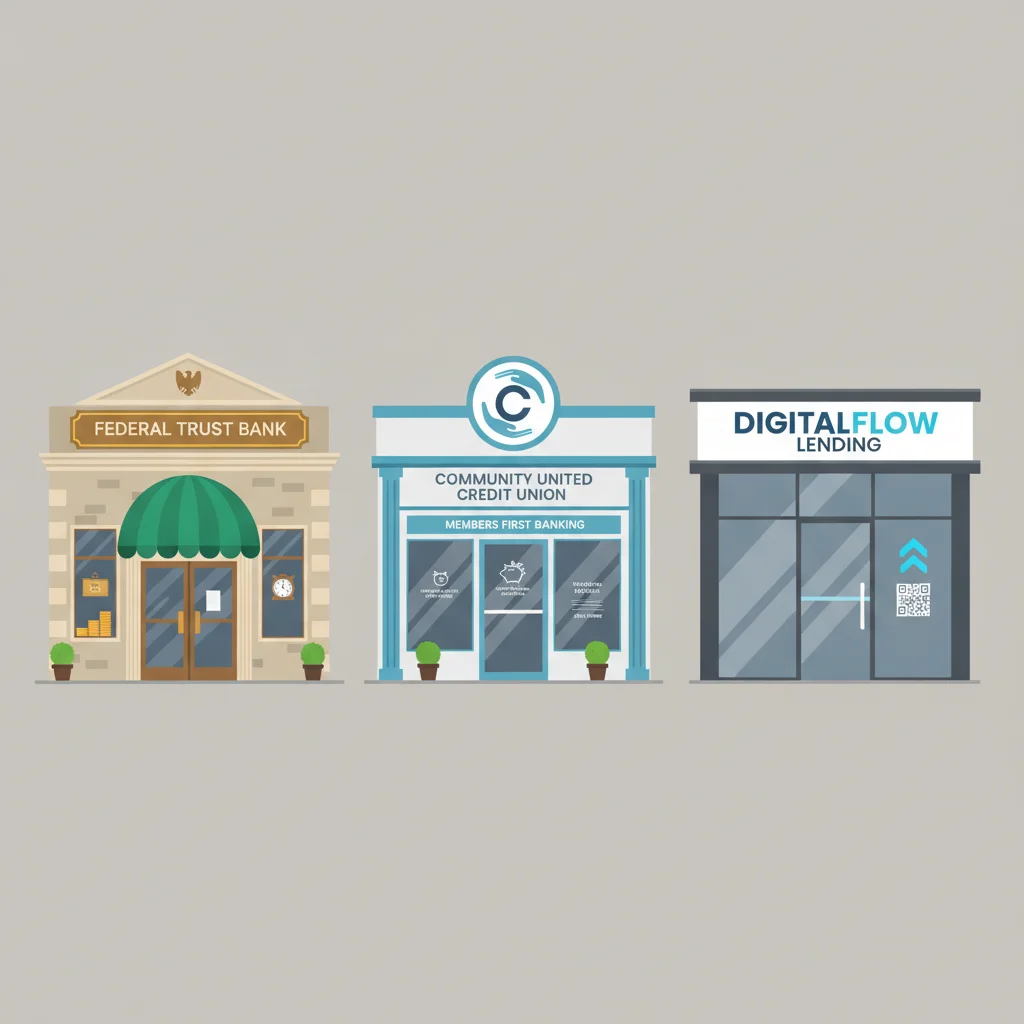
Credit unions are member-owned, nonprofit financial institutions, and that structure changes how they make lending decisions. They're not trying to maximize shareholder returns — they're trying to serve their members. That often translates to more flexibility on credit score thresholds, lower interest rates than subprime banks, and a willingness to consider context that automated systems ignore.
Many credit unions have subprime lending programs specifically designed for members rebuilding their credit. Some even offer "fresh start" auto loans with manageable terms and a built-in path to refinancing once your score improves. If you're not already a member of a credit union, joining one is usually straightforward — many accept anyone who lives or works in a certain area, or who joins an affiliated nonprofit for a small fee.
For a side-by-side comparison of how credit unions stack up against banks and online lenders when your credit is challenged, this breakdown of lender types is worth reading before you submit another application.
Credit unions can say yes when banks say no — their nonprofit structure gives them room to consider your full picture.
Add a creditworthy co-signer to your application
A co-signer is someone with strong credit — typically a score above 680 — who agrees to share legal responsibility for the loan. From the lender's perspective, this dramatically reduces their risk: if you stop making payments, they can pursue the co-signer. That reduced risk often means the difference between denial and approval, and it can also lower the interest rate you're offered.
The catch is significant: your co-signer is fully liable for the debt. If you miss payments, their credit score takes the hit. This isn't a favor to ask lightly, and it works best when you have a concrete plan to refinance the loan in your name alone within 12 to 24 months — once your own credit profile has improved. Be transparent with your co-signer about the risks and your repayment plan before they sign anything.
A parent, sibling, or close friend with good credit who trusts your commitment to repayment is the typical co-signer profile. Some lenders also require that the co-signer be a joint owner on the vehicle title, which is worth clarifying upfront.
A co-signer doesn't just open doors — it can lower your rate significantly, saving you thousands over the loan term.
Increase your down payment to reduce lender risk
A larger down payment accomplishes two things simultaneously: it reduces the loan amount you're requesting (making the numbers easier for an underwriter to approve), and it lowers the lender's exposure if you default and they need to repossess and resell the vehicle. That second factor matters more than most borrowers realize.
Lenders look closely at your loan-to-value ratio — the size of the loan compared to the car's actual market value. If you're financing 110% of a vehicle's value (common when people roll negative equity into new loans), lenders see significant risk. If you come in with 20% down, that ratio drops sharply and approval becomes much more likely even with a damaged credit profile.
If you don't have cash saved, consider whether you can delay your purchase by 90 to 120 days to build a down payment fund. Even an extra $1,000 to $2,000 can shift the math in your favor. Selling a current vehicle, even one that's old, can also generate meaningful down payment capital.
[in_content_images:2]Every extra dollar down reduces both your approval risk and your monthly payment — it's the most direct lever you control.
Consider a Buy Here Pay Here dealer as a short-term solution
Buy Here Pay Here (BHPH) dealerships are auto dealers that act as their own lender. They finance cars directly without going through a bank or credit union, which means they don't run traditional credit checks or use the same approval criteria. For someone who has been rejected everywhere else, BHPH can be the only available path to a vehicle right now.
The tradeoffs are real and worth understanding clearly. BHPH dealers typically charge interest rates between 20% and 30%, sometimes higher. The vehicles are usually older, higher-mileage cars. Payment terms often require weekly or bi-weekly in-person payments. And many BHPH dealers do not report your payment history to the credit bureaus — meaning months of on-time payments may not help your credit score at all.
If you go the BHPH route, treat it as a bridge, not a destination. Ask explicitly whether they report to the credit bureaus — some do, and those are preferable. Keep the vehicle for 12 to 18 months while aggressively building your credit profile, then refinance or trade up through a traditional lender. The goal is to use BHPH to solve an immediate transportation problem while working on a longer-term financial solution.
BHPH financing is expensive, but it can solve a transportation crisis while you rebuild toward better loan terms.
Open a secured credit card to rebuild your score faster
If you have time before your next application — even just six months — a secured credit card is one of the most efficient tools for rebuilding a damaged credit profile. You deposit a sum of money (typically $200 to $500) that becomes your credit limit. The card issuer reports your activity to the credit bureaus, and because the deposit eliminates their risk, approvals are available to people with very low or thin credit files.
The strategy is straightforward: use the card for a small recurring purchase each month — a streaming subscription, gas, or groceries — and pay the full balance before the due date every single month. This creates a pattern of on-time payment history, which is the single most heavily weighted factor in your credit score at 35%. Within six months of consistent use, most people see measurable improvement.
Look for secured cards that charge no annual fee or a minimal one, and that explicitly state they report to all three major credit bureaus. Some secured cards also offer a path to upgrade to an unsecured card and return your deposit after 12 months of responsible use.
Six months of on-time secured card payments can move your credit score enough to unlock entirely different loan terms.
Use a credit-builder loan from a community bank or CDFI
A credit-builder loan works differently from most loans: the lender holds the loan amount in a locked savings account, and you make fixed monthly payments over 6 to 24 months. When the loan is paid off, you receive the funds. The entire value is in the payment history reported to the credit bureaus — it's essentially a structured way to prove creditworthiness with minimal risk to the lender.
Community Development Financial Institutions (CDFIs) and many community banks and credit unions offer these loans specifically for people rebuilding credit. Loan amounts typically range from $500 to $2,500, and monthly payments are small — often $25 to $75. The interest rate is usually low because the loan is fully secured by the deposit.
The dual benefit here is worth noting: at the end of the loan term, you have both an improved credit profile and a lump sum of savings that can serve as a down payment on your auto loan. It's one of the few financial products that directly addresses two problems at once. If you've had a repossession or seriously delinquent account in your history, this guide on rebuilding credit after repossession pairs well with this strategy.
A credit-builder loan solves two problems at once: it builds your credit history and accumulates a down payment simultaneously.
Explore subprime-specialist online lenders with soft-pull prequalification
A small but growing segment of online lenders focuses specifically on subprime auto loans — borrowers with scores in the 500s and even lower. These lenders use alternative underwriting models that weigh employment stability, income level, and time at current address more heavily than a traditional credit score alone. They're not a perfect solution, but they're a real option that many borrowers overlook because they assume "online lender" means the same approval criteria as a bank.
Crucially, many of these lenders offer soft-pull prequalification — meaning you can see whether you're likely to be approved and at what approximate rate before a hard inquiry hits your credit report. This matters because each hard inquiry reduces your score by a small amount (typically 5 to 10 points), and a string of full applications can actually push your score down further during a period when you're trying to build it up.
Use prequalification tools broadly, then commit to a full application only at the lender or lenders where you have the strongest likelihood of approval. For a structured approach to the prequalification process, the loan preapproval hub covers what preapproval actually means and how it strengthens your negotiating position at a dealership. And when you're ready to take the step, getting preapproved with less-than-perfect credit outlines which lenders are worth approaching at different score ranges.
Soft-pull prequalification lets you shop multiple subprime lenders without damaging the credit score you're working hard to rebuild.
Rate-shop within a 14-day window
Credit scoring models from FICO and VantageScore treat multiple auto loan inquiries made within a 14-day window as a single inquiry for scoring purposes. This means you can apply to several lenders in quick succession without compounding the credit score impact. Use this window strategically — gather your documents, identify your top three to five lender candidates, and submit applications within that two-week period.
Negotiate the vehicle price separately from financing
At a dealership, the sales team and the finance office have separate goals. Always negotiate the vehicle's purchase price to its lowest point before discussing financing at all. If the dealer knows you need their in-house financing, they have less incentive to reduce the vehicle price. Come in with a preapproval from a credit union or online lender whenever possible — even a conditional one — so you have a benchmark to compare against dealer financing offers.
What counts as a 'subprime' borrower
The term 'subprime' typically refers to borrowers with FICO scores below 620, though some lenders draw the line at 580 or even 640. 'Deep subprime' generally describes scores below 500. These categories affect which lenders will consider your application and what interest rate range to expect — but they're not permanent labels. Credit scores change continuously based on your financial behavior, and moving from deep subprime to subprime can take as little as six to twelve months of consistent positive activity.
Dealership financing is not your only option
Many borrowers assume the dealership's finance department is their only route when credit is challenged — especially if they've already been rejected by their bank. That's not accurate. Credit unions, online lenders, and community banks all offer direct-to-consumer auto loans, and some specialize in subprime profiles. Securing a preapproval from any of these sources before visiting a dealership gives you a real alternative and measurably stronger negotiating leverage on the loan terms.
Refinancing is a legitimate exit strategy
If you accept a high-rate loan today out of necessity — whether from a BHPH dealer, a subprime lender, or a dealership's finance department — you are not locked into those terms forever. After 12 months of on-time payments, your credit profile will typically have improved enough to qualify for refinancing at a meaningfully lower rate. Set a calendar reminder to check your credit score and explore refinancing options at the 12-month mark of any high-rate loan you take.
Choosing the Right Next Step for Your Situation
Not every path here will apply to you equally. The right move depends on how urgent your transportation need is, how far your credit score is from a workable range, and whether you have any flexibility on down payment or vehicle choice.
If you need a car right now, your short-term options are a co-signer, a larger down payment, or a Buy Here Pay Here dealer — with the understanding that BHPH financing is expensive and should be temporary. If you have 6 to 12 months of flexibility, the credit-builder route will save you substantially more money over the life of any loan you eventually take.

The lender type you approach also matters more than most people realize. For a full breakdown of how banks, credit unions, and online lenders each evaluate subprime applications differently, see where to seek preapproval first based on your credit profile. And when you're ready to start the preapproval process again, getting preapproved with less-than-perfect credit walks you through which lenders are actually worth approaching and what to expect from the process.
The important thing is this: a rejection today is data, not a verdict. Use it to make a more informed application tomorrow — or to make a better financial decision in the meantime.

All claims are backed by peer-reviewed research. Sources on request.