

Key Takeaways
Why Preapproval Matters Even More When Your Credit Is Damaged
Here's the dynamic that plays out every day at dealerships across the country: a buyer with a 580 credit score walks in without financing lined up. The salesperson smiles, takes their keys for a trade-in appraisal, and routes them straight to the finance office. Suddenly that buyer is entirely at the mercy of whoever the dealer decides to send their loan application to — lenders that pay the dealer a kickback called a dealer reserve, often adding 1–3 percentage points to your interest rate without your knowledge.
When you arrive with a preapproval letter in hand, that entire script gets flipped. You already know your rate, your maximum loan amount, and your terms. The dealer either has to beat your rate or you use what you have. That leverage is valuable for any buyer, but it's especially critical when your credit is imperfect — because lenders vary wildly in how they treat subprime borrowers, and the difference between a bad deal and a workable one is often just which lender you landed with.
Getting a car loan with bad credit does come with real trade-offs — higher rates, stricter loan-to-value requirements, shorter terms on older vehicles — but a preapproval forces those trade-offs into the open before you're sitting in a finance office under pressure. This guide walks you through exactly how to get there.

Know Where You Stand Before You Apply
Applying blindly is one of the most expensive mistakes a subprime borrower can make. Before you submit a single application, you need a clear picture of your actual credit profile — not a rough guess.
Pull Your Credit Reports First
Get your free reports from all three bureaus at AnnualCreditReport.com. You're looking for three things: derogatory marks (collections, charge-offs, late payments), errors that don't belong to you, and your current balances relative to your credit limits. Errors are more common than most people realize — a misreported collection or an account that was paid and closed but still shows a balance can be suppressing your score by 30–50 points.
If you spot errors, dispute them with the bureau directly before applying. Transunion, Equifax, and Experian all have online dispute portals, and a legitimate error can be corrected in 30–45 days. That could meaningfully change which lender tier you qualify for.
Understand Your Actual Score Range
Lenders typically classify borrowers into tiers. The exact cutoffs vary by lender, but a general framework looks like this:
| Credit Score Range | Lender Classification | Typical APR Range |
|---|---|---|
| 720+ | Prime / Super-prime | 4%–7% |
| 660–719 | Near-prime | 7%–11% |
| 600–659 | Subprime | 11%–18% |
| 500–599 | Deep subprime | 18%–26%+ |
| Below 500 | High-risk / Specialty only | Varies widely |
These ranges help you self-select toward the right lender types before you apply. Credit score ranges and what they mean for your preapproval odds breaks down this tier system in detail, including how moving even one tier up can dramatically reduce your total interest paid.
Don't Apply Everywhere at Once
Submitting applications to a dozen lenders over the course of a month signals credit-seeking behavior and can compound score damage. Rate-shop with 2–4 targeted lenders within a 14-day window. More applications rarely produce better results — they just create more inquiries.
Avoid Yo-Yo Financing at the Dealership
Dealers sometimes let subprime buyers drive home a vehicle before financing is fully finalized, then call days later to say the deal fell through and demand a higher rate or larger down payment. If you arrive with your own preapproval, this tactic has no leverage over you — your financing is already secured.
Longer Loan Terms Mean More Total Cost
Subprime lenders and dealers often extend terms to 72 or 84 months to make high-rate loans appear affordable. A $25,000 loan at 18% APR over 84 months costs over $13,000 in interest. Always calculate the total cost, not just the monthly payment, before accepting any offer.
Calculate Your Debt-to-Income Ratio
Your credit score tells lenders about your repayment history. Your debt-to-income (DTI) ratio tells them whether you can actually afford another payment. Add up all your monthly debt obligations — rent or mortgage, student loans, credit card minimums, any other installment loans — and divide by your gross monthly income. Most lenders want to see a DTI below 45%, and some subprime lenders cap at 50%. If you're above that, a larger down payment or paying down a revolving balance before applying can make the difference between approval and denial.
For a full breakdown of what lenders weigh, see everything your lender looks at before issuing a preapproval.
Which Lenders Will Work With Challenged Credit
Not every lender is built for every borrower. Understanding who to approach — and in what order — saves you both time and unnecessary credit inquiries.
Credit union membership
Credit unions often offer the most borrower-friendly rates and programs for members with challenged credit histories.
Capital One Auto Navigator
Allows subprime borrowers to prequalify with a soft credit pull and browse participating dealer inventory at estimated rates.
myAutoloan
A multi-lender marketplace that submits your application to several subprime-friendly lenders simultaneously.
Autopay
An online lending platform that specializes in auto refinancing and new purchase loans for borrowers across credit tiers.
AnnualCreditReport.com
Free access to credit reports from all three bureaus — essential for identifying errors before applying.
Auto loan calculator
Used to compute total interest paid and true cost comparisons across different rate and term combinations.
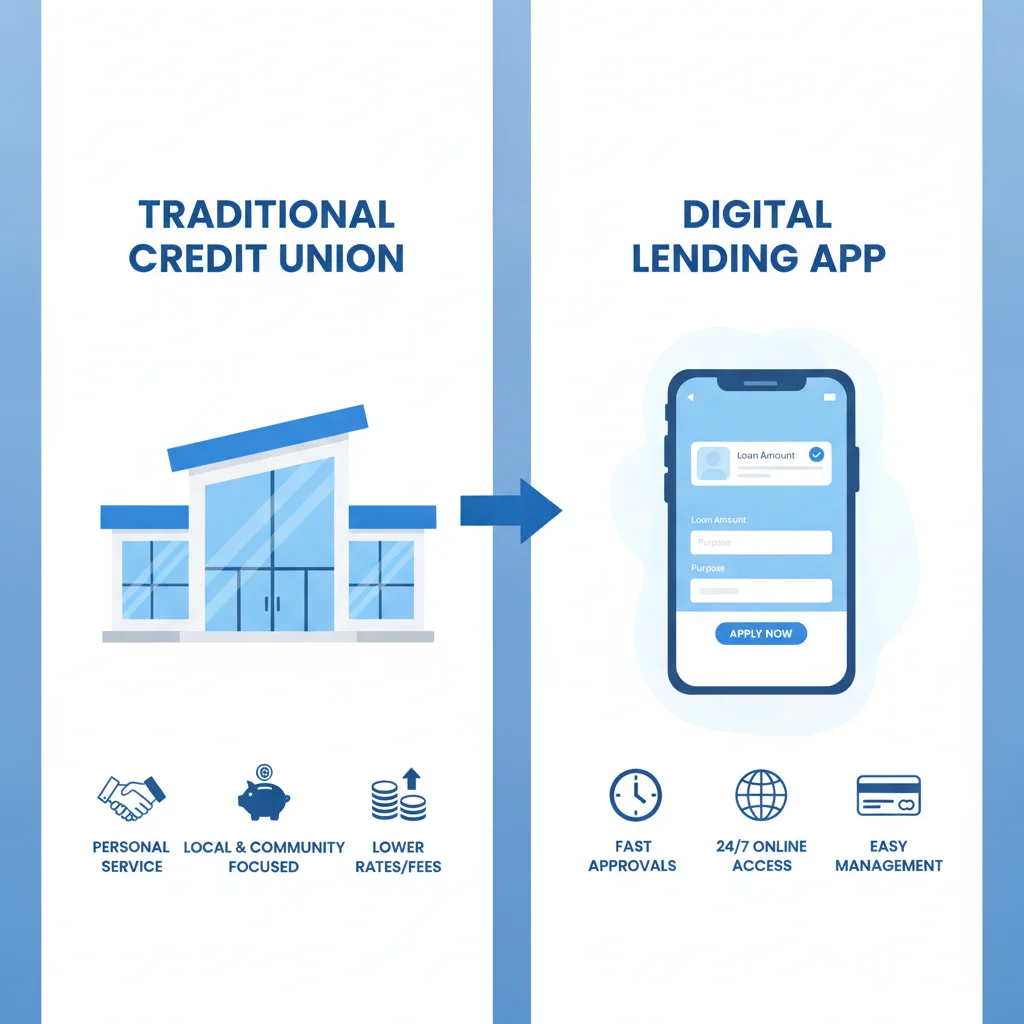
The best strategy is to start with institutions that already have a relationship with you. If you have a checking account at a credit union, call their loan department before you do anything else. Credit unions are member-owned nonprofits, which means their mission isn't to maximize margin on your desperation — they often have internal programs specifically for members rebuilding credit.
If your own financial institution can't help, move to online lenders that specialize in subprime auto lending. Lenders like Capital One Auto Navigator, myAutoloan, and Autopay allow you to prequalify using a soft pull, which doesn't affect your score. A soft pull prequalification isn't the same as a hard-inquiry preapproval, but it tells you which rate tiers you'd likely qualify for before you commit to a full application.
For borrowers with scores below 550, a Buy Here Pay Here (BHPH) dealership is sometimes the only realistic path to a vehicle. These dealers act as their own lenders and don't typically report to credit bureaus — which means you won't build credit history while paying them. Treat BHPH financing as a short-term bridge, not a long-term solution. The bad credit loans hub covers the full spectrum of options for borrowers at every impairment level.
Dealer Markup Is Real — and Legal
When a dealership routes your loan through one of their preferred lenders, they are often permitted to mark up the interest rate above what the lender actually offered. This spread — called dealer reserve — is their profit on the financing. It is entirely legal and rarely disclosed. Your preapproval from an outside lender is the only reliable protection against this practice. Walk in with your own rate, and the dealer's markup becomes irrelevant.
Preapproval Expiration Dates Matter
Most preapproval letters expire in 30–60 days. If you don't find a vehicle within that window, you'll need to reapply — and your credit profile, rate environment, or income situation may have changed. Plan your vehicle search to run concurrently with your preapproval process, not after it.
Step-by-Step: Getting Preapproved With Less-Than-Perfect Credit
The process below is sequenced deliberately. Follow it in order to minimize hard inquiries, put your strongest application forward, and arrive at the dealership with real leverage.
What you will need
Pull and review your credit reports from all three bureaus
Go to AnnualCreditReport.com and download your reports from Equifax, Experian, and TransUnion. Review each one for errors, unfamiliar accounts, and any derogatory marks. Flag anything that looks wrong — you'll dispute those before applying.
Dispute any errors on your reports
File disputes directly with each bureau's online portal for errors you identified. A single misreported collection or incorrect balance can suppress your score significantly. Track your disputes and follow up — bureaus have 30 days to investigate and respond.
Calculate your debt-to-income ratio and down payment capacity
Add up all monthly debt payments and divide by gross monthly income. Aim for a DTI below 45%. Then determine the largest down payment you can realistically make — every additional dollar down reduces your loan amount, your rate risk, and your monthly payment.
Get prequalified through soft-pull lenders to gauge your range
Use Capital One Auto Navigator, myAutoloan, or Autopay to run a soft-pull prequalification. This gives you realistic rate and term estimates without affecting your credit score. Use these results to decide which lenders to pursue for a full application.
Apply to multiple lenders within a 14-day window
Submit full applications to 2–4 lenders — your credit union or community bank first, then 1–2 online subprime lenders. Do all of this within a 14-day period. Credit scoring models treat multiple auto loan inquiries within this window as a single inquiry, minimizing score impact.
Compare all offers on APR, term length, and total cost — not monthly payment
When offers come in, compare them on three dimensions: Annual Percentage Rate (APR), loan term in months, and total interest paid over the life of the loan. A lower monthly payment achieved by extending your term from 60 to 84 months may cost you $2,000–$4,000 more in total interest.
Choose your best offer and secure your preapproval letter
Select the offer that minimizes total cost within a monthly payment you can genuinely sustain. Request a formal preapproval letter from that lender — this is the physical or digital document you bring to the dealership. Confirm the letter specifies your approved loan amount, rate, and expiration date (most are valid for 30–60 days).
Once you have your preapproval letter, you're ready to shop. If your approved amount is lower than the vehicle price you have in mind, what happens when your preapproval amount is less than the car's price walks through your options for bridging that gap without blowing up your budget.
Rate Shopping Window Is Your Best Friend
FICO and VantageScore both treat multiple auto loan inquiries made within a short window (typically 14–45 days depending on the model version) as a single inquiry. This is specifically designed to encourage rate shopping. Apply to multiple lenders in a tight cluster, never spread out over weeks.
Let the Dealer Try to Beat Your Rate
Always share that you have outside financing and ask if the dealer can do better. You're under no obligation to use their offer — but dealers sometimes access lender programs not available directly to consumers. Even a 0.5% rate improvement on a $18,000 loan saves you over $400 across a 60-month term.
Gap Insurance Is Worth It for Subprime Buyers
When you're putting less than 20% down and financing at a higher rate, you'll be underwater on your loan from day one. Gap insurance covers the difference between what your car is worth and what you owe if it's totaled or stolen. Shop it through your auto insurer first — dealership gap coverage is typically 2–3 times more expensive.
Using Your Preapproval as a Negotiating Weapon
A preapproval letter in your hand changes the conversation at the dealership from the moment you walk in. Here's how to use it strategically.
Lead With the Vehicle Price, Not the Monthly Payment
Finance managers are trained to anchor negotiations around monthly payment. The moment you say "I need to stay under $400 a month," they have permission to extend your loan to 84 months, load in extras, and inflate your rate — all while keeping you technically within budget. Never volunteer your payment target.
Instead, open with: "I've been preapproved by my own lender. Let's agree on the out-the-door price of the vehicle first, and then I'll decide whether to use my financing or yours." That one sentence repositions the entire negotiation.
Let the Dealer Compete for Your Business
Dealers make money when they place loans. If your preapproval is at 14.9% APR, tell the finance manager you have outside financing and ask if they can do better. Many dealers have preferred lender relationships that allow them to offer competitive rates to subprime buyers — because they earn a flat fee for the referral rather than rate markup. This is how buyers with challenged credit occasionally get surprised with better-than-expected terms at the dealership.
Watch the Add-Ons
Your preapproval covers the vehicle price, not the F&I (finance and insurance) office extras: extended warranties, gap insurance, paint protection, credit life insurance. Each of these gets rolled into your loan balance if you agree, increasing both your principal and your total interest cost. Gap insurance is the one add-on that legitimately protects subprime buyers — if you're putting less than 20% down on a vehicle, you're likely underwater immediately, and gap covers the difference if the car is totaled. Everything else is negotiable or available cheaper elsewhere.

If you're considering a used vehicle purchase alongside your financing, the buying used cars guide covers what to inspect and how to evaluate whether a used car's price reflects its actual condition and market value.
Rate Shopping Window Is Your Best Friend
FICO and VantageScore both treat multiple auto loan inquiries made within a short window (typically 14–45 days depending on the model version) as a single inquiry. This is specifically designed to encourage rate shopping. Apply to multiple lenders in a tight cluster, never spread out over weeks.
Let the Dealer Try to Beat Your Rate
Always share that you have outside financing and ask if the dealer can do better. You're under no obligation to use their offer — but dealers sometimes access lender programs not available directly to consumers. Even a 0.5% rate improvement on a $18,000 loan saves you over $400 across a 60-month term.
Gap Insurance Is Worth It for Subprime Buyers
When you're putting less than 20% down and financing at a higher rate, you'll be underwater on your loan from day one. Gap insurance covers the difference between what your car is worth and what you owe if it's totaled or stolen. Shop it through your auto insurer first — dealership gap coverage is typically 2–3 times more expensive.
What to Do If You Get Declined or Quoted an Unusable Rate
Getting declined or quoted a 26% APR isn't the end of the road — it's information. Here's how to respond strategically rather than emotionally.
Ask Why You Were Declined
Lenders are required to send you an adverse action notice explaining why you were denied. Read it carefully. If the reason is a specific derogatory account, you may be able to address it before reapplying. If it's DTI-related, you have a solvable problem: increase your down payment, eliminate a debt, or apply with a co-borrower.
Consider a Co-Signer or Co-Borrower
A co-signer with strong credit can unlock approvals and rates you'd never qualify for alone. The distinction matters: a co-signer backs the loan if you default but isn't on the title; a co-borrower shares both the debt obligation and ownership. Either arrangement requires the other person to understand they're fully liable for the loan if you stop paying — don't ask someone to co-sign without being explicit about that risk.
Rebuild First, Then Reapply
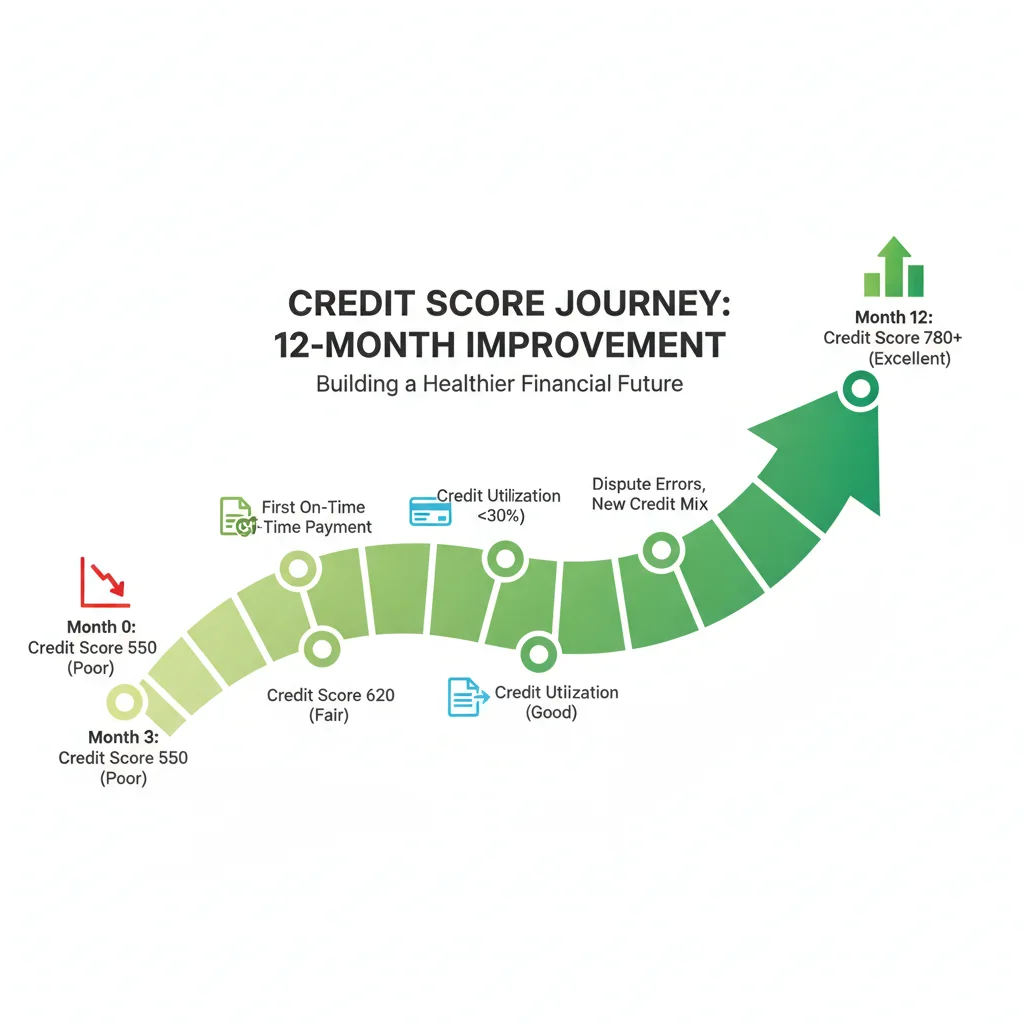
If every path to a workable rate is currently closed, it's worth pausing for 6–12 months of deliberate credit improvement. Paying down revolving balances, bringing any past-due accounts current, and avoiding new credit applications can meaningfully shift your score tier. Strengthening your credit file to qualify for preapproval covers actionable steps even if your history is short or damaged. The difference between a 580 and a 640 score can cut your auto loan APR by 5–8 percentage points — on a $20,000 loan over 60 months, that's thousands of dollars in total interest.
Don't Overlook Thin File vs. Bad Credit
There's an important distinction that many borrowers miss. If your score is low because of a short history rather than actual missed payments, your situation is fundamentally different — and lenders view it differently too. Applying for an auto loan with a thin credit file walks through the specific strategies that work for limited-history borrowers who are otherwise financially responsible.

All claims are backed by peer-reviewed research. Sources on request.