
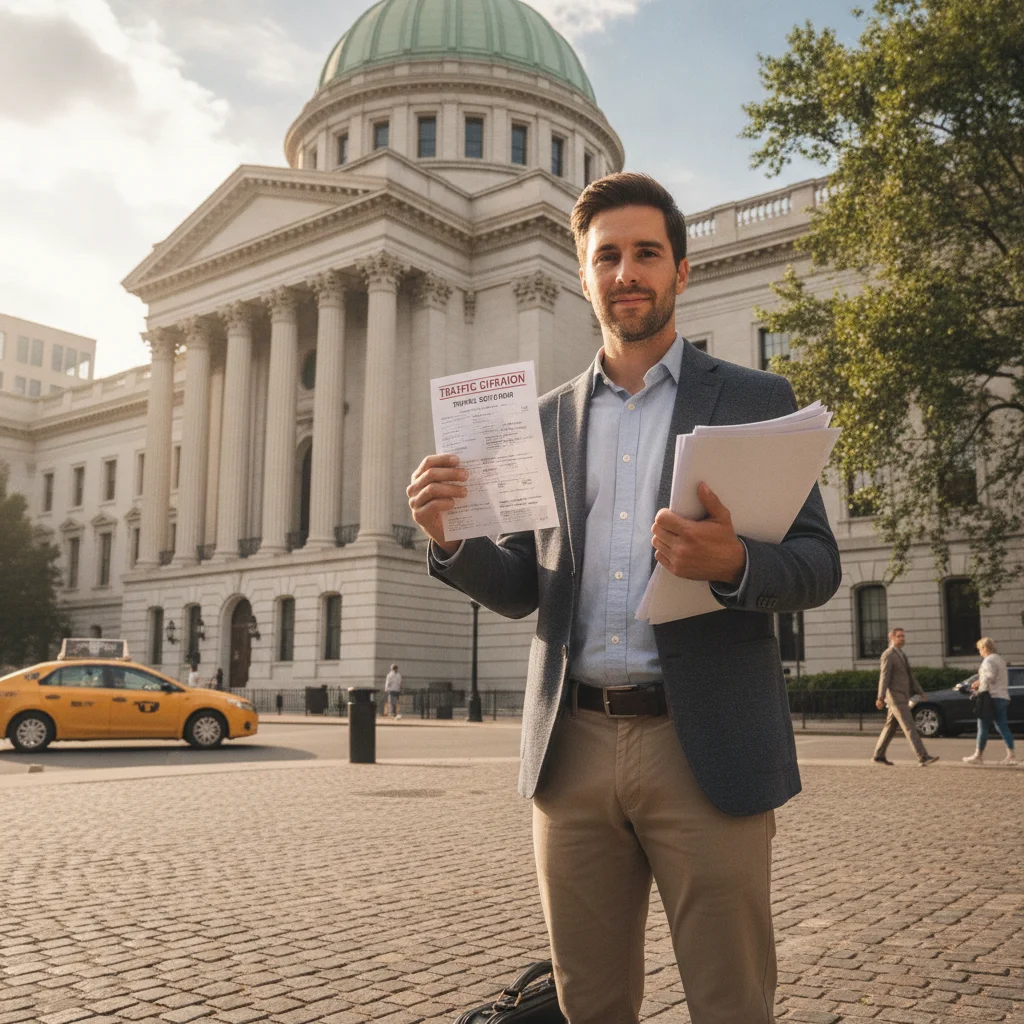
Key Takeaways
Why Contesting a Ticket Is Worth Understanding
Most drivers who receive a traffic ticket pay it without question. It feels easier, less confrontational, and faster. But paying a ticket is effectively an admission of guilt — and the consequences can follow you for years through higher insurance premiums and points on your license.
A single moving violation can raise your auto insurance rate by 20–30% at renewal. If you're already dealing with the aftermath of an accident, those premium increases compound quickly. (For context on how insurance decisions work when things go wrong on the road, see our guide to filing a claim and the complete accident procedures walkthrough.)
Contesting a ticket isn't about gaming the system. It's about exercising your legal right to due process — and in many cases, the citation has procedural flaws, factual inaccuracies, or mitigating circumstances that a court will recognize. This guide walks you through exactly what the process looks like, from the moment you get pulled over to your day in traffic court.
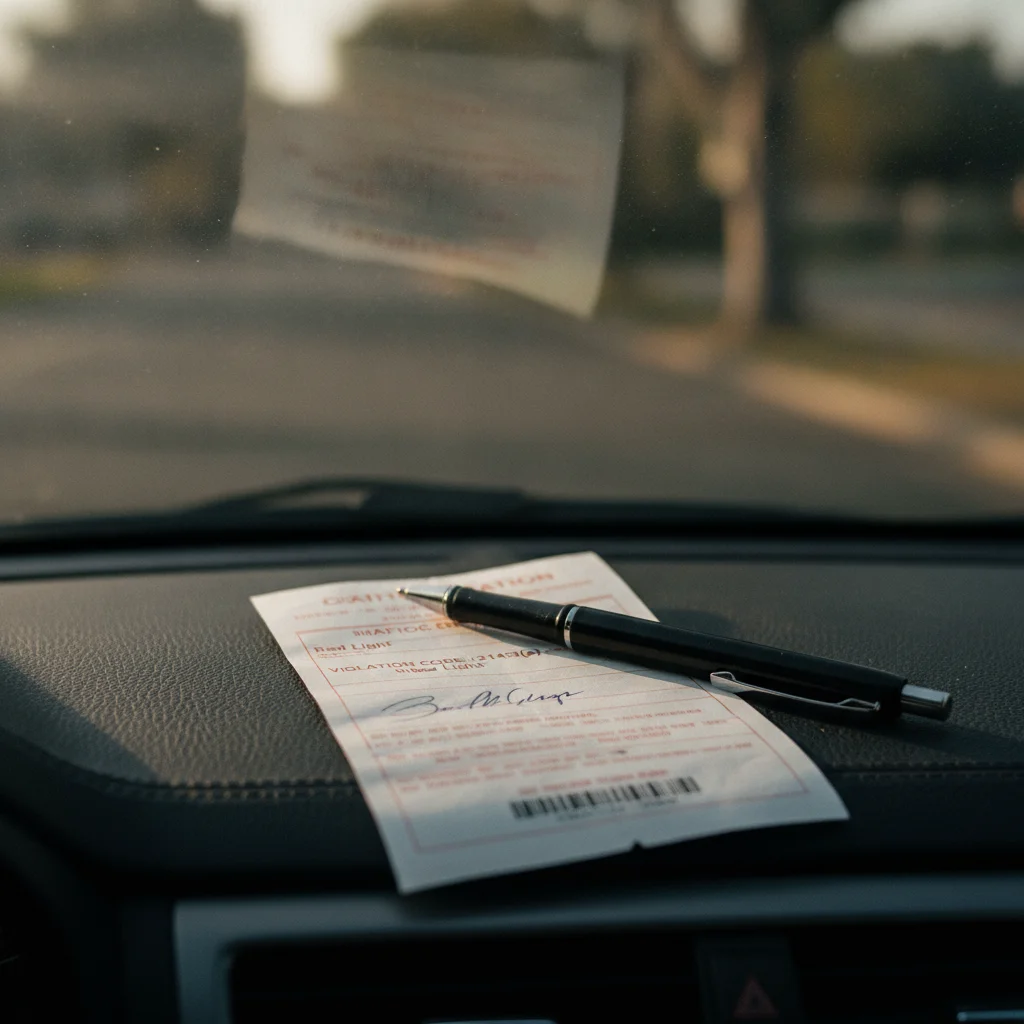
What You Need Before You Start
Before you commit to contesting a ticket, you need to understand the type of violation you're dealing with and what the realistic outcomes are. Not every ticket is worth fighting — but knowing what you have to work with helps you make that call intelligently.
What you will need
Dashcam footage
Provides objective video evidence of the incident that can directly contradict the officer's written account.
Smartphone with camera
Used to photograph the violation scene — signs, road markings, sightlines — as supporting evidence.
State DMV driving record
Documents your history so you can assess how a conviction would affect your license and insurance.
Traffic attorney
Provides professional legal representation, particularly valuable for serious violations or CDL holders.
Discovery request form
Used to formally request the officer's notes and equipment calibration records before your court date.
State traffic court procedure guide
Explains the specific rules of evidence and hearing procedures in your jurisdiction if you represent yourself.
Once you have these materials together, you're in a position to evaluate your case and move through the steps with confidence.
Step-by-Step: How to Contest a Traffic Ticket
The process varies somewhat by state and municipality, but the core sequence is consistent across most jurisdictions. Follow these steps in order.
Document everything at the scene
The moment the officer hands you the ticket, slow down and pay attention to details. Note the exact location, time, weather conditions, road layout, and any signage near the alleged violation. If it's safe, take photos with your phone before driving away.
Write down your recollection of events as soon as you're off the road — memory degrades quickly and specifics matter in court. If there are passengers in the car, ask them to write down what they observed independently.
Read the citation carefully and note the deadline
Your ticket will specify a deadline to either pay the fine or indicate your intent to contest. This is typically 30–90 days from the citation date. Missing this window almost always results in a default conviction and possible additional penalties.
Check whether your state requires you to pay a bail or deposit amount before your hearing, even if you're contesting the ticket. Some jurisdictions require this upfront payment, which is refunded if you win.
Enter a not-guilty plea
Contact the court listed on your ticket — by mail, online portal, or in person, depending on what your jurisdiction allows — and formally enter a not-guilty plea before the deadline. Some courts let you do this entirely online; others require a written letter or in-person appearance.
When you enter your plea, you'll typically be given a hearing date. In some jurisdictions you can also request a trial by declaration (written submission) rather than appearing in person — check whether your state offers this option, as it's lower stakes and sometimes more effective.
Request discovery materials
Before your hearing, submit a discovery request to the court or prosecutor's office asking for the officer's notes, any radar or laser calibration records, and any video footage from police dash or body cameras. Many courts have a standard form for this.
Review these materials carefully. Calibration records that are out of date, notes that conflict with your recollection, or missing documentation are all potential grounds for dismissal.
Return to the scene and gather physical evidence
Visit the location of the alleged violation in similar lighting and weather conditions. Photograph or video everything relevant: sign placement and visibility, signal timing, lane configurations, obstructions, and road markings. If a sign was blocked, measure the distance from the roadway to document it wasn't reasonably visible.
Check whether any nearby businesses have security cameras that might have captured the incident. Some footage is only retained for a short period, so act quickly.
Prepare your case and practice your presentation
Organize your evidence chronologically and prepare a clear, fact-based narrative. Traffic court judges value brevity and specificity — stick to what's relevant and avoid emotional appeals. Your goal is to introduce reasonable doubt or demonstrate a procedural error, not to argue the officer lied.
Prepare to ask the officer specific questions about the conditions at the time of the stop: their exact position, what equipment they used, when it was last calibrated, and whether they had an unobstructed view. These questions don't have to be aggressive — they just need to be precise.
Appear in court and present your case
Arrive early, dress professionally, and bring all your evidence organized in a folder. Address the judge as 'Your Honor' and the officer by their rank and name. When it's your turn, present your evidence concisely and answer questions directly.
If the citing officer does not appear, politely move for dismissal immediately. Most judges will grant it. If the officer is present, you'll have the opportunity to cross-examine them after the prosecution presents its case — use the specific questions you prepared in Step 6.
Missing Your Court Date Has Serious Consequences
Failing to appear at your scheduled hearing — even accidentally — typically results in an automatic conviction, additional fines, and often a bench warrant for your arrest. If you need to reschedule, contact the court at least a week in advance and request a continuance in writing.
Paying the Fine Waives Your Right to Contest
Once you pay a traffic ticket, you've admitted guilt and the conviction is final. If you're considering contesting, do not make any payment — even partial — before entering a formal not-guilty plea.
Trial by Declaration: The Low-Risk Option
Many states allow drivers to contest tickets entirely in writing through a 'trial by declaration' process — no court appearance required. You submit a written account of events and evidence; the officer submits theirs. If the officer doesn't respond, you win automatically. If you lose, most states let you request an in-person trial anyway, giving you two chances with minimal downside.
Check Your Record After Any Outcome
Don't assume your DMV record is accurate after a traffic court proceeding. Errors in how outcomes are reported do happen. Pull your driving record 4–6 weeks after any hearing and verify it reflects the correct result — especially if the ticket was dismissed or reduced.
Calibration Records Are Your Friend
Radar and laser speed-measurement devices must be calibrated on a regular schedule to be considered legally reliable. Requesting these records is free and often reveals that the equipment was overdue for calibration — a finding that has led to countless ticket dismissals.
If the judge rules against you, you still have options. Most states allow you to appeal a traffic court decision to a higher court, though that introduces additional cost and complexity. In some jurisdictions, completing a defensive driving course after a decision can reduce points even on a lost case.
Whatever the outcome, document everything. If your ticket results in license points that affect your insurance, knowing the specifics will help you challenge an insurance decision or shop for better rates with an accurate picture of your record.
What Evidence Actually Helps in Traffic Court
Traffic court judges see hundreds of cases. Vague claims of innocence don't move the needle. What works is specific, verifiable evidence that introduces reasonable doubt about the citation or demonstrates a procedural error.

Dashcam Footage
This is the single most compelling evidence a driver can present. Clear video contradicting the officer's account — showing your speed, the traffic signal state, lane positions — is difficult to argue against. If you have a dashcam, preserve the footage immediately after receiving a ticket.
Photographs of the Scene
Go back to the location as soon as possible. Photograph road signs (especially if obscured by foliage), lane markings, signal visibility, and any environmental conditions relevant to the citation. Courts have dismissed tickets when drivers proved a stop sign was hidden behind an overgrown tree.
Witness Statements
If passengers or nearby drivers witnessed the incident, get their contact information at the scene. A corroborating witness — especially a neutral one — strengthens your account considerably.
Officer's Notes and Equipment Records
You can request a copy of the officer's notes through a discovery request before your court date. For speed-related tickets, you can also request calibration records for the radar or laser gun used. Equipment that hasn't been calibrated on schedule is a legitimate basis for dismissal.
Traffic and Weather Data
For violations involving road conditions, weather data from that date and time can contextualize your actions. Government weather archives are publicly accessible and easy to cite.
Certain Violations Require Immediate Legal Help
Reckless driving, DUI/DWI, and vehicular manslaughter charges are criminal matters, not traffic infractions. The penalties include potential jail time, mandatory license suspension, and a permanent criminal record. Do not attempt to handle these cases without a licensed attorney — the stakes are categorically different from a speeding ticket.
When to Hire a Traffic Attorney — and When Not To
A traffic attorney isn't necessary for every citation, but there are situations where professional representation pays for itself quickly.
Cases Where an Attorney Makes Sense
- CDL holders: Commercial driver's license violations carry severe consequences. An attorney is almost always worth it.
- Reckless driving or DUI charges: These are criminal matters, not just civil infractions. Self-representation is a significant risk.
- Multiple violations or a suspended license on the line: The stakes are high enough that professional advocacy is justified.
- Complex factual disputes: If your defense requires technical expertise — accident reconstruction, signal timing data — an attorney knows how to present it.
Cases You Can Handle Yourself
- Minor moving violations (rolling stop, improper lane change) where evidence is clear-cut
- Non-moving violations like expired registration or equipment issues
- Situations where the officer fails to appear — common in traffic court and an almost automatic win
If you decide to go it alone, read your state's traffic court procedure guide before your hearing. Courts often publish these, and knowing the formal rules of evidence — even at a basic level — keeps you from making avoidable procedural mistakes.
Keep in mind: traffic violations can affect more than your driving record. They factor into how insurers assess your risk. Understanding what happens after an accident claim can help you see the full picture of how your record influences your coverage costs.

After the Hearing: Next Steps Regardless of Outcome
Whether you win, lose, or reach a plea agreement, there are actions to take after your traffic court hearing.
If the Ticket Is Dismissed
Request written documentation of the dismissal. Confirm that no points were added to your driving record by checking with your state DMV a few weeks later. If your insurer was notified of the original citation, let them know the outcome — though most insurers don't adjust rates on pending cases.
If You Get a Reduced Charge
Understand what you're agreeing to. A reduced charge — say, from reckless driving to a basic speeding infraction — still results in a conviction. Confirm the point value of the reduced charge and whether it triggers any insurance reporting requirements in your state.
If You Lose
Pay the fine promptly. Unpaid fines accrue penalties and can result in license suspension. If points were added, check whether your state offers a defensive driving course to reduce or mask them. Some states allow one course per year for this purpose.
Review your insurance policy after any conviction. If rates increase at renewal, it's a legitimate moment to shop your coverage. Insurers weigh moving violations differently — some add a surcharge for three years, others for five. Comparing policies based on your current record rather than simply accepting a renewal rate can save you meaningfully over time.
Just as a denied insurance claim isn't always the end of the road — as we explain in our piece on what to do when a claim is denied — a traffic court loss isn't always the final word either. Appeals exist, record expungement timelines vary by state, and keeping an otherwise clean record going forward is the most reliable way to protect your insurance standing long-term.


All claims are backed by peer-reviewed research. Sources on request.