Key Takeaways
Why Collision Coverage Confusion Costs Drivers Thousands
Auto insurance is one of the most frequently purchased financial products in the country — and one of the least understood. According to the Insurance Information Institute, the average auto insurance claim for collision damage exceeds $4,500. Yet industry surveys consistently find that a significant share of drivers cannot accurately describe what their collision coverage does and doesn't include.
That gap between assumption and reality is not just an academic problem. When a driver files a claim based on a misunderstanding, the result is often a denial letter, an unexpected out-of-pocket bill, or a payout far below what they anticipated. Some of those drivers had been paying for coverage for years without realizing its limitations.
This article tackles the most pervasive myths about collision coverage — the ones that are both widely believed and genuinely costly. Whether you're shopping for a new policy, reassessing an existing one, or trying to understand a recent claim outcome, getting these facts straight will save you money and frustration.

See also: When Does Collision Coverage Pay — and When Doesn't It? for a detailed breakdown of qualifying incidents.
The Core Myths — and the Facts That Replace Them
The following myth-and-fact pairs address the most common and costly misunderstandings drivers carry about collision coverage. Each one is grounded in how policies actually work — not how we might wish they did.
Myth
Collision coverage pays for any damage to my car, regardless of what caused it.
Fact
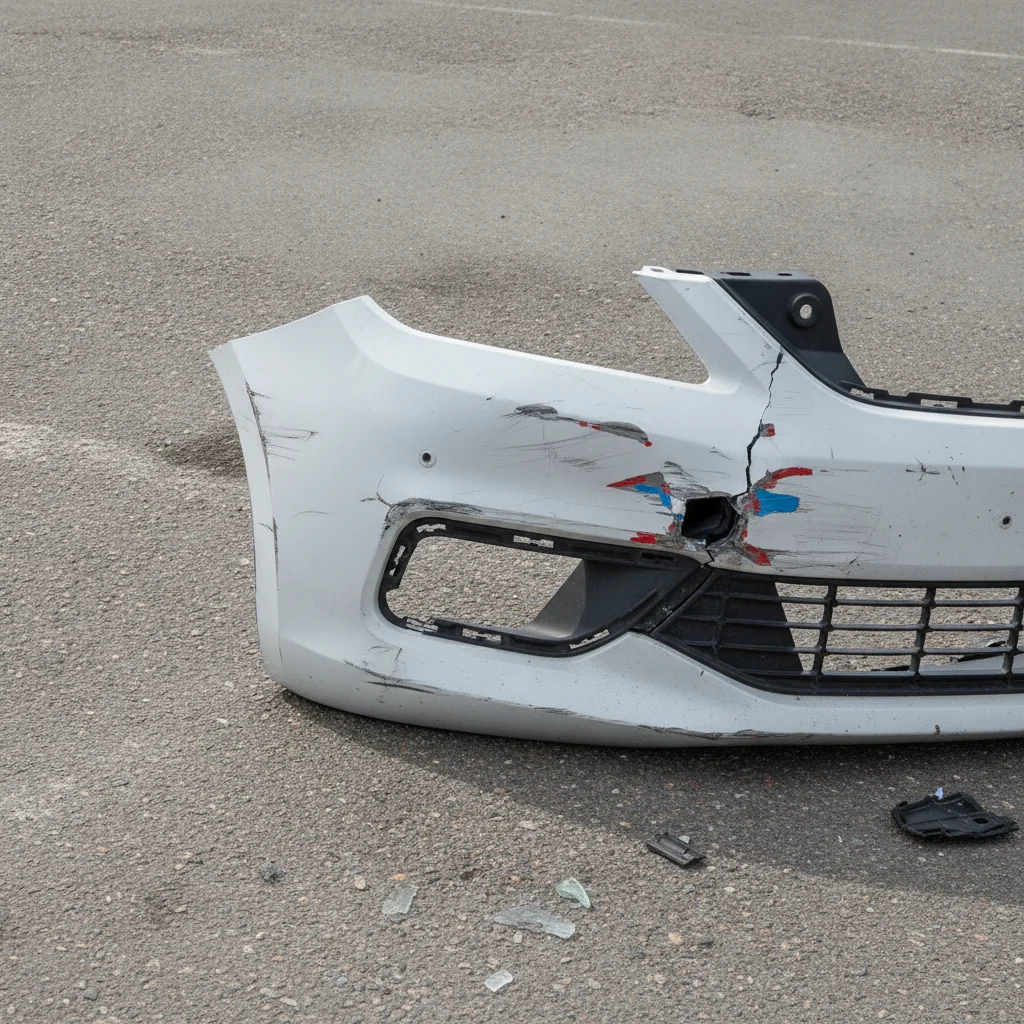
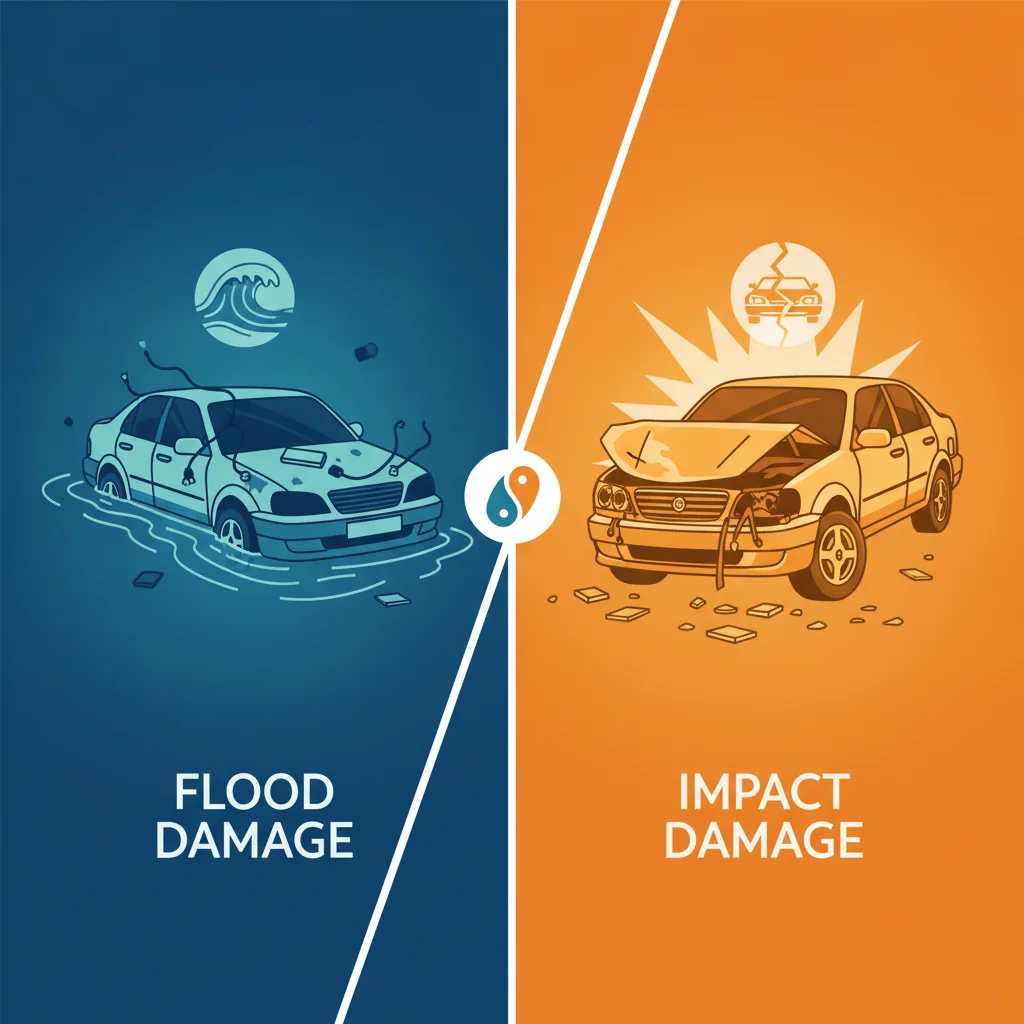
Collision coverage applies specifically to damage resulting from your vehicle striking another vehicle or object — not to theft, weather, flooding, fire, or animal strikes.
This is the foundational misunderstanding about collision coverage, and it's the one most likely to result in a denied claim. Collision insurance is a precisely defined coverage type. It pays when your car makes physical contact with another vehicle, a guardrail, a tree, a pothole, or another stationary or moving object.
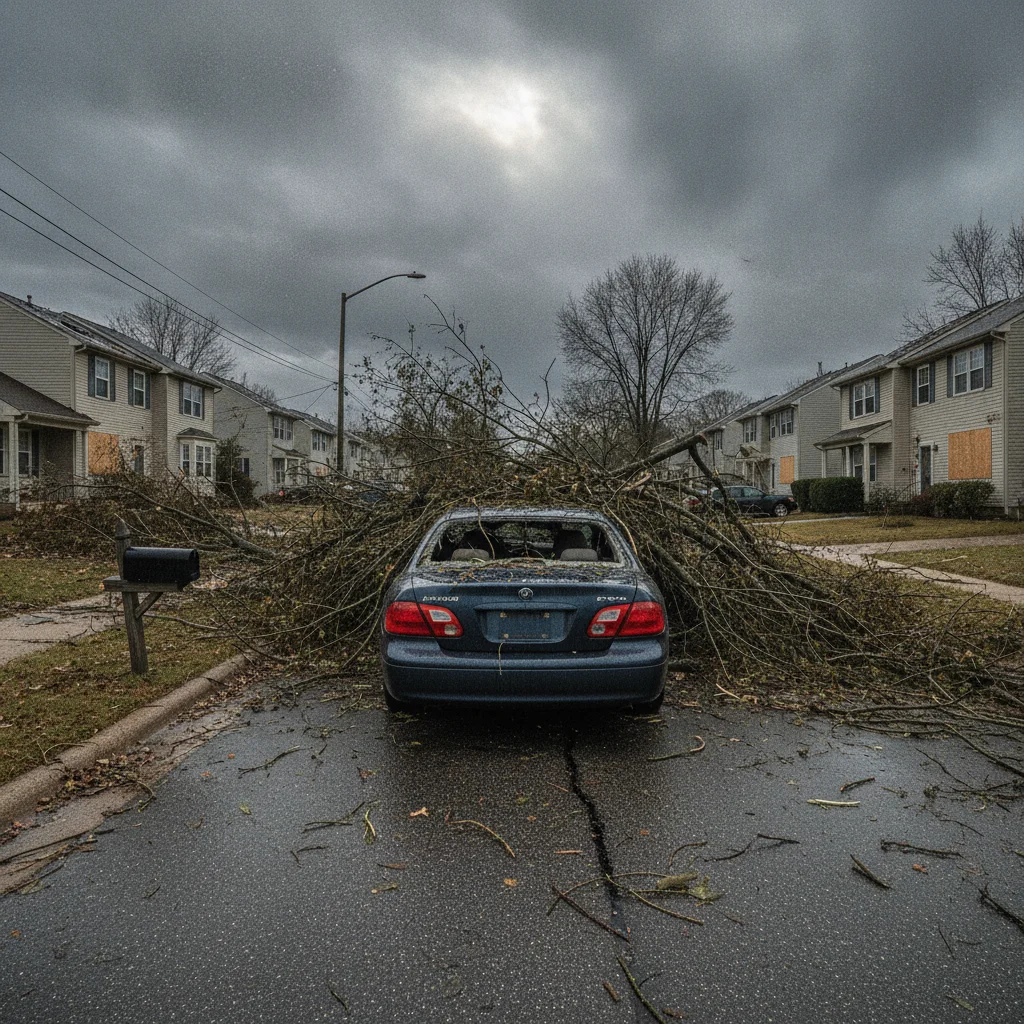
Everything else — a hailstorm, a flooded street, a fire, a deer on the highway — falls under comprehensive coverage, which is a separate policy add-on with its own deductible and limits. If you don't carry comprehensive, none of those events are covered, even if you carry collision.
The practical consequence: a driver who carries collision but not comprehensive and hits a deer will receive no insurance payout for the resulting damage. That same driver might assume the claim will be covered — and only learn otherwise when the claim is denied. For a full explanation of how animal strikes are classified, see Animal Collisions and Insurance: The Coverage Question Most Drivers Get Wrong.
Myth
If the other driver caused the accident, their insurance pays and I don't need collision coverage.
Fact
If the at-fault driver is uninsured, underinsured, or disputes liability, you may have no way to collect without your own collision coverage.
The logic sounds reasonable: if someone else caused the crash, their liability insurance should cover your repairs. In many cases, that's true — but reality is more complicated and far less reliable.
Consider these common scenarios where the at-fault driver's liability coverage doesn't fully protect you:
- The other driver has no insurance at all — approximately 1 in 7 American drivers is uninsured, according to the Insurance Research Council.
- The other driver has only minimum liability limits, which may not cover the full cost of serious vehicle damage.
- Liability is disputed. The other driver claims you were at fault, or both parties share some responsibility. Now there's a coverage fight that could take weeks or months to resolve.
- The at-fault driver flees the scene. Hit-and-run incidents are more common than many drivers realize.
In each of these situations, your own collision coverage allows you to file a claim directly with your insurer, pay your deductible, and get your car repaired — then let the insurers sort out subrogation on the back end. Without collision, you're left waiting, negotiating, or paying out of pocket. For additional context on the gaps that exist even with standard coverage, How Uninsured and Underinsured Motorist Coverage Works — and Why It's Easy to Undervalue is highly relevant.
Myth
Filing a collision claim will definitely raise my premium.
Fact
Whether a collision claim raises your premium depends on your insurer, your state's regulations, your driving history, and whether you were at fault.
The fear of a premium increase stops many drivers from filing legitimate collision claims — often on damages that would have been fully worth claiming after the deductible. This reluctance is understandable but frequently based on an overstatement of how automatic premium increases actually are.
Several factors determine whether a claim affects your rate:
- Fault determination: Most insurers only surcharge for at-fault accidents. If you were rear-ended and the other driver was clearly at fault, your rate may not change at all.
- State regulations: Some states restrict when and how much insurers can surcharge after specific types of claims.
- Accident forgiveness: Many policies include accident forgiveness provisions — either built in for long-term customers or available as a purchased add-on — that protect your rate after a first at-fault accident.
- Claim frequency: One claim in five years has a very different actuarial impact than three claims in two years.
The financially smart move: get a realistic estimate of your repair costs before deciding whether to file. If repairs are $900 and your deductible is $750, the math may not favor a claim. But if damage is $5,000, paying out of pocket to avoid a potential rate increase rarely makes sense. Auto Insurance Myths That Can Cost You During a Claim covers this and related claim-filing misconceptions in detail.
Myth
I should drop collision coverage once my car is old to save money.
Fact
The right time to drop collision depends on your car's actual cash value and your ability to self-fund a replacement — not simply the vehicle's age.
The conventional wisdom — drop collision when the car gets old — is a heuristic, not a rule, and it leads some drivers to make expensive mistakes. Age is a poor proxy for value. A well-maintained 12-year-old truck might carry a market value of $18,000. A 4-year-old vehicle with high mileage and a rough ownership history might be worth $7,000. Age alone tells you almost nothing useful.
A more rigorous approach: look up your vehicle's current actual cash value (ACV) — this is what your insurer would pay in a total loss — and weigh it against your annual collision premium plus your deductible. A commonly cited threshold is that when the annual premium exceeds 10% of the vehicle's ACV, the math begins to favor dropping coverage. But that calculation only holds if you could genuinely absorb a total loss out of pocket without financial hardship.
Additionally, if you're still carrying a loan or lease on the vehicle, dropping collision may not even be an option — most lenders require it as a condition of financing. Removing it without authorization can trigger a lender-placed insurance policy, which is typically far more expensive and less protective than what you dropped.
For a complete look at how physical damage coverage decisions interact with loan balances and vehicle value, see Underinsuring Your Car: The Physical Damage Mistakes That Lead to Big Losses.
Myth
Collision coverage will pay to replace my car with a brand-new equivalent model.
Fact
Collision coverage pays actual cash value — what your car was worth immediately before the accident — not the cost to buy a new replacement.
This myth surprises drivers most painfully when their vehicle is declared a total loss. They expect the insurer to make them whole by replacing the car — and instead receive a check for an amount that may be thousands of dollars short of what a comparable vehicle costs on the current market.
Actual cash value (ACV) accounts for depreciation. A car that cost $32,000 three years ago, driven 45,000 miles, might have an ACV of $19,000. If a collision totals that vehicle, that's the payment — minus your deductible. If you still owe $23,000 on the loan, you'll owe the lender $4,000 out of pocket even after the insurance payout.
This is precisely why gap insurance exists. It covers the difference between ACV and the remaining loan or lease balance. Gap coverage is usually available as an add-on through your auto insurer for a modest annual premium — often far less than the dealer's bundled financing offer for the same product.
Some insurers also offer new car replacement coverage as an endorsement for newer vehicles — typically those less than one to three years old — that pays replacement cost rather than ACV. If you've recently purchased a new car, this endorsement is worth the conversation with your agent.
Myth
Collision coverage includes my personal belongings inside the car.
Fact
Collision coverage applies only to physical damage to the vehicle itself. Items inside the car — a laptop, camera equipment, or luggage — are not covered.
Many drivers are genuinely surprised to learn that the $2,000 laptop left on the back seat is not part of their collision claim. But auto insurance, including collision coverage, covers the automobile — not its contents. Personal property inside a vehicle is typically covered under homeowners or renters insurance (subject to that policy's deductible and limits), not auto insurance.
If your vehicle is broken into and your belongings are stolen, that's a matter for your homeowners or renters policy. If those belongings are damaged in a collision, the same applies. Some homeowners policies exclude or limit coverage for property stolen from vehicles, so it's worth checking your policy's language on that point specifically.
For drivers who regularly transport high-value items — contractors with expensive tools, photographers with camera gear, remote workers with laptops — a scheduled personal property endorsement on the homeowners or renters policy may be the most direct solution. Your auto insurer cannot provide that coverage through collision or any other standard auto policy add-on.
1 in 7
U.S. drivers with no auto insurance
According to the Insurance Research Council, approximately 14% of U.S. motorists were uninsured — underscoring why relying solely on the other driver's liability coverage is a risk.
$4,525
Average collision claim payout
The Insurance Information Institute reports this as the average collision claim payment, illustrating the real financial stakes of coverage gaps.
10%
Rule-of-thumb threshold for dropping collision
Financial planners often suggest reconsidering collision coverage when the annual premium plus deductible exceeds 10% of the vehicle's actual cash value.
~30%
Drivers who misidentify collision vs. comprehensive
Industry surveys and consumer research consistently find that roughly a third of insured drivers cannot accurately distinguish which coverage type applies to common damage scenarios.
The "Full Coverage" Problem and What It Actually Means
Perhaps no single phrase causes more collision-related confusion than "full coverage." The term appears in conversations between car buyers and dealers, on comparison sites, and in casual conversations between friends — but it has no standardized legal definition in any state.
When most people say full coverage, they typically mean a policy that includes liability, collision, and comprehensive. But even that combination leaves significant gaps. It generally won't cover:
- Mechanical breakdowns or engine failures unrelated to a collision
- Custom equipment or aftermarket parts beyond a modest policy limit
- Gap between what the insurer pays (actual cash value) and what you still owe on your loan
- Personal belongings stolen from inside the vehicle
- Rideshare driving unless you've added a specific endorsement
Understanding this matters because drivers who assume "full coverage" means total protection often skip add-ons like gap insurance or rental reimbursement — coverage types that would have been inexpensive and genuinely useful. For a closer look at the comprehensive side of that equation, see Comprehensive Coverage Misconceptions Drivers Believe Too Often.
Don't Assume "Full Coverage" Means Total Protection
The phrase "full coverage" has no standardized legal definition and is not used in any insurance policy document. Even a policy combining liability, collision, and comprehensive can leave significant gaps — including no coverage for gap between your loan balance and ACV, limited coverage for aftermarket parts, and no protection for personal property inside the vehicle. Always read your declarations page and ask your agent to walk through specific exclusions.
Lending Your Car Transfers More Risk Than You Think
When you let someone else drive your vehicle and they're involved in a collision, your insurance is generally the primary coverage — including your deductible and your claims record. If that friend causes a significant accident, the claim can follow your policy at renewal. Before lending your car regularly, verify how your policy handles permissive use and whether it includes any liability limits for non-listed drivers.
Skipping Collision to Save on Premiums Can Backfire Badly
Dropping collision coverage to lower monthly costs is a reasonable calculation — but only if you've done the math honestly. If your vehicle's ACV is $15,000 and you could not comfortably absorb that loss out of pocket, you're self-insuring a risk you may not be equipped to handle. Before cutting collision, look up your car's current market value and compare it against the annual premium and deductible cost.
When Collision Coverage Follows the Car — Not the Driver
One area where drivers consistently get caught off guard involves vehicle lending. Many people assume that their friend's insurance is what matters when they borrow a car — or that their own policy automatically covers them in any vehicle they drive. Neither assumption is reliably accurate.
In most states, auto insurance follows the vehicle first and the driver second. If you lend your car to a friend who then gets into an accident, your collision coverage is generally what pays — including your deductible. Your friend's policy may act as secondary coverage, but the primary claim hits your record and your out-of-pocket costs.
This isn't universal — some policies handle permissive use differently, and exclusions vary by insurer — but the general principle is consistent enough that drivers should think carefully before routinely lending their vehicles. One at-fault accident filed under your policy can affect your premium at renewal.
Conversely, if you regularly drive someone else's vehicle, your own collision coverage typically does not extend to that car. Non-owned auto coverage is a separate endorsement, and without it, you may have no collision protection while driving a vehicle you don't own.
For more on how claims can affect your rates and financial exposure, Underinsuring Your Car: The Physical Damage Mistakes That Lead to Big Losses is worth reading before your next renewal.
Making Smarter Decisions With Accurate Coverage Knowledge
Understanding what collision coverage actually does — and doesn't — do allows you to make genuinely informed decisions rather than guesses dressed up as choices. A few practical takeaways worth anchoring:
- Review your deductible annually. A deductible that made sense three years ago may not be appropriate for your current vehicle value or financial situation. If your car is worth $8,000 and you're carrying a $2,500 deductible, a moderate collision loss becomes disproportionately painful.
- Never drop collision without calculating actual cash value first. Look up your car's current market value through a resource like Kelley Blue Book or NADA, then ask yourself how you'd cover a total loss out of pocket. If the answer is painful, keep the coverage.
- Check whether you need gap insurance. If you financed or leased your vehicle, the difference between what you owe and what the insurer would pay can be thousands of dollars. Gap coverage closes that hole for a relatively modest cost.
- Ask about permissive use and non-owned auto coverage if you frequently lend or borrow vehicles. A brief conversation with your agent can prevent a very expensive misunderstanding.
Collision claims denials often stem from documentation gaps or policy misunderstandings that could have been avoided. See Why Your Collision Claim Was Denied — and What You Can Do About It if you've already received a denial or want to understand the most common triggers.

Finally, collision coverage doesn't exist in isolation. It works alongside liability, comprehensive, and potentially uninsured motorist coverage to form a complete protection picture. Drivers who understand how those pieces interact — rather than treating each as a separate black box — are consistently better positioned after an accident. For perspective on the liability side of that picture, Common Misconceptions About What Liability Insurance Covers covers the most expensive misunderstandings in that category.
Actual Cash Value Is Not Replacement Cost
When your insurer settles a total-loss collision claim, they pay what your car was worth immediately before the accident — not what it costs to buy a comparable replacement today. With used vehicle prices volatile in recent years, that gap can be larger than drivers expect. If you financed your vehicle, gap insurance covers the difference between the ACV payout and your remaining loan balance. Without it, you may owe money on a car you can no longer drive.
Lenders Often Require Collision Coverage
If you're financing or leasing a vehicle, your lender almost certainly requires you to carry both collision and comprehensive coverage as a contractual condition. Dropping these coverages to reduce your premium — without the lender's knowledge — is a breach of your loan agreement. The lender can legally purchase force-placed insurance on your behalf and add the cost to your loan balance, typically at rates far higher than standard market pricing.

All claims are backed by peer-reviewed research. Sources on request.