
Key Takeaways
Why Days on Lot Is One of the Most Powerful Numbers in a Car Deal
Every car on a dealership lot costs the dealer money every single day it sits there. That's not a figure of speech — it's a real financial mechanism called flooring (or floor plan financing). Most dealerships borrow money from a lender to buy their inventory, paying daily interest on each vehicle until it sells. A typical floorplan interest rate runs between 5% and 8% annually, which on a $35,000 vehicle works out to roughly $5–$8 per day, or $150–$240 per month, just in carrying costs. Add depreciation and you can see why a car that has been sitting for 90 days is a genuinely expensive problem for a dealer.
This financial pressure is what the days on lot (DOL) metric captures. DOL is simply the number of days since a vehicle was first listed for sale at that dealership. The higher the number, the more the dealer has paid in floor plan interest, the further the car's market value has slipped, and the more motivated the salesperson's manager is to move it — even at a reduced margin.
Understanding this dynamic is foundational to smart negotiating. See our breakdown of how dealers structure a car deal for context on the other financial levers dealers are balancing at the same time.
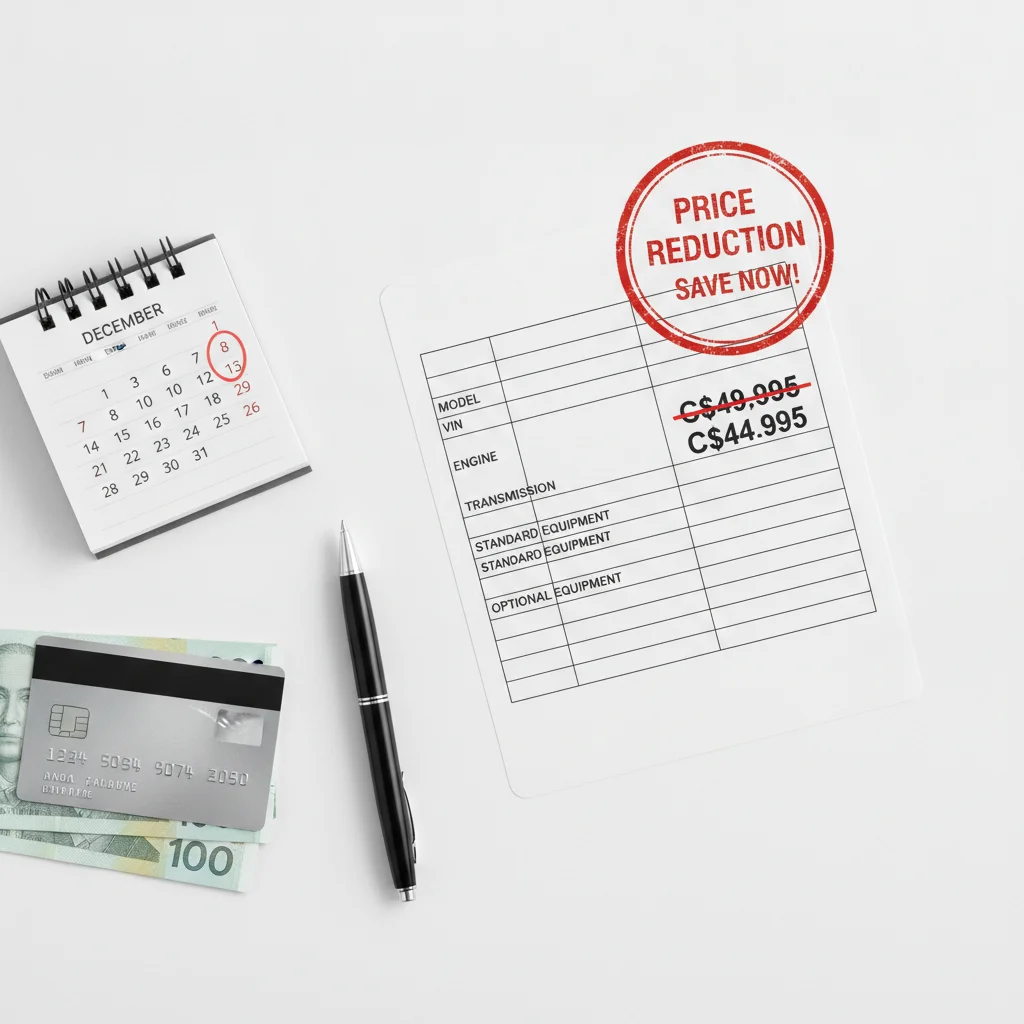
The average new car sits on a lot for about 50–70 days before selling. For used cars, that window is shorter — closer to 30–45 days — because used inventory depreciates faster and the economics are tighter. Any vehicle that has blown past those benchmarks without selling is, from the dealer's perspective, a problem that you can help solve — for a price discount.
Tools and Sources for Finding Days on Lot Data
You don't need insider access or a dealer contact to find DOL data. Several consumer-facing listing platforms surface it publicly, often right on the vehicle listing page.
CarGurus
Displays days listed and deal ratings for new and used vehicle listings, making DOL research straightforward.
AutoTrader
Broad inventory database with listing dates that allow manual DOL calculation for vehicles you're tracking.
Cars.com
Alternative listing platform with price history and listing-date information useful for cross-referencing DOL.
Carfax or AutoCheck
Provides full vehicle history including previous listing dates and prices, revealing relisted or auction-returned units.
Wayback Machine (web.archive.org)
Archives past versions of dealer websites, letting you verify when a vehicle first appeared on the dealer's own lot listing.
Google Sheets or Excel
Tracks DOL data, asking price history, and price-drop patterns across multiple candidate vehicles over time.
Here's how to read each source effectively:
- CarGurus: This is the most transparent platform for DOL. Each listing shows a "days listed" count and a price-trend indicator (whether the price has been cut, and by how much). CarGurus also assigns a deal rating — "Good Deal," "Fair Deal," etc. — based partly on how the asking price compares to similar vehicles and how long it's been listed. A "High Price" rating combined with a high DOL count is a powerful indicator of negotiating room.
- AutoTrader and Cars.com: These platforms don't always display DOL as prominently, but you can sometimes find a "listed since" date in the vehicle details. Subtract that date from today's date to calculate DOL manually.
- Dealer websites: Many dealers post their inventory online. Use the Wayback Machine (web.archive.org) or simply note the first date you saw a vehicle listed. If a vehicle has been on the dealer's own site for weeks without a price drop, that's a data point in itself.
- VIN history reports: A Carfax or AutoCheck report will show when a vehicle was last listed and at what price. If the vehicle appears to have been relisted after a failed sale, that's a red flag and another negotiating signal — the market has already rejected it at the previous price.
When researching, focus on vehicles that have been listed 45 days or longer on new cars and 30 days or longer on used cars. Below those thresholds, dealers rarely feel enough pressure to move significantly off asking price.
For a fuller picture of inventory dynamics at any dealership, see what dealer inventory levels signal about the right time to buy.
Step-by-Step: How to Track and Use Days on Lot Before You Visit
The following steps walk you through building a DOL-informed research profile on any vehicle you're seriously considering buying. Complete this research before you set foot on the lot — once you're in the showroom, the time pressure shifts to you.
What you will need
Identify your target vehicle and collect its listing URL
Before you can track days on lot, you need a specific vehicle in mind — ideally narrowed to a year range, body style, and trim level you'd actually buy. Go to CarGurus and search for that vehicle within a reasonable drive radius (50–100 miles gives you enough options without becoming unmanageable).
For each promising listing, copy the URL and paste it into a tracking document. Note the asking price, mileage, and the "days listed" figure CarGurus displays on the listing page. On AutoTrader or Cars.com, look for a "listed since" date in the details section and calculate the DOL manually.
Note the original listing price and track any price cuts
CarGurus makes this easy — it shows a price drop indicator directly on the listing and tells you by how much the price fell and when. On other platforms, you'll need to check back periodically and note changes manually.
A vehicle that has already had one or two price cuts is signaling something important: the market didn't bite at the original price, and the dealer knows it. Each price cut also confirms that the dealer is willing to negotiate further — they've already demonstrated flexibility.
Record:
- Original listing price
- Current asking price
- Number of price reductions and their dates
- Total dollar amount of reductions so far
Run a VIN history report on high-DOL candidates
Once you've identified vehicles sitting at 45 days or more, pull a Carfax or AutoCheck report on each one. You're looking for two specific things:
- Was this vehicle previously listed at another dealer? A vehicle that has moved between lots, or been listed and delisted multiple times, has essentially been rejected by the market more than once. This is a major negotiating signal.
- Does the history match the listed mileage and condition? High DOL can sometimes indicate a condition issue the dealer is reluctant to disclose. Accident damage, odometer discrepancies, or a flood title will appear here.
A clean vehicle with high DOL due purely to price or market conditions is an opportunity. A vehicle with a murky history and high DOL requires much more scrutiny — or a pass.
Monitor your shortlist weekly and identify the best window to act
DOL is a living number. A vehicle at 40 days today is at 47 days next week. Set a weekly reminder to check your shortlisted vehicles. You're watching for:
- DOL crossing the 45-, 60-, or 90-day thresholds — each is a step up in dealer motivation
- Additional price cuts, which signal increasing desperation
- The vehicle disappearing from the listing — meaning it sold, which tells you roughly what the market clearing price was
Your ideal action window is when a vehicle crosses 60+ days and the calendar is approaching month-end or quarter-end. That convergence is when dealer motivation is highest and your offer is most likely to be accepted.
Calculate your target offer price before contacting the dealer
Armed with DOL, price history, and market comparables, calculate a specific offer before you pick up the phone or walk onto the lot. Use this framework:
- Find the average asking price for similar vehicles (same year, trim, mileage range) in your market from CarGurus or Edmunds True Market Value.
- Subtract an amount that reflects the DOL pressure: roughly 4% for 45–60 days, 6–8% for 60–90 days, and 10%+ for 90+ days.
- Set your opening offer 2–3% below your actual target, giving yourself room to negotiate up to a number you're genuinely happy with.
Write this number down. Having a specific, pre-calculated figure keeps you anchored when the salesperson applies pressure or introduces confusing financing structures.
Confirm DOL in the showroom with a direct but low-key question
When you visit the dealer, you can verify your research and sometimes surface additional context by asking a simple, non-confrontational question: "Has this one been on the lot long?" or "When did you take this one in?"
The answer — or the salesperson's evasiveness — tells you a lot. A confident answer of "just came in last week" on a vehicle your research shows has 80 days on lot means either the salesperson is mistaken or the vehicle was recently transferred from another rooftop (which resets the lot date on their internal system but not necessarily on CarGurus).
If the salesperson confirms long tenure, lean into it: "Well, I'm ready to make a deal today if the price is right. Let me show you what I'm thinking." Present your written offer. Starting from a specific number puts you in control of the negotiation frame.
Once you've completed this research, you're walking into the dealership with a specific number in mind — not a vague sense that you'd like a discount, but a defensible position backed by data. That's a fundamentally different conversation. See questions that reveal how much room a dealer has to move to sharpen your in-showroom tactics.
High DOL on Used Cars Warrants Extra Scrutiny
Not every high-DOL vehicle is a hidden bargain. Some have been on the lot a long time precisely because previous buyers walked away after inspection. Before making any offer on a used car with 60+ days on lot, schedule an independent pre-purchase inspection with a mechanic you trust. A $150 inspection can save you from a $3,000 repair bill.
Don't Let Urgency Override Your Research
Salespeople are trained to create a sense of scarcity — "another buyer is coming in Saturday" is a classic line. DOL data is your antidote. A vehicle that has sat for 80 days is unlikely to sell in the next 48 hours. Stick to your researched offer and your timeline. Walking away is always an option when you've done the homework.
Listing Dates Can Reset After Lot Transfers
When a vehicle moves between dealership locations within the same group, its lot date may reset on some platforms. Always cross-reference CarGurus with the VIN history report to determine when the vehicle actually arrived in dealer inventory — not just when it was listed on a particular platform. A reset listing date can hide a vehicle's true age in dealer inventory.
How to Interpret the Numbers: What Different DOL Ranges Mean
Not every high-DOL vehicle represents the same opportunity. Context matters. Here's a practical interpretation framework:

| Days on Lot | Dealer Motivation Level | Typical Discount Opportunity |
|---|---|---|
| 0–30 days | Low — dealer confident in price | Minimal (0–2%) |
| 31–59 days | Moderate — dealer watching closely | 2–4% below asking |
| 60–89 days | High — floor plan pressure building | 4–7% below asking |
| 90+ days | Very high — vehicle is a liability | 7–12%+ below asking |
To put those percentages in dollar terms: on a $32,000 used SUV sitting at 90 days, a 7% discount is $2,240 off the asking price. A 10% discount is $3,200. Those are real savings that come directly from knowing one data point the average buyer ignores.
A few important caveats:
- High DOL on a popular model may signal a condition issue, not just a pricing mismatch. Always pull a vehicle history report and arrange an independent pre-purchase inspection on any used car with high DOL. A car that no one has wanted for three months sometimes has a reason.
- On new cars, high DOL may reflect an unpopular trim or color combination. That's still a negotiating opportunity, but know what you're buying — a vehicle with low resale demand will hurt you when you eventually sell or trade.
- Market conditions affect these benchmarks. During a supply crunch (like 2021–2022), even 60-day vehicles were selling near MSRP. In a normalized or buyer's market, these figures apply more reliably.
Set a CarGurus Price Drop Alert
CarGurus lets you save a search and receive email alerts when prices drop on vehicles matching your criteria. Turning this on for your target vehicle means you don't have to check manually — price drops land in your inbox automatically. A price drop combined with high DOL is one of the clearest buy signals in used car shopping.
Don't Neglect the Out-the-Door Price
Whatever discount you negotiate off the sticker, always ask for the full out-the-door (OTD) price in writing before agreeing to anything. OTD includes taxes, title, registration, and any dealer fees. Some dealers offset a vehicle price discount by padding documentation fees, which can run $300–$800 and are often negotiable. The OTD number is the only one that matters for comparing deals.
Track Multiple Vehicles Simultaneously
Monitoring three to five candidate vehicles at once gives you options and genuine flexibility — which dealers can sense. When you're not fixated on a single car, you negotiate more confidently. If one dealer won't move on a 75-day-old vehicle, you can walk away knowing you have comparable alternatives on your watchlist.
Combining DOL With Timing to Maximize Your Leverage
Days on lot is a powerful signal on its own, but it compounds with calendar timing. Dealers operate on monthly and quarterly sales cycles. Salespeople have monthly quotas; dealership managers have quarterly targets tied to manufacturer bonus programs. Hitting those targets can mean thousands of dollars in manufacturer incentives — money that has nothing to do with the margin on your individual deal.
This creates predictable windows of maximum dealer motivation:
- Last 3 business days of the month: Salespeople and managers are acutely focused on hitting unit targets. A deal that might have been rejected mid-month gets approved because it contributes to quota.
- Last week of a calendar quarter (March, June, September, December): Manufacturer volume bonuses kick in at the quarterly level. If a dealer is 5 units short of a bonus tier, every incremental sale — even at thin margin — is worth chasing.
- Holiday weekends: Counterintuitively, the days after a big sales-event weekend (Memorial Day, July 4th, Labor Day, Black Friday) can be good. Dealers have processed a rush of deals and are assessing what didn't move. High-DOL units that survived the sale event are candidates for steeper discounts.
If your target vehicle has 75+ days on lot and you visit on the last day of the month, you're combining two independent sources of dealer pressure. That's the sweet spot. Read more about reading inventory signals to time your purchase and see how DOL fits into the broader picture of market timing.
Also consider the trade-in angle. If you have a vehicle to trade, high-DOL conditions on your target car can interact with the dealer's used inventory needs in your favor. Dealer inventory gaps can make your trade-in more valuable — particularly if you're trading in a body style the dealer is short on.
Floor Plan Costs Make DOL a Hard Deadline
Dealers don't just prefer to move old inventory — they're financially compelled to. Floor plan interest accumulates daily, and some manufacturer programs require dealers to reduce the book value of stale inventory on their financial statements after a set number of days. This means a vehicle at 90+ days is often costing the dealer more per day than any reasonable discount you'd request. Understanding this changes the psychology of your negotiation: you're not asking for a favor, you're offering to solve a real financial problem.
Never Reveal Your Maximum Budget to a Salesperson
Your DOL research gives you a rational anchor for your offer. Don't undermine it by disclosing how much you can afford or what your monthly payment limit is. Salespeople who know your ceiling will work to fill it — by stretching the loan term, adjusting the trade-in value, or rolling in add-ons. Keep the conversation focused on the vehicle price only, and negotiate everything else separately.
Bringing DOL Into the Negotiation Without Showing Your Hand
Knowing the days on lot is only useful if you deploy the information strategically. Walking in and saying "I know this car has been here for 87 days" can put the salesperson on the defensive, prompting them to justify the car rather than consider discounting it. Instead, use softer language that implies awareness without telegraphing your research.
Effective phrases:
- "I noticed this one has been listed for a while — has the price moved at all?"
- "Is there any flexibility on the price given where it's sitting in the market?"
- "I've been watching this vehicle for a few weeks. I'm ready to buy today if the numbers make sense."
The phrase "I'm ready to buy today" combined with a reasonable offer on a high-DOL vehicle is a potent combination. Dealers would rather close a deal today at a smaller margin than continue paying floor plan on a vehicle that might sit another 30 days.
When you make your offer, anchor it below your actual target. If the vehicle has been on the lot for 80 days and you believe fair price is $29,000, open at $27,500. Give yourself room to "meet in the middle" at a number that still represents a genuine win for you.
For a deeper playbook on in-dealership tactics, including what to ask and when, explore the dealer negotiation hub and used car buying strategies dealers prefer you don't know.

Set a CarGurus Price Drop Alert
CarGurus lets you save a search and receive email alerts when prices drop on vehicles matching your criteria. Turning this on for your target vehicle means you don't have to check manually — price drops land in your inbox automatically. A price drop combined with high DOL is one of the clearest buy signals in used car shopping.
Don't Neglect the Out-the-Door Price
Whatever discount you negotiate off the sticker, always ask for the full out-the-door (OTD) price in writing before agreeing to anything. OTD includes taxes, title, registration, and any dealer fees. Some dealers offset a vehicle price discount by padding documentation fees, which can run $300–$800 and are often negotiable. The OTD number is the only one that matters for comparing deals.
Track Multiple Vehicles Simultaneously
Monitoring three to five candidate vehicles at once gives you options and genuine flexibility — which dealers can sense. When you're not fixated on a single car, you negotiate more confidently. If one dealer won't move on a 75-day-old vehicle, you can walk away knowing you have comparable alternatives on your watchlist.

All claims are backed by peer-reviewed research. Sources on request.