Key Takeaways
Trade-In Tax Credit
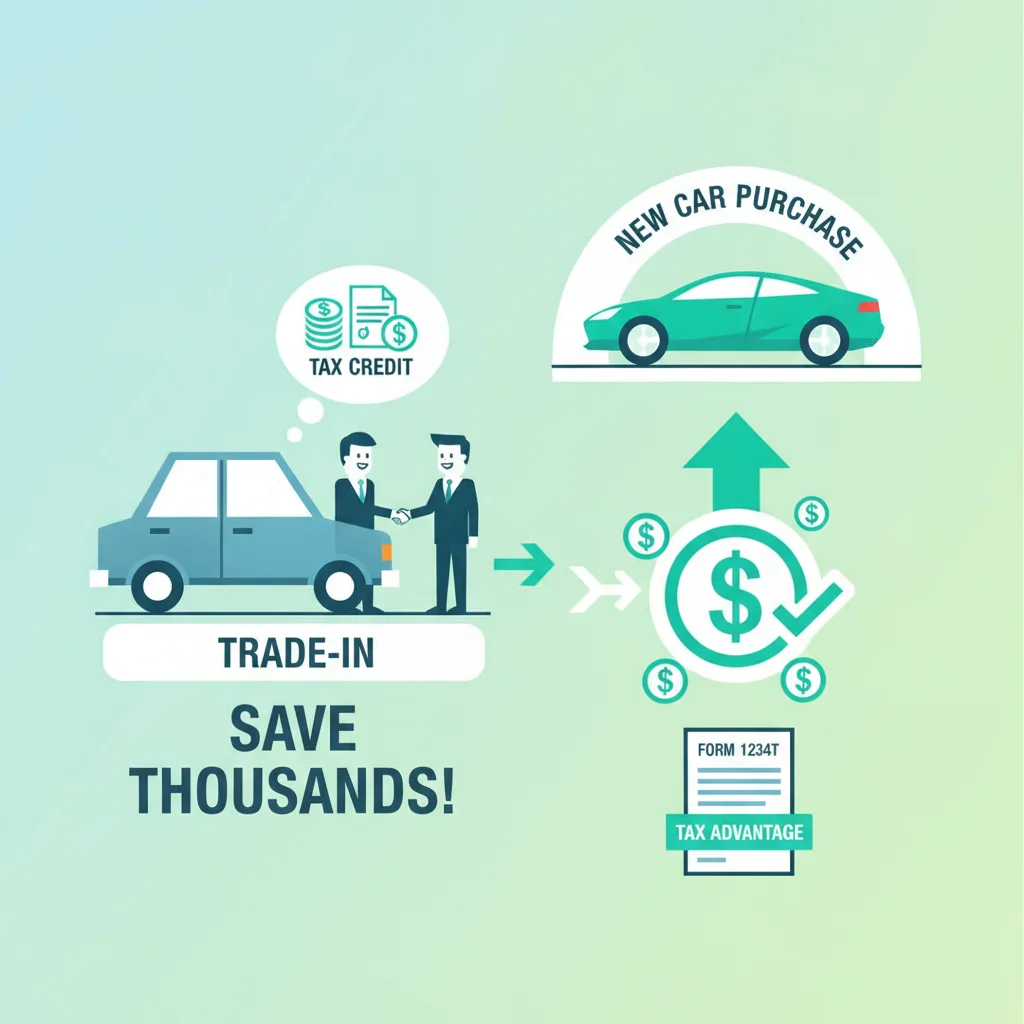
When you trade in a vehicle at a dealership, most states only charge sales tax on the difference between the new car's purchase price and your trade-in's value — not on the full price. This reduction in your taxable amount is known as the trade-in tax credit or trade-in tax offset. It's a built-in financial advantage of trading in rather than selling your car privately before you buy.
The exact savings depend on your state's sales tax rate and whether your state is one of the few that does not offer a trade-in tax credit. As of 2024, states like California do not offer this offset, while states like Texas and Illinois provide it fully.
What the Taxman Actually Charges You When You Trade In
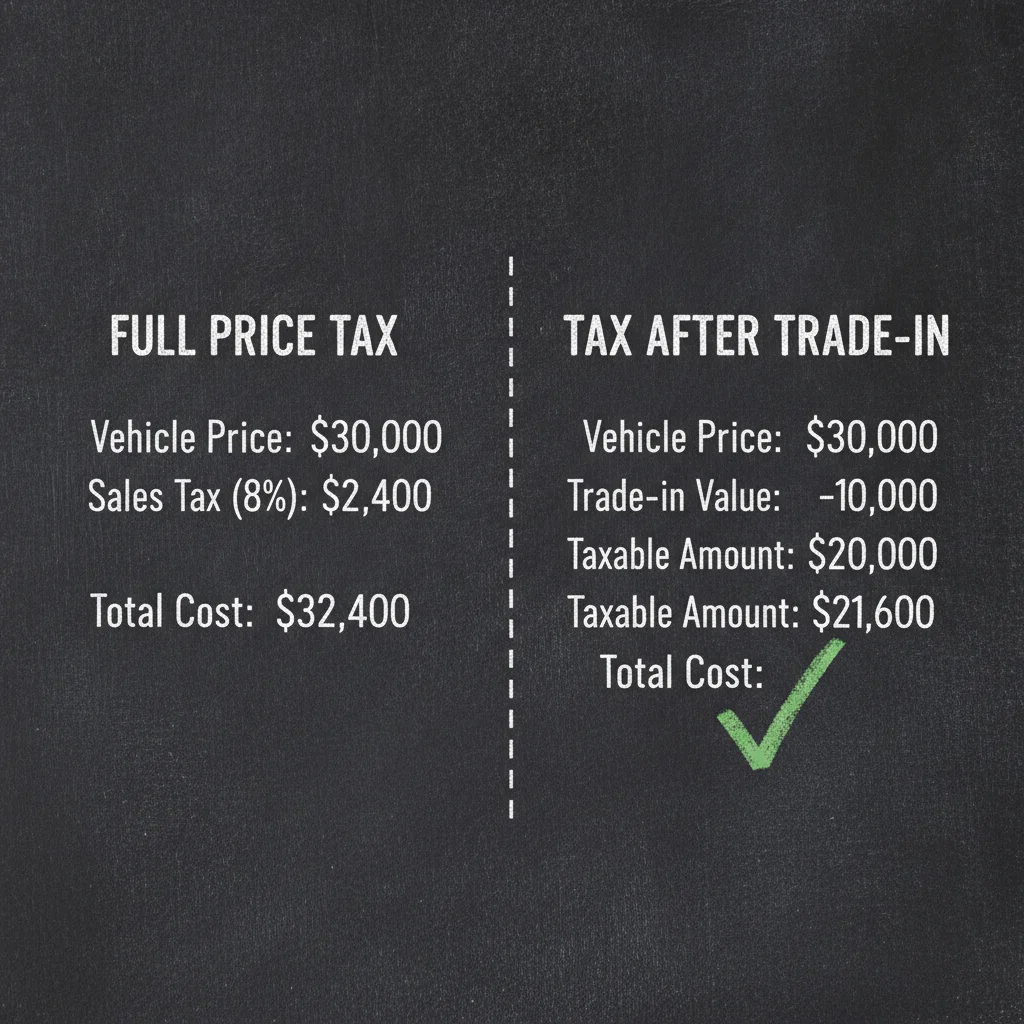
Here's something most car buyers never realize until after they've signed: when you trade in your vehicle at a dealership, the sales tax on your new purchase is calculated on a lower number than the full sticker price. In most states, the dealer subtracts your trade-in value from the new car's price before calculating what you owe in sales tax.
This is called the trade-in tax credit or sales tax offset. It's not a loophole, it's not a dealer promotion — it's written into the tax code of most U.S. states. And it can mean hundreds or even thousands of dollars in savings that you simply don't get if you sell your car privately and walk into a dealership as a clean, no-trade buyer.
Here's the basic math:
| Scenario | New Car Price | Trade-In Value | Taxable Amount | Tax @ 8% |
|---|---|---|---|---|
| Trade-In | $40,000 | $12,000 | $28,000 | $2,240 |
| No Trade-In | $40,000 | $0 | $40,000 | $3,200 |
The difference: $960 saved — just from how your trade-in is applied before tax is calculated. That's real money, and it's sitting on the table every time a buyer sells privately without accounting for this factor.
How the Math Works State by State
The tax savings formula is straightforward: Trade-In Value × State Sales Tax Rate = Your Tax Savings. But whether that formula even applies depends entirely on where you live.
43
U.S. states offering trade-in tax offset
According to state DMV and revenue department policies compiled by automotive researchers, approximately 43 states apply sales tax only to the net amount after trade-in deduction.
$1,050
Average tax savings on a $15,000 trade-in
Based on a blended average state sales tax rate of approximately 7%, a $15,000 trade-in generates roughly $1,050 in avoided sales tax for qualifying buyers.
10–20%
Typical private sale premium over dealer trade-in
Industry data from Edmunds and J.D. Power consistently shows private sellers net 10–20% more than dealer trade-in offers — a gap the tax credit partially offsets.
$985
Average trade-in tax credit in high-tax states
In states with sales tax rates above 8% (such as New York and parts of Illinois), the average trade-in tax credit on a typical $12,000 trade-in exceeds $960.
As of 2024, the vast majority of states — including Texas, Florida, Illinois, Pennsylvania, New York, and Ohio — apply the trade-in offset. A handful do not. The most notable exception is California, which requires buyers to pay sales tax on the full purchase price regardless of any trade-in. Other states that don't offer the credit include Hawaii, Michigan, Maryland, Montana, Oregon, and Virginia (though rules do shift, so always verify).
Here's a quick look at how the savings scale with your state's tax rate:
| State | Tax Rate (approx.) | Savings on $10,000 Trade-In |
|---|---|---|
| Texas | 6.25% | $625 |
| Illinois | 6.25% | $625 |
| New York | ~8.5% | $850 |
| Florida | 6% | $600 |
| Ohio | 5.75% | $575 |
| California | ~8.25% | $0 (no offset) |
If you're in California, the trade-in tax advantage essentially doesn't exist — which changes the math considerably when comparing a trade-in to a private sale. For everyone else, the higher your state's sales tax, the more valuable the trade-in credit becomes.
State Rules Change — Always Verify
State tax laws around trade-ins can change with budget cycles or legislative updates. The list of states that do or don't offer the trade-in offset is accurate as of 2024 but may shift. Before finalizing your strategy, check directly with your state's Department of Motor Vehicles or Department of Revenue. This takes about five minutes and can be worth hundreds of dollars in clarity.
Local Sales Taxes Can Stack
Many states have a base sales tax rate that counties or municipalities can add to. The tax savings you calculate using your state's base rate may actually be higher when local taxes are included. For example, in parts of Illinois the combined rate can reach 10%+, which makes the trade-in offset even more valuable than the state rate alone suggests.
Why Dealers Rarely Mention This — And How It Affects Negotiation
I spent years in dealership finance offices, and I can tell you exactly why the trade-in tax credit rarely comes up in conversation: it's not in the dealer's interest to explain it to you.
When buyers don't understand this benefit, they evaluate the trade-in offer in isolation — comparing the dealer's number to what they could get privately and feeling cheated. That emotional reaction leads them to either accept a low-ball trade-in out of frustration, or to sell privately and walk in thinking they got the better deal — without realizing the tax cost they just absorbed.
The dealer wins either way. If you trade in for a low number, they profit on resale. If you sell privately, they collect full sales tax on your purchase price, which isn't their money — but it does make your true out-of-pocket cost higher, which makes their financing offer look more attractive by comparison.
“Most buyers evaluate their trade-in number in isolation. The smart move is to fold the tax offset into your calculation before you ever decide whether to trade in or sell privately. That one number can change the entire decision.”
— Desmond Kimathi, Former dealership finance manager and consumer auto finance advocate
Knowing this shifts your negotiation posture. When a dealer quotes your trade-in at $11,000 and you know you could get $13,500 privately, don't just look at the $2,500 gap. Subtract the tax savings you'd forfeit by going private. If your state rate is 7%, that's $945 back in your pocket just from the trade-in credit. The real gap narrows to about $1,555 — and that's before you factor in the time, effort, and risk of a private sale.
This is where dealer negotiation strategy matters most: use the tax math as leverage. Tell the finance manager you've run the numbers. Show that you understand the offset. It signals you're not going to be moved by simple sticker comparisons.
Get Competing Offers Before the Dealership
Request trade-in quotes from Carvana, CarMax, and KBB Instant Cash Offer before setting foot on a dealer lot. These are real, written offers that expire in a fixed window. Use them to anchor your negotiation. A dealer who knows you have a $12,000 offer from Carvana will work harder to beat it — and every dollar they add to your trade-in value also compounds through the tax credit.
Check the Buyer's Order Before You Sign
When reviewing final paperwork, find the line labeled 'taxable amount' or 'selling price for tax purposes.' It should equal the new vehicle price minus your trade-in allowance. If it shows the full vehicle price, ask why — and don't sign until you have a clear answer. Errors on this line can cost you hundreds of dollars, and they're not always accidental.
Trade-In with Equity vs. Trade-In Underwater
Not all trade-ins deliver the tax benefit equally. The critical variable is whether you have positive equity or are underwater on your current vehicle.
Positive Equity Trade-In
If your car is worth $14,000 and you owe $8,000, you have $6,000 in equity. That full $14,000 trade-in value is applied to reduce your taxable purchase amount. The tax savings are calculated on the full trade-in value — $14,000 × your state tax rate.
Underwater Trade-In (Negative Equity)
If your car is worth $10,000 but you owe $14,000, you're $4,000 upside down. Most dealers will roll that $4,000 deficit into your new loan. In this case, only the $10,000 trade-in value reduces your taxable amount — the negative equity has no tax benefit and makes your new loan more expensive immediately.
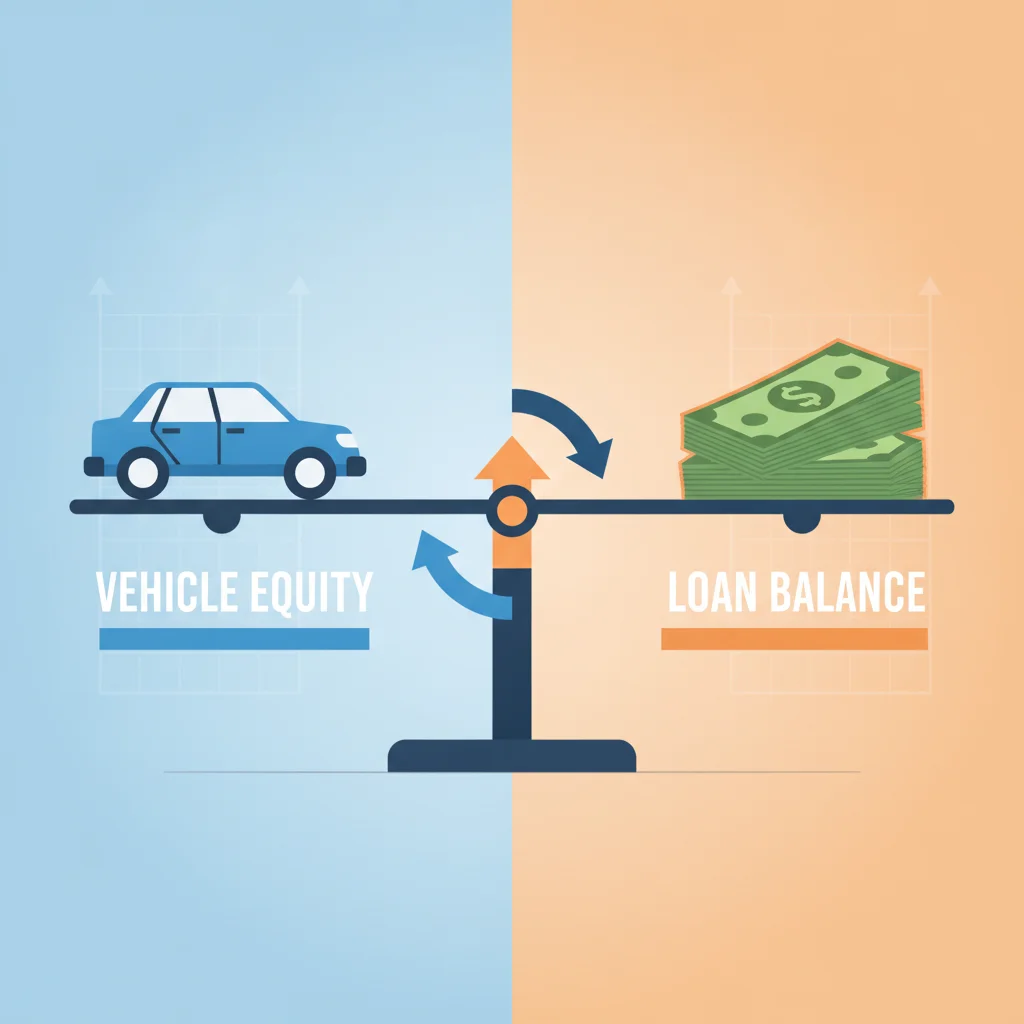
Being underwater significantly changes the financial calculus. You don't just lose the full tax benefit — you also start your new loan in a hole. If you're in this situation, consider whether waiting to pay down the balance before trading is worth the delay. In some cases it is; in others, depreciation will outpace your payoff progress.
For a deeper look at how dealers calculate what your car is actually worth — and where the profit margin hides in that offer — see the hidden math behind your trade-in offer.
Trade-In Tax Savings vs. Private Sale Premium: Running the Real Numbers
This is the decision most buyers face: take the dealer's trade-in offer and benefit from the tax credit, or sell privately for more and give up the tax savings. There's no universal right answer — but there is a clear framework for making the call.
The Break-Even Formula
If (Private Sale Price – Trade-In Offer) > (Trade-In Value × State Tax Rate), sell privately.
If not, trade in.
Let's work a real example. Your car is worth $15,000 in a private sale. The dealer offers $12,500. You're in a state with a 7% sales tax rate.
- Private sale premium: $15,000 – $12,500 = $2,500
- Tax savings you'd lose by selling privately: $12,500 × 7% = $875
- Real advantage of private sale: $2,500 – $875 = $1,625
In this scenario, selling privately still wins by $1,625. But factor in your time (listing, showings, negotiations, title transfer), the risk of buyers falling through, and potential DMV paperwork costs — and that $1,625 premium may not be worth it to everyone.
Now change the numbers: dealer offers $13,800, private sale would get $15,000. That's a $1,200 gap. Tax savings: $966. Real private-sale advantage: just $234. At that point, the convenience of a trade-in almost certainly wins.
For a more comprehensive breakdown of how these two paths compare beyond just the tax angle, trading in vs. selling privately walks through the full tradeoff. And if you want to understand what private sale premiums actually look like in practice, trade-in value vs. private sale price breaks down where the money actually goes.
How to Maximize the Tax Benefit When You Do Trade In
Understanding the tax credit is one thing. Extracting the maximum value from it is another. Here's how to make sure you're getting every dollar the system allows.
1. Know Your Car's Market Value Before You Walk In
Get quotes from Carmax, Carvana, and at least two other dealers before you accept any offer. These numbers are your floor. If a dealer won't match or beat them, the tax savings may not be enough to compensate — and you still have the option of selling to Carmax outright, which doesn't require a simultaneous car purchase.
2. Negotiate the Trade-In and Purchase Separately
Dealers love to blend the two into a single monthly payment conversation. Keep them separate. Agree on the out-the-door price of the new vehicle first. Then negotiate the trade-in value independently. This prevents them from inflating one to offset concessions on the other.
3. Confirm the Tax Credit Is Applied Correctly
When you review the buyer's order, look at the line that shows the taxable amount. It should reflect the new car price minus your trade-in value. If the full price is listed as taxable, flag it immediately — either it's a state where the credit doesn't apply, or there's an error (intentional or not).
Get Competing Offers Before the Dealership
Request trade-in quotes from Carvana, CarMax, and KBB Instant Cash Offer before setting foot on a dealer lot. These are real, written offers that expire in a fixed window. Use them to anchor your negotiation. A dealer who knows you have a $12,000 offer from Carvana will work harder to beat it — and every dollar they add to your trade-in value also compounds through the tax credit.
Check the Buyer's Order Before You Sign
When reviewing final paperwork, find the line labeled 'taxable amount' or 'selling price for tax purposes.' It should equal the new vehicle price minus your trade-in allowance. If it shows the full vehicle price, ask why — and don't sign until you have a clear answer. Errors on this line can cost you hundreds of dollars, and they're not always accidental.
4. Factor In Your State's Rate When Timing Your Purchase
If you're near a state border and considering a private sale, check whether your state has a meaningful tax offset. In high-tax states like New York or Illinois, the credit is especially valuable. In California, it's irrelevant — so the private sale argument is stronger there.
For sellers weighing options beyond the traditional trade-in route, trade-in vs. donation covers how charitable giving of your vehicle compares financially — including what you actually net after deductions.

All claims are backed by peer-reviewed research. Sources on request.