

Key Takeaways
Dealer Holdback
Dealer holdback is a percentage of a vehicle's price — typically 1% to 3% of the MSRP — that the manufacturer quietly pays back to the dealership after the car is sold. It's built into every new vehicle transaction but never appears on the window sticker or the purchase contract. Most buyers never know it exists. It exists so dealers can advertise cars at or near invoice price without actually losing money.
Holdback is typically calculated as a percentage of either the MSRP or the base invoice price, depending on the manufacturer. It is paid quarterly or monthly by the OEM directly to the dealer, separate from any front-end or back-end profit on the deal itself.
What Dealer Holdback Actually Is (And Why It's Hidden)
Walk into any dealership and ask to see the dealer invoice. Some will show it to you. What they won't tell you is that the invoice price is not the dealer's true cost. Between the invoice and what the dealer actually keeps is a layer of manufacturer money called holdback — and it's been standard practice in the car business for decades.
Here's the mechanics: when a manufacturer ships a vehicle to a dealership, the dealer technically pays the invoice price. But the manufacturer then rebates a percentage of that price back to the dealer, usually quarterly. That rebate is holdback. It exists primarily so dealers can advertise cars at invoice or below while still running a profitable operation.
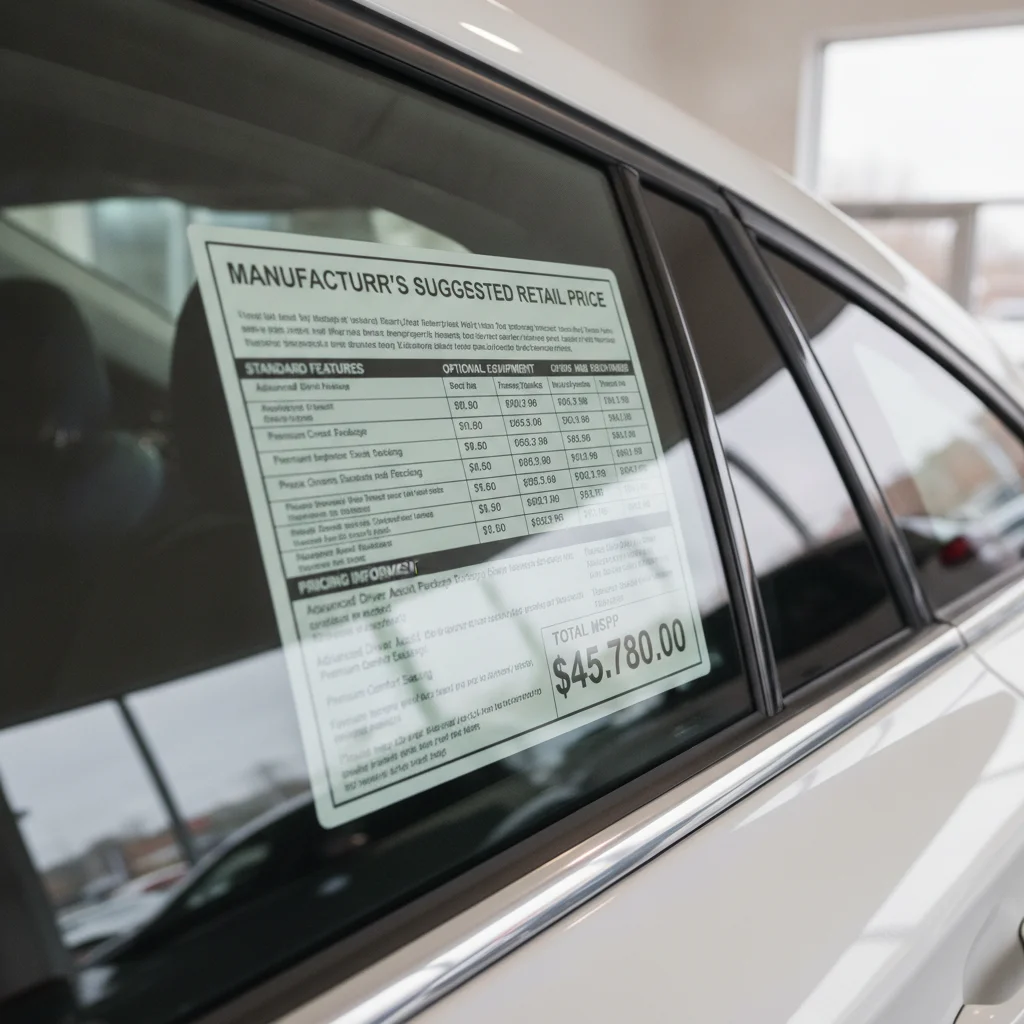
The holdback percentage varies by manufacturer but typically lands between 1% and 3% of MSRP or invoice. On a $45,000 pickup truck, 3% holdback means the dealer quietly collects $1,350 that has nothing to do with the price you negotiated. On a $25,000 sedan, even 2% is $500 the buyer never accounts for.
This isn't illegal. It's not even unethical in isolation. Manufacturers use it as a tool to help dealers manage cash flow and floor planning costs. But it creates an information gap — dealers know their real cost structure, buyers almost never do. That gap is where negotiating leverage quietly disappears.
Holdback Doesn't Apply to Every Deal
Some manufacturers have moved away from traditional holdback structures in favor of alternative dealer support programs, particularly brands experimenting with direct-to-consumer or agency sales models. Tesla, for example, uses a fixed-price model with no negotiation and no traditional holdback. As the industry evolves, always verify the current program for the specific brand you're buying.
Holdback Is Not the Same as a Consumer Rebate
Consumer rebates and cashback offers are paid directly to the buyer (or applied to the purchase price) and are fully disclosed. Holdback is paid from manufacturer to dealer after the sale — you never see it on your paperwork. These are completely separate programs and should not be confused when researching your deal.
Data Has a Shelf Life
Manufacturer holdback rates and dealer incentive programs change periodically. Always verify current rates using a live resource like Edmunds or CarEdge before your negotiation. Rates published in print guides or older articles may not reflect what's actually in place when you're at the table.
How Holdback Differs From Invoice, MSRP, and Dealer Incentives
To understand holdback, you need to understand how it fits into the broader price stack. There are several numbers in play on any new car deal:
- MSRP (Manufacturer's Suggested Retail Price): The sticker price. This is the starting point for negotiation, not the ceiling.
- Invoice Price: What the dealer pays the manufacturer on paper. Widely treated as "dealer cost" by buyers who know to ask. It's not.
- Dealer Cost: The actual cost after subtracting holdback, floorplan credits, and any manufacturer-to-dealer incentives. Usually below invoice.
- Holdback: Manufacturer rebate to the dealer, paid after the sale, not visible on the transaction.
- Dealer Cash / Dealer Incentives: Separate manufacturer payments to dealers for hitting sales targets or moving specific models. Stack on top of holdback.
When a salesperson says "I'm already selling this at invoice — I can't go lower," they're leaning on your assumption that invoice equals cost. It doesn't. The real cost is invoice minus holdback minus any dealer cash incentives running that month. On popular trucks and SUVs, the gap between invoice and true dealer cost can be $2,000 or more.
1%–3%
Typical holdback as % of MSRP
Published holdback rates by manufacturer, sourced from Edmunds and Consumer Reports pricing guides.
$1,350
Holdback on a $45,000 truck at 3%
Illustrative example based on a 3% holdback rate applied to a $45,000 base MSRP pickup truck.
$2,000+
Gap between invoice and true dealer cost
On popular trucks and SUVs with stacked holdback, floorplan credits, and dealer cash incentives combined.
50–80%
Typical margin on dealer F&I products
Industry estimates for finance and insurance product margins, including extended warranties and GAP insurance.
Quarterly
How often holdback is typically paid
Most manufacturers remit holdback to dealers on a quarterly basis, though some pay monthly depending on the brand agreement.
Understanding this stack is central to what the anatomy of a car deal looks like from the dealer's side. They're tracking multiple profit centers simultaneously — and holdback is just one of them.
Look Up Invoice and Holdback Before You Go
Before stepping into any dealership, pull up the invoice price and estimated holdback for the exact trim and options you want. Edmunds and Consumer Reports both provide this. Walking in with a specific number — not a percentage — changes how you negotiate. You're no longer guessing at the dealer's cost; you have an estimate.
Shop at Month or Quarter End for Best Results
Dealers are most motivated to move units in the last few days of a sales period when volume bonuses are within reach. If you can time your purchase to the final week of the month — and especially the final week of a quarter — you're negotiating with a seller who has a structural reason to say yes at a lower price.
Holdback Rates by Major Manufacturer
Holdback isn't uniform across brands. Each manufacturer sets their own rate and calculates it differently — some use MSRP as the base, others use invoice. Here's a breakdown of publicly available holdback data for major brands:
| Manufacturer | Holdback % | Calculated On |
|---|---|---|
| Toyota | 2% | Base MSRP |
| Ford | 3% | Base Invoice |
| General Motors (Chevy, GMC, Buick, Cadillac) | 3% | MSRP |
| Honda | 2% | Base MSRP |
| Nissan | 2% | Base MSRP |
| Chrysler / Stellantis | 3% | Invoice |
| Hyundai / Kia | 2–3% | MSRP |
| Subaru | 2% | MSRP |
Note: Holdback rates are subject to change. Verify current rates using Edmunds, Consumer Reports, or TrueCar before your negotiation.
Notice that luxury brands often don't publish holdback data — or have more complex dealer support structures that achieve similar outcomes through a different mechanism. When you're buying a vehicle from a brand like BMW or Mercedes, the margin arithmetic is less transparent but the principle holds: invoice is not dealer cost.

It's also worth noting that holdback doesn't apply to every vehicle category equally. Dealers on high-demand vehicles that sell at or above MSRP (think popular truck trims during inventory shortages) may be making front-end profit and collecting full holdback. On slow-moving sedans, holdback might be the only meaningful profit on the deal.
What Stacks on Top of Holdback: The Full Dealer Margin Picture
Holdback is the floor, not the ceiling, of dealer profit on a new car. Once you start accounting for everything manufacturers funnel to dealers, the total support package often runs well beyond what the sticker math suggests.
Floorplan Assistance
Dealers borrow money to stock their lots — this is called floorplanning. Manufacturers often reimburse dealers for a portion of those financing costs as an incentive to carry more inventory. This subsidy reduces the dealer's carrying cost and effectively lowers their break-even point below invoice.
Volume Bonuses
Many manufacturers offer dealers tiered bonus payments for hitting monthly or quarterly sales targets. A dealer who sells 100 units this month may receive a per-unit bonus retroactively applied to every car in the batch. This means a deal that looked like a loss at the time of sale becomes profitable once the bonus hits.
Dealer Cash Incentives
Separate from consumer rebates, manufacturers sometimes offer dealer cash — direct payments to move specific models or trims that are piling up. These never appear on consumer-facing listings. A dealer may be sitting on $1,500 in hidden dealer cash on a specific model and still start negotiations at MSRP.
“The invoice price is the dealer's opening bid in reverse. They want you to think it's their cost. It's not. Their real cost is below invoice — sometimes well below — once you account for holdback and everything else the manufacturer sends them.”
— Jordan Delray, Former dealership finance professional and auto loan analyst
All of this stacks on top of back-end profit from dealer markup on your auto loan rate, finance product sales like extended warranties and GAP insurance, and accessory add-ons. The add-ons that inflate your final bill often carry margins of 50–80%, making them far more profitable per dollar than the vehicle itself.
The point isn't to make dealers look villainous — they have high fixed costs and operate on thinner margins than people assume. The point is that "we're losing money at this price" is almost never true on a new car sale.
Look Up Invoice and Holdback Before You Go
Before stepping into any dealership, pull up the invoice price and estimated holdback for the exact trim and options you want. Edmunds and Consumer Reports both provide this. Walking in with a specific number — not a percentage — changes how you negotiate. You're no longer guessing at the dealer's cost; you have an estimate.
Shop at Month or Quarter End for Best Results
Dealers are most motivated to move units in the last few days of a sales period when volume bonuses are within reach. If you can time your purchase to the final week of the month — and especially the final week of a quarter — you're negotiating with a seller who has a structural reason to say yes at a lower price.
How to Use This Knowledge at the Negotiating Table
You can't demand that a dealer hand you their holdback. That's between them and the manufacturer and there's no mechanism for a buyer to capture it directly. But knowing it exists changes the negotiating dynamic in concrete ways.
1. Stop treating invoice as the floor
If you walk in knowing the invoice price and assume that's as low as the dealer can go, you're negotiating from a false baseline. The dealer's true floor is below invoice — sometimes significantly below on slow-moving models. Researching holdback rates plus any current dealer incentive programs gives you a realistic picture of where their actual break-even sits.
2. Start negotiations from a market-informed position
Use tools like Edmunds TMV (True Market Value) or TrueCar to find actual transaction prices in your market. These reflect what real buyers paid, accounting for the full margin picture. If the market rate for a vehicle is 2% below invoice, that tells you dealers are routinely accepting deals in that range — meaning they're still profitable at that price.
3. Name a number below invoice without apologizing
Buyers often feel uncomfortable offering below invoice because they assume it's insulting or unreasonable. It isn't. A dealer who sold a vehicle at $500 below invoice on a model with 3% holdback still walked away with money. Make the offer. The worst outcome is a counter — and now you're negotiating from a lower starting point.
4. Watch for end-of-month and end-of-quarter timing
Holdback is paid periodically, and volume bonuses are typically calculated at month or quarter end. Dealers are more motivated to move units in the final days of a period. A deal that doesn't quite pencil out for them on the 15th might work fine on the 30th when a volume bonus kicks in.
5. Separate the vehicle negotiation from financing
Dealers often blend front-end and back-end profit in the same conversation. If they take a hit on the vehicle price, they may recover it in the financing rate or the F&I office. Lock in your out-the-door vehicle price first, then deal with financing as a separate transaction — ideally with a pre-approval from your own bank or credit union in hand.
The same vigilance applies to documentation charges and paperwork fees. Whether you're buying new or used, the hidden costs in dealer paperwork and costs buried in CPO deals can quietly offset any savings you negotiated on the sticker price.

Common Misconceptions About Holdback
Even buyers who've heard the term holdback often misunderstand how it works. Here are the most common ones worth clearing up.
"Holdback means the dealer is gouging me"
Not exactly. Holdback was designed to help dealers manage their floor plan costs and maintain liquidity between the time they receive a vehicle and when they sell it. A dealer sitting on 300 cars for 60 days has real carrying costs. Holdback offsets that. It's a structural part of the distribution model, not a personal scheme against you.
"If I know the holdback, I can demand the dealer split it with me"
You can try, but it doesn't work that way in practice. Holdback is paid after the sale directly from the manufacturer to the dealer — it's not a line item that can be applied to your deal at the point of sale. What it does is inform your negotiating position. It tells you the dealer can go lower than invoice and still make money.
"Invoice price is what matters — not holdback"
Invoice matters, but only as a reference point. A dealer who sells at invoice is still profitable — just less so than at MSRP. Your goal is to understand the full margin picture and negotiate based on market transaction data, not on invoice price alone.
"This only matters on expensive vehicles"
Holdback matters on any new car. Even on a $22,000 economy sedan, 2% holdback is $440. That's real money. The absolute dollar amount scales up considerably on trucks, SUVs, and luxury vehicles — but the principle of knowing your counterpart's cost structure applies regardless of price point.
Holdback Doesn't Apply to Every Deal
Some manufacturers have moved away from traditional holdback structures in favor of alternative dealer support programs, particularly brands experimenting with direct-to-consumer or agency sales models. Tesla, for example, uses a fixed-price model with no negotiation and no traditional holdback. As the industry evolves, always verify the current program for the specific brand you're buying.
Holdback Is Not the Same as a Consumer Rebate
Consumer rebates and cashback offers are paid directly to the buyer (or applied to the purchase price) and are fully disclosed. Holdback is paid from manufacturer to dealer after the sale — you never see it on your paperwork. These are completely separate programs and should not be confused when researching your deal.
Data Has a Shelf Life
Manufacturer holdback rates and dealer incentive programs change periodically. Always verify current rates using a live resource like Edmunds or CarEdge before your negotiation. Rates published in print guides or older articles may not reflect what's actually in place when you're at the table.
Where to Find Holdback Data Before You Walk Into a Dealership
The good news is that holdback information is publicly available. Dealers aren't hiding it in a vault — it's just not advertised. Here's where to find it before your next negotiation:
- Edmunds
- Edmunds publishes detailed breakdown pages for most makes and models that include invoice price, MSRP, and notes on known holdback rates. Their TMV (True Market Value) tool also reflects real transaction prices that implicitly account for holdback.
- Consumer Reports
- The Build & Buy program and car pricing guides include holdback data by manufacturer. Subscribers can access this as part of the car-buying research suite.
- CarEdge (formerly YAA)
- Provides vehicle-specific market reports that include dealer cost estimates, current incentive programs, and days-on-lot data — useful for identifying leverage points beyond just holdback.
- NADA Guides
- Primarily used by dealers themselves for pricing, but publicly accessible for research purposes. Useful for cross-referencing invoice and MSRP on specific trims.
Armed with invoice price, holdback percentage, and any current dealer incentive programs, you can estimate the dealer's approximate cost on the vehicle you want. That estimate is your negotiating baseline — not MSRP, and not the dealer's word for what they can and can't do.
Holdback Doesn't Apply to Every Deal
Some manufacturers have moved away from traditional holdback structures in favor of alternative dealer support programs, particularly brands experimenting with direct-to-consumer or agency sales models. Tesla, for example, uses a fixed-price model with no negotiation and no traditional holdback. As the industry evolves, always verify the current program for the specific brand you're buying.
Holdback Is Not the Same as a Consumer Rebate
Consumer rebates and cashback offers are paid directly to the buyer (or applied to the purchase price) and are fully disclosed. Holdback is paid from manufacturer to dealer after the sale — you never see it on your paperwork. These are completely separate programs and should not be confused when researching your deal.
Data Has a Shelf Life
Manufacturer holdback rates and dealer incentive programs change periodically. Always verify current rates using a live resource like Edmunds or CarEdge before your negotiation. Rates published in print guides or older articles may not reflect what's actually in place when you're at the table.
If you're negotiating a trade-in at the same time, keep that transaction completely separate. Dealers often adjust trade-in value to recover margin lost on the vehicle price. The trade-in appraisal process has its own set of leverage points worth understanding independently.
All claims are backed by peer-reviewed research. Sources on request.