
Key Takeaways
Subject to Financing
A 'subject to financing' clause is language in a car purchase contract that makes the sale conditional on the buyer securing an approved loan. If financing cannot be arranged on the terms stated in the contract, the deal is not complete and — depending on the specific language — either party may have grounds to cancel. It is essentially a built-in escape hatch tied to the outcome of a loan approval process.
In contract law, this is a form of condition precedent: the buyer's obligation to complete the purchase only arises once the financing condition is satisfied or waived. The enforceability and remedies depend heavily on how the clause is drafted, including what loan terms are specified and the deadline by which financing must be secured.
Why This Clause Exists — and Who It Actually Protects
When you sign a car purchase agreement at a dealership, you're entering a contract. But unlike buying a coffee or a pair of shoes, a car sale almost always involves a third party — a lender — whose approval is required before the deal can actually close. The 'subject to financing' clause exists to acknowledge that reality.
On its face, the clause seems buyer-friendly: if you can't get a loan, you can walk away. But the protection it actually provides depends almost entirely on how the clause is written. A well-drafted clause specifies the loan amount, maximum interest rate, loan term, and a hard deadline. A poorly drafted one might simply say the sale is 'contingent on financing' with no further detail — which opens the door to disputes over what 'financing' means and when the condition is satisfied.
Dealers, for their part, include this language partly for their own protection too. If a dealer has already sent the car to auction or sold your trade-in and the lender later rejects your application, the dealer needs a clear legal mechanism to unwind the transaction. The clause gives both parties an exit — but the terms of that exit are not always balanced.
State Laws Vary on Financing Contingencies
Consumer protection rules around car purchase contracts — including financing contingency language, deposit refundability, and spot delivery practices — differ significantly from state to state. California, for example, has specific regulations that limit how dealers can structure spot delivery agreements. Before signing, it's worth checking your state's attorney general website or consulting a consumer law resource to understand what protections apply in your jurisdiction.
Financing Approval Is Not the Same as Loan Finalization
A dealer's F&I office may tell you your financing is 'approved' before the paperwork has actually been assigned to and accepted by a lender. True loan finalization happens when a lender has reviewed, approved, and funded the loan — not simply when the dealer's internal system returns a preliminary decision. This distinction matters for understanding when the financing condition in your contract is actually satisfied.
Keep Copies of Everything You Sign
Every document you sign at a dealership — including the purchase agreement, any spot delivery addendum, credit application, and trade-in forms — should be given to you as a copy before you leave. If a dispute arises later about what a financing clause said or what terms were agreed to, your copies are your primary evidence. Never leave a dealership without a complete copy of every page you signed.
Understanding this clause is also critical context for the broader loan process. Our guide on loan terms explained covers how the specific numbers — principal, APR, and term — interact to define what 'approved financing' actually looks like in practice.
The Specific Language That Matters Most
Not all 'subject to financing' clauses are created equal. The protective power of this language lives or dies in four specific details. Before you sign any purchase agreement, check whether each of the following is clearly stated:
- Loan amount: The clause should state the exact dollar amount you need to borrow. If it's left blank or stated as 'the balance due,' disputes can arise later about what you were actually seeking to finance.
- Maximum interest rate (APR): This is the most important number. If the clause doesn't cap the interest rate, a dealer could argue that financing at 22% APR satisfies the condition — even if that rate makes the loan unaffordable for you. Specify your maximum acceptable rate.
- Loan term: The number of months matters. A 72-month approval on a car you planned to finance for 48 months changes your monthly payment significantly. The term should match your expectations.
- Financing deadline: There should be a specific date — typically 3 to 10 business days — by which financing must be secured. Without a deadline, the deal can remain in limbo indefinitely, tying up your deposit and the dealer's inventory.

If any of these four elements is missing, ask for them to be added before you sign. A reputable dealership will accommodate this request. One that refuses should give you pause about the deal overall.
For a broader guide on reading the full loan agreement once you reach that stage, see how to read an auto loan contract before agreeing to anything.
What Happens When Financing Falls Through
If the financing condition is not met by the deadline — either because a lender denied your application or because no lender would approve the terms specified in the clause — the condition precedent fails. In plain terms: the sale does not go through, and the contract unwinds.
Here's what should happen next:
- Your deposit is returned in full. This should be non-negotiable. If the failure to secure financing was not your fault and the clause was properly drafted, you are owed every dollar you put down.
- The vehicle goes back to the dealer's inventory. You have no further obligation to purchase it, and the dealer has no further obligation to sell it to you.
- Any trade-in vehicle should be returned. If you traded in a car as part of the deal, it should come back to you. This gets complicated if the dealer has already sold your trade — a scenario that creates significant legal and practical problems.
Always Insist on a Written Financing Deadline
A financing clause without a deadline leaves you in limbo — the dealer can claim financing is still 'pending' indefinitely, tying up your deposit without resolving the deal. Request a specific date, ideally within 5 to 7 business days of signing. If that date passes without an approval meeting the stated terms, your right to cancel and receive a refund should activate automatically.
Get Preapproved Before You Step on the Lot
Walking into a dealership with a firm preapproval from your own bank or credit union changes the entire dynamic. You already know your rate, your maximum loan amount, and your monthly payment ceiling. This transforms the 'subject to financing' clause from a source of uncertainty into a formality. Visit the <a href="/auto-loans/credit-and-approval/loan-preapproval">loan preapproval hub</a> to understand exactly what preapproval involves and how to get one before your next car purchase.
The failure of a financing condition does not automatically mean you lose everything. But it can become a dispute if the clause was vague or if the dealer argues you did not act in good faith to secure financing. 'Good faith' typically means you applied for a loan promptly and honestly — not that you sabotaged the application.
If a dealer resists returning your deposit after financing legitimately falls through, document everything in writing and consider filing a complaint with your state's attorney general office or department of motor vehicles licensing board.
79%
Car buyers who finance through the dealership
According to J.D. Power, roughly four in five financed car purchases are arranged through dealer F&I offices rather than buyers' own banks or credit unions.
1 in 4
Spot delivery deals that get renegotiated
Consumer advocacy research suggests a significant share of spot delivery transactions result in the dealer contacting the buyer to revise loan terms after the vehicle has left the lot.
$1,000+
Average excess interest cost from yo-yo deals
The Center for Responsible Lending has estimated that buyers who accept renegotiated terms after spot delivery pay an average of over $1,000 more in interest over the life of the loan.
The Spot Delivery Problem — and Why It Complicates Everything
Here's where many buyers get into serious trouble: they sign a 'subject to financing' purchase agreement and then, on the same day, also sign a spot delivery agreement that lets them drive the car home before the loan is finalized.
These two documents can directly conflict. The purchase agreement says the deal is conditional. The spot delivery agreement may say you're taking possession of the vehicle 'as-is' while financing is arranged — and it may include language that limits your ability to walk away if the dealer later calls to say the original financing terms couldn't be met.
This is the legal foundation for what's commonly called 'yo-yo financing' — a practice where a buyer drives off the lot believing the deal is done, only to receive a call days or weeks later demanding they return to sign new paperwork at worse terms. Our article on how yo-yo financing works and how to protect yourself breaks down the full mechanics of this practice.
The safest approach is to never take possession of a vehicle before financing is fully confirmed by a lender — not just approved by the dealer's F&I office. If you must take spot delivery, read every line of that separate agreement and understand what it says about your rights if financing terms change. See our companion explainer on spot delivery vs. completed financing for a full comparison of the two scenarios.
“The financing contingency is supposed to be the buyer's safety net — but it only works if the specific loan terms are written into the contract. A clause that just says 'contingent on financing' without specifying rate, amount, and deadline is effectively no protection at all.”
— Rosemary Shahan, President, Consumers for Auto Reliability and Safety (CARS)
How a Preapproval Changes Your Position
The most effective way to neutralize the risk created by a 'subject to financing' clause is to walk into the dealership with a firm loan preapproval from your own bank or credit union already in hand. When you do this, the financing condition in the purchase contract effectively becomes a formality — the condition is already met before you sign.
There's an important distinction here, though. Not all preapprovals are equal. A conditional preapproval means the lender has reviewed your credit application and is likely to approve — but subject to verifying income, confirming the vehicle's value, or satisfying other requirements. A firm preapproval means those checks have already been completed and the lender has committed to a specific rate and amount.
Conditional vs. firm preapproval: what the difference means for your deal is a distinction worth understanding before you assume you're protected. If your preapproval is still conditional, a 'subject to financing' clause in the purchase agreement still carries real risk.
When you do have a firm preapproval, you can present it to the dealer and request that the contract reflect the specific loan terms you've secured — including the APR cap and loan amount from your lender's commitment letter. This also gives you negotiating leverage on the vehicle price itself, since you're effectively a cash buyer from the dealer's perspective.
For more on how preapprovals fit into the broader loan process, see the Loan Preapproval hub.
Always Insist on a Written Financing Deadline
A financing clause without a deadline leaves you in limbo — the dealer can claim financing is still 'pending' indefinitely, tying up your deposit without resolving the deal. Request a specific date, ideally within 5 to 7 business days of signing. If that date passes without an approval meeting the stated terms, your right to cancel and receive a refund should activate automatically.
Get Preapproved Before You Step on the Lot
Walking into a dealership with a firm preapproval from your own bank or credit union changes the entire dynamic. You already know your rate, your maximum loan amount, and your monthly payment ceiling. This transforms the 'subject to financing' clause from a source of uncertainty into a formality. Visit the <a href="/auto-loans/credit-and-approval/loan-preapproval">loan preapproval hub</a> to understand exactly what preapproval involves and how to get one before your next car purchase.
Reading the Clause in Context: What Else the Contract Says
A 'subject to financing' clause doesn't exist in isolation. It sits inside a purchase agreement that includes other provisions that can expand or limit your rights. Here are the surrounding terms that most commonly interact with the financing condition:
- Deposit terms
- Does the contract state explicitly that the deposit is refundable if the financing condition fails? Some contracts treat deposits as 'earnest money' that becomes non-refundable once you sign — regardless of whether financing goes through. Insist on explicit refundability language tied to the financing condition.
- Lender assignment clause
- Many dealerships don't lend you money directly — they originate the loan and then assign it to a bank or finance company. An assignment clause may state that the sale is 'subject to the dealer successfully assigning the contract to a lender,' which is subtly different from 'subject to the buyer securing financing.' Under this framing, the dealer's ability to sell your loan — not your creditworthiness — is the operative condition.
- As-is acknowledgment
- If the contract contains an as-is clause alongside the financing condition, confirm that the as-is provision only activates upon the financing condition being satisfied. You shouldn't be waiving vehicle condition rights before you're even obligated to complete the purchase.
- Arbitration clause
- If there's a dispute about whether the financing condition was met, an arbitration clause may require you to resolve it outside of court. This isn't necessarily harmful, but it changes the practical dynamics of enforcing your rights.
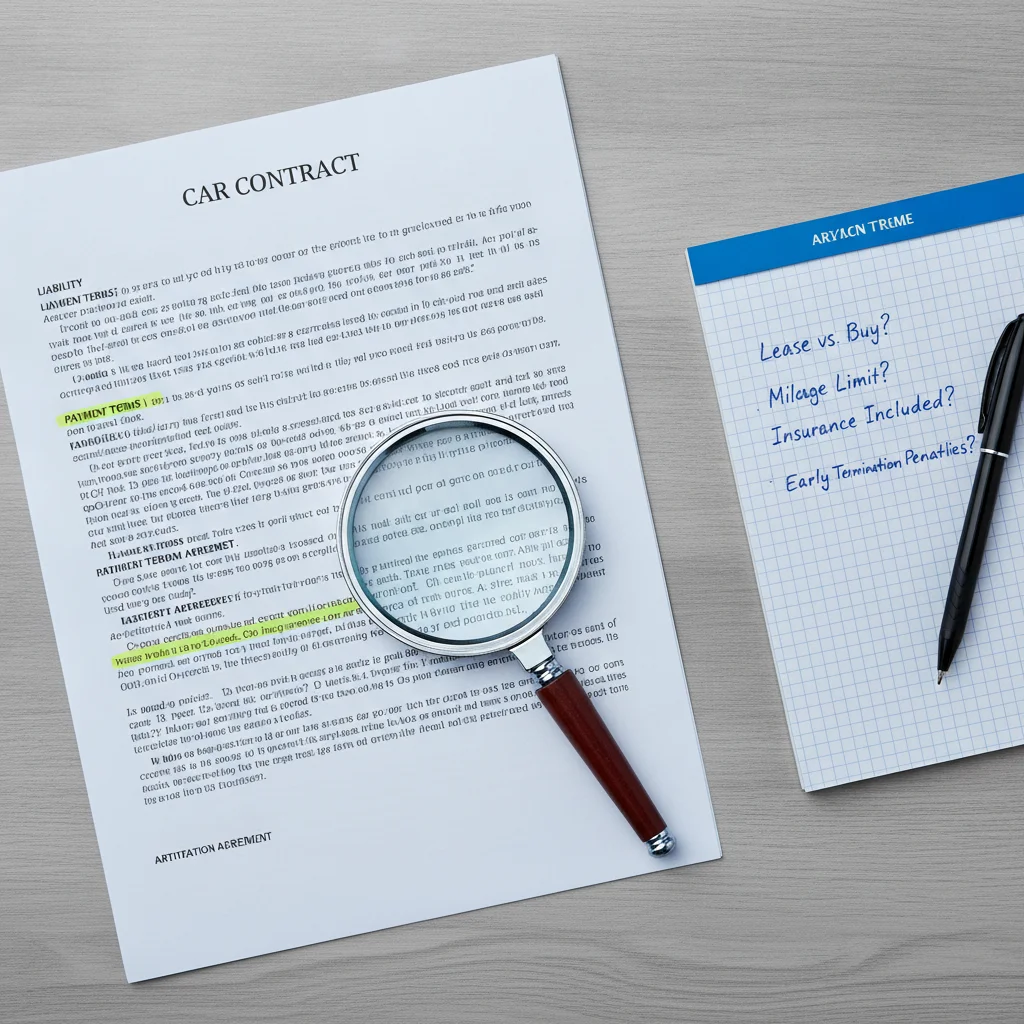
Understanding how these provisions interact is part of why reading the complete purchase agreement matters so much — not just the financing clause in isolation. See our overview of auto loan terms decoded for help parsing the specific numbers you'll encounter throughout the contract.
State Laws Vary on Financing Contingencies
Consumer protection rules around car purchase contracts — including financing contingency language, deposit refundability, and spot delivery practices — differ significantly from state to state. California, for example, has specific regulations that limit how dealers can structure spot delivery agreements. Before signing, it's worth checking your state's attorney general website or consulting a consumer law resource to understand what protections apply in your jurisdiction.
Financing Approval Is Not the Same as Loan Finalization
A dealer's F&I office may tell you your financing is 'approved' before the paperwork has actually been assigned to and accepted by a lender. True loan finalization happens when a lender has reviewed, approved, and funded the loan — not simply when the dealer's internal system returns a preliminary decision. This distinction matters for understanding when the financing condition in your contract is actually satisfied.
Keep Copies of Everything You Sign
Every document you sign at a dealership — including the purchase agreement, any spot delivery addendum, credit application, and trade-in forms — should be given to you as a copy before you leave. If a dispute arises later about what a financing clause said or what terms were agreed to, your copies are your primary evidence. Never leave a dealership without a complete copy of every page you signed.
What to Do Before You Sign
Armed with everything above, here is a practical checklist to apply before you put pen to paper on any car purchase agreement containing financing language:
- Locate the financing clause. Ask the F&I manager to show you exactly where it appears in the contract. Don't accept 'it's standard, don't worry about it' as a response.
- Confirm the four elements are present: loan amount, APR cap, loan term, and a financing deadline. If any are missing, ask for them to be added.
- Verify deposit refundability. Find the language that addresses your deposit in the event financing fails. It should explicitly state that the full deposit is returned to you.
- Clarify whether this is a buyer-financing condition or a lender-assignment condition. These are different. The first protects you. The second protects the dealer.
- Understand any spot delivery paperwork separately. If you're taking the car home today, know what you're signing on that separate agreement — and how it interacts with the purchase contract.
- Use your preapproval if you have one. Present your lender's commitment letter and ask that the contract reflect those specific terms. You can also use your preapproval as a baseline to compare dealer-arranged financing — if the dealership can beat your rate, great; if not, you already have a loan ready to go.
These steps add perhaps 15 minutes to the signing process but can save you thousands of dollars and enormous legal headaches if the deal goes sideways. Take the time.
State Laws Vary on Financing Contingencies
Consumer protection rules around car purchase contracts — including financing contingency language, deposit refundability, and spot delivery practices — differ significantly from state to state. California, for example, has specific regulations that limit how dealers can structure spot delivery agreements. Before signing, it's worth checking your state's attorney general website or consulting a consumer law resource to understand what protections apply in your jurisdiction.
Financing Approval Is Not the Same as Loan Finalization
A dealer's F&I office may tell you your financing is 'approved' before the paperwork has actually been assigned to and accepted by a lender. True loan finalization happens when a lender has reviewed, approved, and funded the loan — not simply when the dealer's internal system returns a preliminary decision. This distinction matters for understanding when the financing condition in your contract is actually satisfied.
Keep Copies of Everything You Sign
Every document you sign at a dealership — including the purchase agreement, any spot delivery addendum, credit application, and trade-in forms — should be given to you as a copy before you leave. If a dispute arises later about what a financing clause said or what terms were agreed to, your copies are your primary evidence. Never leave a dealership without a complete copy of every page you signed.

All claims are backed by peer-reviewed research. Sources on request.