
Key Takeaways
Why Online Car Listings Require a Skeptic's Eye
Online car marketplaces — Autotrader, Cars.com, Facebook Marketplace, Craigslist, CarGurus — have made finding your next vehicle faster and easier than ever. But that convenience cuts both ways. The same low barrier to entry that lets legitimate private sellers post in minutes also lets scammers, flippers, and misrepresenting dealers do the same. And unlike a dealership lot where you can walk around the car, sit inside it, and look a salesperson in the eye, an online listing is only as trustworthy as the person who wrote it.
I spent years in dealership finance, and I can tell you with certainty: the manipulation that happens in finance offices doesn't hold a candle to some of what circulates in online listings. At least in a dealership, there's a legal entity on the hook. Online, a bad actor can disappear with your deposit in minutes.
The good news is that most red flags are visible before you ever pick up the phone — if you know where to look. The list below covers the most common and most costly warning signs I've seen buyers overlook, along with exactly what to do when you spot them. If you want to go deeper on vetting the person behind the listing, our guide on how to spot a legitimate online car seller is worth reading alongside this one.
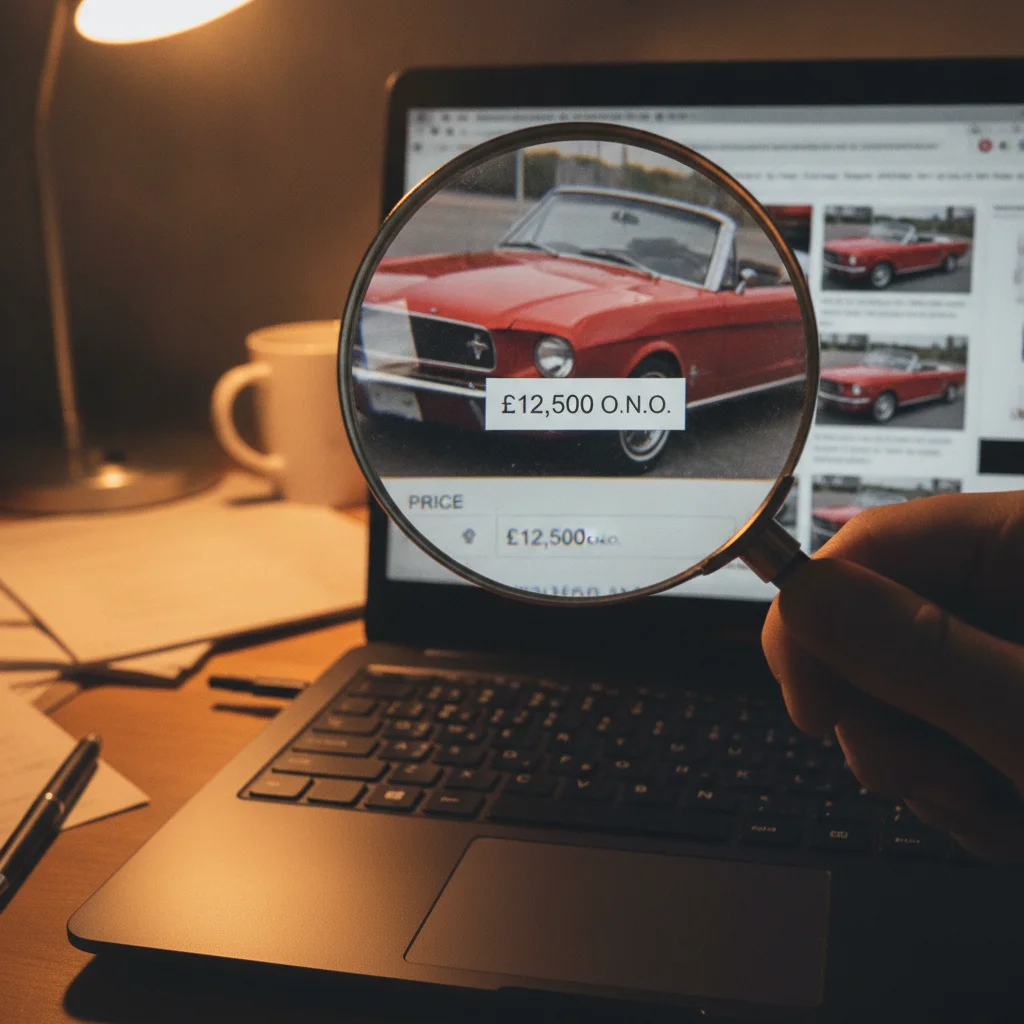
The price is dramatically below market value
This is the oldest trick in the scam playbook, and it still works because buyers want to believe they've found a deal. A 2021 Honda CR-V with 40,000 miles listed for $11,000 when every comparable example is $24,000–$27,000 isn't a bargain — it's bait. The listing exists to generate inquiries, not to actually sell that car at that price.
The mechanism usually goes one of two ways: either the car doesn't exist and the "seller" is collecting deposits, or the car has serious undisclosed problems — a salvage title, flood damage, or a rolled-back odometer — that make it nearly worthless on the open market.
Before you contact any seller, run the listed price against at least two independent market value sources. Our guide on how to research a car's market value before buying online walks you through exactly how to do that. You can also use the tools covered in the Valuation Tools hub to cross-check what a fair price actually looks like for the year, make, model, trim, and mileage.
What to do: If the price is more than 15–20% below market comparables with no explanation in the listing, treat it as suspicious until proven otherwise. Ask the seller directly why it's priced where it is. A legitimate seller with a genuine reason — urgent relocation, quick estate sale — will have a specific, verifiable answer.
A price 20% below market with no explanation isn't a deal — it's a trap.
No VIN is provided — or the VIN doesn't match
Every legitimate used car listing should include the Vehicle Identification Number. No exceptions. The VIN is the car's fingerprint — it unlocks its accident history, title status, recall records, number of previous owners, and whether it's been reported stolen. A seller who omits it, refuses to provide it, or gives you a different number than what's on the dashboard is hiding something material.
The VIN mismatch issue is particularly dangerous. Some fraudsters clone a legitimate listing from another platform — copying photos, description, and specs — but swap in a different VIN (or omit it entirely) because the real car has a salvage title or theft report attached. When you run the cloned VIN, everything looks clean because it belongs to a different, legitimate vehicle.
What to do: Request the full 17-character VIN before you go any further. Run it through the National Motor Vehicle Title Information System (NMVTIS), Carfax, or AutoCheck. Cross-check the VIN in the listing against the one visible through the windshield in any interior photos. If those don't match, walk away. Also search the VIN on Google — if the same VIN appears in listings across multiple cities simultaneously, it's a cloned listing.
A seller who won't provide the VIN upfront has a reason — and it won't be a good one.
The photos are stock images or clearly not of the actual car
Real sellers photograph the actual vehicle they're selling. They may not be professional photos, but they show the specific car — its real condition, its actual wear, its particular quirks. When a listing uses manufacturer press photos, generic stock images, or a suspiciously perfect set of photos that don't match the vehicle's described mileage or age, the seller likely doesn't have the car in their possession.
This is one of the most common tactics in advance-fee fraud. The listing looks professional and the price is appealing, but the "seller" is operating from overseas or across the country, using images lifted from another listing or from a manufacturer's website. Once they have your deposit or wire transfer, they vanish.
[in_content_images:1]What to do: Right-click any listing photo and run a reverse image search in Google Images or TinEye. If the photos appear on other listings, manufacturer websites, or stock photo libraries, you're looking at a fraudulent post. Demand seller-taken photos with specific requests — ask them to photograph the VIN plate, the odometer reading, and any area of reported damage. A legitimate seller can do this in five minutes. A fraudster cannot.
Run a reverse image search on every photo — fraudsters recycle images constantly.
The description is vague, templated, or copy-pasted
A seller who actually owns and knows their car will write about it specifically. They'll mention that the passenger-side door has a small ding, that it runs cold AC, that they replaced the brakes last spring. Vague descriptions full of generic selling language — "runs great," "well maintained," "clean inside and out" — with no specifics are either a lazy listing or a deliberately evasive one.
Template descriptions are also common among wholesalers and flippers who acquire vehicles quickly and list them before they've fully inspected them. That's not automatically fraud, but it means the seller may know less about the car than you'll need them to — and they may be hiding condition issues they haven't bothered to investigate.
What to do: Look for specifics in the description: recent service records, tire brand and tread depth, known cosmetic issues, modifications, and reason for selling. If the description doesn't answer basic questions, ask them directly in writing. Compare their answers to what the photos show. Inconsistencies are a signal to dig harder before committing any money or time to an in-person visit.
Specific details separate genuine sellers from those hiding something about the vehicle.
The seller avoids or delays an in-person inspection
Any legitimate seller — private individual or dealer — should have no problem with you seeing the car in person and having it inspected by a mechanic. When a seller introduces friction around this basic step, it almost always means the car doesn't look as advertised, or they don't actually have the car to show you.
The excuses vary: the car is "in storage," they're currently "out of the country," they can't meet until after you've "secured your interest" with a deposit, or they'll only deal remotely for "safety reasons." These are scripted stalling tactics. I've seen versions of all of them used successfully to separate buyers from their money before they ever laid eyes on the vehicle.
What to do: Make your inspection requirement clear from the first message. If the seller pushes back or introduces conditions — like a deposit before viewing — treat it as a hard stop. For out-of-state purchases where travel is impractical, hire a third-party pre-purchase inspection service (companies like Lemon Squad or CARCHEX operate nationally) to inspect the vehicle on your behalf and send you a detailed report. Never commit money to a car you or a trusted inspector hasn't physically verified.
[note_callout]No legitimate seller with a clean car will block you from inspecting it.
Payment must be wire transfer, Zelle, or gift cards
Payment method is one of the clearest tells in any online transaction. Wire transfers, Zelle, Venmo, Cash App, cryptocurrency, and gift cards all have one thing in common: they're non-reversible and offer you zero buyer protection. Fraudsters specify these methods precisely because once the money moves, it's gone. There's no chargeback, no dispute process, no recourse.
Legitimate private sellers typically accept cash (for in-person transactions), cashier's checks from a recognized bank, or — increasingly — escrow services designed specifically for vehicle sales. Dealers are required to process transactions through formal payment channels. Anyone insisting on an untraceable, irreversible method is protecting themselves from accountability, not you.
What to do: If a seller specifies wire transfer or gift cards as the only accepted payment methods, stop the conversation immediately. For any remote transaction where you can't pay cash in person, use a legitimate vehicle transaction escrow service — Escrow.com is commonly used for this purpose. Never send money before you have legal title and physical possession of the vehicle confirmed.
Wire transfers and gift cards are the payment method of choice for vehicle scammers.
The listing appears on multiple platforms with inconsistencies
Legitimate sellers occasionally cross-post a vehicle on multiple platforms — that's normal. What's not normal is when the same car appears with different prices, different mileage figures, different seller names, or different contact information across those platforms. Inconsistency across listings is a strong signal that you're dealing with either a dishonest seller who adjusts details strategically, or a scammer who has cloned someone else's legitimate listing and made careless errors in the process.
The platform itself also matters. Craigslist and Facebook Marketplace have minimal listing verification, which makes them higher-risk environments than platforms with seller accountability features — though scams occur everywhere. For a broader look at the warning signs that appear in used car listings specifically, our article on red flags in used car listings that serious buyers learn to recognize goes deeper on the pattern-recognition side.
[in_content_images:2]What to do: Search the VIN, the seller's phone number, and any email address they provide across Google and multiple platforms. Look for the same listing with different details. If you find contradictions, document them and confront the seller directly — their response will tell you exactly how much trust the relationship deserves. Also check seller profiles for account age and review history on platforms that support it.
The same car listed with different mileage on different platforms is never an accident.
Title issues buried or missing from the listing
The title status of a used vehicle determines whether you can legally drive it, insure it, register it, and eventually resell it. A clean title means the car hasn't been declared a total loss. A salvage or rebuilt title means an insurance company once determined the repair cost exceeded the car's value — the vehicle was likely in a serious accident, flood, or fire. Dealers in most states are legally required to disclose title status. Private sellers often are not — or they hope you won't ask.
Listings that don't mention title status at all aren't automatically hiding something, but it's a detail you must verify before proceeding. More concerning are listings that describe the car glowingly with no mention of a salvage brand, but where the VIN history report reveals one. That discrepancy — whether accidental or deliberate — should immediately change your willingness to proceed at the listed price, if at all.
What to do: Run the VIN through an NMVTIS-authorized provider before your first phone call. Look specifically for salvage, rebuilt, flood, lemon law buyback, or odometer discrepancy flags. If the listing doesn't disclose a salvage title but the report shows one, treat the omission as intentional. A salvage or rebuilt title vehicle can be a reasonable buy — but only at the right price and with full transparency, not as a surprise after you've already emotionally committed to the car.
A VIN check before the first phone call costs less than $40 and can save you thousands.
Don't Stop at the Listing — Keep Digging
Spotting red flags in a listing gets you halfway there. The other half is what happens when you start communicating with the seller. Pressure to decide quickly, refusal to meet in person, and sudden changes to the advertised price are all signs that the deal itself — not just the listing — is compromised. Our article on red flags in a car deal that should make you pause picks up exactly where this one leaves off.

Build a Pre-Contact Checklist
Before you message any seller, run through a quick checklist: Is the price within 15% of market value? Is a full VIN provided? Are the photos clearly of the actual vehicle? Does the description include specific, verifiable details? If you can't check all four boxes, you have questions to answer before the conversation begins. This 60-second filter will save you hours of wasted communication with sellers who aren't worth your time.
If you're buying used and still feeling uncertain after vetting a listing, the Buying Used Cars hub has a full framework for finding and evaluating pre-owned vehicles. And if you're dealing with multiple listings at once, don't miss our guide on how to compare online car listings without getting overwhelmed — it'll save you hours of confusion.
The online car market rewards buyers who slow down and ask hard questions. Every legitimate seller with a solid vehicle will welcome your scrutiny. The ones who push back? That tells you everything you need to know.
Out-of-State Purchases Require Extra Verification
Buying a car from another state significantly raises the stakes on every red flag listed here. You're unlikely to visit in person before committing, which means you're more dependent on third-party verification. Always use a professional pre-purchase inspection service, request a video walkthrough from the seller in real time (not pre-recorded), and never wire funds before you have a signed title and bill of sale in hand. Escrow services exist precisely for these situations — use them.
Report Fraudulent Listings — It Helps Other Buyers
If you identify a listing you believe is fraudulent, report it to the platform directly and file a complaint with the FTC at reportfraud.ftc.gov. Most platforms have a flag or report function on every listing. Taking 90 seconds to report a scam listing can protect dozens of other buyers who encounter it after you. The more reports a fraudulent account accumulates, the faster the platform can remove it.

All claims are backed by peer-reviewed research. Sources on request.