Key Takeaways
Reduces total interest paid over the loan life
Because auto loans accrue interest on the outstanding principal daily, lowering your balance with a lump sum immediately reduces how much interest accumulates each day forward. Even a modest $1,500 payment can save hundreds of dollars over a multi-year term at rates above 6%.
Shortens your loan term without refinancing
Applying extra principal reduces the number of payments needed to zero out the balance. If you maintain your regular monthly payment after the lump sum, you will pay off the loan earlier than originally scheduled — without filling out new applications or undergoing a credit check.
Improves your loan-to-value ratio
Paying down principal faster reduces the gap between what you owe and what your vehicle is worth, which is especially valuable if you plan to trade in or sell the car within a few years. A better LTV position gives you more flexibility and negotiating room.
Low friction compared to other debt strategies
Unlike refinancing, which requires shopping lenders, submitting documents, and waiting for approval, a principal payment typically takes a few minutes online or by phone. There is no credit inquiry, no new contract, and no closing process to manage.
Certain, guaranteed return equal to your loan's APR
Paying down a 7.5% auto loan is the financial equivalent of earning a guaranteed 7.5% return on that money — with no market risk. In a volatile investment environment, that certainty has real value.
Opportunity cost if higher-rate debt exists
If you carry credit card balances at 18% to 25% APR, paying down a 6% car loan first costs you money. Every dollar applied to the lower-rate loan instead of the higher-rate debt generates a net interest loss on the spread between the two rates.
Potential prepayment penalties can erode savings
Some loan agreements — particularly those from buy-here-pay-here dealers or older loan products using the Rule of 78s — include fees for early payoff or reduce the interest rebate you would otherwise receive. Always verify your contract terms before sending a lump sum.
Locks up liquid cash you may need urgently
Once applied to a loan principal, that money is gone — you cannot retrieve it if an emergency arises. Borrowers without a robust emergency fund are essentially trading liquidity for interest savings, which is a dangerous trade-off.
Minimal benefit late in the loan term
In the final months of a loan, most of your regular payment is already going toward principal rather than interest. A lump sum at that stage saves very little in interest charges compared to the same payment made in the first or second year.
Does not address a negative equity problem
If you owe significantly more than the car is worth, a single lump-sum payment reduces the gap but does not solve the underlying negative equity situation. Selling, trading in, or insuring a totaled vehicle will still leave you short until the balance-to-value ratio improves substantially.
May miss a better return in tax-advantaged accounts
For borrowers with low APR loans (below 5%) who have not yet maximized their IRA or 401(k) contributions, the tax-sheltered compounding in those accounts could outperform the interest saved — especially over a long horizon.
Our Verdict
Using a tax refund to pay down your car loan is a smart move for borrowers who have emergency savings covered, no higher-interest debt competing for the funds, and a lender that applies extra payments to principal without penalty. The math is straightforward: reducing your balance faster means less interest accrues over the remaining term. However, it is not the right call for everyone — those underwater on their loan, carrying costly credit card balances, or lacking a financial cushion may find better uses for that lump sum.
Best for borrowers who are current on their loan, have a solid emergency fund, and want to reduce total interest costs without taking on the paperwork of refinancing.
How a Lump-Sum Payment Actually Reduces Interest
Before weighing the pros and cons, it helps to understand exactly why sending a lump sum to your lender saves you money. Auto loans use simple interest, meaning interest is calculated on your outstanding principal balance each day. The larger that balance, the more interest accrues. Shrink the balance — even once — and every future payment stretches further.
Here is a concrete example. Say you have a $18,000 balance remaining on a 6.5% APR loan with 36 months left. Your monthly payment is roughly $553. Over those 36 months, you would pay approximately $1,890 in total interest. Now apply a $2,000 tax refund to principal today. Your new balance is $16,000. Keeping the same monthly payment, you pay off the loan about four months early and save nearly $340 in interest charges.
That may sound modest, but the savings scale with your balance, your rate, and how early in the term you make the extra payment. Someone with a $28,000 balance at 8% APR and 48 months remaining would save over $900 in interest from the same $2,000 lump sum.
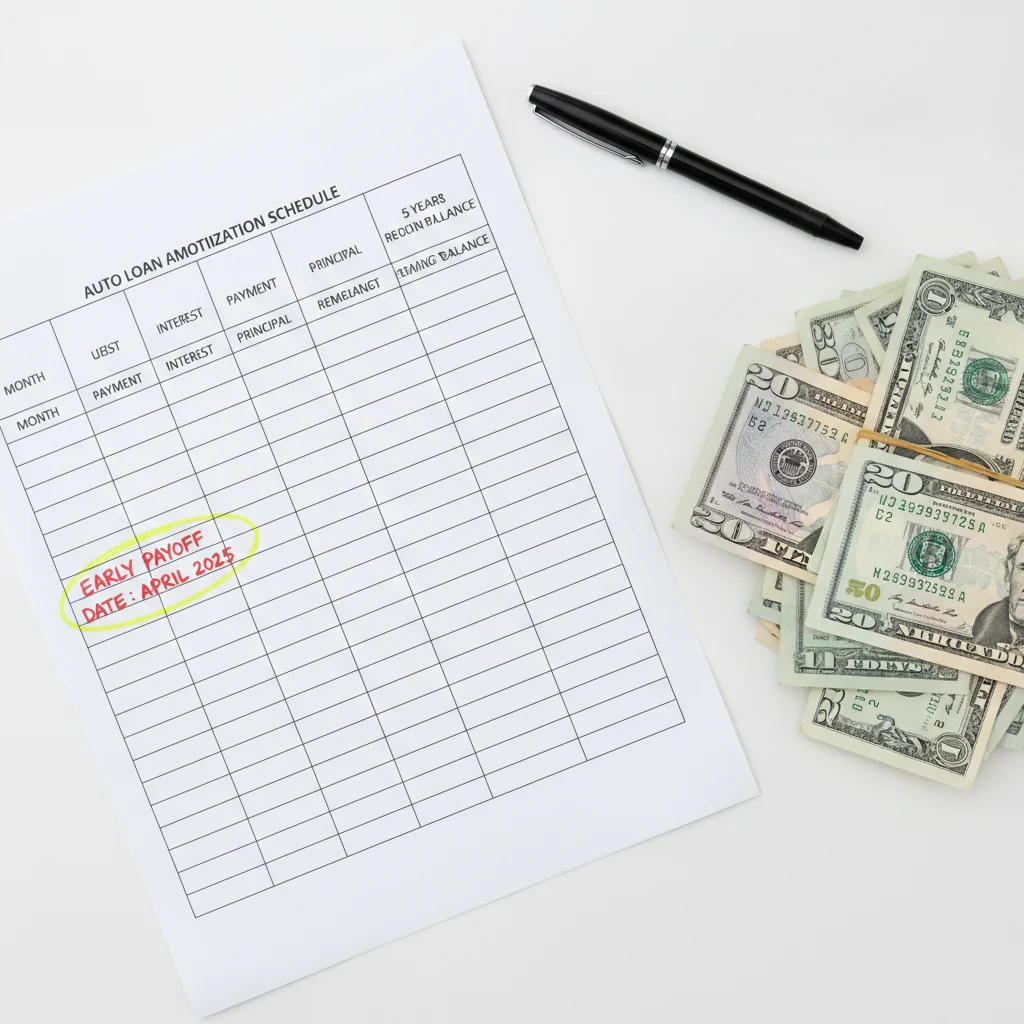
The key word in all of this is principal. A lump-sum payment only produces these savings if your lender applies it to the outstanding principal — not to prepaid interest or future scheduled payments. Always call your lender or log into your account and explicitly designate the payment as a principal-only payment. Get written or electronic confirmation before and after you send the funds.
The Case For Using Your Refund on Your Car Loan
There are real, calculable benefits to directing your tax refund toward your auto loan balance. Here is where applying that lump sum makes genuine sense.
Reduces total interest paid over the loan life
Because auto loans accrue interest on the outstanding principal daily, lowering your balance with a lump sum immediately reduces how much interest accumulates each day forward. Even a modest $1,500 payment can save hundreds of dollars over a multi-year term at rates above 6%.
Shortens your loan term without refinancing
Applying extra principal reduces the number of payments needed to zero out the balance. If you maintain your regular monthly payment after the lump sum, you will pay off the loan earlier than originally scheduled — without filling out new applications or undergoing a credit check.
Improves your loan-to-value ratio
Paying down principal faster reduces the gap between what you owe and what your vehicle is worth, which is especially valuable if you plan to trade in or sell the car within a few years. A better LTV position gives you more flexibility and negotiating room.
Low friction compared to other debt strategies
Unlike refinancing, which requires shopping lenders, submitting documents, and waiting for approval, a principal payment typically takes a few minutes online or by phone. There is no credit inquiry, no new contract, and no closing process to manage.
Certain, guaranteed return equal to your loan's APR
Paying down a 7.5% auto loan is the financial equivalent of earning a guaranteed 7.5% return on that money — with no market risk. In a volatile investment environment, that certainty has real value.
One underappreciated advantage is psychological: eliminating months from your loan term gives you a concrete finish line you can see. When you run the numbers and watch the payoff date move from, say, October to June, that motivation tends to sustain the discipline to keep making full payments throughout the year.
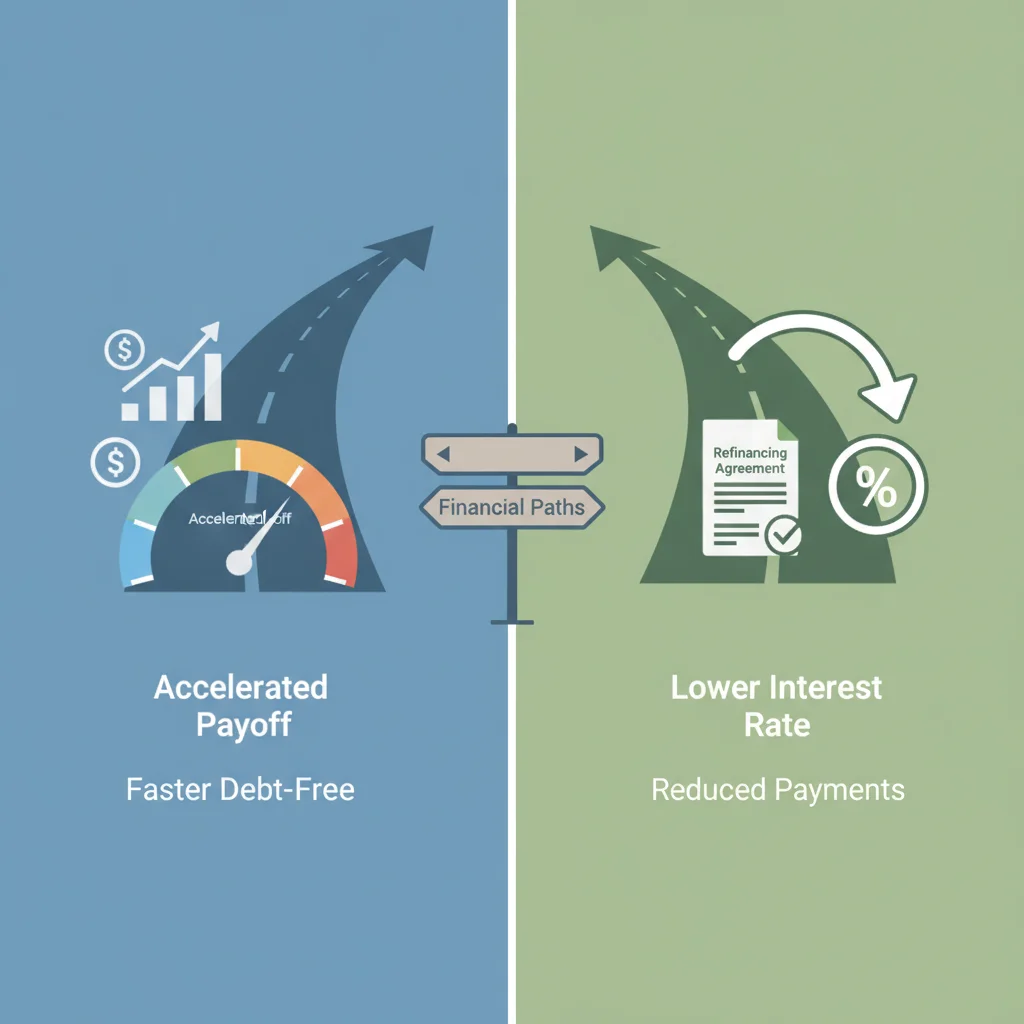
For borrowers who want to reduce loan costs but do not want to go through the paperwork and credit inquiry involved in refinancing, a lump-sum principal payment is a low-friction alternative. You do not need to qualify again, shop lenders, or sign new documents. See how that compares to the refinancing approach in our guide to accelerated payoff vs. refinancing.
The Case Against — When to Think Twice
The benefits above are real, but they are not universal. There are several situations where directing your refund elsewhere is the wiser financial move.
Opportunity cost if higher-rate debt exists
If you carry credit card balances at 18% to 25% APR, paying down a 6% car loan first costs you money. Every dollar applied to the lower-rate loan instead of the higher-rate debt generates a net interest loss on the spread between the two rates.
Potential prepayment penalties can erode savings
Some loan agreements — particularly those from buy-here-pay-here dealers or older loan products using the Rule of 78s — include fees for early payoff or reduce the interest rebate you would otherwise receive. Always verify your contract terms before sending a lump sum.
Locks up liquid cash you may need urgently
Once applied to a loan principal, that money is gone — you cannot retrieve it if an emergency arises. Borrowers without a robust emergency fund are essentially trading liquidity for interest savings, which is a dangerous trade-off.
Minimal benefit late in the loan term
In the final months of a loan, most of your regular payment is already going toward principal rather than interest. A lump sum at that stage saves very little in interest charges compared to the same payment made in the first or second year.
Does not address a negative equity problem
If you owe significantly more than the car is worth, a single lump-sum payment reduces the gap but does not solve the underlying negative equity situation. Selling, trading in, or insuring a totaled vehicle will still leave you short until the balance-to-value ratio improves substantially.
May miss a better return in tax-advantaged accounts
For borrowers with low APR loans (below 5%) who have not yet maximized their IRA or 401(k) contributions, the tax-sheltered compounding in those accounts could outperform the interest saved — especially over a long horizon.
One scenario worth flagging specifically: if you are already upside down on your loan — meaning you owe more than the car is currently worth — a principal payment does reduce what you owe, but it does not immediately fix the negative equity position. You may want to read more about what to do when you owe more than your car is worth before committing a lump sum in that situation.
Similarly, if you have been eyeing a refinance because rates have dropped or your credit score has improved significantly, applying your refund first and then refinancing into a lower APR is the power move — not one or the other. Our article on refinancing to lower your APR walks through how to evaluate whether you qualify for a better rate right now.
How to Check for Prepayment Penalties Before You Send a Dime
Prepayment penalties are less common on auto loans than they once were, but they do still exist — particularly on loans originated through buy-here-pay-here dealerships or certain credit unions with older loan products. Sending a large extra payment without checking first could trigger a fee that cancels out a significant chunk of your interest savings.
Principal-Only vs. Advance Payment: Know the Difference
When you send an extra payment, many loan servicers default to applying it as an "advance payment" — meaning they credit it toward your next scheduled due date rather than reducing your principal balance. This moves your next payment date forward but does not shrink the balance you are paying interest on. To save money, you must specifically request that the extra funds be applied as a <strong>principal-only payment</strong>. Call your lender, use the designated field in your online portal, or include a written note with a mailed check — and verify the posting in your account statement afterward.
Rule of 78s Loans: A Red Flag to Check For
Older auto loans — and some subprime products still in use today — use a front-loaded interest method called the Rule of 78s, in which most of your interest is "earned" by the lender in the early months of the loan. If your loan uses this method, paying it off early does not save as much interest as a simple-interest loan would because the interest is treated as already owed. Look for the phrase "precomputed finance charge" in your loan contract, or ask your lender directly whether early payoff reduces your total interest obligation dollar for dollar.
Getting a Payoff Quote Is Free and Takes Minutes
A payoff quote from your lender shows you the exact dollar amount needed to fully close the account as of a specific date, including any accrued interest and outstanding fees. Most lenders provide this online or by phone at no charge. Even if you are not planning to pay off the entire balance, reviewing your payoff quote before sending a lump sum helps you confirm the current balance, verify there are no surprises, and choose the most strategic amount to send.
To check whether your loan has a prepayment penalty:
- Pull out your original loan contract. Look for a section titled "Prepayment" or "Early Payoff." If the document uses the phrase "precomputed interest" or "Rule of 78s," you may face a penalty or receive reduced interest-savings benefit.
- Call your lender directly. Ask: "Does my loan carry a prepayment penalty, and if so, what is the fee structure?" Get the answer in writing — via email or secure message through their portal.
- Ask how extra payments are applied. Specifically request that any lump-sum payment be applied to principal, not spread across future payments. Some servicers default to advancing your next payment due date, which does not reduce your principal at all.
If you discover a prepayment penalty, run the math: subtract the penalty from your projected interest savings. If the net savings is still positive and meaningful, the payoff may still make sense. If the penalty erases your savings or comes close, hold the refund and explore other uses.

Prioritizing Your Refund: A Decision Framework
Your tax refund is likely to be one of the larger single cash inflows you see all year. Before committing it to your car loan, run through this quick decision sequence:
$3,167
Average U.S. federal tax refund amount
According to IRS filing season statistics for 2024, the average refund issued was approximately $3,167 — enough to make a meaningful dent in most auto loan balances.
7.1%
Average new car loan APR in early 2024
Experian's State of the Automotive Finance Market report for Q1 2024 showed average APRs on new vehicle loans climbing above 7%, increasing the payoff value of extra principal payments.
~$900+
Interest saved on $28K loan at 8% APR
A borrower with a $28,000 balance at 8% APR and 48 months remaining who applies a $2,000 lump sum to principal today would save over $900 in total interest charges.
34%
New car buyers who are underwater on trade-ins
Edmunds data from 2023 found that roughly one in three trade-in transactions involved negative equity, highlighting why principal paydown matters for LTV management.
- Do you have three to six months of expenses in an emergency fund? If no, that comes first. A car payment you cannot make because your transmission failed is a worse problem than a slightly slower loan payoff.
- Do you carry credit card debt or personal loans at a higher interest rate than your auto loan? If yes, pay those down first. A 22% APR credit card balance costs you more per dollar owed than a 7% car loan — by a wide margin.
- Are there upcoming large expenses in the next six to twelve months — a medical bill, roof repair, tuition payment? Keep liquid reserves for predictable obligations before locking cash into loan principal.
- Does your car loan rate exceed 5% or 6%? If yes, paying it down becomes more compelling. Below that threshold, the opportunity cost of not investing the money (in a high-yield savings account or retirement account) may outweigh the interest saved.
- Is your loan in its first half of the term? The earlier you make a lump-sum payment, the more interest you avoid because more of the remaining schedule is interest-heavy. If you are in the final quarter of your loan, the savings will be smaller.
If you cleared all five of those checkpoints, your car loan is a strong candidate for the refund. If not, tackle the earlier items first or split the refund across multiple priorities.
Looking for other ways to find extra cash to apply toward your loan throughout the year? See our guide to freeing up cash to pay off your car loan faster.
One More Thing: Timing and Tax Refund Season Dealership Tactics
If you are reading this article because you received a refund and are weighing using it as a down payment on a new car rather than paying down your current loan, be aware of the seasonal dynamics at play. Early spring is one of the busiest times at dealerships, precisely because buyers flush with refunds flood showrooms. Increased foot traffic gives dealers less reason to negotiate aggressively.
Our analysis of who really benefits during tax refund season at dealerships explores that dynamic in detail. The short version: if your current car is still serving you well, using your refund to pay down the existing loan is almost always a smarter financial move than trading in and taking on fresh debt under high-demand conditions.
Principal-Only vs. Advance Payment: Know the Difference
When you send an extra payment, many loan servicers default to applying it as an "advance payment" — meaning they credit it toward your next scheduled due date rather than reducing your principal balance. This moves your next payment date forward but does not shrink the balance you are paying interest on. To save money, you must specifically request that the extra funds be applied as a <strong>principal-only payment</strong>. Call your lender, use the designated field in your online portal, or include a written note with a mailed check — and verify the posting in your account statement afterward.
Rule of 78s Loans: A Red Flag to Check For
Older auto loans — and some subprime products still in use today — use a front-loaded interest method called the Rule of 78s, in which most of your interest is "earned" by the lender in the early months of the loan. If your loan uses this method, paying it off early does not save as much interest as a simple-interest loan would because the interest is treated as already owed. Look for the phrase "precomputed finance charge" in your loan contract, or ask your lender directly whether early payoff reduces your total interest obligation dollar for dollar.
Getting a Payoff Quote Is Free and Takes Minutes
A payoff quote from your lender shows you the exact dollar amount needed to fully close the account as of a specific date, including any accrued interest and outstanding fees. Most lenders provide this online or by phone at no charge. Even if you are not planning to pay off the entire balance, reviewing your payoff quote before sending a lump sum helps you confirm the current balance, verify there are no surprises, and choose the most strategic amount to send.
Ultimately, the most important step is to request an updated payoff quote from your lender before you act. This quote tells you the exact amount needed to fully retire the loan today, and confirms whether there are any outstanding fees. Even if you are not paying off the entire balance, reviewing that document gives you a clear picture of where your loan stands — and how much your refund will actually move the needle.

All claims are backed by peer-reviewed research. Sources on request.