

Key Takeaways
One-stop shopping saves significant time
You can select a vehicle, negotiate the price, and arrange financing in a single visit. For buyers who have already researched their options, this consolidation is a genuine time benefit — not just marketing.
Access to manufacturer subvention rates
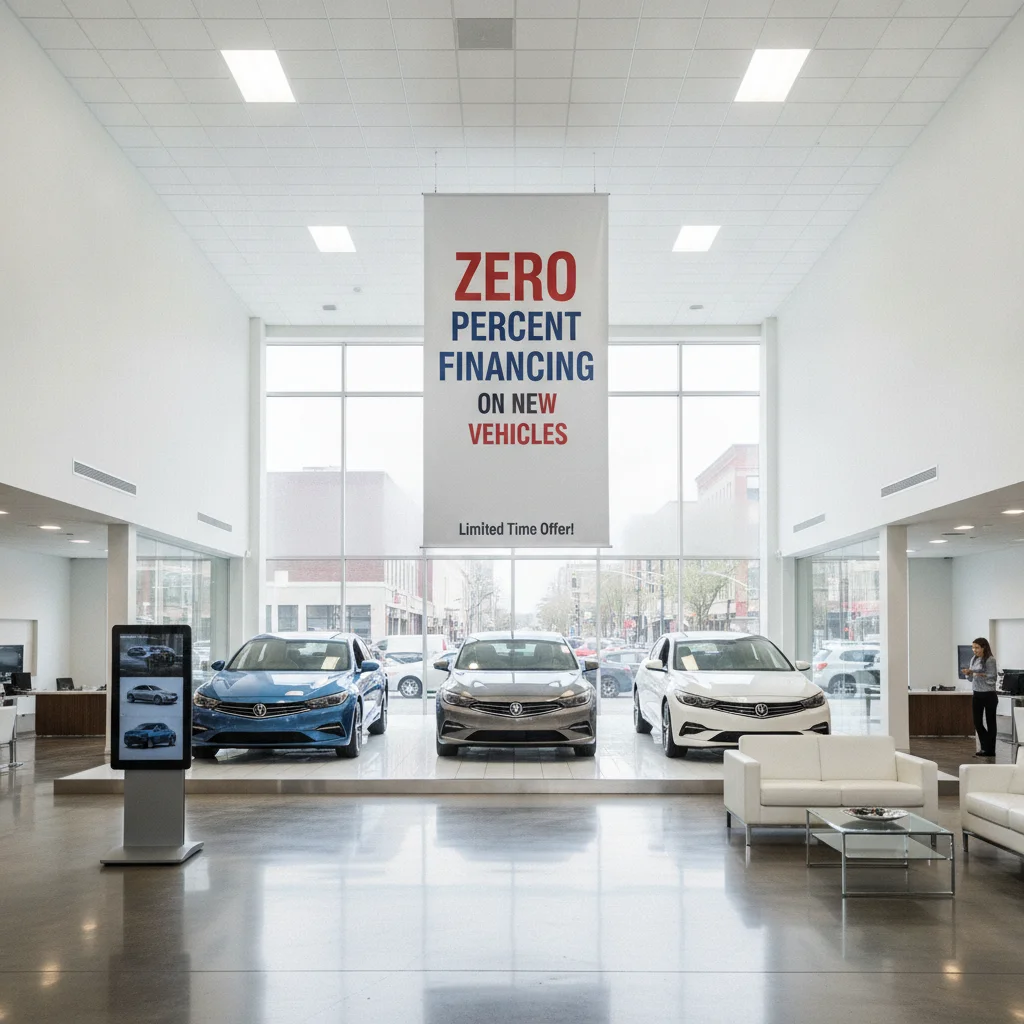
Automakers regularly subsidize financing at 0%–1.9% APR to move specific models. These rates are only available through the dealer's captive finance arm and cannot be matched by outside banks or credit unions.
Multiple lender submissions in a single credit pull
Dealers submit your application to several lenders simultaneously. Under FICO scoring rules, multiple auto loan inquiries within a 14–45 day window count as a single hard inquiry, so shopping around through the dealer has minimal credit score impact.
Approval access for buyers with limited options
Buyers with poor or thin credit may find it easier to get approved through a dealer network than through a traditional bank, because dealers have relationships with subprime lenders and captive finance arms motivated to close the sale.
Financing contingencies handled on-site
Down payment, trade-in, and loan approval are coordinated simultaneously by the finance office, reducing back-and-forth with separate institutions — a practical advantage for complex transactions.
Dealers mark up the interest rate for profit
The rate you see is typically higher than the buy rate the lender actually offered. On a $30,000 loan, a 2-point markup over 60 months adds roughly $1,600 in extra interest that goes directly to the dealership.
APR disclosure arrives late in a tiring process
By the time the Truth in Lending disclosure appears, buyers have often spent hours negotiating and are emotionally committed to the purchase. This timing works against careful review of the actual cost.
Finance office adds high-margin ancillary products
Extended warranties, GAP coverage, paint sealant, and credit insurance are routinely presented as financing add-ons. When rolled into the loan, they accrue interest and inflate the total cost significantly.
Payment-focused framing obscures total loan cost
Finance managers are trained to anchor negotiations around monthly payment — not APR or total cost. A lower payment achieved by extending the loan term can cost thousands more over the life of the loan.
Limited transparency about lender options
The dealer will not tell you which lenders submitted competing bids or what their buy rates were. You are receiving the dealer's curated offer, not a transparent marketplace view.
Spot delivery risk on contingent approvals
Sometimes dealers allow you to drive away before final lender approval. If the loan falls through, you may be called back to renegotiate terms — often less favorable than the original deal.
Our Verdict
Dealer-arranged financing is the right call in a narrow set of circumstances — chiefly when a manufacturer subvention rate is on the table or when your credit makes outside approval difficult. In most other situations, you will pay a markup that quietly inflates the total cost of the vehicle. The convenience is real, but it has a price tag that rarely shows up in the monthly payment comparison the finance manager shows you.
Best for buyers who qualify for a manufacturer promotional rate (0%–1.9% APR), or for those with limited banking relationships who need a single-stop financing solution — provided they understand the markup risk and compare offers before signing.
What Dealer-Arranged Financing Actually Is
When you finance a car at a dealership, you are not actually borrowing from the dealer. The dealership acts as a broker. It submits your credit application to a network of banks, captive finance arms (like Ford Motor Credit or Toyota Financial Services), and sometimes credit unions. Those lenders reply with buy rates — the lowest rate they are willing to accept for your loan profile. The finance manager then marks that rate up, presenting you a higher number. The difference between the buy rate and the rate you sign at is the dealer's profit on the financing, often called the dealer reserve or finance markup.
For example: a lender approves your profile at 5.9% APR. The dealer quotes you 7.9% APR. On a $32,000, 60-month loan, that 2-percentage-point spread costs you approximately $1,050 in extra interest. That money flows back to the dealership as a financing commission — invisible in the payment comparison you see on the desk.

Understanding this structure is the foundation for evaluating any offer the finance office puts in front of you. It is not inherently dishonest — dealers are entitled to earn a commission — but it is a cost you should consciously accept, not accidentally absorb.
For a direct head-to-head comparison of dealer financing against arranging your own loan before you walk in, see Financing Through a Dealer vs. Your Own Bank or Credit Union.
Rate vs. APR: The Number That Actually Matters
The finance office will almost always lead with a monthly payment or a quoted interest rate. What you need to focus on is the Annual Percentage Rate (APR). These are not the same number, and the distinction is consequential.
The interest rate (sometimes called the nominal rate or money factor) is the base cost of borrowing, expressed annually. The APR is the total cost of the loan expressed as a yearly rate — it includes the interest rate plus any fees folded into the financing, such as origination fees, documentation fees rolled into the loan principal, and in some structures, dealer-added products like GAP insurance or extended warranties that get bundled into the financed amount.
APR vs. Interest Rate: The Legal Definition
Under the federal Truth in Lending Act (TILA), lenders must disclose the APR on any closed-end consumer loan, including auto loans. The APR must reflect the annualized cost of credit, incorporating the stated interest rate and any prepaid finance charges. In practice, auto loan APRs and interest rates are often very close — but if products or fees are rolled into the loan balance, the effective cost to the borrower is higher than either stated number. Always request the total-of-payments figure, which shows the exact dollar amount you will pay over the full loan term.
Dealer Markup Caps Vary by State
Some states cap the dealer reserve markup — California and several others limit it to 2 percentage points on loans under 60 months and 1.5 points on longer terms. Many states have no cap at all. Knowing your state's rules before you walk in is a simple way to set a ceiling on what the finance office can add. The CFPB and your state attorney general's consumer protection site are the best sources for current rules.
Contingent (Spot) Delivery: Know the Risk
If a dealer allows you to take the car home before lender approval is finalized, you have entered a spot delivery — sometimes called a yo-yo sale. This is legal in most states. If the lender ultimately declines the loan or approves it only at a higher rate, the dealer can require you to return the car or sign new financing terms. The safest approach is to not take delivery until written loan approval is confirmed from the lender, not just from the finance manager.
A loan quoted at 6.9% interest rate but carrying $1,800 in add-on products financed into the principal can produce an effective APR materially higher than 6.9% — even though the rate number on the contract reads 6.9%. Always ask for the APR, the total amount financed, and the total interest paid over the loan term. Those three numbers together tell the real story.
Dealers are legally required to disclose the APR on the Federal Truth in Lending disclosure in your contract. The problem is that this disclosure arrives at the end of a long process, when buyers are tired and eager to finish. Read it before you sign, not after.
2–3%
Typical dealer markup above buy rate
Consumer Financial Protection Bureau research and state-level studies have consistently found dealer reserve markups averaging 1–3 percentage points above the lender's buy rate.
$1,000–$3,000
Extra interest cost from average markup
On a $30,000–$40,000 loan over 60–72 months, a 2-percentage-point dealer markup translates to approximately $1,000–$3,000 in additional interest paid over the loan term.
0%
Manufacturer promotional APR floor
Major automakers including Ford, GM, Toyota, and Honda regularly offer 0% APR promotions on selected models — rates that no outside lender can match.
85%
New car buyers who finance through the dealership
According to industry data from Experian and J.D. Power, roughly 80–85% of new vehicle purchases that include financing are arranged at the dealership rather than through a separate lender.
30–50%
Premium over insurer pricing for dealer GAP
GAP insurance sold in the finance office typically costs $400–$700, versus $20–$50 per year when added to an existing auto insurance policy — a substantial premium for the same protection.
Advantages of Dealer-Arranged Financing
Dealer financing is not a bad product — it is a product with specific use cases where it genuinely wins. Here are the situations where accepting it makes financial sense.
One-stop shopping saves significant time
You can select a vehicle, negotiate the price, and arrange financing in a single visit. For buyers who have already researched their options, this consolidation is a genuine time benefit — not just marketing.
Access to manufacturer subvention rates
Automakers regularly subsidize financing at 0%–1.9% APR to move specific models. These rates are only available through the dealer's captive finance arm and cannot be matched by outside banks or credit unions.
Multiple lender submissions in a single credit pull
Dealers submit your application to several lenders simultaneously. Under FICO scoring rules, multiple auto loan inquiries within a 14–45 day window count as a single hard inquiry, so shopping around through the dealer has minimal credit score impact.
Approval access for buyers with limited options
Buyers with poor or thin credit may find it easier to get approved through a dealer network than through a traditional bank, because dealers have relationships with subprime lenders and captive finance arms motivated to close the sale.
Financing contingencies handled on-site
Down payment, trade-in, and loan approval are coordinated simultaneously by the finance office, reducing back-and-forth with separate institutions — a practical advantage for complex transactions.
The most powerful advantage — manufacturer subvention rates — deserves extra emphasis. Automakers fund below-market or zero-percent financing out of their own margins to move inventory. You cannot replicate a 0% APR offer from a bank or credit union because no bank will lend money at 0%. If you qualify for a subvention rate and the vehicle fits your needs, the math almost always favors taking the dealer financing. Just verify whether the promotional rate requires you to forgo a cash rebate — sometimes the rebate plus your own financing produces a lower net cost. Run both scenarios.
For guidance on how to evaluate dealer offers against outside preapprovals side by side, see Dealer Financing vs. Outside Preapproval: Which Puts More Money in Your Pocket.
Disadvantages of Dealer-Arranged Financing
The convenience of one-stop shopping carries predictable costs. These are the disadvantages that consistently show up in real transactions — not hypothetical edge cases.
Dealers mark up the interest rate for profit
The rate you see is typically higher than the buy rate the lender actually offered. On a $30,000 loan, a 2-point markup over 60 months adds roughly $1,600 in extra interest that goes directly to the dealership.
APR disclosure arrives late in a tiring process
By the time the Truth in Lending disclosure appears, buyers have often spent hours negotiating and are emotionally committed to the purchase. This timing works against careful review of the actual cost.
Finance office adds high-margin ancillary products
Extended warranties, GAP coverage, paint sealant, and credit insurance are routinely presented as financing add-ons. When rolled into the loan, they accrue interest and inflate the total cost significantly.
Payment-focused framing obscures total loan cost
Finance managers are trained to anchor negotiations around monthly payment — not APR or total cost. A lower payment achieved by extending the loan term can cost thousands more over the life of the loan.
Limited transparency about lender options
The dealer will not tell you which lenders submitted competing bids or what their buy rates were. You are receiving the dealer's curated offer, not a transparent marketplace view.
Spot delivery risk on contingent approvals
Sometimes dealers allow you to drive away before final lender approval. If the loan falls through, you may be called back to renegotiate terms — often less favorable than the original deal.
The rate markup problem is the most financially significant. In states without markup caps, dealers can legally add 2 to 3 percentage points above the buy rate. On a $35,000 vehicle financed for 72 months, a 2.5-point markup over a competitive bank rate adds roughly $2,600 in interest across the loan. That number never appears as a line item — it is simply embedded in the monthly payment.
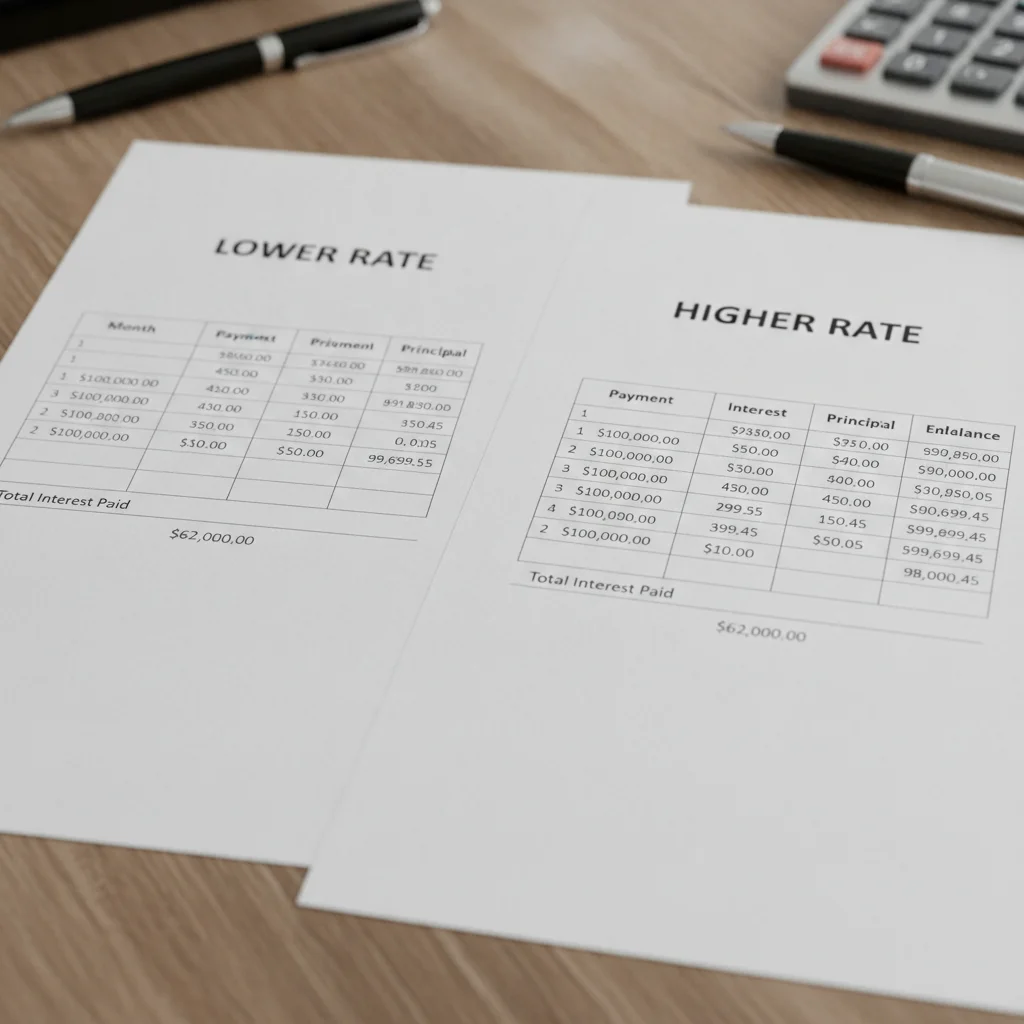
If you already accepted dealer financing and later suspect you overpaid on the rate, refinancing is a realistic option — often within 60 to 90 days of the original loan. See Dealership Financing vs. Refinancing with a Bank or Credit Union for when refinancing makes sense and what it costs.
Buyers with damaged credit face a compounded version of these disadvantages. The markup is typically larger on subprime loans because the baseline rate is already high, and there are fewer competing lenders willing to approve the deal. If your credit score is below 620, review Dealer Financing vs. Direct Lending When Your Credit Is Poor before you let a dealer be your only path to a loan.
How to Protect Yourself If You Use Dealer Financing
If dealer financing makes sense for your situation — or if it is simply unavoidable — these four steps reduce the risk of overpaying.
- Get a preapproval before you visit the lot. A bank or credit union preapproval gives you a concrete rate to benchmark the dealer's offer against. The dealer may beat it; if not, you have a fallback. This single step has more impact than any negotiation tactic inside the finance office. See our related piece on comparing dealer financing vs. outside preapproval for exactly how to use that leverage.
- Negotiate the vehicle price separately from the financing. Finance managers are skilled at packaging price and payment together. Agree on the out-the-door vehicle price first, then discuss financing. Never negotiate around a monthly payment number — it masks the total cost.
- Ask for the buy rate. You probably will not get a direct answer, but asking signals you understand the markup structure. Some dealers will narrow the spread when they know the buyer is informed.
- Decline add-on products you do not need or can buy elsewhere. GAP insurance, extended warranties, and paint protection packages financed into the loan inflate the principal and the total interest. GAP insurance in particular is often 30–50% cheaper through your car insurance provider than through the finance office.

For broader negotiation strategy at the dealership — covering price, trade-in, and financing — see our dealer negotiation hub. If you are also trading in a vehicle, be aware that the trade-in value and the financing are two separate negotiation tracks the dealer may try to link together — more on that at Dealer Trade-Ins.
When Dealer Financing Genuinely Wins
To be fair, there are scenarios where accepting dealer financing is the objectively correct financial decision — not just the convenient one.
- Manufacturer promotional APR: A 0%, 0.9%, or 1.9% APR offer from a captive finance arm (Ford Motor Credit, Honda Financial, Hyundai Motor Finance, etc.) is a genuine subsidy. No outside lender can replicate it. If you qualify — typically requires good credit, usually 700+ — take it.
- Thin or new credit history: If you have limited credit history, captive finance arms affiliated with major automakers sometimes have more appetite to approve thin-file borrowers than traditional banks, because they have a direct interest in selling the vehicle.
- Speed is genuinely critical: If you need a vehicle within 24–48 hours for work or family circumstances, the all-in-one convenience justifies some rate premium.
Even in these cases, verify the APR, read the contract before signing, and decline financed add-ons you do not need.
For a more nuanced look at the specific scenarios where dealer financing outperforms bank loans, see When Dealer Financing Beats Your Bank — and When It Doesn't.
All claims are backed by peer-reviewed research. Sources on request.