

Key Takeaways
Summary
22 items · 45–90 minutes
Why Credit Readiness Is the Most Valuable Tool in Your Car-Buying Arsenal
I spent years on the other side of the finance desk. I watched buyer after buyer sit down, get handed a contract, and have no idea whether the rate they were being offered was fair, inflated, or outright predatory. The single biggest reason that happened was that they came in blind — they didn't know their score, didn't know their tier, and had never seen their own credit report.
That ignorance is expensive. On a $35,000 loan over 60 months, the difference between a Tier 1 rate (around 5.5% APR) and a Tier 3 rate (around 11% APR) is roughly $5,800 in total interest. Dealers don't have a legal obligation to offer you the best rate they can get you — they have a financial incentive to offer you a rate slightly above what they buy it from the lender for. That spread is called dealer reserve, and it goes directly into dealer profit.
The checklist below is designed to close that information gap before you ever walk through the showroom doors. Work through it methodically. If you're also preparing the rest of your buying strategy, pair this with the full dealership preparation checklist to ensure your budget, research, and negotiation approach are equally locked in.

Tools You'll Need to Work Through This Checklist
Before you start, gather the following. None of this requires a paid subscription — the most critical items are free by law.
AnnualCreditReport.com
Pull free credit reports from all three bureaus — federally mandated access, no subscription required.
myFICO.com
Obtain your FICO Auto Score 8, the specific version most auto lenders use when making approval and rate decisions.
Credit union membership
Access competitive preapproval rates that often undercut bank and dealer financing by 0.5–1.5 percentage points.
Auto loan calculator
Model monthly payments at different APRs and terms to understand how your tier translates into real dollars per month.
Bureau dispute portals (Equifax, Experian, TransUnion)
Submit and track disputes on inaccurate or fraudulent items directly with each bureau online.
Credit Karma or similar free score app
Useful for tracking score trends week-to-week; not reliable as your lender-facing score — treat it as directional only.
Pay stubs and tax returns (last 2 years)
Required documentation for most formal preapproval applications to verify income and employment.
The Credit Readiness Checklist
Work through each group in order. Don't skip ahead to the score section without first pulling and reviewing the full reports — knowing your score without understanding what's driving it is like checking the fuel gauge without knowing if there's a fuel leak.
Pull and Review Your Credit Reports
Dispute Errors Before You Apply
Know Your Credit Score — The Right Way
Calculate Your Debt-to-Income Ratio
Understand Your Credit Tier and Rate Expectations
Secure a Preapproval Offer
Don't Let the Dealer Pull Your Credit First
If you walk in without a preapproval and let the dealer's finance office run your credit before you've done your own homework, you lose your benchmark. They now know your score before you've negotiated anything on the vehicle price or trade-in. Always separate those negotiations. Let the salesperson know you're paying cash or have outside financing lined up until the vehicle price is agreed upon — then discuss financing.
Free Score Apps Frequently Mislead Car Buyers
VantageScore (used by Credit Karma, Credit Sesame, and others) is not the same as the FICO Auto Score most dealers and lenders actually pull. Buyers regularly come in expecting a 720 and get quoted rates appropriate for a 670 because the two models scored them differently. Budget $30–$40 for a myFICO report that shows all three bureau FICO Auto Scores if you want the most accurate preview.
Applying Too Early Can Hurt a Borderline Score
Hard inquiries from lenders reduce your score by about 2–5 points each. If your score is sitting at 651 and you apply before disputing an error that would push you to 665, you may have permanently missed a tier threshold. Do the dispute and cleanup work first, then apply.
Understanding Your Credit Tier and What It Means for Your Rate
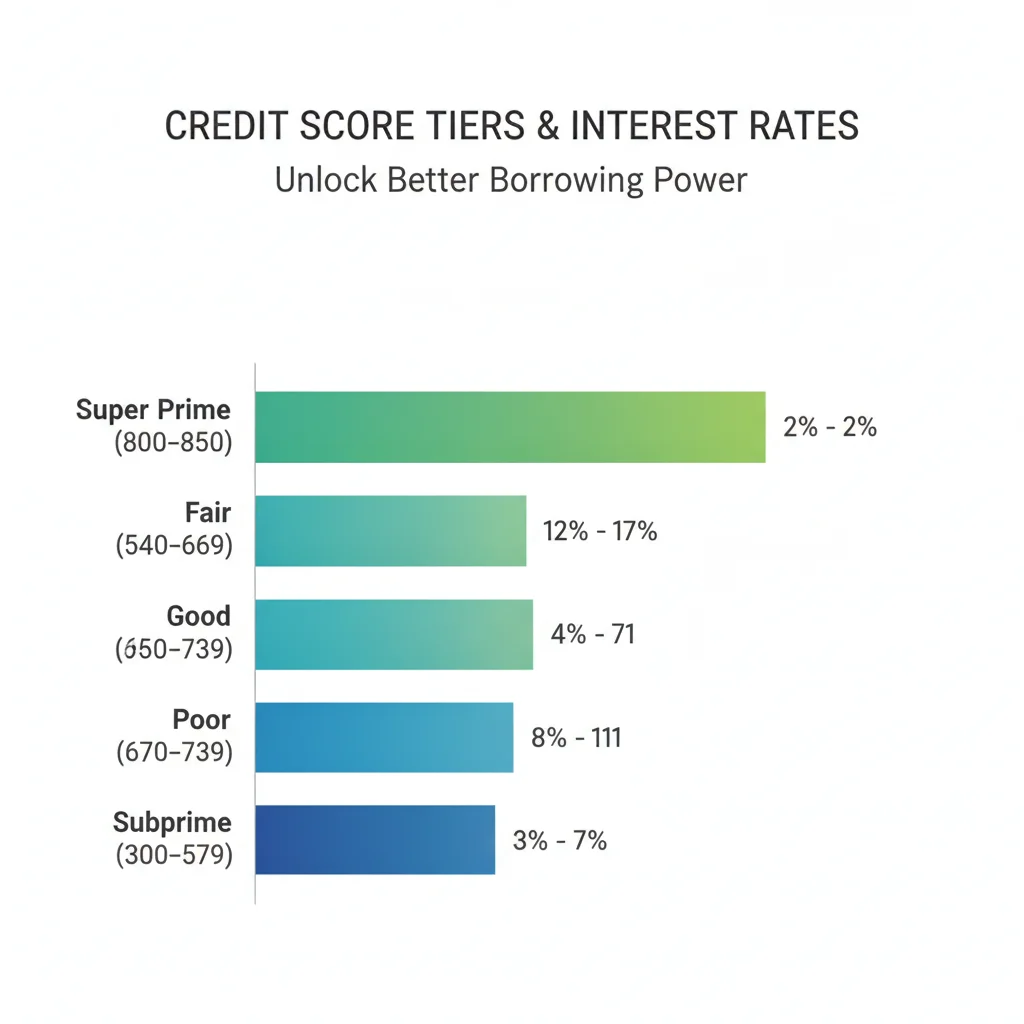
Lenders don't use a single cutoff — they use tiers. The exact boundaries vary by lender, but the table below represents a realistic composite based on how most auto lenders structure their programs.
| Tier | Score Range | Typical New Car APR | Typical Used Car APR |
|---|---|---|---|
| Tier 1+ (Super Prime) | 750+ | 4.5% – 6.5% | 5.5% – 7.5% |
| Tier 1 (Prime) | 700 – 749 | 6.5% – 8.5% | 7.5% – 10% |
| Tier 2 (Near Prime) | 650 – 699 | 9% – 12% | 11% – 14% |
| Tier 3 (Subprime) | 600 – 649 | 13% – 18% | 15% – 20% |
| Tier 4 (Deep Subprime) | Below 600 | 18% – 25%+ | 20% – 29%+ |
These are ranges, not guarantees. Income, debt load, loan-to-value ratio, and the specific lender all shift the final number. But knowing which tier you fall into tells you whether the rate on a dealer's contract is in the ballpark or a ripoff.
Dealer Reserve Is Legal — But Negotiable
Dealers are legally permitted to mark up the interest rate they get from a lender — this markup, called dealer reserve, is typically capped at 1–2.5 percentage points above the buy rate. On a $30,000 loan over 60 months, a 2% markup costs you about $1,600 extra. If you walk in with a competing preapproval, the dealer must beat or match that offer to earn your business, which eliminates most or all of the reserve markup.
One Missed Payment Can Drop You an Entire Tier
A single 30-day late payment on an otherwise clean file can reduce your FICO score by 60–110 points. If that drop pushes you from 705 to 645, you've crossed from Tier 1 into Tier 2 — and that difference on a $35,000 loan can mean $3,000–$5,000 in additional interest over the loan term. Treat your credit file like the financial asset it is in the months before any major vehicle purchase.
If your score is borderline between tiers — say, 698 — it is worth spending 30–60 days on targeted improvements before applying. Moving from 698 to 705 isn't just a cosmetic number bump; it can drop your APR by 1.5–2 full percentage points on a new car loan.
If your score is already below 620, the strategy changes. You should review the bad credit auto loan verification checklist before submitting any applications — each hard inquiry counts, and wasted pulls make a thin file look worse.
Getting Preapproved Before You Negotiate
Once you've cleaned up your report and confirmed your tier, the next move is to get preapproved through a bank, credit union, or online lender — before you set foot in the dealership. A preapproval does several things simultaneously:
- It gives you a rate ceiling. If a dealer's finance office quotes you 9.9% and your credit union preapproval says 7.4%, you have a document to show them. That's leverage.
- It tells you the real loan amount you qualify for. Shopping with a phantom budget is how buyers get stretched into 84-month terms they can't afford.
- It speeds up the process. Dealers prefer a quick close. Coming in preapproved often shortens the finance office visit dramatically.
For a detailed walkthrough of the preapproval process — including which lenders to approach and what documents to bring — see the preapproval step-by-step guide.
One critical point on inquiries: when multiple auto lenders pull your credit within a short window, credit scoring models (FICO 8 and newer versions) typically consolidate those pulls into a single inquiry if they occur within 14–45 days. Apply to all lenders you want to compare within that window — don't spread them across weeks out of fear of inquiry damage.
When you're finally at the contract stage, use the pre-signing contract checklist to verify that the rate, term, and principal on your contract match exactly what was disclosed — not approximately, exactly.
Final Checks Before You Go
The day before your dealership visit, run through this quick confirmation sequence to make sure nothing has slipped:
- Confirm your preapproval letter or offer sheet is printed or saved on your phone.
- Double-check that disputed accounts have been resolved and updated scores are reflected.
- Verify your debt-to-income ratio one more time with your actual current balances — credit card balances fluctuate month to month.
- Know your target vehicle's invoice price and current incentive programs. Finance rate and vehicle price are separate negotiations; keep them that way.
- If you're trading in a vehicle, know its wholesale and retail value independently. See how dealer trade-in appraisals work to avoid leaving money on the table.
You've done the homework. The buyer who walks in knowing their tier, holding a preapproval, and understanding their own debt picture is not the buyer who gets taken advantage of. Be that buyer.
All claims are backed by peer-reviewed research. Sources on request.