
Key Takeaways
Why When You Apply Is Almost as Important as Whether You Apply
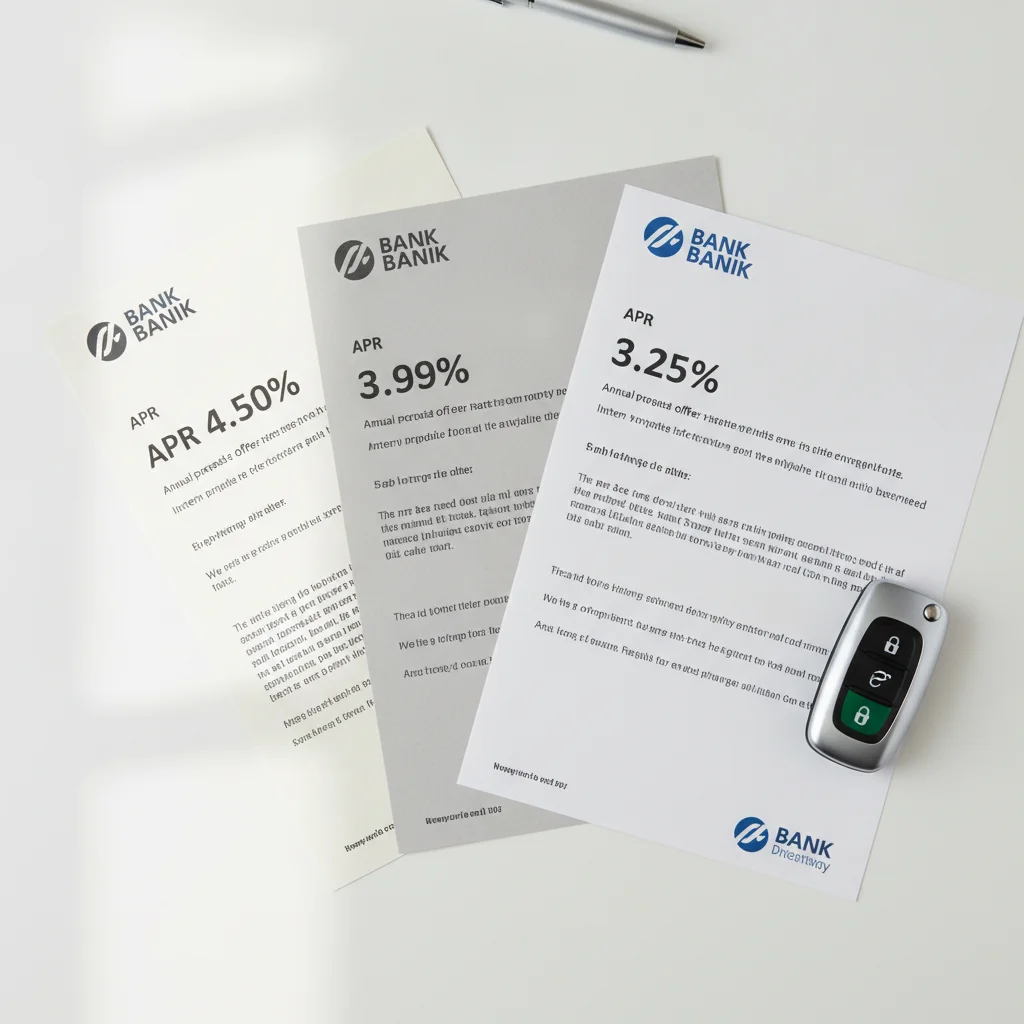
Most buyers treat a preapproval as a checkbox — something to get done before heading to the lot. What they miss is that when they apply can shift the rate they're offered by half a percentage point or more, and on a $35,000 loan over 60 months, that's real money.
Timing works on two levels. The first is macroeconomic: the Federal Reserve's rate decisions ripple directly into the benchmark rates lenders use to price auto loans. The second is situational: dealer incentive calendars, your personal credit cycle, and preapproval expiration windows all create moments that either help or hurt you. Understanding both lets you approach the financing desk from a position of strength.
If you're still fuzzy on how a preapproval functions as a negotiating tool, read how preapproval anchors your rate negotiation before going further — it provides the foundation everything in this article builds on.
Macroeconomic Timing: Reading the Fed's Rate Cycle
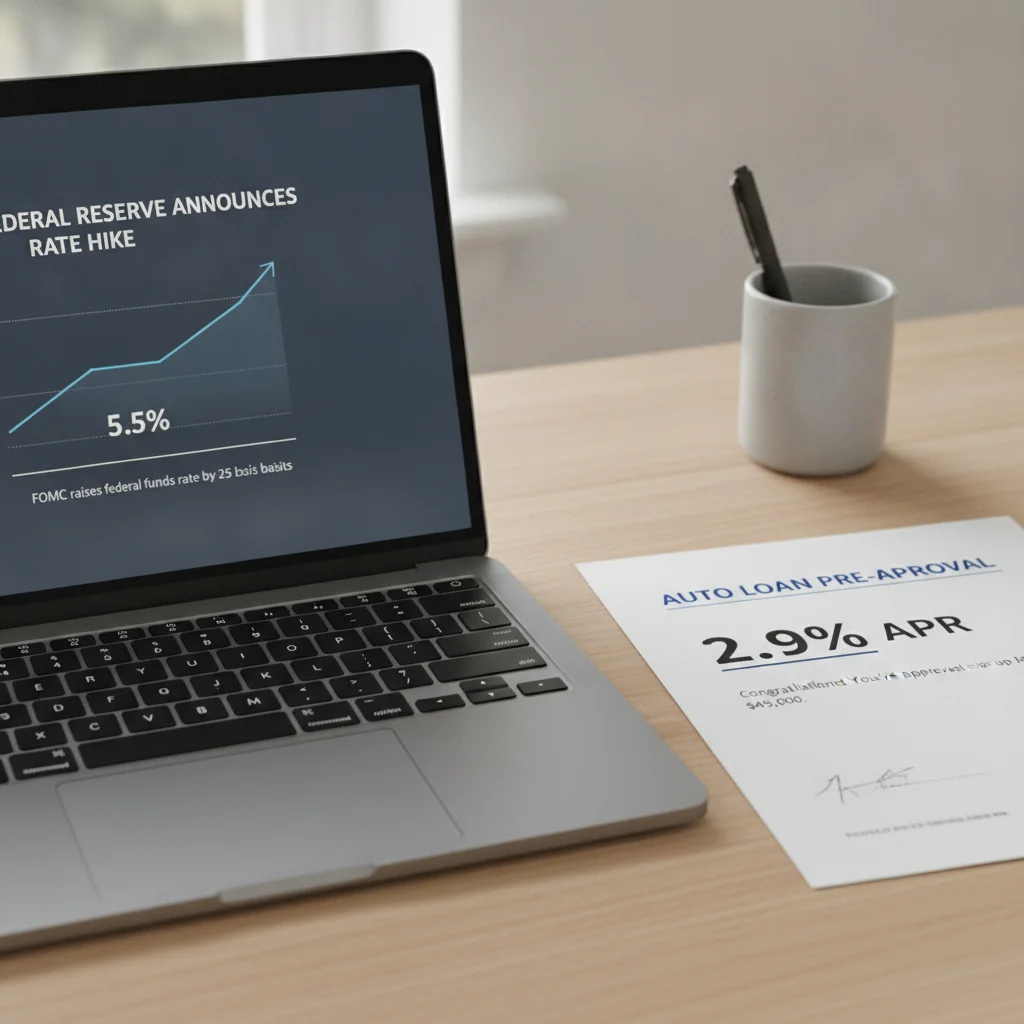
Auto loan rates don't move independently. They're priced off benchmarks like the prime rate and short-term Treasury yields, both of which respond directly to Federal Reserve policy decisions. When the Fed cuts its federal funds rate target, banks and credit unions typically lower their auto loan rates within weeks. When it hikes, rates follow upward just as quickly.
This creates a strategic window: apply for preapproval in the months following a Fed rate cut, not before one. If you lock in a preapproval right before an expected cut, you may end up with a rate that's already been superseded by cheaper money by the time you reach the dealership. And your preapproval rate is a ceiling, not a floor — if rates drop after you apply, you can re-shop.
0.5%–1.5%
Typical rate swing across Fed rate cycles
Auto loan rates for new vehicles typically move 0.5 to 1.5 percentage points between rate-hiking and rate-cutting cycles, according to Federal Reserve consumer credit data.
14–45 days
Rate-shopping window for auto loan inquiries
FICO scoring models deduplicate multiple auto loan hard inquiries submitted within 14 days (FICO 8) or up to 45 days (FICO 10), treating them as a single inquiry.
30–60 days
Typical preapproval validity window
Most banks and credit unions issue auto loan preapprovals valid for 30 to 60 days, after which the rate offer expires and a new application is required.
$1,200+
Average end-of-month dealer discount opportunity
Consumer data from automotive negotiation studies consistently shows buyers who shop in the final 3 days of the month save an average of $1,000 to $1,500 more than early-month buyers on identical vehicles.
41 points
Score increase from dropping utilization below 10%
Credit counseling case studies show borrowers who reduce credit utilization from above 70% to below 10% frequently see FICO score improvements of 30 to 50 points within one billing cycle.
You don't need to be an economist to track this. The Fed publicly signals its rate intentions through its quarterly Summary of Economic Projections (the "dot plot") and through the statements released after each Federal Open Market Committee (FOMC) meeting. When committee members are signaling easing, that's your signal to accelerate your timeline and get into a falling-rate environment.
Conversely, if the Fed is in a hiking cycle or signaling tightening, locking in a preapproval sooner rather than later may protect you from rates that are only going to get worse. The key is to be deliberate rather than passive — most buyers simply apply whenever they feel ready, without considering where rates are heading.
Preapproval Is a Rate Ceiling, Not a Lock
Your preapproval establishes the maximum rate a lender will charge you based on your profile at application time. If rates fall before you finalize your purchase, you can reapply with that lender or apply to a new one and potentially do better. If the dealer's captive financing offers a lower rate, you're free to take it. The preapproval simply ensures you always have a baseline to negotiate from.
Don't Confuse Preapproval Window With Decision Deadline
A 45-day preapproval window means you have up to 45 days to use the offer — not that you must buy within 45 days. If you don't find the right vehicle in time, you can decline the preapproval and reapply without obligation. The only cost of letting it expire unused is the hard inquiry already on your report, which has minimal impact after 12 months and disappears entirely after two years.
Dealer Calendar Timing: End-of-Month, End-of-Quarter, and Model-Year Transitions
The macroeconomic layer affects your base rate. The dealer calendar layer affects your total deal — and your preapproval's leverage within it.
Sales managers at dealerships operate against monthly and quarterly volume targets. Miss those targets and bonuses evaporate, holdback calculations shift, and manufacturer incentives go uncollected. What that means for you: the last three days of any month, and the last two weeks of a fiscal quarter, are when dealers are most motivated to move metal. Your preapproval becomes a weapon in this environment because you're not a financing prospect — you're a cash-equivalent buyer who just needs to agree on price.

Model-year transitions are another underused timing lever. When a manufacturer ships next year's models — typically August through October — dealers need to clear current-year inventory. Combine that with manufacturer cash-back incentives and you can sometimes negotiate a lower selling price, which means you're financing less even at the same rate.
To maximize this, time your preapproval application about two weeks before you intend to shop. That gives you a valid offer in hand for end-of-month negotiations without burning too much of your preapproval's 30-to-60-day validity window. See our guide on timing your purchase for a deeper breakdown of when manufacturer incentives peak.
Stack End-of-Month and Model-Year Timing
The single most powerful timing combination is the last week of August, September, or October. You get end-of-month dealer pressure AND current-year clearance incentives at the same time. Dealers are motivated on both the price side and the volume side simultaneously. If your preapproval is ready going into that window, you're holding the strongest possible hand.
Credit-Cycle Timing: When Your Profile Is at Its Strongest
No amount of Fed-watching or calendar manipulation will matter if your credit profile isn't ready. And credit profiles are not static — they shift month to month based on balances, payment history, and recent inquiries. Timing your application when your profile is at its strongest is within your control.
The biggest levers:
- Credit utilization: If you carry revolving balances, pay them down to below 10% of each card's limit before applying. Utilization updates monthly when your statement cuts. Apply the cycle after your lower balance posts.
- Recent inquiries: Hard pulls from other credit applications — a new credit card, a mortgage inquiry — temporarily dent your score. Wait 60 to 90 days after any unrelated hard pull before submitting auto loan applications.
- Derogatory marks aging off: Late payments older than seven years drop off entirely. If you're within a few months of a significant negative item aging off, waiting may meaningfully change your rate tier.
If you want a structured checklist for getting your credit in shape before applying, these strategies genuinely improve your approval odds before you submit a single application.
Apply during or immediately after a Federal Reserve rate-cutting cycle
Auto loan rates respond quickly to Fed policy moves. Waiting until a rate cut has been implemented — rather than anticipated — ensures lenders have already adjusted their pricing. Applying during a hiking cycle means you're borrowing at a cyclical peak.
Time your dealership visit for the last three days of the month
Dealers operate against monthly sales targets tied to manufacturer bonuses and holdback payments. In the final days of the month, sales managers are far more willing to reduce margins to hit their numbers. A preapproval converts you into a near-cash buyer, amplifying your leverage in those negotiations.
Pay down revolving balances before the statement date, then apply the cycle after
Credit utilization is calculated from your reported balances, which update when your statement closes each month. Paying down a card before that date — not just before the payment due date — ensures the lower balance is what lenders see when they pull your report.
Compress all lender applications into a single 14-day window
FICO's rate-shopping rule collapses multiple auto loan inquiries within 14 days (or up to 45 days under newer models) into a single hard pull. Spreading applications across weeks wastes this protection and multiplies the credit score impact unnecessarily.
Apply for preapproval four to six weeks before your intended purchase date — no earlier
Applying too early wastes your preapproval's validity window. Most offers expire in 30 to 60 days, and if your purchase slips past that deadline you'll need to reapply — triggering another hard pull and potentially receiving a different rate in a changed market environment.
Target model-year transition months for maximum dealer motivation
August through October, dealers receive incoming model-year inventory while current-year vehicles sit unsold. Manufacturer cash incentives peak during these months, and per-unit gross margins compress as dealers clear aging inventory. Your preapproval-backed offer lands in the most receptive possible environment.
Rate Shopping Without Damaging Your Credit
One of the most persistent myths in auto financing is that applying to multiple lenders will crater your credit score. This keeps buyers from shopping around — and it keeps dealers' captive financing desks in a strong position. Here's the reality:
Credit scoring models treat multiple auto loan inquiries within a defined window — 14 days under FICO 8, up to 45 days under newer FICO models — as a single inquiry. The bureau recognizes rate shopping and doesn't penalize you for being a smart consumer. The practical implication: apply to three to five lenders simultaneously, receive their offers, and choose the best one. You've done meaningful damage to nothing.
“Rate shopping is explicitly encouraged by the credit scoring system. The bureaus know that a smart borrower shops around, and the model is designed to avoid penalizing that behavior. The buyers who don't shop are simply leaving money on the table.”
— Maxine Waters, Former Chair, U.S. House Financial Services Committee
The lenders worth hitting include your primary bank or credit union, at least one online lender (LightStream, PenFed, and Consumers Credit Union are commonly competitive), and potentially a manufacturer's captive finance arm if they're running a promotional rate. Don't apply to each in sequence over several weeks — compress everything into a single 14-day window.
For a clear breakdown of why offers differ across lenders even for identical applications, see why preapproval offers vary across lenders. And if you're worried about the credit impact at all, how multiple preapproval applications affect your credit score explains the rate-shopping window rule in plain terms.

Managing Preapproval Expiration: Don't Let Time Work Against You
A preapproval isn't a permanent offer. Most lenders issue them with a 30-to-60-day validity window, after which the rate quote expires and you'd need to reapply — triggering another hard inquiry. If your car search drags on past that window, you lose the leverage the preapproval was supposed to give you.
The fix is sequencing: don't apply for preapproval until you're within four to six weeks of an actual purchase decision. That's not the moment you start browsing listings — it's the moment you've identified the vehicle type, set your budget, and are ready to visit dealerships within the week.
Preapproval Is a Rate Ceiling, Not a Lock
Your preapproval establishes the maximum rate a lender will charge you based on your profile at application time. If rates fall before you finalize your purchase, you can reapply with that lender or apply to a new one and potentially do better. If the dealer's captive financing offers a lower rate, you're free to take it. The preapproval simply ensures you always have a baseline to negotiate from.
Don't Confuse Preapproval Window With Decision Deadline
A 45-day preapproval window means you have up to 45 days to use the offer — not that you must buy within 45 days. If you don't find the right vehicle in time, you can decline the preapproval and reapply without obligation. The only cost of letting it expire unused is the hard inquiry already on your report, which has minimal impact after 12 months and disappears entirely after two years.
If your preapproval does lapse, the damage is limited but real: another hard inquiry and potentially a rate offer that reflects any credit changes in the interim. To minimize this risk, keep your credit score stable between preapproval and loan closing — avoid new credit applications, large purchases on existing cards, or any payment lapses during that window.
For a full breakdown of what expiration means and how to work around it, why preapproval expiration dates matter more than you think is worth reading before you begin your lender applications.
Bringing It All Together at the Dealership
Once you have a preapproval in hand, the dynamics at the financing desk change substantially. The F&I (finance and insurance) manager's first move is almost always to run your credit through their lending partners and present you with their rate — as if it's the only option. When you already have a rate commitment from an outside lender, that play doesn't work.
Your approach: present the preapproval offer early in the conversation, after you've agreed on the vehicle price. Keep the price negotiation separate from the financing negotiation — dealers profit from conflating the two. Lock in the out-the-door price first, then tell the finance manager you have a preapproval at a specific rate and ask if they can beat it. If they can, great — take the lower rate. If they can't, use your outside lender.

For a complete walkthrough of how to use your preapproval document strategically from the moment you walk in, shopping with a preapproval changes everything at the dealership. And if you want to understand the seasonal pricing dynamics that affect how motivated a dealer is to compete on your deal, the market timing guide offers useful context on how seasonal factors shape leverage.
Timing your preapproval isn't a passive exercise — it's a deliberate sequence of decisions that compounds. Get your credit in shape, watch the rate environment, apply during a rate-friendly window, compress your lender applications into 14 days, and arrive at the dealership at the end of the month with a valid rate offer in hand. That combination doesn't guarantee the lowest possible rate, but it puts you in the strongest possible position to get close to it.

All claims are backed by peer-reviewed research. Sources on request.