Key Takeaways
Bad Credit Car Loan Down Payment
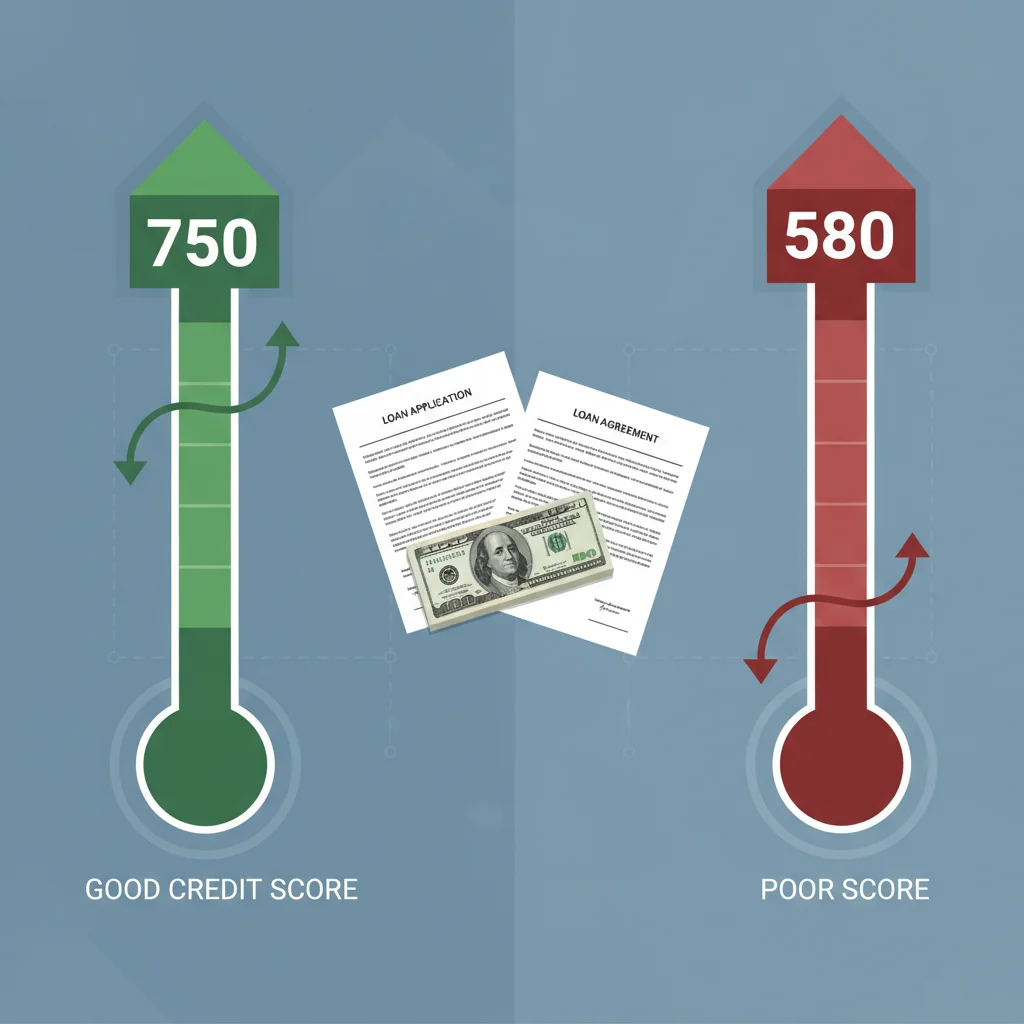
A down payment on a bad credit car loan is the upfront cash you pay toward the vehicle's purchase price before financing the rest. For subprime borrowers — typically those with credit scores below 620 — lenders often require a larger down payment to reduce the risk they take on. The more you put down, the less you borrow, which lowers the lender's exposure if you default.
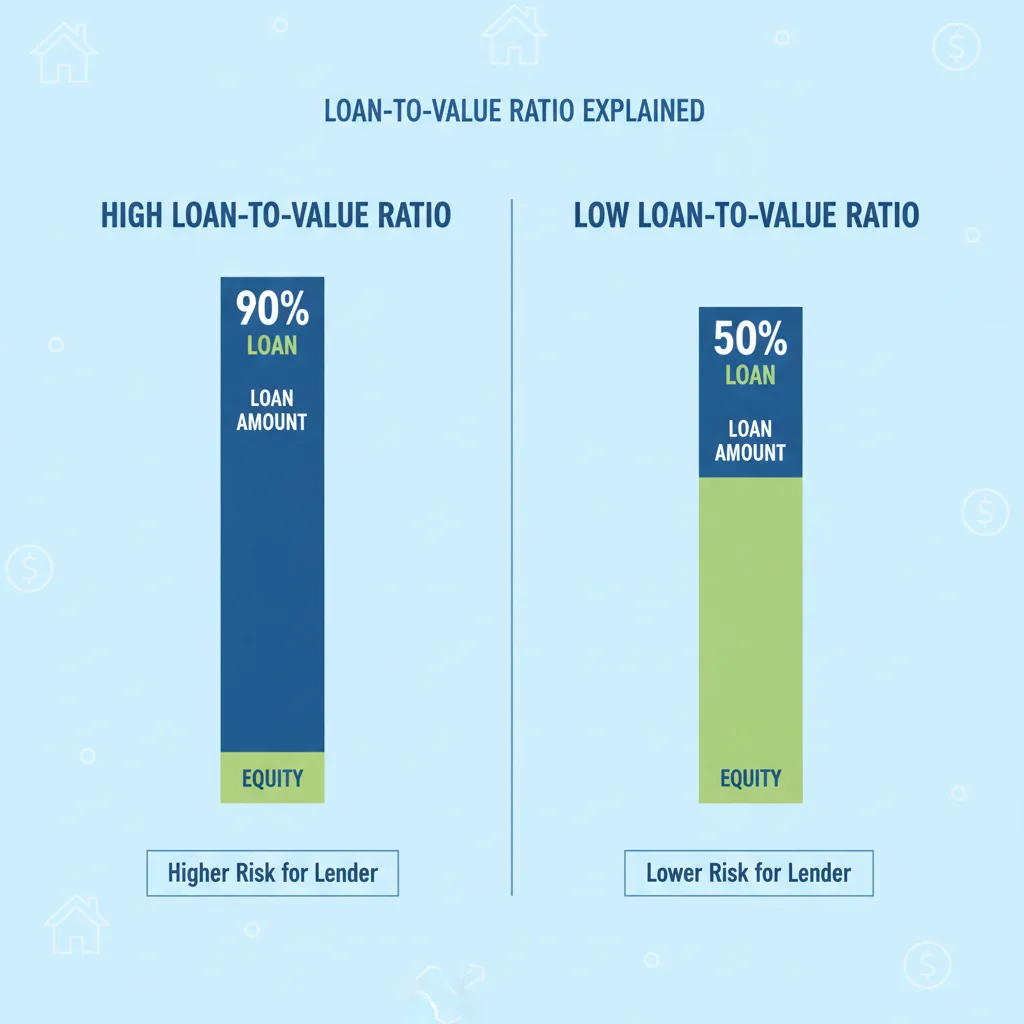
Lenders use the loan-to-value (LTV) ratio — the loan amount divided by the vehicle's value — to assess risk. A larger down payment directly reduces LTV, which can be the deciding factor between approval and denial for subprime applicants.
Why Your Down Payment Matters More With Bad Credit
When you have good credit, a down payment is mostly about managing your monthly payment and avoiding negative equity. When you have bad credit, a down payment becomes something more fundamental — it's a negotiating tool, a trust signal, and sometimes the only lever you have to get approved at all.
Here's the logic from the lender's perspective: your credit history tells them you've struggled to repay debt in the past. That makes you a higher risk. To compensate, they need something that reduces their potential loss if you stop making payments. A larger upfront payment does exactly that — it means the lender is financing a smaller share of the vehicle's value, so if they need to repossess and sell the car, they're less likely to take a loss.
This is captured in a metric called the loan-to-value (LTV) ratio. If a car is worth $20,000 and you borrow $18,000, your LTV is 90%. If you put $4,000 down and borrow $16,000, your LTV drops to 80%. For subprime lenders, that difference often determines whether they'll approve you — and at what rate.
Understanding this dynamic changes how you approach the car-buying process. Instead of thinking "how little can I put down," start thinking "how much can I put down to maximize my position." That shift in mindset — plus knowing where the real thresholds are — is what this article is here to help with.
LTV Requirements Vary by Lender and Vehicle
Not all subprime lenders use the same LTV thresholds. Buy-here-pay-here dealerships, credit unions, and online subprime lenders each have their own risk models. It's worth getting pre-qualified with multiple sources before assuming one lender's requirements are universal. A credit union, in particular, may offer more flexibility to members than a dealership's in-house financing arm.
What Subprime Lenders Actually Require
There's no universal rule, but there are well-established norms in the subprime lending market. Here's how requirements typically stack up by credit tier:
| Credit Score Range | Typical Down Payment Required | LTV Lenders Accept |
|---|---|---|
| 580–619 (Near-prime) | 10%–15% | Up to 110%–120% on used cars |
| 500–579 (Subprime) | 15%–20% | Up to 100%–110% |
| Below 500 (Deep subprime) | 20%–25%+ | Typically capped at 100% |
Keep in mind that these ranges are guidelines, not guarantees. A lender who sees strong compensating factors — steady income, long employment history, low debt-to-income ratio — may relax their down payment expectations. One who sees a recent repossession on your record might demand more than 25% regardless of your score.
Vehicle type also matters significantly. Lenders are generally more flexible on late-model used vehicles with low mileage because those hold their value better. If you're eyeing a 10-year-old car with 120,000 miles, expect higher down payment requirements because the collateral depreciates faster and is harder to resell.
20%
Typical minimum down payment for deep subprime borrowers
Industry data from subprime auto lenders consistently shows 20% as the baseline for borrowers with scores below 550.
15%–20%
Average first-year depreciation on a new vehicle
According to Edmunds and Kelley Blue Book analyses, most new cars shed 15–20% of value within the first 12 months of ownership.
33%
Share of auto loans made to subprime borrowers
Experian's State of the Automotive Finance Market reports routinely show subprime borrowers make up roughly a third of all new auto loan originations.
18–24%
Typical APR range for deep subprime auto loans
Experian's Q1 2024 automotive finance data shows deep subprime borrowers typically face APRs in the 18–24% range or higher.
$1,500+
Interest savings from an extra 10% down at subprime rates
On a $20,000 vehicle financed at 18% APR over 60 months, an additional $2,000 down saves approximately $1,500–$2,000 in total interest paid.
To see how your credit score directly affects loan rates, the numbers are often eye-opening. A 100-point difference can swing your interest rate by 5–8 percentage points, which translates to thousands of dollars over a standard loan term.
The 10%–20% Rule — And When to Go Higher
The most commonly cited guidance for subprime borrowers is to put down at least 10% on a used car and 20% on a new car. These benchmarks exist for practical reasons beyond just satisfying lenders.
Why 20% on a new car?
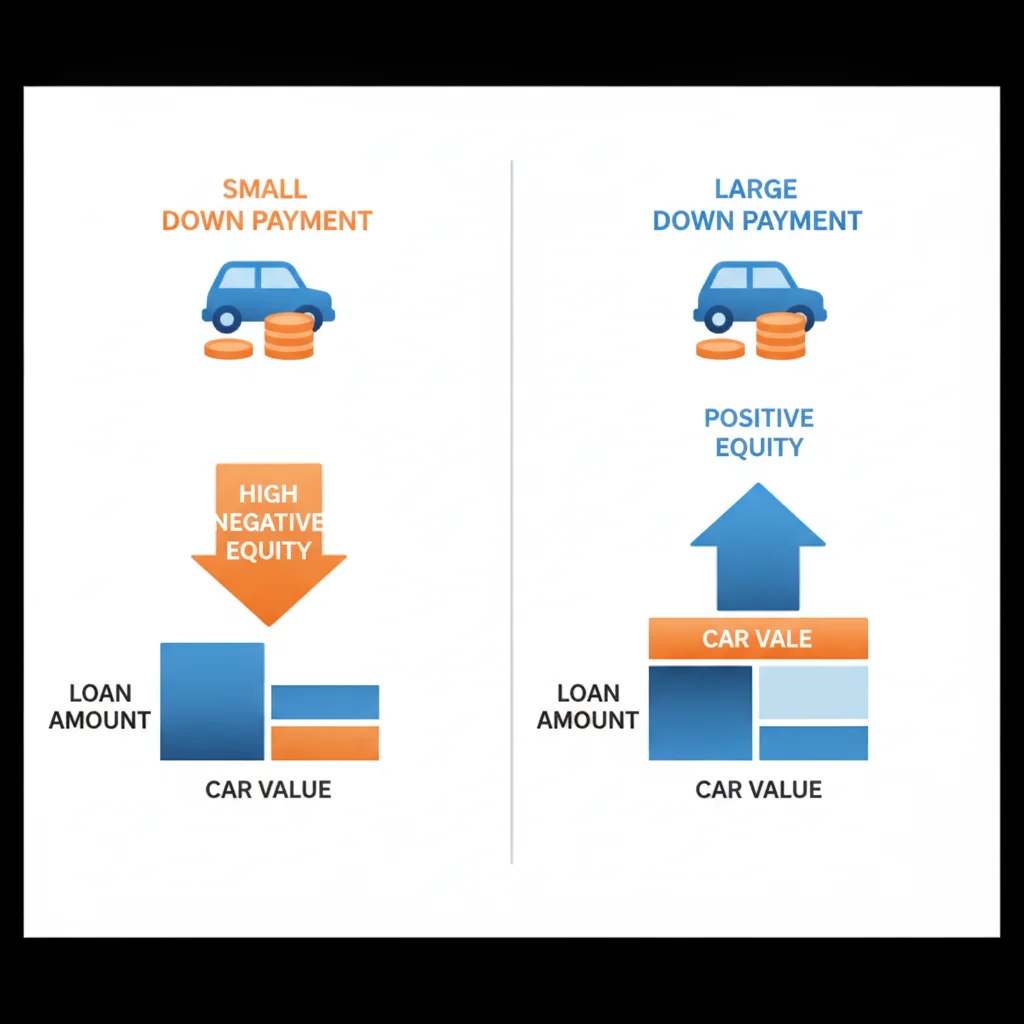
New vehicles lose roughly 15%–20% of their value in the first year, and as much as 10% the moment you drive off the lot. If you finance 100% of a new car and something happens in month three — job loss, medical emergency — and you need to sell, you'll almost certainly owe more than the car is worth. That gap comes straight out of your pocket. A 20% down payment creates a buffer that keeps you out of that trap.
Why 10% on a used car?
Used vehicles depreciate more slowly because they've already absorbed the steepest part of the curve. A 10% down payment on a used car typically keeps your LTV manageable for lenders and prevents early negative equity. But if the vehicle has high mileage or is over 8 years old, consider bumping that to 15%–20%, since lenders view older vehicles as riskier collateral.
When you should go higher than 20%
There are situations where going above 20% makes sense for a bad credit borrower:
- Your score is below 550: Some lenders won't touch a file under this threshold without 25%+ down. It may be the price of entry.
- You've had a recent repossession or bankruptcy: These are significant red flags. Extra cash down demonstrates renewed financial discipline and reduces risk sufficiently for some lenders.
- The vehicle is older or high-mileage: Higher depreciation risk warrants more equity cushion.
- You want a noticeably lower interest rate: At some lenders, crossing from 90% LTV to 80% LTV unlocks a better rate tier.
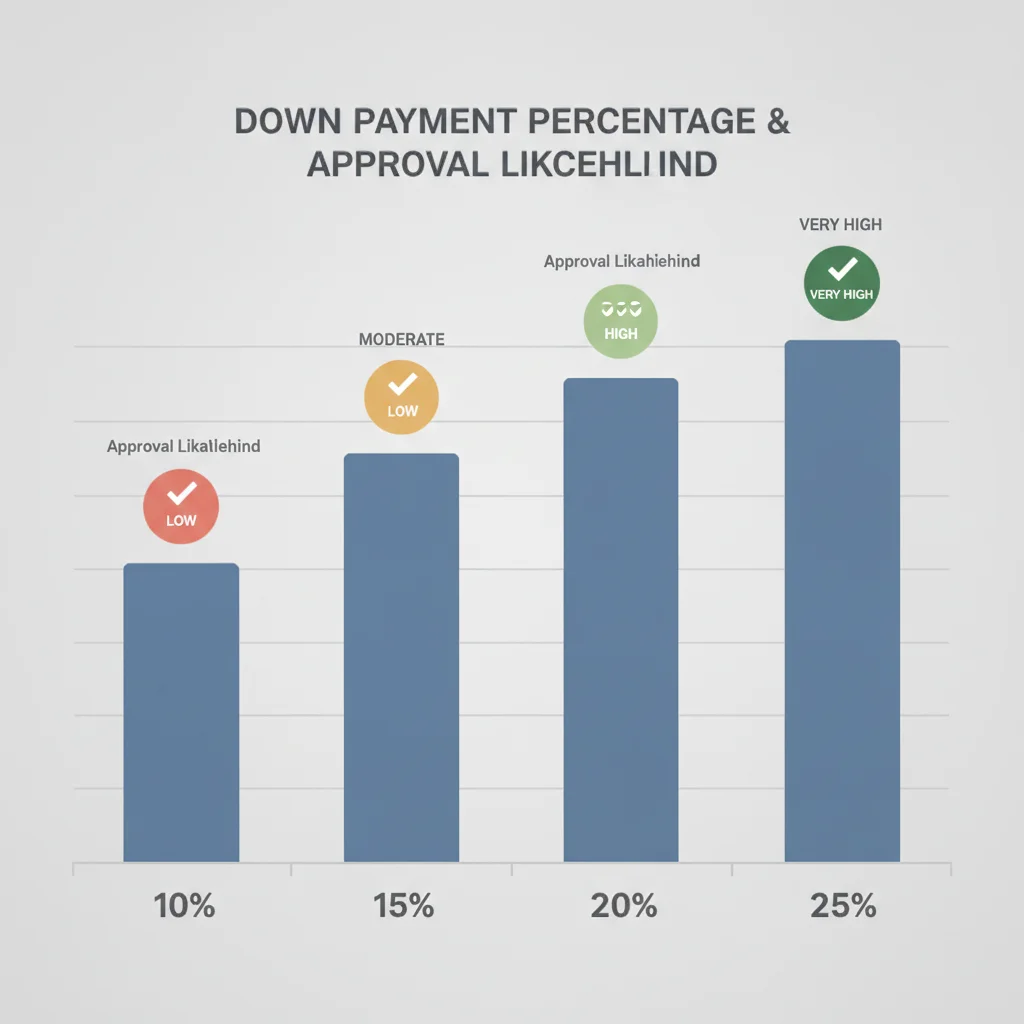
For more detail on how a substantial upfront payment changes your approval odds, see our article on how a large down payment affects your approval odds with bad credit.
The Point of Diminishing Returns
Here's something most advice articles gloss over: there's a ceiling on the benefit you get from putting more money down. Past a certain point, additional cash doesn't meaningfully improve your loan terms or your approval odds — it just depletes your savings unnecessarily.
In practical terms, once your LTV drops below 80%, most lenders have already categorized your application as manageable from a collateral standpoint. Going from 80% LTV to 70% LTV rarely moves the needle further on your interest rate or approval likelihood. The lender's remaining concern at that point is your ability and willingness to repay — and that's determined by your income, employment history, and credit profile, not by adding more cash upfront.
“The biggest mistake I see subprime borrowers make is draining every dollar they have into a down payment just to get approved. Lenders want you to have skin in the game — but they also want to know you can keep making payments when life happens. Cash reserves matter too.”
— Melinda Caruso, Certified Auto Finance Counselor and consumer lending educator
The bigger risk of over-contributing to a down payment is leaving yourself cash-poor. If you drain your emergency fund to put down 30% on a vehicle, you've created a fragile financial situation. One unexpected repair bill, medical expense, or missed paycheck could put you immediately behind on payments — which is exactly what you were trying to avoid. Lenders actually evaluate whether you have reserves because cash-strapped borrowers default more frequently.
A reasonable approach: aim for 20% down, or whatever the lender's threshold is, and stop there unless you have a compelling specific reason to go higher. Keep at least 1–2 months of your projected car payment in reserve as a buffer.
Build Your Down Payment Before You Shop
Resist the temptation to shop for a car before you know exactly how much you can put down. Arriving at a dealership or lender without a defined down payment amount puts you at a negotiating disadvantage. Decide your number first — ideally at least 20% of your target vehicle price — then shop within that constraint. You'll make clearer decisions and be less susceptible to upselling.
Don't Overlook the Full Cost of the Loan
A lower monthly payment isn't always the best outcome. Extending your loan term to 72 or 84 months reduces your payment but dramatically increases total interest paid — especially at subprime rates. Use your down payment to reduce the loan amount, then keep the term as short as your budget allows. The goal is to minimize total cost, not just the number on your monthly statement.
If you're unsure whether your down payment amount is proportional to the car you're buying, it's worth reviewing the warning signs your down payment is too small before you commit.
Trade-Ins, Cash, and Creative Down Payment Sources
One of the most underutilized tools for bad credit borrowers is the trade-in vehicle. If you own a car with positive equity — meaning you either own it outright or owe less than it's worth — that equity counts as a down payment in the eyes of most lenders. You're effectively converting a depreciating asset into negotiating power.
For example: if your current car is worth $8,000 and you owe $3,000, you have $5,000 in trade equity. Combined with $2,000 in cash, you've assembled a $7,000 down payment without touching most of your liquid savings. That's a meaningful sum that can shift your LTV into an approvable range.
Be careful, though. If you owe more on your trade than it's worth — a situation called being underwater or upside-down — that negative equity typically gets rolled into your new loan. This inflates your loan balance and pushes your LTV higher, which makes your approval situation worse, not better. Some dealers will absorb small amounts of negative equity in the deal, but it's not something you can count on.
Other legitimate sources to build your down payment
- Tax refunds: Many subprime borrowers time their vehicle purchase around their annual tax refund, which can provide $1,000–$5,000 in usable cash.
- Savings accounts: Even setting aside $100–$200 per month for 6–12 months before buying can meaningfully change your down payment position.
- Gifts from family: Lenders generally accept documented monetary gifts as part of a down payment. Some may ask for a letter confirming the funds don't need to be repaid.
- Side income or freelance work: Directing a few months of secondary income toward your vehicle savings fund is one of the cleanest ways to build a stronger position before applying.
What lenders don't want to see is a down payment funded by another loan — for instance, a personal loan you just took out. If the source of your down payment shows up as new debt on your credit report before closing, it can actually hurt your application.
How the Down Payment Interacts With Your Loan Terms
A down payment doesn't exist in isolation — it ripples through every element of your loan. Understanding these interactions helps you make smarter decisions before you sign anything.
Effect on monthly payment
This one is straightforward: the more you put down, the less you finance, and the lower your monthly payment. On a $20,000 car at 18% APR over 60 months, putting down $2,000 (10%) vs. $4,000 (20%) saves you roughly $30–$35 per month. Over five years, that's $1,800 less leaving your bank account.
Effect on total interest paid
Because you're financing a smaller principal, you accrue less interest over the life of the loan. On the same example above, a $2,000 larger down payment could save you $1,500–$2,000 in total interest at subprime rates — even though the monthly savings look modest. See the real dollar cost of a low credit score on a car loan to understand how these numbers add up over time.
Effect on negative equity risk
This is where a healthy down payment truly earns its keep. Vehicles depreciate fastest in their first 12–24 months of ownership. If you finance too much, you spend the early part of your loan term underwater — owing more than the car is worth. A good down payment keeps your loan balance close to or below the vehicle's market value from the start, giving you flexibility if your circumstances change.
For a deeper look at how these two variables work together, the article on how down payments interact with your credit score on an auto loan breaks down the mechanics in useful detail. And if you're weighing whether a co-signer might be a better alternative to a large down payment, it's worth reading about getting a co-signer for a bad credit car loan to understand that trade-off.
The bottom line: your down payment is one of the most controllable inputs in a bad credit car loan. Unlike your credit score — which takes time to improve — you can increase your down payment by saving more or leveraging trade equity before you step into the dealership. Use that leverage intentionally.
Build Your Down Payment Before You Shop
Resist the temptation to shop for a car before you know exactly how much you can put down. Arriving at a dealership or lender without a defined down payment amount puts you at a negotiating disadvantage. Decide your number first — ideally at least 20% of your target vehicle price — then shop within that constraint. You'll make clearer decisions and be less susceptible to upselling.
Don't Overlook the Full Cost of the Loan
A lower monthly payment isn't always the best outcome. Extending your loan term to 72 or 84 months reduces your payment but dramatically increases total interest paid — especially at subprime rates. Use your down payment to reduce the loan amount, then keep the term as short as your budget allows. The goal is to minimize total cost, not just the number on your monthly statement.

All claims are backed by peer-reviewed research. Sources on request.