

| Best month to buy a new car | December (final two weeks) (Edmunds historical transaction data) |
| Second-best buying window | Late August through Labor Day weekend (iSeeCars annual timing analysis) |
| Typical savings vs. MSRP at year-end | 5%–8% below MSRP on average (Edmunds, 2023) |
| Weakest buying months | April and May (spring demand surge) |
| Quarterly pressure deadlines | Last week of March, June, September, December |
| Model-year changeover peak | August–September |
| Days-on-lot threshold for negotiating leverage | 60+ days (Industry standard dealer metric) |
| Holiday weekends with verified manufacturer incentives | Presidents' Day, Memorial Day, Labor Day, Veterans Day, Black Friday |
Why the Month You Buy Actually Matters
Most buyers treat car shopping like grocery shopping — walk in when you need something, pay whatever the sticker says, and leave. But new car pricing doesn't work that way. Manufacturer rebates, dealer cash incentives, model-year changeovers, and seasonal demand swings create a pricing environment that shifts meaningfully from January through December.
The difference between buying in the wrong month versus the right one can easily run $1,500 to $4,000 on a mid-size SUV or truck. That's not a negotiating trick — it's structural. Automakers and dealers face quota pressure, inventory cycles, and fiscal deadlines that predictably push prices lower at specific points in the year.
This calendar breaks down what's actually happening under the hood of car pricing each month, so you can time your purchase deliberately instead of accidentally. For a deeper look at two of the highest-leverage windows specifically, see how month-end and year-end incentives compare.
| Best month to buy a new car | December (final two weeks) (Edmunds historical transaction data) |
| Second-best buying window | Late August through Labor Day weekend (iSeeCars annual timing analysis) |
| Typical savings vs. MSRP at year-end | 5%–8% below MSRP on average (Edmunds, 2023) |
| Weakest buying months | April and May (spring demand surge) |
| Quarterly pressure deadlines | Last week of March, June, September, December |
| Model-year changeover peak | August–September |
| Days-on-lot threshold for negotiating leverage | 60+ days (Industry standard dealer metric) |
| Holiday weekends with verified manufacturer incentives | Presidents' Day, Memorial Day, Labor Day, Veterans Day, Black Friday |
Q1: January Through March — Slow Season, Real Deals
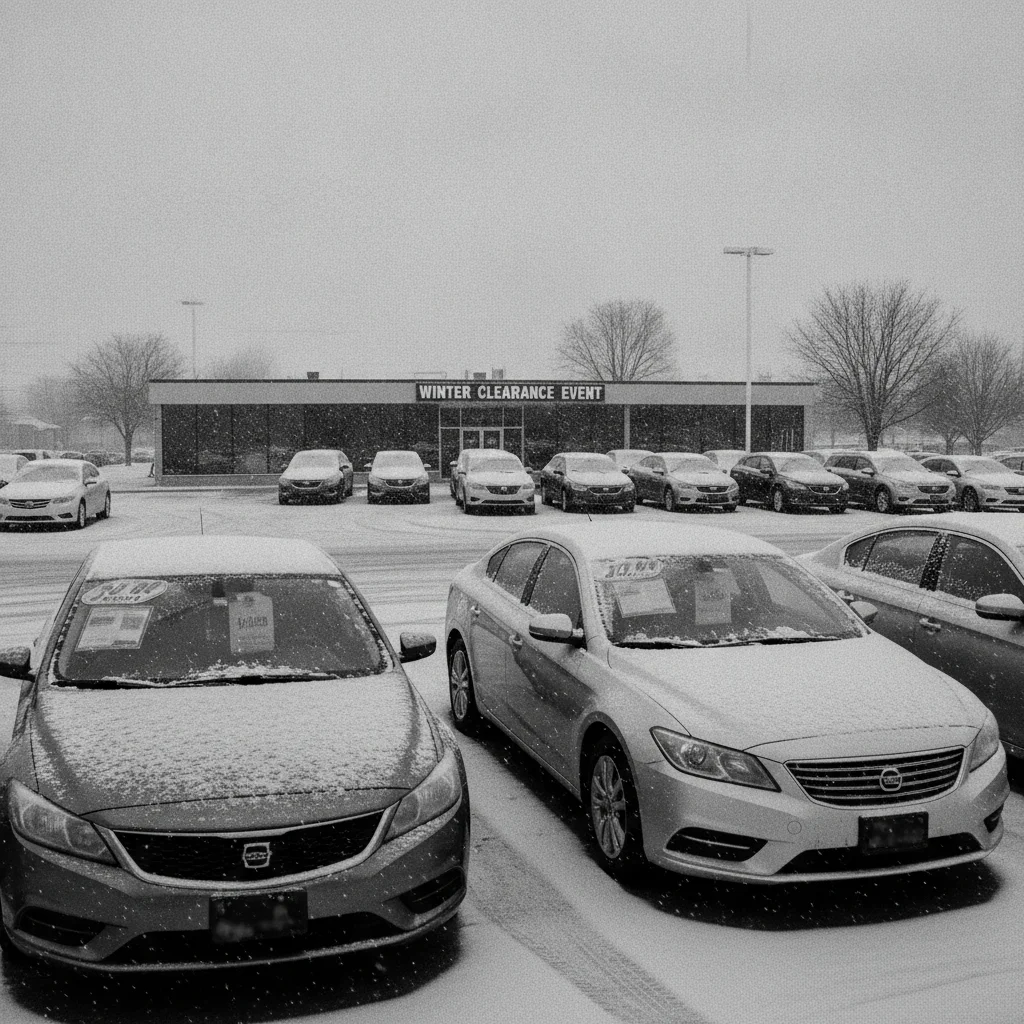
January is one of the most buyer-friendly months of the year, and almost no one takes advantage of it. Holiday spending has drained consumer budgets, weather keeps shoppers at home, and dealer lots are sitting on leftover prior-year inventory. That combination creates genuine urgency on the dealer side.
January
Buyer conditions: Excellent. Dealers are closing out last year's books and trying to move any remaining prior-model-year vehicles. Manufacturer rebates on outgoing models can be substantial — sometimes $3,000 to $5,000 on full-size trucks and large SUVs. Financing deals (0% APR offers or low-rate promotions) tend to appear in January as automakers try to jumpstart the new sales year. Foot traffic is at its annual low, which means salespeople have time and motivation to negotiate.
February
Buyer conditions: Good, with some caveats. Presidents' Day weekend is a legitimate sales event — manufacturers often attach real incentives, not just marketing noise. Outside of that holiday weekend, February is still quiet. Watch for "Year-End Clearance" pricing that lingers into February on models that didn't sell through in December and January. Tax refund anticipation starts building consumer confidence late in the month, which can slightly reduce dealer urgency by end of February.
March
Buyer conditions: Moderate to good. March closes the first fiscal quarter for many automakers, and quarterly sales pressure becomes a real force. Dealers that are short of their Q1 targets will negotiate harder in the final week of March than they will at any other point in the first quarter. If your timing is flexible, aim for the last three days of March over any other day in the month.
7.9%
Average discount below MSRP in late December
According to iSeeCars analysis of over 1.8 million new car transactions, December buyers save nearly 8% versus spring buyers.
$3,000–$6,000
Typical rebate range during model-year changeover
Clearance discounts on outgoing model-year vehicles peak in August and September as new inventory arrives on lots.
22%
More likely to negotiate a price concession at month-end
Edmunds research found buyers who purchase in the final three days of any month are significantly more likely to receive dealer price reductions.
60 days
Days on lot that signals dealer motivation to deal
Vehicles sitting on a dealer's lot for two months or longer carry higher floor plan costs, incentivizing dealers to negotiate more aggressively.
4.5x
Greater savings potential: December vs. April
iSeeCars data consistently shows December delivers savings multiples higher than spring months when adjusted for comparable vehicle categories.
Q2: April Through June — The Market Shifts Toward Sellers
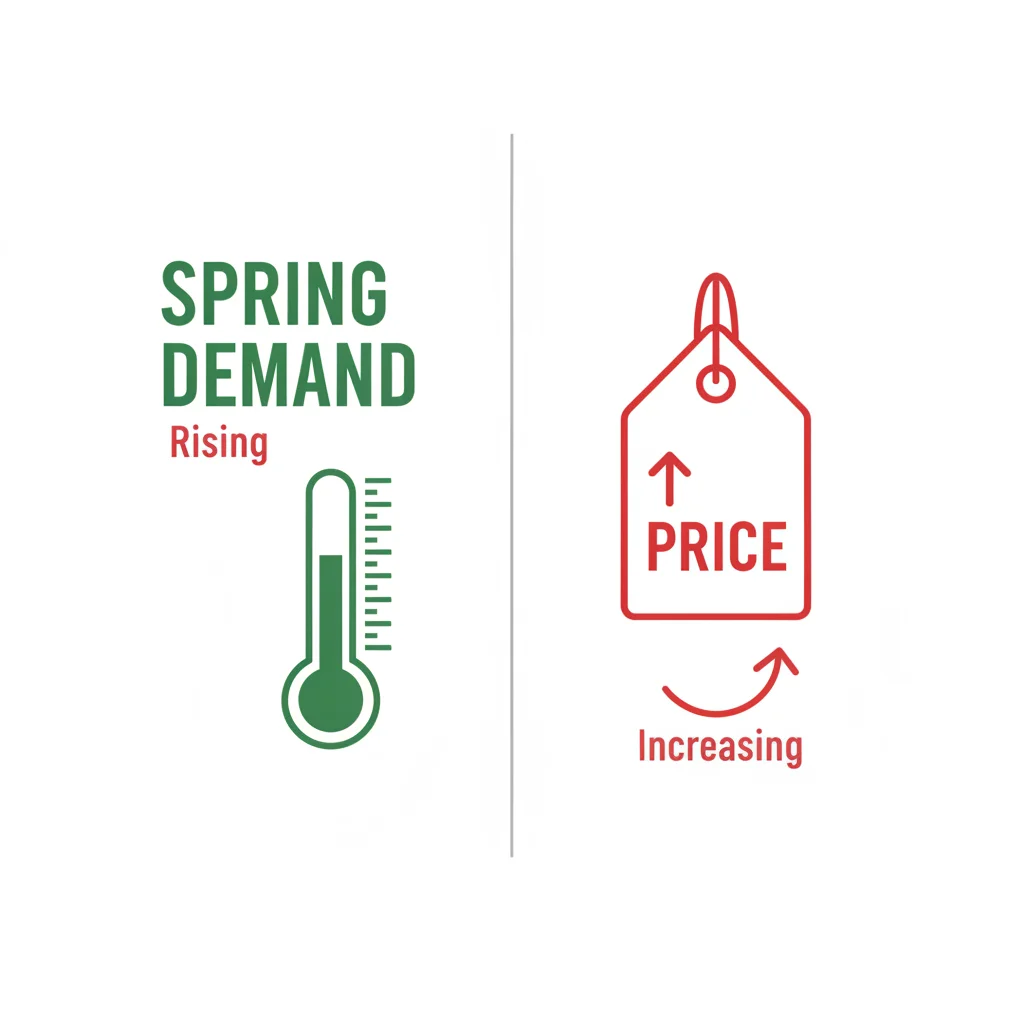
Spring is when the car market tilts. Tax refunds arrive, weather improves, and consumer confidence rises. More buyers enter showrooms, which reduces dealer urgency. Inventory on popular models tightens. This doesn't mean you can't get a deal — it means you'll have to work harder for it.
April
Buyer conditions: Fair. Tax refund season drives the single largest surge in used car demand all year, and new car showrooms feel it too. Dealers know walk-in traffic is up, which reduces their motivation to heavily discount. That said, April still closes Q1 stragglers who didn't sell through in March, and some incentive programs roll over. If you're buying in April, go during the week — weekend showroom traffic is highest.
May
Buyer conditions: Fair to poor for most, decent for trucks. Memorial Day weekend is a heavily marketed sales event. The incentives are real but often smaller than January or year-end deals. Where May shines is pickup trucks — spring construction season drives commercial truck demand, but manufacturers often counter with fleet incentives that spill over into retail pricing. Check manufacturer websites directly for regional truck incentives in May.
June
Buyer conditions: Poor for mainstream buyers, good for strategic buyers. June closes Q2, so the final week delivers another round of quarterly pressure. More importantly, June is when automakers begin announcing next model year vehicles. If you see a 2025 model announcement, that means leftover 2024 inventory will start accumulating on dealer lots — and those cars will need to move by fall. Start tracking which models are getting redesigned or refreshed; their current-year versions will get discounted aggressively later. See how model changeover timing affects deal quality for specifics.
Manufacturer rebate
A cash discount paid directly by the automaker — not the dealer — to reduce the effective purchase price. Rebates are publicly listed on manufacturer websites and don't require negotiation; they're attached to specific models and expire on set dates.
Dealer cash incentive
Money paid by the manufacturer to the dealer (not the buyer) to move specific inventory. Dealers may or may not pass this savings on, so it's worth researching whether a hidden dealer cash incentive exists on your target vehicle.
Model-year changeover
The period — typically July through September — when next model-year vehicles arrive on dealer lots and outgoing model-year inventory must be sold. Changeover is one of the most reliable windows for significant discounts.
Days on lot
The number of days a specific vehicle has been sitting on a dealer's lot since arriving. Higher days-on-lot means the dealer is paying more in floor plan financing costs and is more motivated to negotiate.
Floor plan financing
The loan dealers take out to purchase inventory from manufacturers. Dealers pay interest on this loan for every day a car sits unsold, which is why high days-on-lot vehicles create natural negotiating leverage for buyers.
Conquest incentive
A rebate offered specifically to buyers who are switching from a competitor brand. These can be stacked with standard rebates but require proof of current ownership of a competing brand's vehicle.
Invoice price
The price a dealer officially pays the manufacturer for a vehicle, listed on the factory invoice. In practice, dealers often receive additional holdback payments and dealer cash that bring their effective cost below invoice.
Holdback
A percentage of MSRP (typically 2–3%) that manufacturers refund to dealers after a sale. Holdback is separate from the invoice price and represents profit margin dealers maintain even on deals priced at invoice.
Q3: July Through September — The Changeover Window
Late summer is underappreciated by most car buyers. It contains one of the most mechanically reliable discount windows of the year: the model-year changeover. New model-year vehicles begin arriving on dealer lots, and existing inventory needs to be sold to make room. That supply-demand math creates predictable price drops.
July
Buyer conditions: Good on outgoing models. July 4th sales events are real but unspectacular — treat them as a starting point, not a peak. The bigger story is that some early-arriving 2026 model-year vehicles (using a generic example) start trickling onto lots, immediately pressuring the value of their 2025 predecessors. If a dealer has ten 2025 models in stock and just received five 2026 versions, those 2025 units become motivated sellers. Ask specifically about prior-model-year inventory and what incentives are attached.
August
Buyer conditions: Very good on current-model-year vehicles. August is when changeover pressure peaks. Most manufacturers push their new model year vehicles aggressively, which means "Clearance Events" on outgoing inventory are genuine rather than manufactured. Savings of $3,000 to $6,000 below MSRP on well-equipped trucks, SUVs, and sedans are achievable on models being refreshed or redesigned. Labor Day weekend — which bridges August and September — is historically one of the top three buying windows of the year.
September
Buyer conditions: Excellent at month-end, especially Labor Day weekend. September closes Q3, delivering another quarterly pressure point on top of the ongoing changeover clearance. Labor Day is the peak event of Q3. Manufacturers stack rebates, dealers are chasing quota, and lots are full of current-model-year cars they need to move before fall inventory fills up. For most vehicle categories, late September rivals late December for deal quality — without the competition from other holiday shoppers.
If you want a structured view of how quarterly deadlines layer on top of each other, quarterly sales pressure and buyer leverage breaks it down in detail.
Q4: October Through December — Year-End Intensifies
Q4 is when most buyers think about year-end deals, but the reality is more nuanced. October is often overlooked, November builds steadily, and December — specifically the final two weeks — is the most powerful buying window of the year for buyers willing to navigate holiday-season showrooms.

October
Buyer conditions: Moderate to good. October is a transitional month. New model-year inventory is largely in place, so changeover clearance deals have mostly run their course. However, Q3 missed targets create quiet desperation on some dealer lots. Look for bonus cash on slow-selling models — crossovers in saturated segments, sedans in truck-heavy markets — where dealers are sitting on aging units. Columbus Day weekend sometimes carries attached manufacturer incentives worth checking.
November
Buyer conditions: Good and improving rapidly. Veterans Day weekend in early November is a legitimate buying opportunity. More importantly, November is when year-end pressure begins in earnest. Dealers know how far they are from their annual sales targets, and the math starts getting uncomfortable. Black Friday automotive deals have become a genuine tradition — many manufacturers attach specific rebates to that weekend. Consumer attention is split between retail shopping and holiday planning, which keeps showroom traffic lower than you'd expect given the incentive strength. That's a buyer's advantage.
December
Buyer conditions: Exceptional in the final two weeks. December is the pinnacle of buying pressure for dealers and manufacturers alike. Annual targets, fiscal year-end bonuses for salespeople, manufacturer-to-dealer incentive payments — all of it crystallizes in the last days of December. The final week between Christmas and New Year's Eve is statistically the best time to buy a new car, full stop. A complete year-end buying playbook walks through exactly how to approach that window strategically.
One important nuance: popular models in high demand (three-row SUVs, hybrid crossovers, certain trucks) don't discount as deeply even in December. Year-end deals are strongest on models with inventory surpluses. Check your target vehicle's days-on-lot metric — any car sitting 60+ days is a deal candidate regardless of the month.
For context on how the used car market moves differently across the same calendar, the annual rhythm of used car demand provides a parallel breakdown worth reading alongside this one.
Incentives Vary Significantly by Region
Manufacturer rebates and dealer cash incentives are not uniform across the country. A truck market like Houston may see smaller truck discounts than a sedan-heavy market like Boston, where dealers need to move trucks harder. Always check regional incentives on the manufacturer's website using your ZIP code — national advertised deals often understate what's available locally.
Popular Models Don't Follow This Calendar
Timing strategies work best on models with inventory surplus. High-demand vehicles — three-row hybrid SUVs, certain performance trucks, limited-edition trims — frequently sell at or above MSRP year-round. Days-on-lot for these vehicles is often under 10 days. If your target is one of these models, timing matters far less than finding available inventory at all.
New Model Announcements Can Reshape Timing
When a manufacturer announces a significant redesign or all-new model, the outgoing generation can depreciate faster than the typical calendar would suggest. Monitoring automotive news for redesign announcements — even a year in advance — can help you anticipate unusually deep discounts on soon-to-be-replaced models before the clearance events officially begin.
Edmunds True Market Value (TMV)
Edmunds TMV shows what buyers in your region are actually paying for a specific vehicle, updated in real time. Use it to benchmark whether a quoted price reflects current market conditions or leaves money on the table.
Manufacturer Incentives Pages
Every major automaker publishes current rebates and financing offers on their website. Check the offers section using your ZIP code before visiting a dealer — knowing the published incentives prevents dealers from keeping manufacturer cash as extra margin.
CarGurus Days-on-Lot Filter
CarGurus allows you to filter vehicle listings by days on market, making it easy to identify inventory that has been sitting long enough to create negotiating leverage regardless of the time of year.
iSeeCars Best Time to Buy Analysis
iSeeCars publishes annual research quantifying average savings by month for new and used vehicles. Their data-backed breakdowns validate the calendar windows described in this article with transaction-level evidence.
Year-End Car Buying Playbook
A detailed step-by-step guide to navigating the November–December buying window, including how to identify which models are most discounted and how to approach dealers in the final days of the year.
Auto Loan Payment Calculator
Before timing your purchase, know your monthly payment ceiling. An auto loan calculator helps you work backwards from a comfortable payment to understand how much vehicle — and how many incentive dollars — you actually need.
How to Use This Calendar Strategically
Knowing the calendar is only half the equation. Here's how to translate timing knowledge into an actual better deal:
- Match your target vehicle to the right window. Trucks and SUVs get their deepest discounts during changeover season (August–September) and year-end (late December). Sedans and entry-level cars often see better deals in January when they're sitting unsold. Sports cars and convertibles move in spring; buy them in fall when demand cools.
- Stack timing windows where possible. The last day of a month that also falls in the final week of a quarter, during a manufacturer sales event, is more powerful than any single factor alone. The last Saturday of September — especially if it's near Labor Day — often delivers all three simultaneously.
- Track days on lot. Any car that has been sitting on a dealer's lot for 60 days or more is a better negotiating target than a fresh arrival, regardless of the calendar. Tools like Edmunds and CarGurus show this metric. Valuation tools can also help you benchmark what a fair price looks like before you walk in.
- Understand what incentives are actually attached. Not all "sale" events deliver real savings. Manufacturer rebates are published and verifiable — check the automaker's website directly. Decoding dealer incentives explains exactly how to identify which discounts are real and which are just repositioned MSRP.
- Be wary of used car pricing seasonal swings. If you're trading in or selling a vehicle, the calendar works against you at the same moments it works for you as a buyer. Late December is great for buying new but poor for maximizing your trade-in. Read why the month you list your car changes what buyers pay before timing your trade.

The bottom line: you don't need to be a financial expert to time a car purchase well. You just need to know which months create structural pressure on dealers — and show up ready to buy when that pressure peaks.

All claims are backed by peer-reviewed research. Sources on request.