Key Takeaways
Auto Loan Refinancing Trigger
An auto loan refinancing trigger is a change in your financial profile — most commonly a significant credit score increase — that creates a meaningful gap between the interest rate you're currently paying and the rate you'd qualify for today. When that gap is large enough, replacing your existing loan with a new one at a lower rate can save you real money over the remaining loan term. It's not about getting a new car; it's about getting better terms on the one you already own.
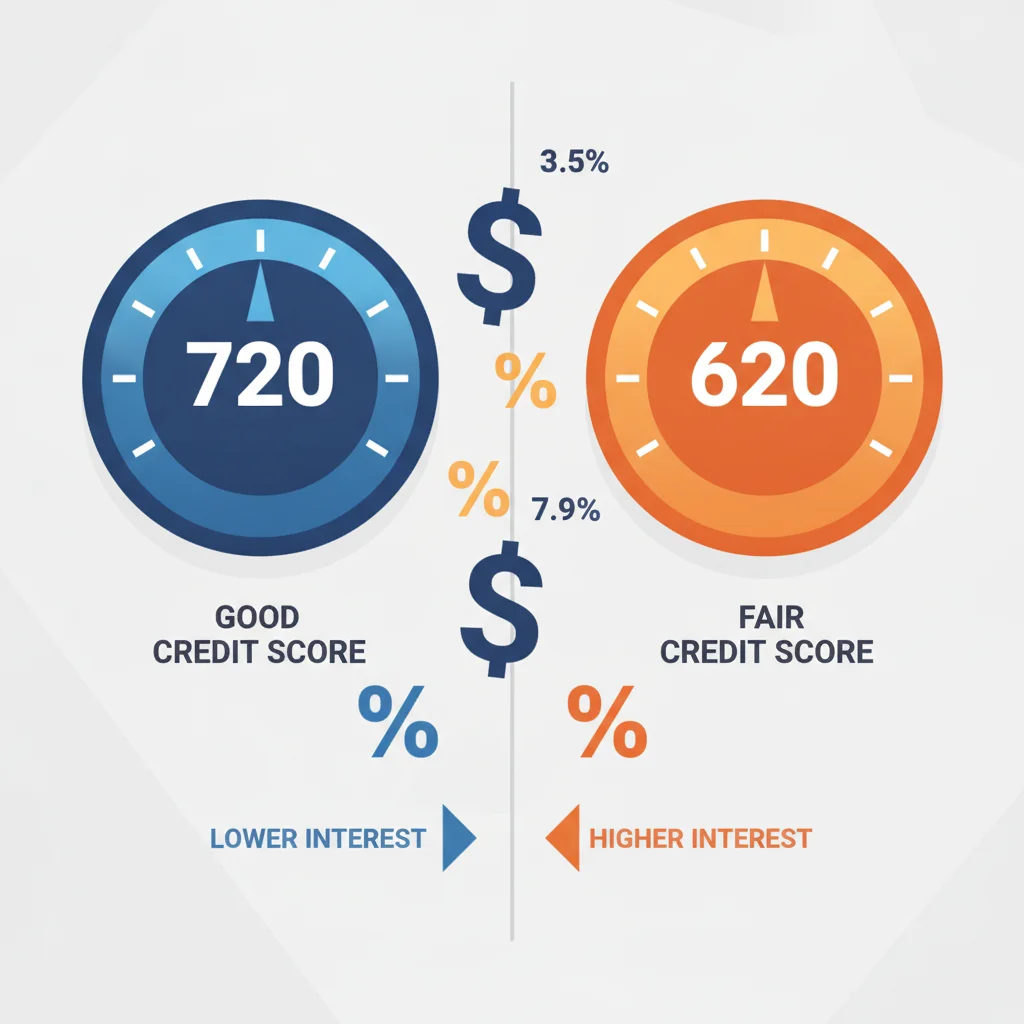
Lenders use risk-based pricing tiers that can shift sharply at specific score thresholds (e.g., 580, 620, 660, 700, 720). Crossing one of these boundaries can drop your APR by 2–5 percentage points, making refinancing financially significant even with modest principal remaining.
Why a Score Jump Isn't Just a Number on a Screen
Most people check their credit score periodically and feel a quiet satisfaction when it ticks upward. But if you're carrying an auto loan, that number has a direct relationship to how much you're paying every single month — and whether you're paying more than you need to.
Here's the core idea: when you took out your car loan, the lender priced your interest rate based on the credit risk you represented at that exact moment. If your score was 590, you probably got a rate that reflected subprime borrowing conditions. If it's now 660, you're a different borrower in the eyes of lenders — but you're still locked into the old rate unless you do something about it.
That's what refinancing is for. It lets you go back to the market, present your improved credit profile, and replace your old loan with one that reflects who you are financially today. The question isn't whether this is theoretically possible — it is. The question is whether the numbers actually work in your favor right now.
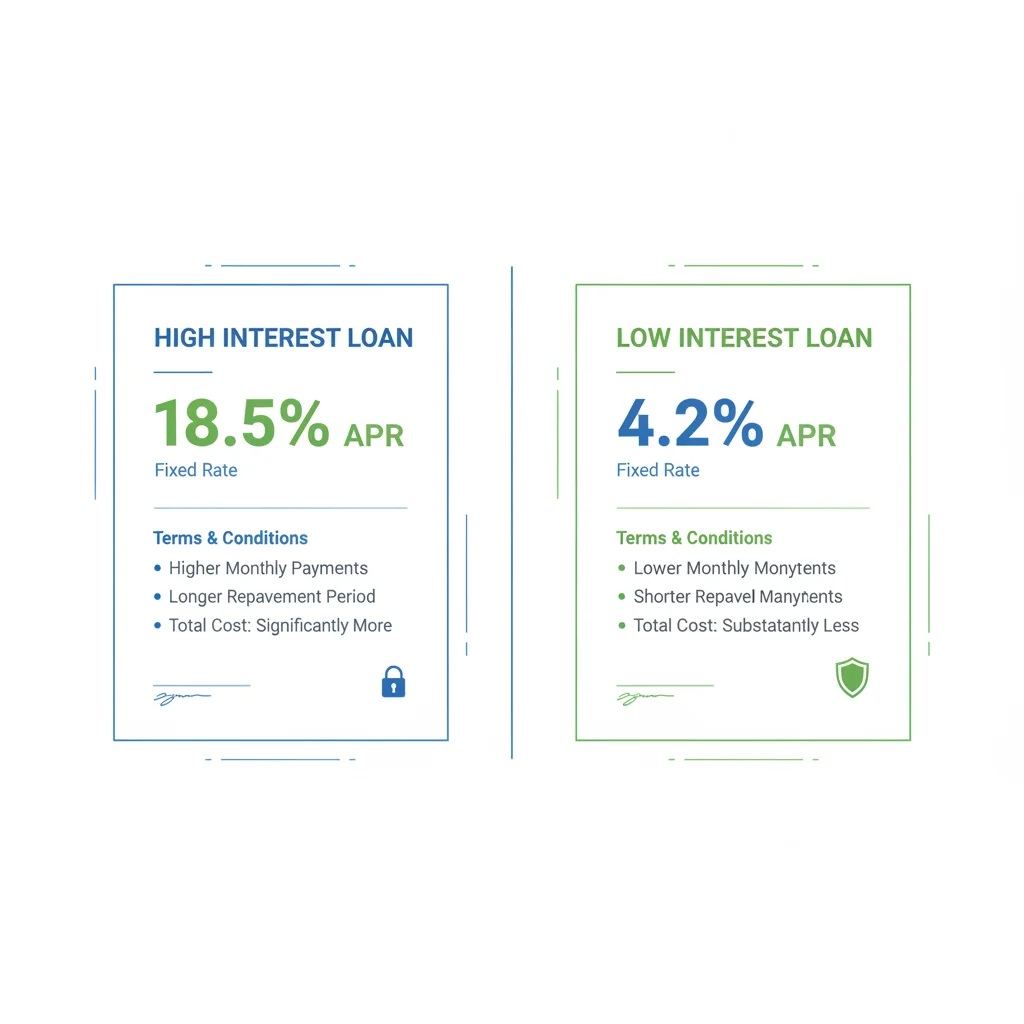
Credit score impact on your loan rate is not a vague or minor influence. Lenders use risk-based pricing, which means every bracket of your credit score corresponds to a specific range of interest rates they're willing to offer. Move up a bracket, and you may qualify for rates that are dramatically lower than what you're currently paying. Understanding this is the first step to knowing whether your score jump is worth acting on.
How Lenders Price Risk — And Where the Big Jumps Happen
Auto lenders don't offer everyone the same rate. They segment borrowers into risk tiers, each with its own APR range. The exact cutoffs vary by lender, but the general structure looks like this:
| Credit Score Range | Typical Borrower Tier | Approximate APR Range (used car) |
|---|---|---|
| 300–579 | Deep Subprime | 18%–26%+ |
| 580–619 | Subprime | 12%–18% |
| 620–659 | Near-Prime | 8%–12% |
| 660–719 | Prime | 5%–8% |
| 720+ | Super-Prime | 3.5%–6% |
Rates shown are illustrative approximations. Actual rates depend on lender, vehicle age, loan term, and market conditions.
Notice what happens at the boundaries. A borrower at 619 and a borrower at 620 are separated by a single point — but they can face APR differences of 4 or more percentage points depending on the lender. The same is true at the 660 and 720 thresholds. These aren't gradual slopes; they're steps.
Certain score benchmarks trigger meaningfully better rates, and knowing which tier you've crossed into — or are close to crossing into — tells you exactly how valuable your score improvement really is.
5%+
APR difference between credit tiers
Borrowers crossing from subprime to prime can see APR differences of 5 percentage points or more on used car loans, according to Experian's State of the Automotive Finance Market reports.
$2,000–$5,000
Potential interest savings from refinancing
On a $20,000 loan with 36+ months remaining, dropping the APR by 4–6 percentage points can save between $2,000 and $5,000 in total interest paid.
38%
Share of auto loans held by subprime borrowers
According to Experian's automotive finance data, a substantial share of outstanding auto loans are held by near-prime and subprime borrowers who may benefit from refinancing after credit improvement.
14 days
Safe window to shop multiple lenders
FICO scoring models treat multiple auto loan inquiries within a 14-day window as a single inquiry, minimizing the impact on your credit score during rate shopping.
This is also why a 40-point jump matters so much more at some score levels than others. Going from 640 to 680 might be a tier change worth several percentage points. Going from 740 to 780 might barely move your rate at all, because you're already deep in super-prime territory. Context is everything.
Soft vs. Hard Pulls When Rate Shopping
Many lenders now offer a prequalification step that uses a soft credit pull — meaning it won't affect your credit score. This lets you see estimated rates before committing to a full application. Always ask whether a lender's initial quote involves a soft or hard pull before proceeding. Hard pulls do affect your score, though the impact is small (typically 2–5 points) and temporary.
Market Rates Move Independently of Your Score
Your credit score determines which rate tier you qualify for — but the actual rates within each tier rise and fall with the broader interest rate environment set by the Federal Reserve. In a high-rate environment, a super-prime borrower may still face rates above 6%, even with a perfect profile. Tracking benchmark rates (like the federal funds rate) alongside your credit score gives you the full picture.
The Break-Even Calculation: When Refinancing Actually Pays Off
Knowing you qualify for a better rate is just the starting point. The real question is whether the savings outweigh the costs of refinancing. Here's how to think through it.
Step 1: Find your potential rate reduction
Get prequalified quotes from two or three lenders without committing to a hard pull where possible. Compare the APR they're offering today to the APR on your current loan. The difference is your rate gap.
Step 2: Calculate your remaining interest cost under both scenarios
Take your current balance and remaining term. Using your current rate, calculate total interest remaining. Then run the same calculation with the new, lower rate. The difference is your gross savings potential.
Step 3: Subtract any costs
Most auto loan refinances have minimal fees — often $0 to $50 for a title transfer. However, check your current loan for prepayment penalties. If your lender charges a penalty for paying off early, that reduces your net savings. Subtract these costs from your gross savings figure.
Step 4: Check your loan timing
This is where many people make a mistake. Auto loans are typically structured so that early payments are heavily weighted toward interest. By the time you're 80% through the loan term, most of the interest has already been paid. Refinancing in the final year of a 60-month loan may save very little, even if your rate drops significantly.
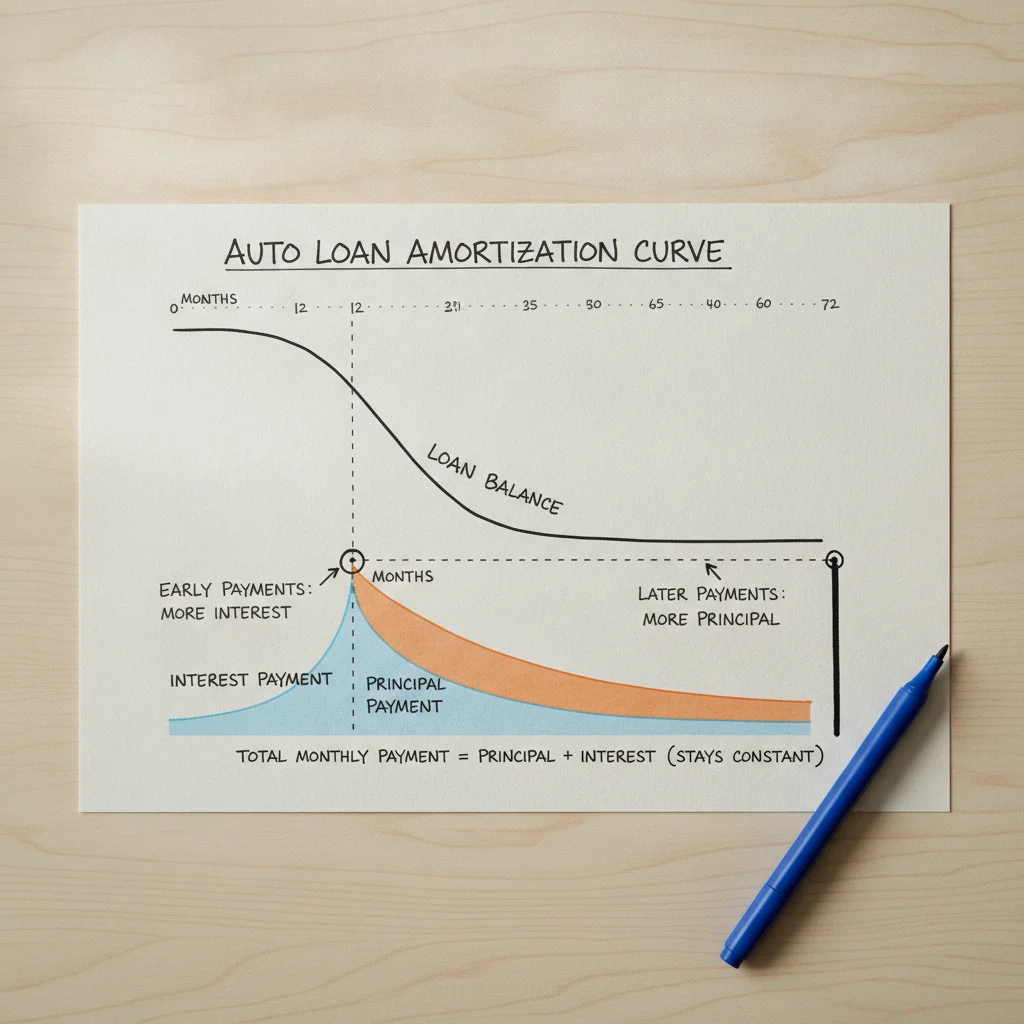
As a general rule of thumb: if you have fewer than 18 months remaining on your loan, refinancing rarely makes sense unless your rate is extremely high. If you have 30 or more months remaining, even a modest rate reduction can produce meaningful savings.
Run the Numbers Before You Commit
Before submitting a formal refinance application, use an online auto loan refinancing calculator to estimate your monthly savings and total interest reduction. Input your current balance, remaining term, current APR, and projected new APR. If the monthly savings are less than $20–$25, the administrative effort may not be worth it unless you're early enough in the term that long-term savings add up.
Get Quotes From Credit Unions First
Credit unions typically offer lower auto loan rates than traditional banks, especially for borrowers who have recently improved their credit. If you're not already a member of a credit union, many allow you to join based on your employer, location, or other affiliations. Checking their rates alongside bank and online lender offers gives you the most competitive picture of what's available.
For a concrete side-by-side look at how rate differences translate to payment and total cost changes, see how a 100-point credit score gap changes your monthly payment.
What Counts as a 'Significant' Score Jump?
There's no universal threshold that automatically makes refinancing worth it — it depends on where your score started, where it is now, and what tier boundary you've crossed. But as a practical guide:
- 20–30 point jump: May help, but often not enough to cross a tier boundary. Worth checking quotes, but don't assume refinancing will be dramatic.
- 40–60 point jump: This is the range where meaningful tier transitions often happen. If you started in subprime or near-prime, a jump of this size can translate to 2–4% APR improvement.
- 60–100+ point jump: Almost certainly worth exploring. Borrowers who moved from subprime to prime territory can sometimes cut their APR in half.
The underlying reason these thresholds matter is explained in detail in why your credit score has such a large effect on your car loan APR. The short version: lenders use your score as a proxy for default probability, and even small changes in perceived risk translate to large changes in the rate they're willing to offer.
“The auto loan market is one of the most responsive lending categories to credit score changes. Borrowers who improve their scores by even 40 to 60 points can see APR offers that are dramatically different from what they qualified for originally — and that gap translates directly into monthly cash flow.”
— Melinda Zabritski, Senior Director of Automotive Financial Solutions, Experian
It's also worth noting that the direction of your score trend matters to some lenders. A score that jumped from 590 to 655 over 18 months looks different — and more credible — than one that briefly spiked and has been declining. Lenders sometimes look at the full picture, not just the current number.
Market Conditions: The Variable You Can't Control
Your credit score improvement is something you earned — but the broader interest rate environment is outside your control, and it matters a lot. When market rates are high, even an excellent credit score may only get you a rate that's modestly better than what you secured during a low-rate environment. The reverse is also true.
Before refinancing, check what current market rates look like for borrowers at your credit tier. Resources like the Federal Reserve's consumer credit data and lender rate boards give you a sense of the baseline. If you secured a loan during a low-rate period (say, 2020–2021) and rates have since risen sharply, refinancing based solely on a credit score improvement may not produce a lower rate than you already have — even if your creditworthiness has genuinely improved.
This is not a reason to skip the analysis. It's a reason to run the numbers honestly rather than assuming a better credit score automatically means a better refinancing outcome. In some market environments, your improved score earns you the best available rate — which may still be higher than your original one.

If the market rate environment is working against you right now, the right move may be to hold your current loan and continue building your credit. The credit factors that move the needle most can help you identify what to focus on while you wait for a better refinancing window.
Soft vs. Hard Pulls When Rate Shopping
Many lenders now offer a prequalification step that uses a soft credit pull — meaning it won't affect your credit score. This lets you see estimated rates before committing to a full application. Always ask whether a lender's initial quote involves a soft or hard pull before proceeding. Hard pulls do affect your score, though the impact is small (typically 2–5 points) and temporary.
Market Rates Move Independently of Your Score
Your credit score determines which rate tier you qualify for — but the actual rates within each tier rise and fall with the broader interest rate environment set by the Federal Reserve. In a high-rate environment, a super-prime borrower may still face rates above 6%, even with a perfect profile. Tracking benchmark rates (like the federal funds rate) alongside your credit score gives you the full picture.
Protecting Your Score Between Now and the Application
Once you've decided to pursue refinancing, the period between that decision and actually submitting your application requires some care. Your credit score is not frozen — it continues to move based on your behavior.
Don't open new credit accounts
Every new credit application — whether for a credit card, a personal loan, or anything else — generates a hard inquiry that can temporarily drop your score by a few points. In the weeks before a refinance application, avoid any unnecessary credit activity.
Keep credit utilization low
If you carry balances on revolving credit (credit cards), pay them down as much as possible before applying. Credit utilization — the ratio of your balance to your limit — is one of the faster-moving factors in your score. Getting below 30%, and ideally below 10%, can give your score an additional lift right before the lender checks it.
Don't close old accounts
Closing a credit card reduces your available credit and can hurt your utilization ratio. Keep existing accounts open and unused rather than closing them.
Shop within a short window
When you do apply for refinancing quotes, try to submit all applications within a 14-day window. Credit scoring models treat multiple auto loan inquiries within a short period as a single inquiry, minimizing the impact on your score. Don't spread applications out over two or three months — that defeats the purpose.
Run the Numbers Before You Commit
Before submitting a formal refinance application, use an online auto loan refinancing calculator to estimate your monthly savings and total interest reduction. Input your current balance, remaining term, current APR, and projected new APR. If the monthly savings are less than $20–$25, the administrative effort may not be worth it unless you're early enough in the term that long-term savings add up.
Get Quotes From Credit Unions First
Credit unions typically offer lower auto loan rates than traditional banks, especially for borrowers who have recently improved their credit. If you're not already a member of a credit union, many allow you to join based on your employer, location, or other affiliations. Checking their rates alongside bank and online lender offers gives you the most competitive picture of what's available.
If your score has improved significantly but you're not quite sure it's at its peak, raising your credit score before financing walks through a practical sequence for squeezing out additional improvement before you apply.
Alternatives If Refinancing Isn't the Right Move Yet
Not every credit score jump will produce refinancing savings large enough to justify acting immediately. Here are a few situations where waiting or exploring alternatives makes more sense.
You're too far into the loan term
With fewer than 18 months remaining, the interest savings from even a significant rate reduction are likely minimal. In this case, focus on building your credit further so your next vehicle purchase starts with a much stronger profile.
The rate environment is unfavorable
If current market rates have risen above what you secured originally, a credit score improvement won't overcome that headwind. Monitor rate trends and revisit refinancing when conditions improve.
Your score jump is real but fragile
If your score jumped because of a one-time event (like having a collection removed or disputing an error), but your underlying credit habits haven't changed, the improvement may not be fully reflected in the rates lenders offer. Lenders look at more than just the score — recent late payments, high utilization elsewhere, and thin credit history can all limit what you're actually offered.
In cases like these, a co-signer with strong credit may unlock rates your solo profile wouldn't qualify for, either now or when you finance your next vehicle.
Finally, if you haven't yet applied for refinancing but are thinking about your position heading into a new purchase, consider loan preapproval as a way to understand exactly what rate your current score qualifies for before you commit.

All claims are backed by peer-reviewed research. Sources on request.