Key Takeaways
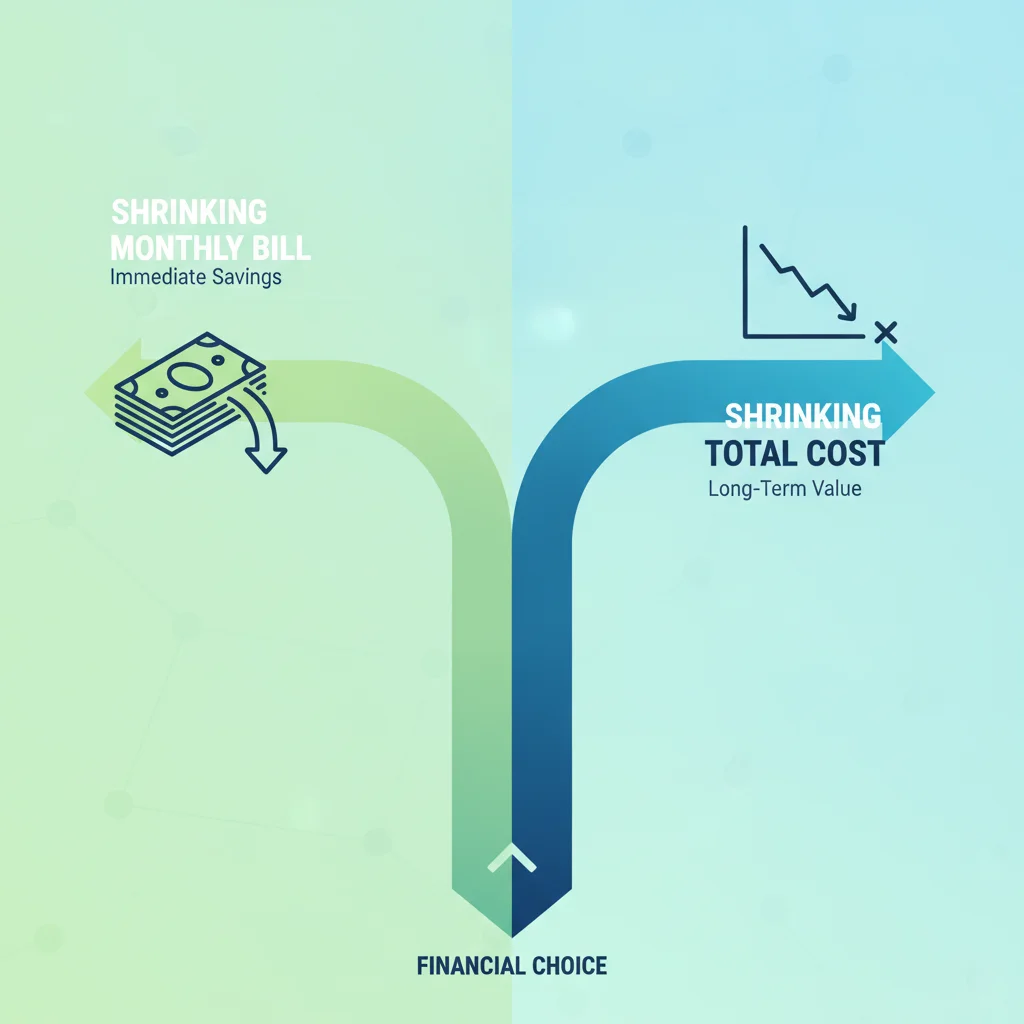
Immediately reduces your required monthly payment
Spreading your remaining balance over more months lowers the amount due each cycle, freeing up cash for other obligations. This can provide real breathing room if your budget has tightened since you took out the original loan.
Reduces risk of missed payments and default
A lower required payment makes it easier to stay current on your loan, protecting your credit score and avoiding repossession. Consistency in on-time payments has more long-term credit value than slightly overpaying each month.
Gives you flexible cash flow for higher-priority needs
The monthly savings can be redirected toward high-interest debt, an emergency fund, or essential expenses. In some situations, the opportunity cost of keeping cash tied up in an auto payment exceeds the cost of extra loan interest.
Can work well alongside a lower interest rate
If your credit score has improved since your original loan, you may qualify for a significantly lower rate. Combining a rate reduction with a modest term extension can produce a lower payment without dramatically increasing total interest paid.
Creates a lower minimum floor with room to pay more
Extending your term lowers the required minimum, but most lenders allow you to pay extra without penalty. You get financial flexibility without being locked into a high required payment every single month.
Significantly increases total interest paid over the loan
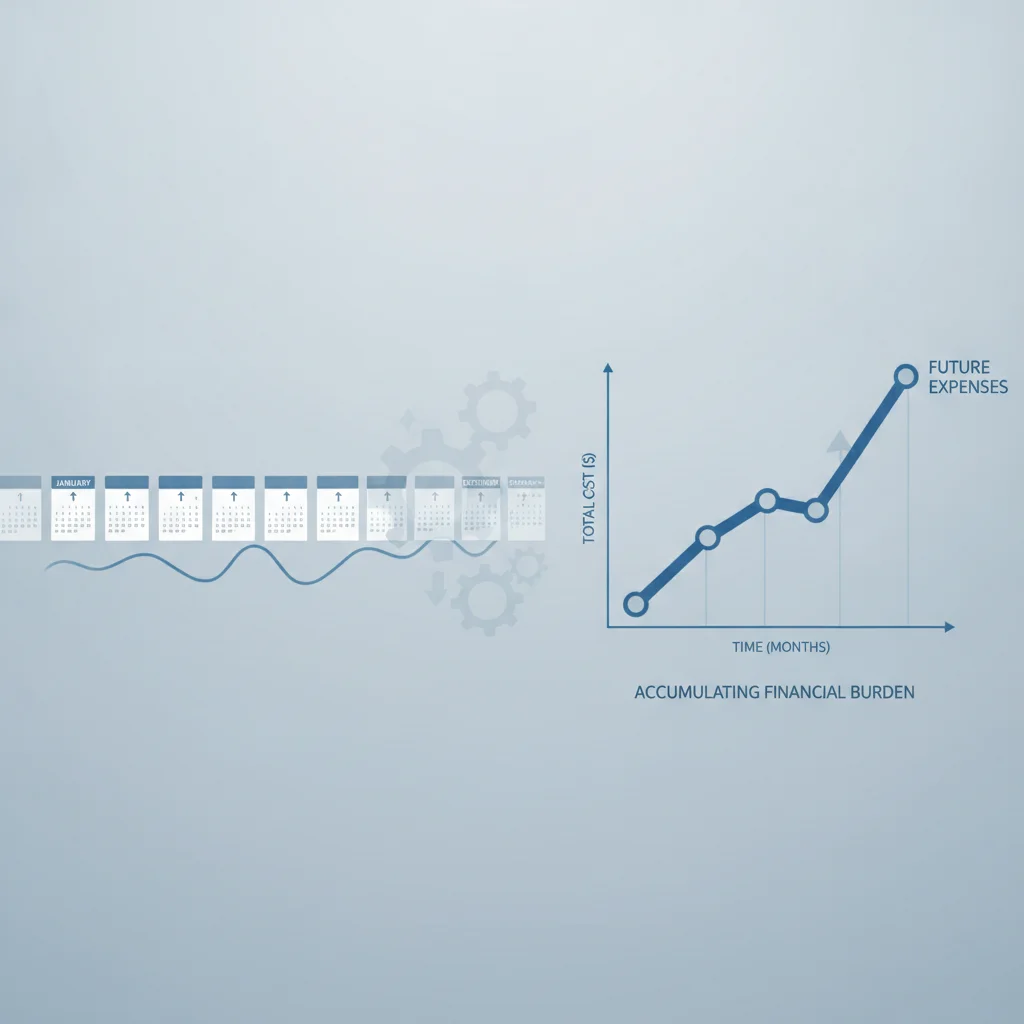
Every additional month of repayment adds interest cost. Resetting a long term can add hundreds or even thousands of dollars to what you pay for the vehicle in total, even if the rate stays the same.
Increases the risk of going underwater on the loan
Cars depreciate faster than most loan balances shrink, and a longer term slows equity-building even further. The result is that you may owe more than the car is worth for an extended period, which creates problems if you sell, trade in, or total the vehicle.
Delays your path to full vehicle ownership
A term extension pushes back the date when the car is fully yours. Until you own it outright, the lender holds a lien on the vehicle and you have less flexibility in what you do with it.
Loan may outlast the vehicle's reliable lifespan
If your car is already older or has high mileage, a longer term means you might still be making payments when the car needs major repairs or becomes undependable. This leaves you paying for a vehicle that may no longer be worth the cost.
Compounds the negative equity problem when trading in
If you plan to trade in or sell the vehicle while still underwater, any negative equity typically rolls into your next loan. Extending your term now can make this problem worse when you're ready to move on.
Psychological risk of treating the symptom, not the cause
A lower payment can relieve pressure in the short term while masking an underlying budget problem that needs real attention. Borrowers who extend without a plan often find themselves in the same position — or worse — a year later.
Our Verdict
Extending your loan term during a refinance is a legitimate financial tool, but it comes with real trade-offs that are easy to underestimate. The monthly relief is immediate and tangible; the extra interest cost is slow, quiet, and substantial. For borrowers who genuinely need breathing room in their budget, a term extension can prevent missed payments and financial stress — but it should be paired with a plan to pay off the loan early when circumstances improve.
Best for borrowers experiencing a temporary income shortfall or a major budget disruption who need immediate payment relief and have a clear plan to accelerate repayment once their situation stabilizes.
What It Means to Extend Your Loan Term During a Refinance
When you refinance an auto loan, you replace your existing loan with a new one — ideally at a better interest rate, different term length, or both. Extending your loan term means choosing a repayment period that is longer than what you have remaining on your current loan.
For example, suppose you're 18 months into a 60-month loan and you refinance into a new 60-month loan. Instead of having 42 months left, you now have 60 months again. Your monthly payment drops, but your payoff date moves further away — and the total interest you pay grows accordingly.
This is one of the most common refinancing decisions borrowers face, and it's also one of the most misunderstood. The lower monthly number feels like a win. But the total cost story is more complicated. To understand why, it helps to look at both sides clearly. See our overview of loan terms explained for a primer on how term length, monthly payments, and total cost interact.
The Pros of Extending Your Loan Term
There are real, legitimate reasons to stretch your repayment period. The key is knowing exactly what benefit you're getting — and what you're giving up in return.
Immediately reduces your required monthly payment
Spreading your remaining balance over more months lowers the amount due each cycle, freeing up cash for other obligations. This can provide real breathing room if your budget has tightened since you took out the original loan.
Reduces risk of missed payments and default
A lower required payment makes it easier to stay current on your loan, protecting your credit score and avoiding repossession. Consistency in on-time payments has more long-term credit value than slightly overpaying each month.
Gives you flexible cash flow for higher-priority needs
The monthly savings can be redirected toward high-interest debt, an emergency fund, or essential expenses. In some situations, the opportunity cost of keeping cash tied up in an auto payment exceeds the cost of extra loan interest.
Can work well alongside a lower interest rate
If your credit score has improved since your original loan, you may qualify for a significantly lower rate. Combining a rate reduction with a modest term extension can produce a lower payment without dramatically increasing total interest paid.
Creates a lower minimum floor with room to pay more
Extending your term lowers the required minimum, but most lenders allow you to pay extra without penalty. You get financial flexibility without being locked into a high required payment every single month.
The most common reason borrowers extend their term is straightforward: they need more money available every month. If your current payment is straining your budget, a refinance with a longer term can reduce that obligation immediately. That freed-up cash can go toward an emergency fund, high-interest credit card debt, or simply covering regular expenses during a difficult stretch.
It's worth noting that this benefit is most valuable when you're refinancing at a meaningfully lower interest rate at the same time. If you can lower both your rate and extend your term, the monthly savings compound. If you only extend the term without a rate reduction, the savings are smaller and the long-term cost is higher.
The Cons of Extending Your Loan Term
The disadvantages of a term extension are real and quantifiable. Before you commit, these are the risks you need to weigh honestly.
Significantly increases total interest paid over the loan
Every additional month of repayment adds interest cost. Resetting a long term can add hundreds or even thousands of dollars to what you pay for the vehicle in total, even if the rate stays the same.
Increases the risk of going underwater on the loan
Cars depreciate faster than most loan balances shrink, and a longer term slows equity-building even further. The result is that you may owe more than the car is worth for an extended period, which creates problems if you sell, trade in, or total the vehicle.
Delays your path to full vehicle ownership
A term extension pushes back the date when the car is fully yours. Until you own it outright, the lender holds a lien on the vehicle and you have less flexibility in what you do with it.
Loan may outlast the vehicle's reliable lifespan
If your car is already older or has high mileage, a longer term means you might still be making payments when the car needs major repairs or becomes undependable. This leaves you paying for a vehicle that may no longer be worth the cost.
Compounds the negative equity problem when trading in
If you plan to trade in or sell the vehicle while still underwater, any negative equity typically rolls into your next loan. Extending your term now can make this problem worse when you're ready to move on.
Psychological risk of treating the symptom, not the cause
A lower payment can relieve pressure in the short term while masking an underlying budget problem that needs real attention. Borrowers who extend without a plan often find themselves in the same position — or worse — a year later.
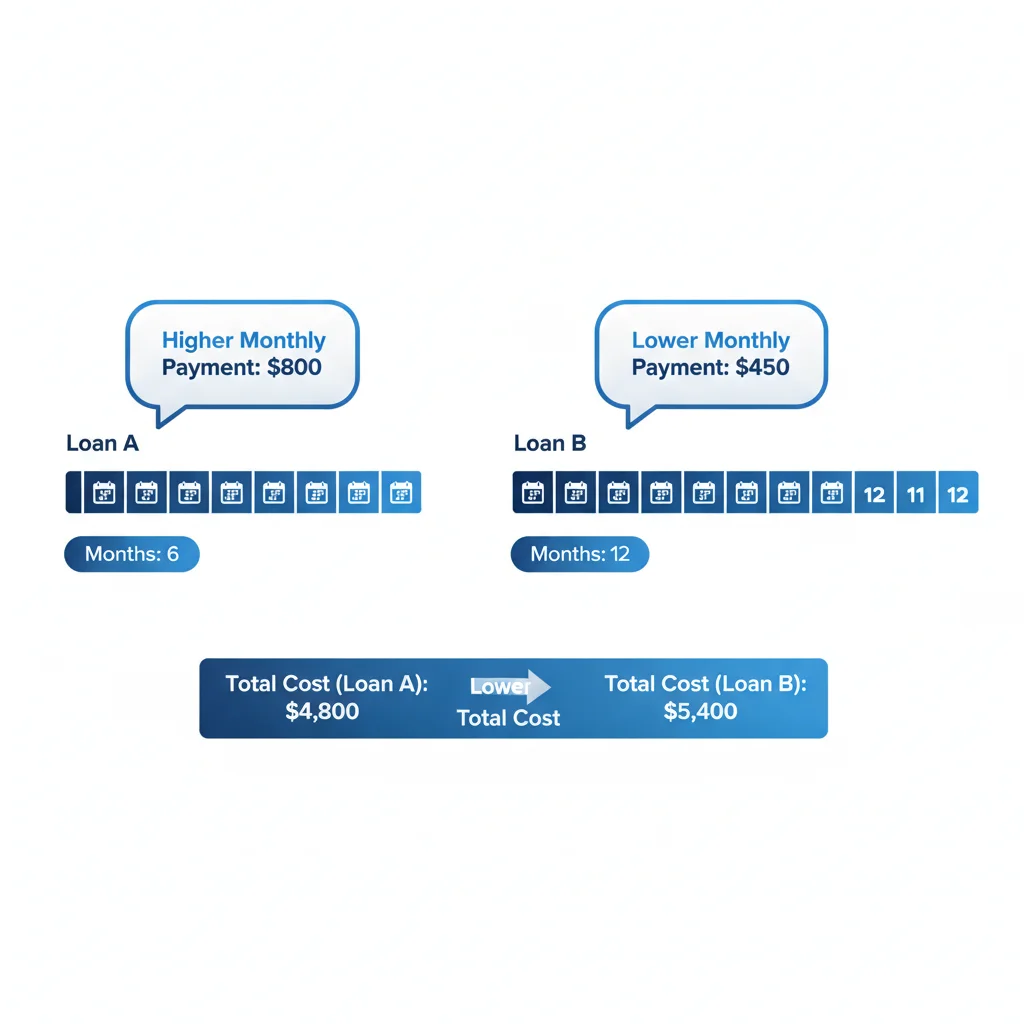
The most significant downside is the one that's easiest to overlook: you end up paying more for the same car. Every additional month of interest represents real money leaving your pocket. And because auto loans are amortized, you pay more interest at the beginning of a loan term than at the end — so resetting or lengthening the clock is especially costly.
To put a number on it: if you owe $18,000 at 7% APR with 42 months remaining, your monthly payment is roughly $506 and total remaining interest is about $3,200. Refinance that into a new 72-month loan at the same 7% rate, and your payment drops to about $308 — but your total interest paid jumps to around $4,200. You save $198 per month but spend an extra $1,000 in interest overall. That trade-off only makes sense if the monthly savings genuinely solves a real problem. For a deeper look at this dynamic, see why a lower monthly payment can cost you more in the end.

The Hidden Danger: Negative Equity and Depreciation
One of the most underappreciated risks of extending a loan term is what it does to your equity position in the vehicle.
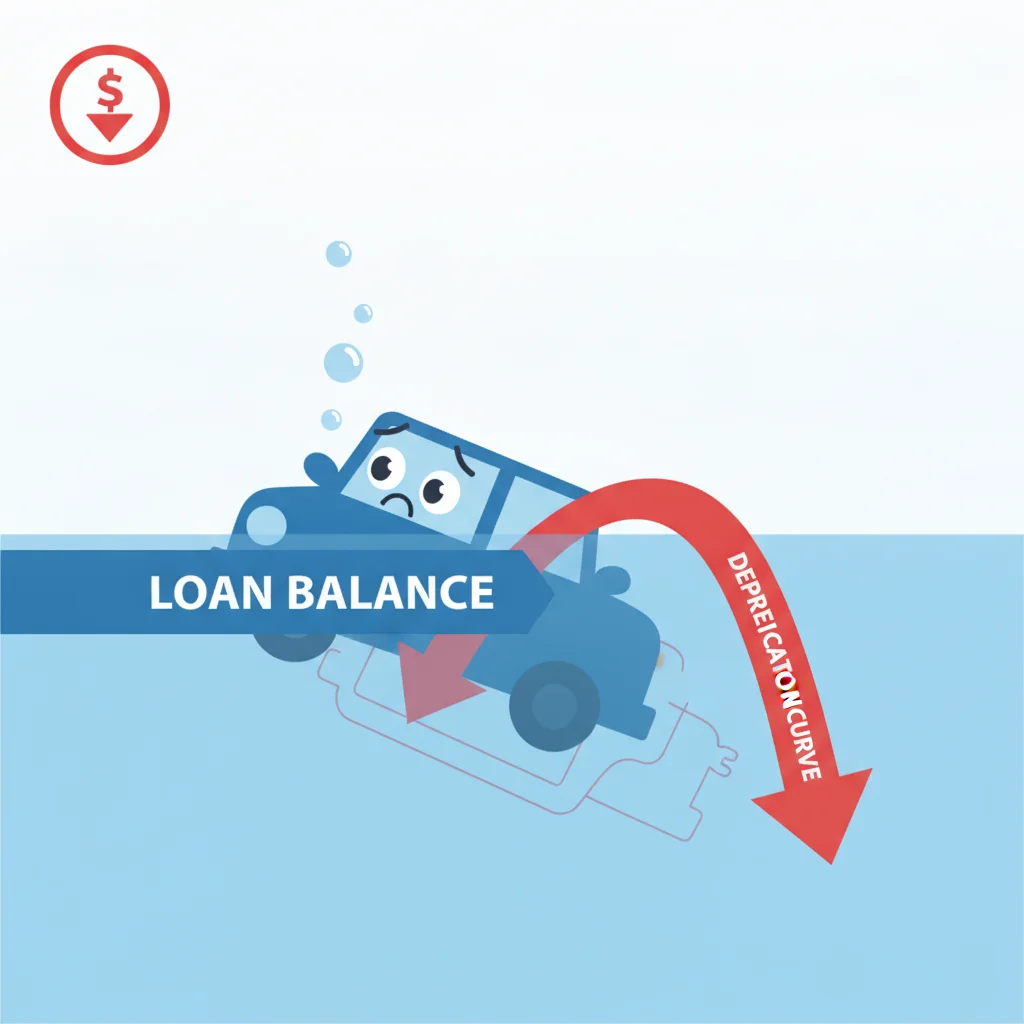
Cars depreciate quickly — often faster than loan balances shrink, especially in the early years of a loan. When you extend your term, you slow down the rate at which you build equity even further. The result: you're more likely to be "underwater" on your loan, meaning you owe more than the car is worth.
How Depreciation Outpaces Loan Paydown
A new car can lose 15–25% of its value in the first year alone, and around 50% over five years. Meanwhile, in the early months of a loan, most of your payment goes toward interest rather than principal — so your balance shrinks slowly. A longer term amplifies both effects. If you extend a loan on a vehicle you've owned for two or three years, check its current market value before you commit. The gap between what you owe and what the car is worth may already be uncomfortably close.
Check for Prepayment Penalties Before Committing
If your plan is to extend the term but pay extra when possible, first confirm that your new loan agreement does not include a prepayment penalty. Most auto loans today — particularly from banks and credit unions — do not charge for early payoff, but some dealership-financed and subprime loans do. Ask the lender directly and look for this language in the loan agreement before signing. A prepayment penalty can eliminate the financial benefit of the accelerated payoff strategy entirely.
Being underwater creates serious problems if your car is totaled, stolen, or if you need to sell. In each of those scenarios, the insurance payout or sale proceeds may not cover your outstanding loan balance. You'd still owe the difference out of pocket — or you'd have to roll that negative equity into your next loan, which just compounds the problem.
The longer the term you extend to, the greater this risk. If you're already in a long original loan (say, 72 or 84 months) and you reset the clock by refinancing into another long-term loan, you may be upside down on the loan for years. That's a financially fragile position to be in.
Gap insurance can protect you against some of the fallout from negative equity, but it adds cost and doesn't address the underlying problem — you're paying for a car you don't fully own yet.
When Extending Your Term Actually Makes Sense
Despite the drawbacks, there are specific circumstances where extending your loan term is the right call. The key is that the decision should be deliberate and driven by a clear financial need — not just a desire for a smaller number on your statement.
You're facing a genuine cash flow crisis
Job loss, a medical expense, a family emergency — life can disrupt your budget in ways that have nothing to do with poor planning. If your current payment is at risk of becoming unaffordable, extending your term to preserve cash flow is a sensible triage move. Missing payments damages your credit score, triggers late fees, and can lead to repossession. A term extension avoids all of that.
You're also getting a lower interest rate
If you can extend your term and lock in a lower rate — perhaps because your credit score has improved since your original loan — the math becomes more favorable. The rate reduction offsets some of the additional interest from the longer term. You may still pay more overall, but the gap narrows. See how to weigh monthly payment savings against total interest reduction to run the numbers for your situation.
You plan to pay it off early
Some borrowers extend the term to lower the required minimum payment while intending to pay more than the minimum whenever possible. This strategy gives you flexibility: in tight months, you pay the minimum; in better months, you put extra toward principal. Before pursuing this approach, confirm your lender does not charge prepayment penalties. Most modern auto loans don't, but it's worth verifying. Longer terms aren't always the wrong call — here's a breakdown of the specific circumstances where this strategy holds up.
72–84 mo
Most common extended refinance term lengths
According to Experian's State of the Automotive Finance Market report, loans with terms of 73–84 months now make up a significant and growing share of all auto loan originations.
~$1,000+
Typical extra interest cost from a term extension
On an $18,000 loan at 7% APR, extending from 42 remaining months to a new 72-month loan adds roughly $1,000 in total interest paid, even with no rate change.
Over 20%
Share of auto loan borrowers with negative equity
Edmunds data has consistently shown that more than one in five trade-in transactions involves a vehicle with negative equity, a risk compounded by longer loan terms.
When You Should NOT Extend Your Term
Just as important as knowing when to extend is knowing when to resist the temptation — even if the lower payment looks attractive.
You're already deep into your loan
If you're in the final 12 to 18 months of your loan, extending the term adds significant interest for relatively modest monthly savings. You're close to the finish line. Pushing that out by two or three years rarely makes economic sense unless you're in a genuine financial crisis.
Your car has high mileage or is aging
Extending the loan term means you'll be making payments longer. If your vehicle is already aging or accumulating high mileage, there's a real chance it will need major repairs — or become unreliable — before you finish paying it off. You could end up making payments on a car that no longer serves you well, or paying to repair a car you still owe money on.
You want to trade in soon
If you're thinking about upgrading your vehicle in the next year or two, extending your term now is counterproductive. You'll have a higher outstanding balance when you go to trade in, which means more negative equity to contend with. That negative equity often gets rolled into the next loan, inflating your new payment and perpetuating the cycle.
For a fuller picture of what the alternative looks like, see what changes when you refinance to a shorter term. Comparing both paths — longer and shorter — helps clarify which one actually serves your goals.
How to Evaluate the Decision for Your Specific Situation
There's no universal right answer here. The decision to extend your loan term depends on your current financial position, your vehicle's value, the new rate you qualify for, and how long you plan to keep the car. Here's a practical framework for thinking it through.
- Calculate your current payoff balance and remaining term. Contact your lender for a current payoff quote. This is the number that matters, not what your original loan was.
- Find out what rate you qualify for today. Your credit score may have changed since you took out the original loan. Getting preapproved for refinancing before committing lets you see your real options without affecting your credit score significantly.
- Run the total cost comparison, not just the monthly payment. Multiply your proposed new monthly payment by the number of months in the new term. Compare that total to what you'd pay finishing your current loan. The difference is your true cost of extending.
- Check your vehicle's current market value. Use a source like Kelley Blue Book or Edmunds. If you already owe more than the car is worth, extending the term worsens your equity position. Factor that risk in.
- Define your goal. Are you solving a short-term cash flow problem, or trying to reduce overall interest cost? The answer changes which term makes sense. For a direct comparison between the two approaches, see short-term vs. long-term refinancing.
How Depreciation Outpaces Loan Paydown
A new car can lose 15–25% of its value in the first year alone, and around 50% over five years. Meanwhile, in the early months of a loan, most of your payment goes toward interest rather than principal — so your balance shrinks slowly. A longer term amplifies both effects. If you extend a loan on a vehicle you've owned for two or three years, check its current market value before you commit. The gap between what you owe and what the car is worth may already be uncomfortably close.
Check for Prepayment Penalties Before Committing
If your plan is to extend the term but pay extra when possible, first confirm that your new loan agreement does not include a prepayment penalty. Most auto loans today — particularly from banks and credit unions — do not charge for early payoff, but some dealership-financed and subprime loans do. Ask the lender directly and look for this language in the loan agreement before signing. A prepayment penalty can eliminate the financial benefit of the accelerated payoff strategy entirely.
Making the Most of a Term Extension If You Go That Route
If you've weighed the trade-offs and a term extension is the right move for your situation, there are strategies that can minimize the long-term cost.
Make biweekly payments instead of monthly
Paying half your monthly payment every two weeks results in 26 half-payments per year — the equivalent of 13 full monthly payments instead of 12. That one extra payment per year chips away at your principal faster and reduces total interest paid, even on a longer-term loan.
Apply windfalls to principal
Tax refunds, bonuses, or any unexpected income can be applied directly to your loan principal. Even one or two extra payments per year can shave months off your repayment timeline and meaningfully reduce your interest cost.
Refinance again when your situation improves
A term extension doesn't have to be permanent. If your income increases or your credit score improves further, you can refinance again — this time to a shorter term. You'll lock in a faster payoff and potentially a better rate. Think of the extension as a temporary tool, not a final decision.
The bottom line is that a term extension is neither inherently good nor bad — it's a financial lever. Like any lever, it has to be used intentionally to produce the outcome you actually want.


All claims are backed by peer-reviewed research. Sources on request.