Key Takeaways
Implied Consent Law
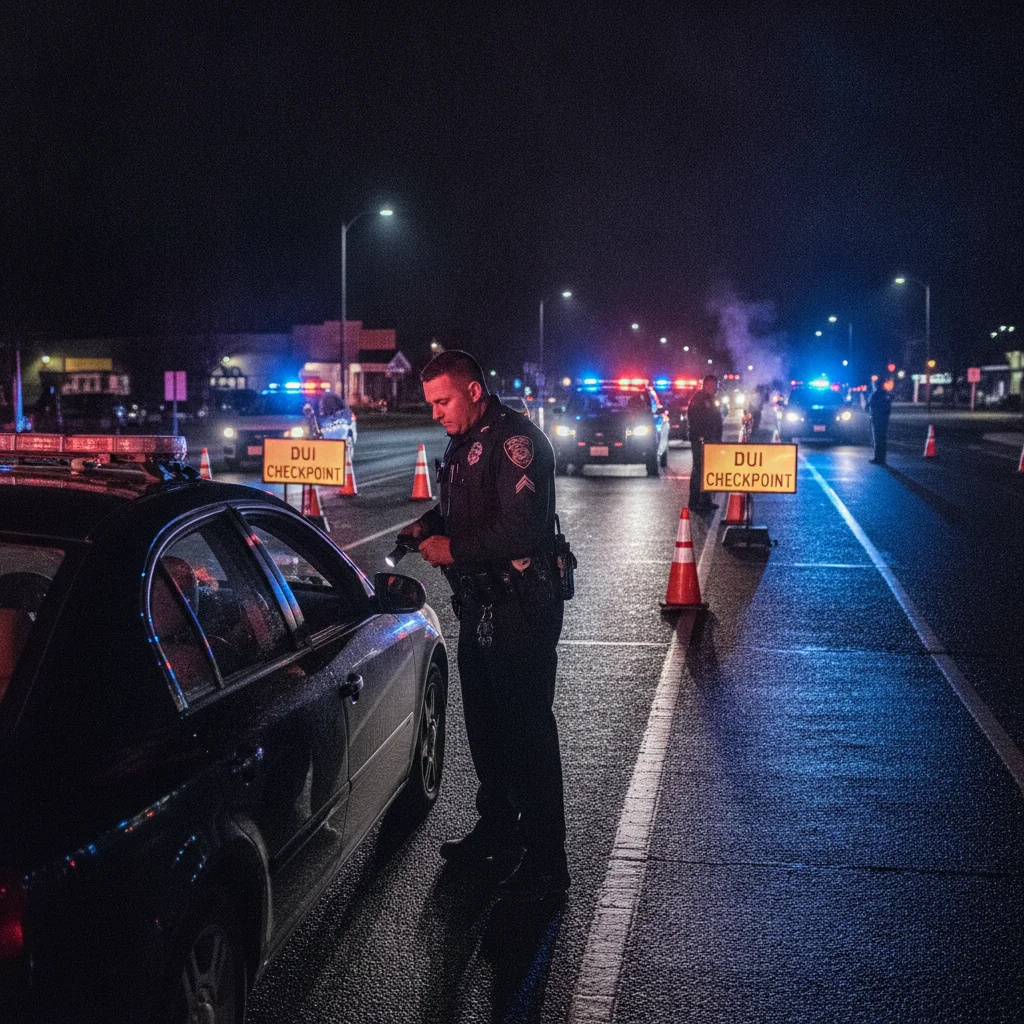
An implied consent law means that by choosing to drive on public roads, you have automatically agreed — in advance — to submit to chemical testing (breath, blood, or urine) if a law enforcement officer has reasonable grounds to suspect you of driving under the influence. You don't sign anything; the consent is built into your driver's license. All 50 U.S. states have some version of this law on the books.
Implied consent is a civil-administrative doctrine separate from criminal DUI charges. Refusing a chemical test triggers automatic license sanctions under administrative per se laws, independent of whether you're convicted of a DUI offense in criminal court.
What Implied Consent Actually Means
Most drivers hear the phrase "implied consent" for the first time when they're already in a stressful situation at the side of the road. That's exactly the wrong time to learn what it means. Here's the plain version: the moment you applied for and accepted a driver's license in your state, you entered into a legal agreement. Part of that agreement is submitting to chemical testing — breath, blood, or urine — if an officer has probable cause to believe you're driving impaired.
The "implied" part is the key. You never explicitly signed a document saying "I agree to chemical testing." The law treats the act of driving as your agreement. Courts have upheld this doctrine consistently, reasoning that driving is a privilege — not a right — and states can attach reasonable conditions to that privilege.
It's also worth understanding what implied consent does not cover. It doesn't mean police can search your vehicle without cause. It doesn't mean you waive your Fifth Amendment right against self-incrimination in any broad sense. It specifically and narrowly applies to chemical testing for intoxicants when there's a lawful DUI or DWI investigation underway.
Implied Consent and Miranda Rights Are Separate
Many drivers assume they must be read their Miranda rights before being asked to take a chemical test. That's a misconception. Miranda applies to custodial interrogation — questioning designed to elicit incriminating statements. A chemical test request is not interrogation. Officers are not required to Mirandize you before asking for a breath or blood sample, and failure to do so does not invalidate implied consent.
Warrant Technology Has Changed the Equation
Prior to widespread electronic warrant systems, a refusal could meaningfully delay evidence collection long enough for BAC to drop. Today, many jurisdictions process electronic warrants in under 30 minutes, and some operate 24/7 on-call magistrate systems specifically for DUI blood draw warrants. The practical benefit of refusal on evidentiary grounds has diminished significantly in most urban and suburban jurisdictions.
The Two Types of Tests You Should Know
Not all chemical tests are treated equally under implied consent law, and this distinction trips up a lot of drivers. There are generally two categories:
Preliminary Alcohol Screening (PAS) — The Roadside Test
This is the small handheld device an officer might ask you to blow into at the scene of a traffic stop. In many states, this test is considered investigatory — it helps the officer establish probable cause for an arrest, but it is not the official evidentiary test. In California, for example, drivers over 21 who aren't on DUI probation can decline a PAS without triggering implied consent penalties. Always check your state's specific rules before assuming this applies to you.
Evidentiary Tests — The Official Record
These are the tests administered after arrest — typically a breath test at the station, a blood draw, or in some cases a urine sample. This is where implied consent fully applies. Refusing an evidentiary test triggers automatic administrative penalties almost everywhere in the country. There is no loophole here.
50
U.S. states with implied consent laws
Every state in the country has enacted some form of implied consent statute, though the specific penalties and test types covered vary significantly.
72%
Of DUI arrests involve breath test results
According to NHTSA data, breath testing is the predominant evidentiary method used in DUI enforcement across the United States.
Up to 3 years
Maximum license revocation for repeat refusals
Several states, including New York and Massachusetts, impose revocations of up to three years for drivers who refuse chemical testing on a second or subsequent offense.
88%
Of refusal cases still result in DUI conviction
Research cited by the American Prosecutors Research Institute found that refusal of chemical tests does not reliably prevent DUI convictions, as other evidence often suffices.
10–30 days
Window to request DMV hearing after refusal
Most states require drivers to formally request an administrative DMV hearing within 10 to 30 days of a refusal or arrest, or the license suspension becomes automatic.
In states that offer a choice, the officer may have the authority to designate which test is administered — or you may be given a choice. Either way, once the request is made in a post-arrest context, implied consent is in effect.
Know Your State's PAS Rules Before You Drive
Spend five minutes on your state DMV's website searching for 'implied consent' or 'chemical testing.' Print or bookmark the relevant page. Knowing whether you can decline a roadside PAS device without triggering penalties is information worth having before you're standing on the side of a road at 11 PM.
Act Fast After a Refusal — The Clock Is Running
Most states give you between 10 and 30 days to request a DMV administrative hearing to contest a refusal suspension. This deadline is separate from any criminal court dates. Contact a DUI attorney immediately after a refusal arrest — not after you've had time to 'think it over.' Missing the hearing window removes one of your most important options.
What Happens When You Refuse
Refusal is a legal option, but it comes with a cost that many drivers underestimate. Here's what typically follows a refusal:
- Immediate license suspension: In most states, the officer confiscates your license on the spot and issues a temporary driving permit. The formal suspension kicks in within a set number of days — often 7 to 30.
- Administrative hearing: You usually have a limited window (often 10–30 days depending on state) to request a hearing before your state's DMV to contest the suspension. Miss that window and the suspension is automatic.
- Longer suspension than a DUI conviction: This surprises people. In many states, a first-offense refusal suspension is 12 months, while a first DUI conviction might only result in a 90-day suspension. The law penalizes refusal heavily because it undermines law enforcement's ability to gather evidence.
- Refusal as evidence: Prosecutors can tell a jury that you refused the test. Courts in most states allow this inference — that a person who refused did so because they knew they'd fail.
- Ignition interlock requirements: Some states require an ignition interlock device as a condition of license reinstatement, even for refusals on a first offense.
The practical takeaway: refusing doesn't make the DUI problem go away. It trades one set of legal problems for another set — and often a harder one to navigate.
“Drivers who refuse chemical testing often believe they're making a strategic choice. In practice, they're trading a potentially defensible BAC number for a near-automatic license suspension and a prosecutorial gift: the inference of guilt.”
— Lawrence Taylor, Author of 'Drunk Driving Defense' and nationally recognized DUI law authority
Blood Draws, Warrants, and Your Constitutional Rights
One reason some drivers believe refusal is a smart strategy is the assumption that without a breath sample or consent to a blood draw, police have no evidence. The Supreme Court's 2013 decision in Missouri v. McNeely significantly complicated that calculus.
The ruling held that the natural dissipation of alcohol in the bloodstream does not, by itself, create the kind of emergency that justifies a warrantless blood draw in every case. Police generally need a warrant. But here's the critical part: in many jurisdictions, officers can obtain electronic warrants in under 30 minutes. Once that warrant is in hand, your refusal is legally irrelevant — the draw happens regardless, and you may still face refusal penalties on top of it.
Some states have enacted laws that create automatic exceptions in certain scenarios — fatal accidents, situations where a breath test isn't available, or cases involving prior DUI convictions. In those cases, a blood draw may be compelled without a warrant under the state's own constitutional framework.
Implied Consent and Miranda Rights Are Separate
Many drivers assume they must be read their Miranda rights before being asked to take a chemical test. That's a misconception. Miranda applies to custodial interrogation — questioning designed to elicit incriminating statements. A chemical test request is not interrogation. Officers are not required to Mirandize you before asking for a breath or blood sample, and failure to do so does not invalidate implied consent.
Warrant Technology Has Changed the Equation
Prior to widespread electronic warrant systems, a refusal could meaningfully delay evidence collection long enough for BAC to drop. Today, many jurisdictions process electronic warrants in under 30 minutes, and some operate 24/7 on-call magistrate systems specifically for DUI blood draw warrants. The practical benefit of refusal on evidentiary grounds has diminished significantly in most urban and suburban jurisdictions.
The bottom line on warrants: refusing a chemical test no longer provides the evidence shield it once might have. The legal machinery for obtaining a warrant quickly is well-established in most jurisdictions. What refusal reliably produces is administrative penalties and a suspicious-looking paper trail.
How Implied Consent Affects Your Car Insurance
This is the piece of the implied consent picture that most legal explainers skip — and it's directly relevant to anyone trying to make smart ownership decisions. A refusal suspension, just like a DUI conviction, creates a record. That record reaches your insurer.
Here's what typically happens on the insurance side:
- Rate surcharges: A DUI or refusal-related suspension flags you as a high-risk driver. Premium increases of 50% to 100% or more are common, and they can persist for 3–7 years depending on your state and insurer.
- SR-22 filing: Many states require drivers who lose their license due to DUI or refusal to file an SR-22 — a certificate of financial responsibility — before reinstatement. This document tells your insurer (and the state) that you carry the minimum required coverage. Not all insurers will file one; some will non-renew your policy outright.
- Non-renewal or cancellation: Insurers have the right to non-renew a policy after a major violation. A refusal suspension often qualifies. If you're dropped, you'll be shopping for coverage in the non-standard (high-risk) market at significantly higher rates.
If you're currently facing a suspension and need to understand coverage options, coverage options for high-risk drivers is a practical next step to review.
Know Your State's PAS Rules Before You Drive
Spend five minutes on your state DMV's website searching for 'implied consent' or 'chemical testing.' Print or bookmark the relevant page. Knowing whether you can decline a roadside PAS device without triggering penalties is information worth having before you're standing on the side of a road at 11 PM.
Act Fast After a Refusal — The Clock Is Running
Most states give you between 10 and 30 days to request a DMV administrative hearing to contest a refusal suspension. This deadline is separate from any criminal court dates. Contact a DUI attorney immediately after a refusal arrest — not after you've had time to 'think it over.' Missing the hearing window removes one of your most important options.
Navigating an Implied Consent Stop: A Practical Framework
You can't always predict when you'll be stopped, but you can think through your options in advance. Here's a clear-headed framework:
Before Any Stop
Know whether your state distinguishes between PAS (roadside) and evidentiary (post-arrest) tests. A quick search of your state's DMV website for "implied consent" will surface the relevant statute. This matters if you're ever asked to blow into a handheld device before an arrest decision has been made.
During a Stop
Be calm, be cooperative on basic identity and documentation, and understand that anything you say can be used against you. You have a right to decline to answer potentially incriminating questions beyond providing your license, registration, and proof of insurance.
If Asked to Take a Test
This is a decision with no perfect answer — only tradeoffs. Taking the test: if you're below the legal limit, the result clears you. If you're above it, you face DUI charges but preserve your license for longer and avoid refusal penalties. Refusing: you face immediate license consequences and provide prosecutors with damaging circumstantial evidence, but deny them a precise BAC number.
After a Stop
If you've been arrested — whether you took the test or refused — contact a DUI defense attorney before your DMV hearing deadline expires. The administrative (license) and criminal (court) proceedings are separate, and both have strict timelines. Missing the DMV hearing window is one of the most common and costly mistakes drivers make.
For a broader look at what to do after any serious traffic incident, post-accident procedures walks through the full sequence of steps.

All claims are backed by peer-reviewed research. Sources on request.