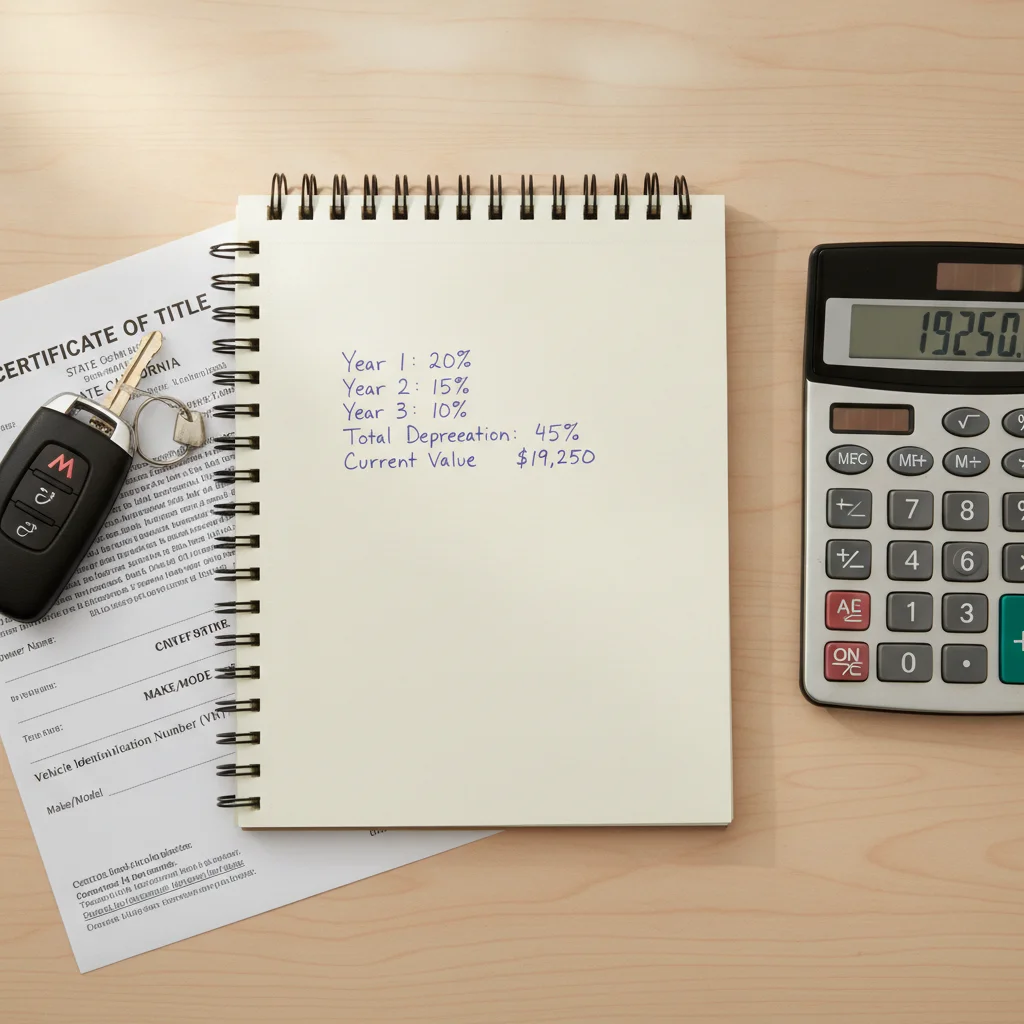

Key Takeaways
Residual Value
Residual value is the estimated worth of a vehicle at the end of a lease term — typically two to four years from now. Leasing companies set this number upfront, and it directly determines how much you pay each month. The higher the residual value, the less of the car's cost you're financing through your payments. In plain terms, it's a prediction of how much the car will depreciate during your lease.
Residual value is expressed as a percentage of the vehicle's MSRP and is set by the lender or captive finance arm of the manufacturer, not the dealership. It is non-negotiable in most lease structures.
What Residual Value Actually Is
Here's the simplest way to think about residual value: it's depreciation math dressed up in leasing language. When a finance company writes a lease, they need to know two things — what the car is worth today, and what it will be worth when you hand the keys back. The difference between those two numbers is what you pay for, spread across your monthly payments. The end-of-lease predicted value is the residual.
So if you lease a $45,000 SUV and the lender sets a 55% residual over 36 months, they're predicting that truck will be worth $24,750 three years from now. You're financing the other $20,250 — plus interest — divided into 36 payments. That's the whole engine driving your monthly cost.
It's worth being clear that residual value isn't a random guess. Lenders use historical depreciation data, projected supply, model-year changes, and competitive market conditions to set these numbers. For the major brands, residuals are published monthly and apply uniformly across every dealer in the country. Understanding this is the first step to reading a lease deal with clear eyes.
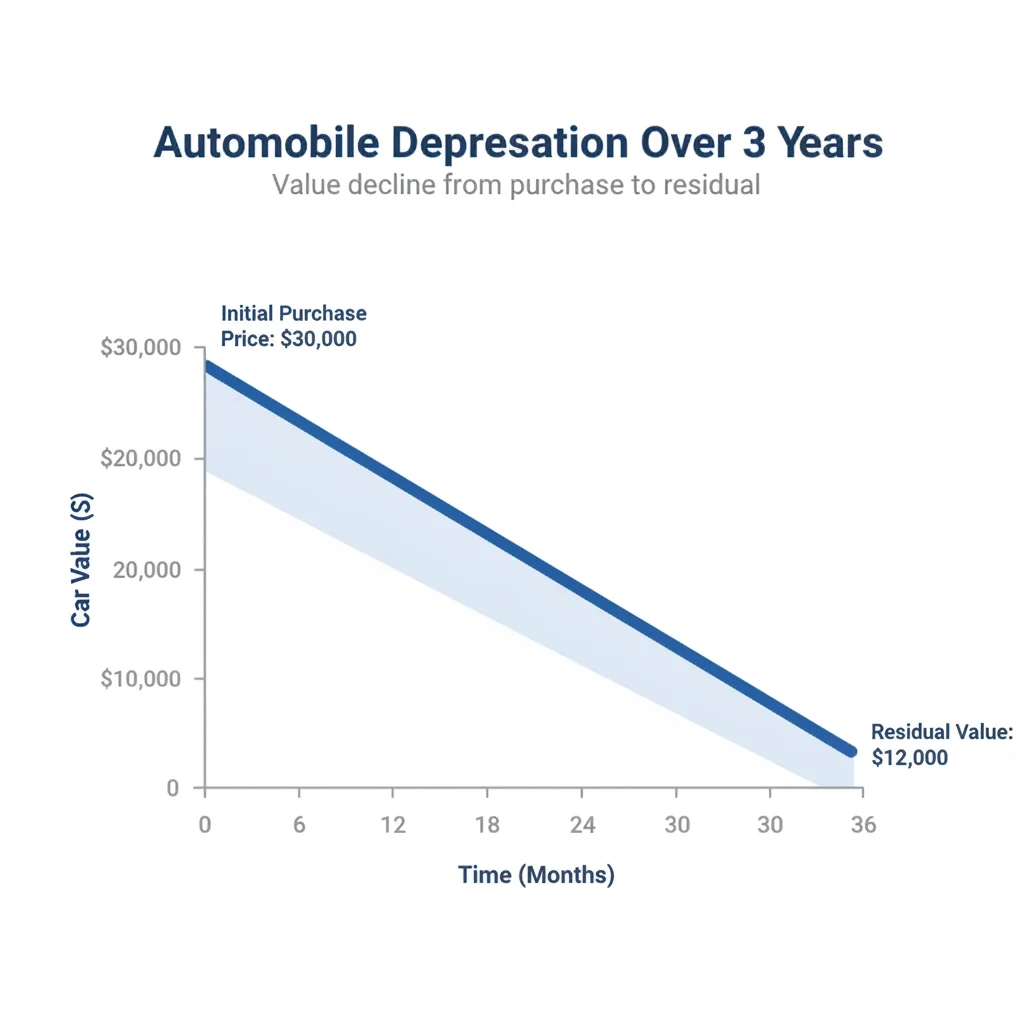
For a deeper foundation on how cars lose value over time, see our guide to vehicle depreciation. Residual value is essentially that same process, forecasted forward instead of measured backward.
How Residual Value Is Set — And Who Sets It
This is where a lot of people get confused: the dealer does not set residual value. The number comes from the manufacturer's captive finance arm — think Ford Motor Credit, Toyota Financial Services, GM Financial, or BMW Financial Services — or from a third-party lender if the brand doesn't have its own. That distinction matters because it means the residual is fixed before you negotiate anything.
What goes into the calculation? A few key factors:
- Historical depreciation curves — How have past versions of this model held up over 24, 36, and 48 months?
- Planned production volume — More units on the road generally means more supply at lease-end, which pushes values down.
- Competitive segment pressure — If three rivals are offering similar vehicles at the same price, resale values get squeezed.
- Incentive history — Models that have been heavily discounted tend to depreciate faster and carry lower residuals.
- Model refresh cycle — A model due for a redesign in two years will often have a lower residual, since the outgoing version becomes less desirable.
Subvented Leases: When Residuals Are Inflated on Purpose
Automakers sometimes set residuals higher than market data supports in order to lower monthly payments and stimulate sales on a specific model. These manufacturer-subsidized deals are called subvented leases. They can be genuine value — but they can also signal that demand for the model is soft and the brand is compensating with financial engineering. Always cross-check residuals against actual used-car market prices for the model to evaluate whether a deal is truly strong.
Your Residual Is Locked Into Your Contract
The residual value is written into your lease agreement on day one and does not change regardless of what the market does over the next 36 months. If the car drops in value faster than predicted, the lender absorbs that loss — not you. If it holds value better than predicted, you have a buyout opportunity. This fixed nature is one of leasing's genuine advantages over financing: you're protected from the downside of unexpected depreciation.
Automakers also use residuals as a sales tool. When a brand wants to push a specific model, they sometimes artificially inflate the residual — making monthly payments look attractively low — even if the market doesn't necessarily support that future value. This is called a subvented lease, and it can be a genuine deal or a way to move slow inventory.
For a broader look at how depreciation rates differ by vehicle segment, the complete owner's reference on vehicle depreciation covers the typical curves you should know.
Why Residual Value Drives Your Monthly Payment
Monthly lease payments have three components: depreciation cost, finance charge (the money factor), and taxes and fees. The depreciation cost is simply the capitalized cost (the agreed selling price) minus the residual value, divided by the number of months. The money factor is applied to the sum of those two values. So residual value directly controls the biggest piece of your payment.
Let's walk through a concrete comparison:
| Scenario | Vehicle Price | Residual (36 mo.) | Depreciation to Finance |
|---|---|---|---|
| High residual (60%) | $45,000 | $27,000 | $18,000 |
| Low residual (45%) | $45,000 | $20,250 | $24,750 |
Before the money factor is even applied, the low-residual vehicle costs you $6,750 more over the same 36 months — that's roughly $188 extra per month, just from the residual difference. Same car price, same term, dramatically different payment.
49%
Average 3-year depreciation for new cars
According to iSeeCars analysis of millions of vehicle transactions, the average new car loses roughly 49% of its value within three years of purchase.
60%+
Residual value on top-rated lease vehicles
Trucks and select luxury models from brands like Toyota and BMW have posted 36-month residuals above 60% in recent model years, according to Edmunds lease data.
$188
Monthly payment difference from a 15% residual gap
On a $45,000 vehicle, the difference between a 45% and 60% residual translates to roughly $188 more per month over a 36-month lease before finance charges are applied.
27%
Typical first-year depreciation hit
Most new vehicles lose 20–27% of their value in the first year alone, according to Carfax and multiple industry depreciation studies — the steepest drop in the ownership cycle.
This is why experienced lessees always check residual percentages before test-driving. A car that leases well isn't necessarily the cheapest sticker — it's the one that loses the least value over the lease term. Brands known for strong resale value, like Toyota, Honda, and Subaru, often produce the most competitive lease deals relative to their price points precisely because of this.
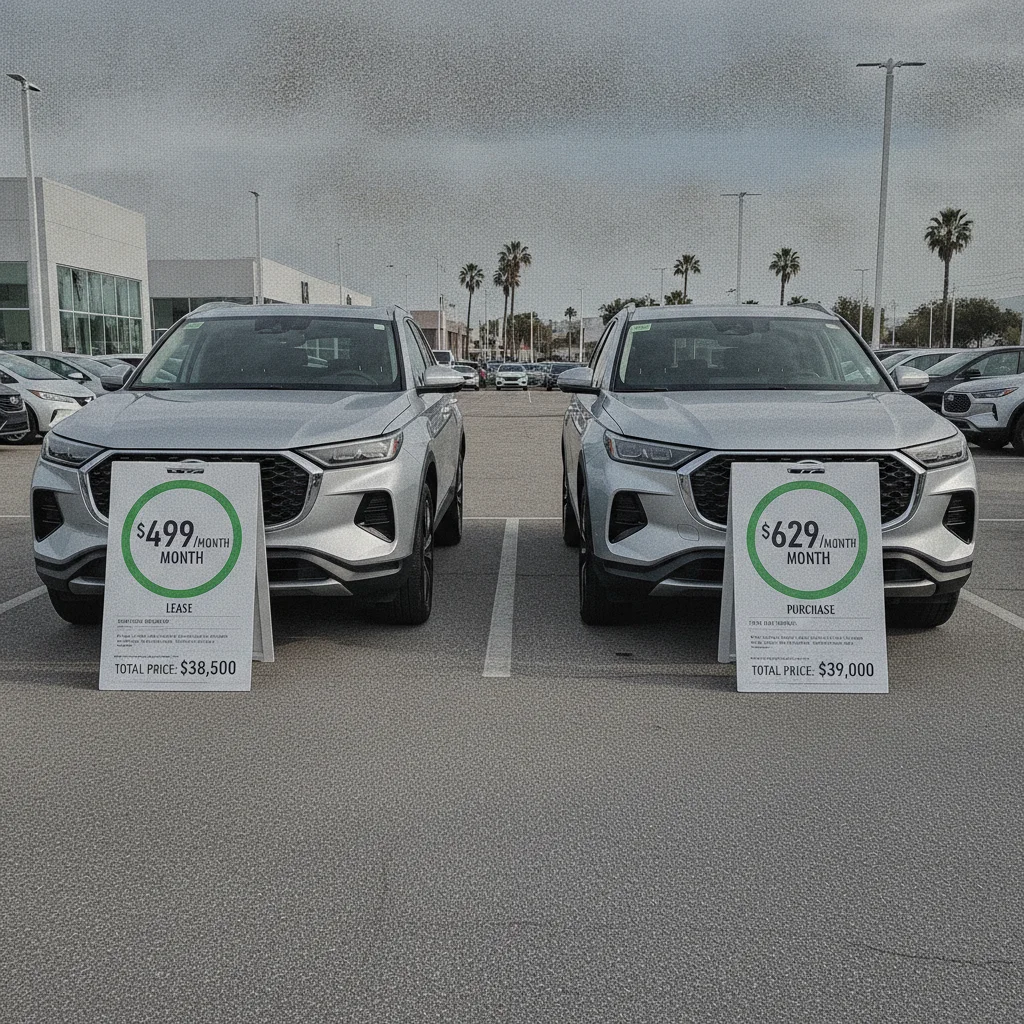
If you want to work through your own numbers, our practical depreciation calculation walkthrough gives you a step-by-step framework you can apply to any vehicle.
What Residual Value Tells You Even If You're Not Leasing
Here's the part that doesn't get enough attention: residual values are useful intelligence for buyers and owners, not just lessees. If a manufacturer's captive finance company is posting a 58% residual on a 36-month lease, they're essentially publishing their own depreciation forecast for that model. That's free market research.
Check Residuals Before You Shop, Not After
Most shoppers fall in love with a car and then try to make the numbers work. Do it the other way: pull residual percentages for the segment you're considering before you set foot in a showroom. A five-minute residual check can tell you which models will produce competitive lease payments and which ones are financial dead ends — before you've invested any emotional energy in a test drive.
High Residual = Lower Ownership Cost Either Way
Whether you lease or buy, a vehicle with a strong residual percentage is generally a smarter financial choice. It means the market respects the car's long-term value, your loan payoff schedule stays ahead of depreciation, and your eventual trade-in or private sale return more of your original investment. Use residuals as a quick quality filter across any models you're seriously considering.
When you're comparing two vehicles to buy outright, check their current lease residuals. The model with the higher residual will generally hold its value better over the same period — which means lower total cost of ownership, a better trade-in, and more flexibility when you're ready to sell. It doesn't guarantee a better car, but it's a meaningful signal.
The inverse is also true. A vehicle with a 40% residual on a 36-month lease is telling you something: the market expects it to shed 60% of its value in three years. If you're buying that car with a five-year loan, you need to understand you could be underwater on your loan well into the back half of the term. That's real financial exposure.
For context on how trade-in offers reflect this same depreciation reality from the dealer's perspective, see what dealer trade-in values are really telling you about depreciation. The numbers connect directly.
Residual Value at Lease End: Your Three Options
When a lease expires, the residual value becomes a concrete number you can act on — and you have three realistic choices:
- Return the car. Walk away. The lender absorbs any gap between the residual and what they can actually sell the car for at auction. If residuals were set accurately (or optimistically), they take the hit.
- Buy the car at the residual price. You pay what was agreed upfront, regardless of what the car is actually worth in the current market. If the market value is higher than the residual — as happened widely with used cars from 2021 onward — you're buying below market. If market value has dropped below the residual, you'd be overpaying.
- Sell your buyout right to a third party. In some states, you can assign your lease buyout to a dealer or private buyer, capturing the difference between the residual and market value as cash in your pocket. Manufacturer restrictions on this practice vary — Toyota and Honda have restricted third-party assignments in recent years.
Subvented Leases: When Residuals Are Inflated on Purpose
Automakers sometimes set residuals higher than market data supports in order to lower monthly payments and stimulate sales on a specific model. These manufacturer-subsidized deals are called subvented leases. They can be genuine value — but they can also signal that demand for the model is soft and the brand is compensating with financial engineering. Always cross-check residuals against actual used-car market prices for the model to evaluate whether a deal is truly strong.
Your Residual Is Locked Into Your Contract
The residual value is written into your lease agreement on day one and does not change regardless of what the market does over the next 36 months. If the car drops in value faster than predicted, the lender absorbs that loss — not you. If it holds value better than predicted, you have a buyout opportunity. This fixed nature is one of leasing's genuine advantages over financing: you're protected from the downside of unexpected depreciation.
Knowing the residual figure before the lease ends — it's in your original contract — lets you plan intelligently. Compare it against current market values using tools like Kelvin Blue Book or Edmunds (see our guide to valuation tools for how to read those estimates). If your car is worth more than the residual, act on it. If it's worth less, walk away without hesitation.
“The monthly payment tells you nothing about whether a lease is a good deal. The residual percentage tells you almost everything.”
— Philip Reed, Senior Consumer Advice Editor, Edmunds
How to Use Residual Value When Shopping for a Lease
Residual percentages for current model-year vehicles are published monthly by most captive finance companies. You can find them on dedicated automotive lease forums, through subscription services like Edmunds, or sometimes directly on manufacturer incentive pages. Here's how to put that information to work:
Step 1: Find the residual percentage for the model you're considering
Look for the 36-month (or 24/48-month if that fits your preference) residual on the specific trim and configuration you want. Residuals often vary by trim level — higher-trim models sometimes carry lower residuals because their elevated MSRP doesn't necessarily translate to proportionally higher used-car demand.
Step 2: Calculate your depreciation cost
Multiply the vehicle's MSRP by the residual percentage to get the predicted residual value in dollars. Subtract that from the capitalized cost (your negotiated selling price). The result is the depreciation you're financing. Divide by the number of months for your base monthly depreciation charge.
Step 3: Compare across models
Run the same calculation on competing vehicles. A rival model with a 5% higher residual on a similar price point will frequently produce a meaningfully lower payment even if the rival's price is slightly higher. The residual can overcome a modest sticker price difference.
Check Residuals Before You Shop, Not After
Most shoppers fall in love with a car and then try to make the numbers work. Do it the other way: pull residual percentages for the segment you're considering before you set foot in a showroom. A five-minute residual check can tell you which models will produce competitive lease payments and which ones are financial dead ends — before you've invested any emotional energy in a test drive.
High Residual = Lower Ownership Cost Either Way
Whether you lease or buy, a vehicle with a strong residual percentage is generally a smarter financial choice. It means the market respects the car's long-term value, your loan payoff schedule stays ahead of depreciation, and your eventual trade-in or private sale return more of your original investment. Use residuals as a quick quality filter across any models you're seriously considering.
The broader depreciation context for each segment — which vehicle types hold value best and why — lives in our depreciation basics hub. It's worth a read before you commit to any lease term, especially for newer segments like electric vehicles where residual setting is still volatile.
Finally, understand what residual value cannot tell you: it won't predict whether you'll like the car, whether it will be reliable, or whether a better deal will emerge next month. It's one variable in a larger decision. But it's the one variable that most shoppers never look at — and that's exactly why understanding it gives you a real edge.


All claims are backed by peer-reviewed research. Sources on request.