
Key Takeaways
Summary
22 items · 30–60 minutes to gather everything
Why Your Document Package Is the Foundation of Your Negotiating Power
Most buyers treat preapproval as a checkbox — something to knock out after they've already fallen in love with a truck on the dealer's lot. That's exactly backwards. A preapproval letter in your pocket before you walk in changes every conversation you'll have with a finance manager. It tells them you already have a number, and they have to beat it or lose the deal.
But here's the part that kills deals before they start: incomplete applications. Lenders don't issue preapprovals on good faith. They need verified data — income, identity, residence — and if you're missing pieces, they'll either decline outright or come back asking for more, which triggers another credit inquiry and restarts the clock.
I've watched buyers lose rate locks because they took three days to dig up a pay stub. I've seen others get stuck with dealer financing at 8.9% because their preapproval never came through in time. Getting your document stack right the first time is how you avoid both scenarios.
For a deeper look at what lenders are actually evaluating when they review your application, see Everything Your Lender Looks at Before Issuing a Preapproval. And if you want the full picture of how preapproval fits into the car-buying process, Auto Loan Preapproval: What It Actually Means and Why It Matters breaks it down clearly.

What You'll Need: The Complete Document Checklist
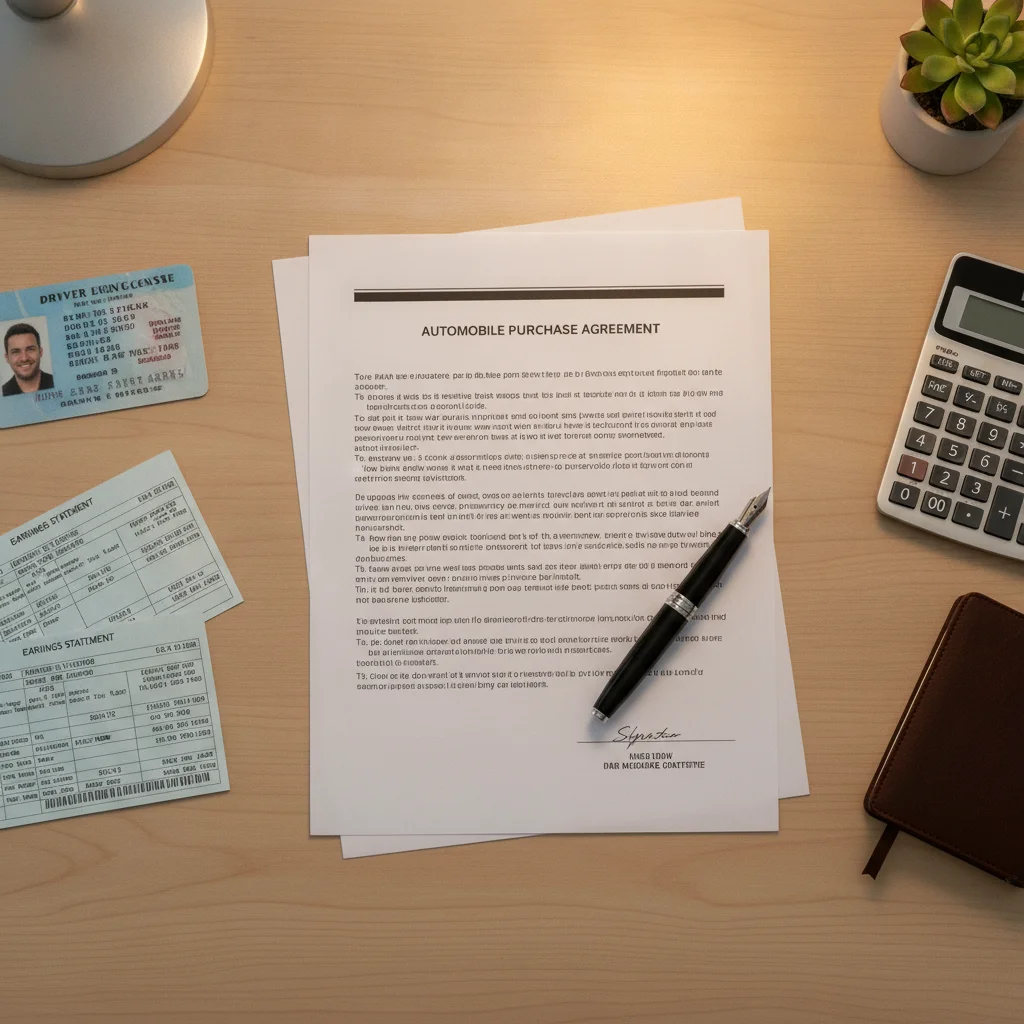
Below is the full checklist, broken into logical groups so you can work through it systematically. Print it, screenshot it, or run through it in your browser — but don't show up to a lender's application portal without everything in hand.
Identity Verification
Proof of Income
Employment Verification
Proof of Residence
Financial Account Information
Vehicle Information (If Known)
Once you've confirmed everything is in order, the actual application process moves quickly. Getting Preapproved for a Car Loan Before You Step on the Lot walks you through submitting your application and comparing offers from multiple lenders.
Don't Submit Multiple Applications Over Weeks
Rate-shopping is smart, but timing matters. If you spread auto loan applications over several weeks or months, each lender pulls a hard inquiry and your credit score takes repeated hits. Concentrate all your applications within a 14-to-45-day window — most FICO and VantageScore models will treat them as a single inquiry. Apply strategically, not casually.
Outdated Documents Will Stall Your Application
Pay stubs older than 30 days and bank statements older than 60 days are typically rejected by underwriters and will require resubmission. Don't gather documents weeks in advance and let them go stale before you apply. Time your document collection to the week you plan to submit, not the week you start thinking about it.
Tools and Resources That Make the Process Faster
You don't need specialized software to gather your documents, but a few tools will dramatically reduce the time it takes to find, organize, and submit everything.
AnnualCreditReport.com
Pull free credit reports from all three bureaus to identify and dispute errors before lenders see them.
Secure cloud storage (Google Drive, Dropbox, or iCloud)
Store scanned or photographed copies of all documents so you can upload them instantly from any device during the application.
Scanner app (Adobe Scan, Microsoft Lens)
Convert physical documents like pay stubs and utility bills into clean, legible PDFs that meet lender upload requirements.
Auto loan rate comparison tool (Credit Karma, NerdWallet, LendingTree)
Compare preapproval offers from multiple lenders side by side without triggering separate hard inquiries for each.
Password manager (1Password, Bitwarden)
Store lender portal login credentials securely so you can pick up an incomplete application without losing access.
Special Situations That Require Extra Documentation
Standard W-2 employees with a two-year work history at the same company have the easiest path through preapproval. Everyone else needs to plan for additional paperwork. Lenders aren't being difficult — they're managing risk, and anything that makes your income or stability less predictable requires more evidence.

Self-Employed Applicants
If you own a business or work as an independent contractor, expect lenders to ask for two years of personal tax returns (not just 1099s), two years of business tax returns if you operate under a separate entity, a current profit-and-loss statement, and sometimes three to six months of business bank statements. They're trying to confirm that your net income — not your gross revenue — supports the loan payment. Many self-employed buyers are surprised to find that aggressive tax deductions work against them here: lower reported income means lower borrowable amounts.
Recent Job Changers
Switched jobs in the last 90 days? Lenders want to see that you're still in the same field or that your new income is at least as strong. Be ready to provide an offer letter from your new employer, your most recent pay stub from the new job, and documentation showing your previous employment history. A lateral move within the same industry is usually fine; a complete career change raises flags.
Applicants Adding a Co-Borrower
If you're applying with a spouse, partner, or co-signer, every document on this checklist applies to them too — separate identity documents, separate income verification, separate employment history. Don't assume the lender will only look at the primary applicant. They'll underwrite both credit profiles.
Buyers Trading In a Vehicle
A trade-in doesn't require extra preapproval documents, but you'll want your current vehicle's title (or payoff information if it's still financed), your registration, and your account number with your existing lender if there's a remaining balance. This keeps the deal from stalling in the F&I office. For a broader look at the paperwork side of a car sale, see Paperwork & Contracts.
Co-Borrower? Both Profiles Get Fully Underwritten
Adding a co-borrower is not a shortcut — it's a full second underwriting. Every document on this checklist applies separately to your co-applicant: their ID, their income verification, their employment history, and their credit report. Lenders will use the lower of the two credit scores in many cases to price the loan. Make sure your co-borrower is fully prepared before you submit a joint application.
A Preapproval Is Not a Loan Guarantee
A preapproval letter gives you a rate and loan amount based on your stated and verified information at the time of application. If your financial situation changes before you close — you lose a job, take on new debt, or the vehicle doesn't meet the lender's criteria — the lender can revise or rescind the offer. Don't make any major financial moves between preapproval and final loan closing.
Common Mistakes That Delay or Kill Preapproval
I've seen hundreds of loan applications come through — and the delays almost always trace back to the same handful of mistakes. Avoid these and you'll move faster than 80% of buyers.
- Submitting outdated pay stubs. Most lenders want pay stubs dated within 30 days. A stub from three months ago gets flagged and you'll need to resubmit.
- Using a P.O. box as your address. Lenders need a physical residential address for verification purposes. A P.O. box triggers a manual review that adds days to the process.
- Forgetting about side income. If you want rental income or freelance earnings counted toward your qualifying income, you need documentation for it. Don't assume the lender will take your word for it.
- Applying for multiple lenders without a strategy. Rate-shopping within a 14-to-45-day window is smart — most scoring models treat multiple auto loan inquiries in that window as a single inquiry. Spreading applications over several months is not smart and will ding your score repeatedly.
- Not checking your credit report first. Errors on your credit report can cause an otherwise strong application to get declined or mispriced. Pull your report before you apply, dispute any errors, and wait for corrections before submitting. If your credit file is thin rather than damaged, Strengthening a Thin Credit File to Qualify for Preapproval gives you a practical action plan.
Also worth noting: the documents required for preapproval on a new purchase are not identical to what you'd need if you were refinancing an existing loan. If refinancing is on your radar, Documents and Information You'll Need Ready Before Refinancing covers that separate list.
When you're ready to move from document gathering into the full preapproval process, The Auto Loan Preapproval Process, Start to Finish gives you the end-to-end roadmap — from your first credit check to walking into the dealership with an offer in hand.

All claims are backed by peer-reviewed research. Sources on request.